Duluth Caps Single-Family Short-Term Rentals and Ends Commercial Exceptions
Duluth passed a unanimous ordinance capping single-family short-term rentals and tying existing permits to current owners, impacting upper-story commercial operators.
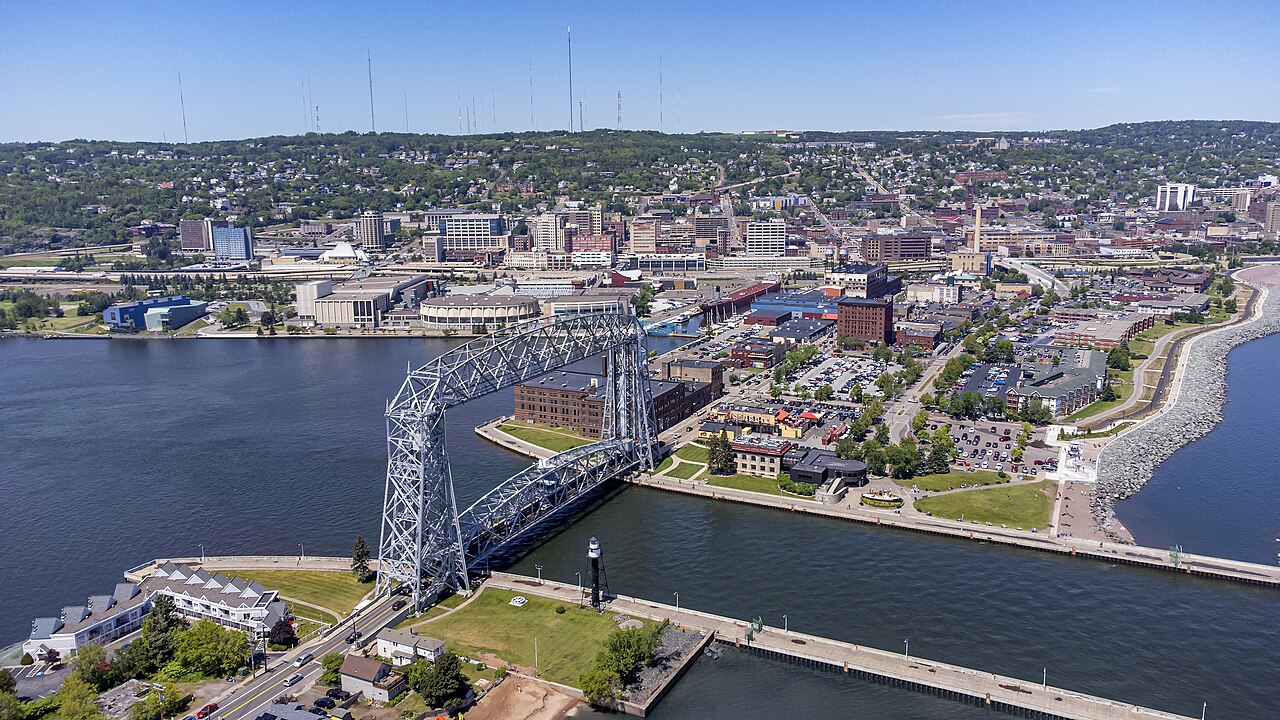
Photograph by Chrisographer: Duluth Drone, on Wikimedia Commons under the CC BY-SA 4.0 licence
On the upper floor of a multi-story brick building along Superior Street in downtown Duluth, Minnesota, an apartment sits directly above a local coffee shop. For years, upper-floor flats like this one, situated above commercial storefronts in Canal Park, West Duluth, and the Lincoln Park craft district, provided visitor lodging for tourists while generating steady income that allowed property owners to maintain and restore older commercial buildings.
That operating environment shifted when the Duluth City Council passed an updated short-term rental ordinance by a unanimous vote. The new ordinance explicitly bars the issuance of new short-term rental licenses for single-family residences across the city. More significantly for commercial operators, the city eliminated previous exemptions that had allowed unrestricted licensing within designated form districts, bringing commercial corridors under the same regulatory framework as residential neighborhoods.
While existing permit holders are allowed to maintain operations under current licenses, the updated ordinance ties those permits strictly to the individual property owner. If a commercial building or condominium is sold, the short-term rental permit terminates immediately, forcing the new owner to convert the space into long-term residential housing or an alternative commercial use. The change has drawn criticism from commercial developers, property management firms, and local business owners who contend that flexible upper-story lodging is vital for commercial revitalization.
What happened
Under its previous regulatory system, the City of Duluth maintained a citywide cap of 110 short-term rental licenses for vacation dwelling units. However, the municipal code contained a significant exemption for form districts—special planning zones that encompass high-density commercial and tourist areas such as Canal Park, Lincoln Park, and downtown Duluth. In those form districts, property owners were free to apply for short-term rental permits without counting against the 110-unit cap.
The ordinance passed unanimously by the Duluth City Council last month changes that framework entirely. The city now oversees approximately 200 permitted short-term rental licenses across Duluth, but the form-district exemption has been removed. Going forward, no new licenses will be issued for single-family residences anywhere in the city, and form districts are no longer excluded from numerical or location-based regulatory restrictions.
For current license holders, existing operations remain permitted under a grandfathering provision. However, municipal officials established that short-term rental licenses are personal to the current owner and will not transfer upon property sales. If an owner sells a building containing short-term rentals, the purchaser cannot take over or renew the existing short-term rental permit. Instead, those upper-floor units or individual condos must transition to long-term residential housing with stays of more than 30 days.
Property owners and hospitality management companies express deep concern about the sudden rule change. Tiegen Brickson, co-owner of The Brix in Canal Park, manages 12 short-term rental units with five additional units scheduled to launch, including properties inside The Suites Hotel at Waterfront Plaza. On October 9, Brickson sent an email to city representatives requesting an explicit exception for commercial tourism districts. Brickson pointed out that clients had used a recent city moratorium period to invest hundreds of thousands of dollars redeveloping condo units, believing form-district rules would remain identical to those in place before the moratorium.
City officials indicated that a formal administrative review of the ordinance is scheduled for March. However, local business owners stress that carrying six months of regulatory uncertainty creates severe financial strain for operators who have made substantial capital commitments and must manage active debt service without knowing whether future sales or ongoing permits will be allowed.
Commercial mix and upper-floor adaptive reuse
The practice of operating short-term rentals on upper floors above commercial storefronts has long served as an adaptive reuse model in American cities. In many older industrial and regional centers, multi-story commercial buildings feature active retail shops, cafes, or restaurants on the ground floor, while upper levels remain underutilized because transforming them into standard apartments requires heavy capital investment in fire separation, independent egress, plumbing, and structural framing.
In Duluth, upper-floor short-term rentals exist above a wide variety of commercial operations across the city. Examples include spaces above Bailey's Builds in West Duluth, Duluth Coffee Company at 105 East Superior Street, Blacklist Brewing Company and Duluth's Best Bread in downtown, The Press Building Residential Suites in Lincoln Park, Lake Superior Brewing Company in Lakeside, and the I Love Duluth store in Canal Park.
Mike Schraepfer, president of Heirloom Property Management and a former Duluth Planning and Zoning commissioner, emphasized that upper-story short-term rentals offered a practical way to fill vacant commercial space and support downtown revitalization. Schraepfer noted that city officials have generally supported mixed-use projects that expand overall housing stock, provided developers are permitted to include a small allocation of short-term rental units so that overall project budgets can pencil out and generate a reasonable return on investment.
Developments like Lakeview 333 showcase how this financial equation functions in practice. When developers restore historical commercial real estate, initial construction and architectural costs are high. Including short-term lodging units generates higher initial revenue per square foot than standard long-term residential leases, allowing building owners to service construction loans and stabilize the asset. Once stabilized, the broader commercial structure provides long-term utility for the surrounding neighborhood.
Local hospitality entrepreneurs have also embraced this approach. Tom Hanson, founder of Duluth Grill Family Business, entered the short-term rental sector in 2024 by converting eight rental units at the Duluth Press Building Residential Suites into vacation rentals. Hanson noted that while hosting is not his most lucrative business enterprise, upper-story rentals allow guests to engage directly with local business owners and experience commercial neighborhoods from an authentic local perspective.
Transferability rules and real estate asset values
The rule governing whether a short-term rental permit attaches to a property deed or remains a non-transferable personal license is a critical factor in real estate valuation. When a municipality enacts non-transferability provisions, it effectively puts a sunset clause on the short-term rental use of the property whenever ownership changes.
Consider the situation at Duluth Coffee Company. Owner Eric Faust expanded the cafe at 105 East Superior Street and operates two upper-level apartments as short-term rentals listed on Airbnb. Under the updated Duluth ordinance, Faust can continue hosting guests in those units for as long as he retains ownership. However, if Faust ever sells the building, the new buyer is legally prohibited from continuing short-term rental operations and must convert those spaces into long-term residential rentals or traditional commercial space.
Schraepfer pointed out that this restriction directly impacts commercial property values. Commercial real estate values are calculated based on capitalization rates and net operating income. If high-performing upper-floor short-term units must revert to standard residential rent levels upon sale, prospective buyers will offer significantly less capital for the building. This reduces the equity accumulated by property owners who invested heavily in renovating older urban structures.
The non-transferability rule creates similar friction for individually owned condo units located inside commercial hospitality facilities, such as the Hawthorne Inn and Suites Building or The Suites Hotel at Waterfront Plaza. Even though these buildings function as hotels with shared guest amenities and commercial registration, individual condo units inside them are classified legally as single-family residential spaces under the city ordinance. Upon sale, those condos lose their short-term rental operating status and must convert to long-term leases.
Mortgage lenders evaluating commercial purchase loans or refinancing applications closely inspect property revenue streams. When debt coverage calculations can no longer factor in short-term rental income for future owners, borrowing capacities drop. This dynamic leaves existing owners with fewer exit options and restricts their ability to leverage property equity for future business expansions.
The other view
From the perspective of municipal leaders and housing enforcement officials, strict short-term rental regulations are necessary measures to protect the local housing supply and maintain community stability. City officials across the United States argue that unchecked short-term rental growth drains residential inventory, driving up rent prices and displacing local workers.
In Duluth, a city-funded housing study determined that the municipality requires 900 additional housing units to meet demand and support local economic growth targets by 2030. City officials maintain that achieving this housing target requires closing regulatory loopholes that allow potential long-term rental housing to be converted into transient tourist lodging.
Jonathan Otis, deputy chief of life safety for the Duluth Fire Department, oversees permitting and enforcement for vacation dwelling units. Otis explained that when Duluth originally exempted form districts like Canal Park, Lincoln Park, and downtown from the 110-unit cap, the city hoped to encourage commercial investment. However, municipal officials observed that the exemption led to direct displacement of long-term residents.
According to Otis, tenants on month-to-month leases in form districts—frequently service industry employees living paycheck to paycheck—were evicted as property owners renovated buildings to create vacation rentals. Otis noted that while these conversions brought capital investment, they resulted in a net loss of affordable housing. Reverting those spaces to long-term rentals provides essential housing for nursing staff, trade workers, and college students who support the local economy.
Furthermore, municipal officials faced enforcement challenges under the old system. Some operators received interim temporary licenses from Planning and Zoning but failed to satisfy Life Safety fire codes, such as secondary egress, fire alarm wiring, or sprinkler installations. These properties continued operating in regulatory gray areas created by split oversight between departments. Unifying rules under a clear single-family ban and removing form-district exemptions was intended to establish clean, enforceable life safety standards citywide.
Permit delays and administrative friction
While city officials view short-term rental restrictions as a direct solution to housing shortages, real estate developers contend that administrative delays, complex building codes, and municipal staffing shortages are the true bottlenecks holding back housing development.
Brian Forcier, chief executive officer of Titanium Partners, develops mixed-use properties in Duluth, including the former Ordean Building conversion and local hotel properties. Forcier stated that short-term rentals are not the primary driver of Duluth's housing shortage. Instead, he highlighted challenging topography, high construction costs, complex regulations, and severe permit processing delays as the main factors suppressing new housing construction.
Forcier noted that developers in Duluth regularly wait 12 weeks or longer for building permit approvals, even when submitting detailed engineering plans prepared by professional architects and engineers. When municipal building departments are understaffed, processing delays inflate carrying costs for developers paying interest on land acquisition and pre-development loans.
In this environment, short-term rentals serve as an important financial mechanism during property redevelopment. Allocating a portion of a commercial property to short-term lodging enables developers to generate immediate revenue to cover holding costs while navigating lengthy municipal entitlement processes or waiting for permits on larger long-term housing phases.
When municipal governments impose strict limits on short-term rentals without concurrently expediting building plan reviews, developers face compounded financial risk. Forcier agreed that limiting short-term rentals in purely residential neighborhoods is appropriate, but argued that commercial tourism districts require flexible regulations that accommodate unique hospitality situations and encourage commercial capital investment.
When a municipality enacts non-transferability provisions, it effectively puts a sunset clause on the short-term rental use of the property whenever ownership changes.
Market saturation and unit economics
Beyond changing local ordinances, short-term rental hosts are operating in a national market shaped by increased supply and evolving guest expectations. The nationwide surge in short-term rental listings over recent years has reshaped market economics for independent property operators.
Data from Phocuswright Research indicates that 30 percent of leisure travelers nationwide used short-term rentals in 2024-2025. While consumer demand for short-term lodging remains substantial, the rapid growth in total active listings across major booking platforms like Airbnb, Vrbo, and direct-booking channels has altered local supply and demand dynamics.
Mike Schraepfer noted that the short-term rental market has reached a point of saturation in many regions, reducing profit margins compared to the post-pandemic surge. Schraepfer observed that standard, neighborhood-type houses lacking distinctive views, unique architectural features, or premium amenities often struggle to clear basic financial thresholds once cleaning fees, maintenance, platform commissions, and local licensing taxes are deducted.
In saturated markets, traveler demand concentrates among high-performing, distinctive properties situated in prime locations. Upper-floor commercial flats in walkable downtown districts, water-view suites, and historic boutique conversions maintain strong occupancy rates because they offer experiences that traditional residential homes cannot replicate.
For hosts managing standard properties, shifting market conditions require conservative financial modeling and precise cost management. Relying on aggressive pricing or continuous high occupancy is no longer realistic in competitive markets. Property owners must evaluate whether their listing possesses unique market features or whether a pivot toward long-term or medium-term corporate renting offers superior risk-adjusted returns.
How American cities handle commercial district exemptions
The policy debate taking place in Duluth reflects broader regulatory patterns across the United States as municipal governments attempt to write rules for the short-term rental industry. Cities across the country are searching for frameworks that protect residential housing stocks while supporting tourist economies and commercial downtown districts.
Many American municipalities establish distinct rules for commercial overlay districts and mixed-use zones. In cities like New Orleans, Savannah, and Nashville, municipal codes distinguish between single-family residential neighborhoods and high-density commercial corridors. In commercial zones, cities frequently permit short-term rentals under commercial lodging licenses, subjecting them to commercial fire, building, and accessibility codes while exempting them from owner-occupancy requirements or strict numerical caps.
Conversely, other US cities enforce blanket restrictions that prohibit non-owner-occupied short-term rentals across all municipal zones, including commercial districts. Cities adopting this approach prioritize housing preservation over lodging expansion, requiring property owners in commercial corridors to operate either standard long-term residential leases or traditional registered hotels.
Grandfathering rights and permit transfer mechanisms also vary significantly across state and local jurisdictions. In some states, local zoning laws protect existing non-conforming land uses, allowing short-term rental permits to transfer to new buyers upon property sales. In other states, statutory authorities allow municipalities to write personal licensing rules that expire upon property conveyance or terminate after a set amortization period.
For short-term rental operators, these national variations underscore the importance of understanding local land use laws. Operating a rental in a commercial zone does not automatically shield a business from future municipal restrictions. Property owners must actively monitor local legislative agendas and work with municipal leaders to ensure commercial lodging interests are recognized in urban master plans.
What to do with this
When local short-term rental regulations change, property owners and hospitality managers must take immediate, structured steps to protect their asset values, secure existing permits, and adjust operational models.
- Audit permit transfer provisions: Review existing city license certificates and municipal code language to confirm whether operating permits run with property titles or terminate upon sale.
- Track city council review milestones: Monitor local municipal calendars—such as Duluth's upcoming March review—to submit public comments or formal policy feedback before ordinances are finalized.
- Archive complete compliance records: Maintain a permanent file of all approved building permits, life safety inspection certificates, platform booking logs, and local tax receipts to prove continuous lawful operation.
- Perform multi-scenario financial stress tests: Model property cash flows across three distinct operating strategies: short-term vacation rental, medium-term corporate lease, and long-term 12-month tenant lease.
- Collaborate with local merchant groups: Work with local downtown business associations, chambers of commerce, and commercial district coalitions to share economic data showing the role of upper-floor lodging in commercial building restoration.
The standards desk (June Ashby) went over this story: 60 details tested; 55 matched to the source material; 4 kept as general background; nothing cut.
STR Gazette is general information for hosts in the United States. It is not legal, tax or financial advice; confirm rules and figures with your city, your state agency or a qualified professional.

What readers say