The Susman House Hits Market in Ventura: Architectural Insights for Coastal STR Hosts
A Carl Maston modernist oceanfront retreat listed for $5.1 million in Ventura highlights the rules, risks, and returns of operating coastal California rentals.
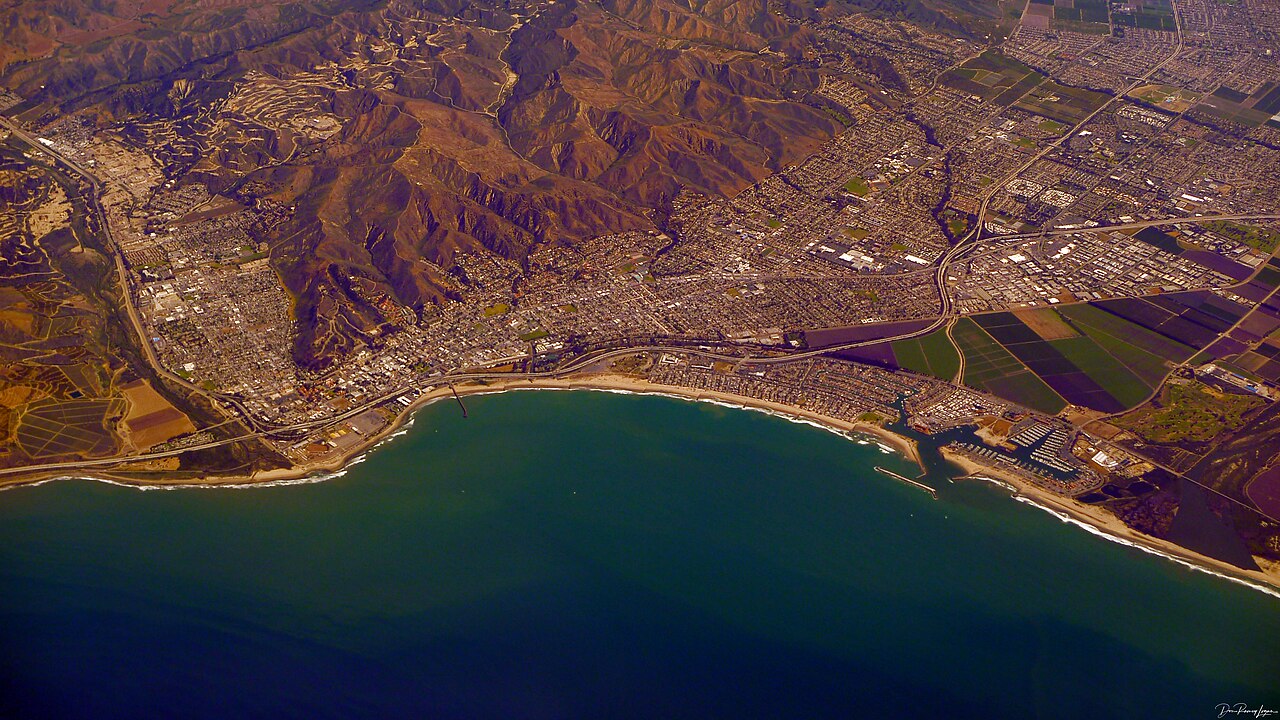
Photograph by Don Ramey Logan: Ventura California Aerial Photo Don Ramey Logan, on Wikimedia Commons under the CC BY-SA 4.0 licence
Along a quiet strip of Ventura County coastline where the surf breaks against Mondo’s Cove, an architectural piece from the mid-1980s has come onto the real estate market for the first time. The Susman House, a 2,640-square-foot oceanfront home located at Faria Beach in Ventura, California, was listed for $5.1 million. Commissioned in 1981 and completed in 1984 by former actress Tracy “Babs” Susman, the residence was designed by prominent Southern California modernist architect Carl Maston.
For real estate investors, vacation rental owners, and direct-booking operators, high-value coastal properties like The Susman House represent a distinct operational category. A famous house on the ocean can earn a lot through Airbnb, Vrbo or its own site, and it is also hard work to run. Operators must navigate local short-term rental ordinances, land-use regulations governed by the California Coastal Commission, high property insurance premiums, and specialized physical maintenance required for oceanfront structures.
Analyzing the listing of a landmark property offers valuable insights into how coastal short-term rentals operate in California. From understanding zoning rules in unincorporated county pockets to protecting historical design features while catering to modern travelers, oceanfront hospitality requires balancing financial performance with meticulous property stewardship.
What happened
According to listing details published by Realtor.com, The Susman House at Faria Beach in Ventura, California, entered the market for $5.1 million, marking the first time the property has been offered for sale since its completion in 1984. The three-bedroom oceanfront residence was commissioned by former actress Tracy “Babs” Susman, who bought the parcel on Mondo’s Cove in 1981 after spending much of her youth along the Ventura coast. Susman selected modernist architect Carl Maston to design the custom home. Maston, whose architectural portfolio includes residential projects throughout Southern California—including the Los Angeles residence owned by actress Dakota Johnson—crafted a design that emphasizes natural light, ocean vistas, and structural texture.
Co-listing agent Shannon Menzel of The Menzel Group stated that the current owner has kept the residence in its original condition since construction. The structure features an open floor plan with custom brick flooring, exposed wood beams, cedar-clad walls, vaulted ceilings, custom built-ins, and retractable glass doors that open to a 42-foot ocean-facing deck. A double-sided fireplace anchors the central living area, which includes built-in window seating facing the Pacific Ocean. The kitchen contains custom cabinetry, an original wood-slat ceiling, modern appliances, and broad windows designed to frame coastal views.
Upstairs, the primary suite features vaulted ceilings, floor-to-ceiling glass windows, a fireplace, a soaking tub, and access to a private deck overlooking the ocean. The home also includes a secondary suite with its own fireplace and a guest suite equipped with a privacy divider. Located roughly an hour northwest of Los Angeles, the property offers views of the Channel Islands, access to private beach entry points, and community tennis court access.
“Along this coast, about 30 to 40 percent of the owners are permanent, full-time residents, so the majority are second homes.”
Listing agent Chuck Menzel noted that the local neighborhood dynamic consists of a blend of permanent occupants and seasonal owners. He added that the cove features consistent sand during summer months and accessible surf breaks, creating an appealing setting for second-home buyers and vacationers seeking a coastal getaway.
Architectural heritage as a short-term rental asset
In the short-term rental marketplace, architectural lineage functions as a clear marketing differentiator. Homes designed by recognized modernist architects like Carl Maston possess an intrinsic narrative that attracts design-conscious travelers, photo shoot productions, and high-net-worth guests. Rather than competing strictly on bed count or proximity to commercial districts, architectural properties compete on aesthetic identity and exclusive atmosphere.
When listing a mid-century or late-modernist home on platforms like Airbnb Luxe, Plum Guide, or a direct-booking website, highlighted architectural features—such as custom brick flooring, cedar cladding, and floating staircases—become key marketing elements. Guests looking for unique accommodations are often willing to pay a premium average daily rate (ADR) for original design integrity. Properties with distinct architectural histories frequently experience strong booking velocity during off-peak seasons, as leisure travelers seek out the physical space itself rather than relying solely on outdoor seasonal activities.
However, operating a preserved architectural home as a short-term rental requires clear rules for guest care. Original materials like vintage wood-slat ceilings, custom brickwork, and custom built-in furniture cannot be easily replaced if damaged. Successful operators of historic or designer homes implement clear house guidelines, limit maximum guest capacity, and enforce strict policies against large events to protect the building's physical structure.
Preserving original architectural elements while updating necessary amenities requires thoughtful balance. While guests appreciate vintage aesthetic details, they expect modern functional standard features, such as updated kitchen appliances, high-speed internet, premium bedding, and climate control. Maintaining original 1980s architectural details while discreetly integrating high-efficiency infrastructure allows hosts to command top-tier rates without compromising the property's design character.
Short-term rental regulations in Ventura County
For any investor considering a property purchase in Ventura County with short-term rental operations in mind, understanding local government regulations is essential. The Susman House is located in Faria Beach, an unincorporated coastal pocket of Ventura County. Short-term rentals in unincorporated areas of Ventura County are governed by specific county codes separate from the municipal regulations of the city of Ventura (officially the City of San Buenaventura).
Ventura County enforces a dedicated Short-Term Rental Ordinance for unincorporated areas, which distinguishes between homestays (where an owner lives on-site) and unhosted short-term rentals. To operate legally, property owners must apply for and maintain a valid short-term rental permit. The county established regulatory frameworks that include maximum occupancy limits based on bedroom count, mandatory quiet hours from 10:00 p.m. to 7:00 a.m., strict parking restrictions, and requirements for nuisance abatement.
A central component of Ventura County's short-term rental program is the designation of a local contact person. Failure to address noise, parking, or trash complaints promptly can result in administrative fines, permit suspension, or non-renewal of the operational license.
In addition to local permitting, hosts in Ventura County are required to collect and remit Transient Occupancy Tax (TOT). The tax rate in unincorporated areas is applied to gross rental receipts for stays under 30 consecutive days. Airbnb and Vrbo take care of the TOT on stays booked through them; a host who books guests directly has to charge it, file it and pay it to the Ventura County Tax Collector on schedule.
It is important for buyers to recognize that short-term rental permits in Ventura County are often subject to neighborhood concentration caps or waiting lists in specific coastal zones. Before entering a purchase contract on a coastal property with the intention of renting it short-term, prospective buyers should verify permit availability and zoning eligibility directly with the Ventura County Resource Management Agency.
The California Coastal Commission and beach access
Short-term rentals along the California coastline operate within a unique regulatory framework governed by the California Coastal Commission (CCC). This oversight directly impacts short-term rental operations in coastal communities like Faria Beach.
Historically, the California Coastal Commission has viewed short-term rentals as an important mechanism for preserving public coastal access. The Commission's mandate requires maximizing visitor-serving accommodations for members of the public who cannot afford to buy coastal real estate. As a result, the CCC has frequently opposed municipal and county efforts to enact total bans on short-term rentals within the coastal zone, urging local governments to adopt balanced regulations that protect both permanent housing and public overnight lodging.
However, coastal jurisdiction also involves strict environmental and structural regulations. Properties located directly on oceanfront coves, like Mondo's Cove, must comply with Coastal Commission regulations regarding shoreline protection structures, seawall maintenance, and public beach access corridors. Owners cannot alter coastal bluffs, build private stairways to the beach, or modify sea walls without obtaining Coastal Development Permits (CDPs).
For hosts operating oceanfront rentals, public beach access laws mean that the sandy area below the mean high tide line remains public property. Informing guests about tide cycles, public beach boundaries, and community access paths helps maintain positive relations with local residents and ensures guest safety during periods of high surf.
Underwriting and insuring coastal oceanfront real estate
Acquiring and managing a $5.1 million oceanfront home requires rigorous financial underwriting, particularly regarding property insurance and structural maintenance. Over recent years, the California real estate market has experienced significant shifts in property insurance availability, with several major admitted carriers reducing coverage or exiting the state altogether.
Oceanfront homes face unique physical risk profiles, including exposure to saltwater corrosion, high coastal winds, ocean wave action, and bluff erosion. Standard homeowners policies typically exclude damage caused by ocean flooding, wave action, or earth movement. Consequently, hosts operating high-value coastal rentals must secure specialized coverage combinations, often incorporating primary surplus-lines hazard policies, separate flood insurance through the National Flood Insurance Program (NFIP) or private flood underwriters, and specialized commercial short-term rental liability policies.
Maintaining original 1980s architectural details while discreetly integrating high-efficiency infrastructure allows hosts to command top-tier rates without compromising the property's design character.
Commercial short-term rental insurance is necessary to protect against guest liability, property damage caused by short-term occupants, and loss of rental income resulting from covered claims. Traditional homeowner policies frequently contain business activity exclusions that deny coverage for claims arising during paid short-term guest stays. Securing comprehensive insurance tailored to luxury short-term rentals ensures that both the physical asset and the revenue stream remain protected.
Operational maintenance costs for oceanfront properties are significantly higher than inland equivalents. Salt-air exposure accelerates metal corrosion, degrades window seals, and damages exterior finishes. Cedar-clad walls, custom brick patios, and expansive ocean-facing decks require routine sealing, pressure washing, and structural inspections.
Operating models and direct booking strategies
For ultra-high-end coastal properties, relying solely on third-party Online Travel Agencies (OTAs) like Airbnb or Vrbo can result in substantial platform commission fees. On an architectural oceanfront home where weekly summer rates can reach tens of thousands of dollars, building a direct-booking channel is a cost-effective operational strategy.
A direct-booking strategy allows hosts to establish direct relationships with guests, implement customized rental contracts, and avoid third-party platform service charges. Direct-booking websites for luxury homes should feature professional high-resolution photography, detailed architectural history, floor plans, clear rate schedules, and integrated secure payment processing. Establishing an independent brand around an architectural property—such as marketing the unique Maston design of The Susman House—builds repeat guest loyalty and word-of-mouth referrals.
To support direct bookings, hosts must implement rigorous guest screening procedures. Requiring signed rental agreements, government-issued photo identification, identity verification, and security deposits protects the owner's investment while maintaining neighborhood security. Utilizing specialized digital guest screening software helps mitigate risks without introducing friction to the booking process.
Furthermore, luxury oceanfront properties often diversify income streams by accommodating mid-term executive rentals (stays of 30 days or longer), corporate offsite retreats, or licensed film and photography productions. Mid-term stays provide stable occupancy with reduced turnover management, while film permits governed by local film commissions offer profitable daily rates during off-peak travel months.
The other view
While short-term rental operators view oceanfront properties as valuable business assets and avenues for public coastal access, local full-time residents and community advocates frequently offer a different perspective. In small beach communities like Faria Beach, where listing agent Chuck Menzel estimates that 30 to 40 percent of homeowners are permanent full-time residents, high turnover among short-term guests can raise concerns regarding community cohesion, parking availability, and evening noise levels.
Full-time residents often emphasize that frequent guest rotation alters the residential feel of small coastal streets. Concerns regarding limited beach parking, trash collection schedules, and late-night social gatherings prompt neighborhood associations and municipal leaders to lobby for stricter enforcement of short-term rental caps and operational rules.
Architectural preservationists also raise valid points regarding the intensive use of historic residential properties as commercial short-term rentals. High turnover increases physical wear on custom built-ins, original vintage surfaces, and delicate architectural features that might otherwise remain undisturbed in a single-family residential setup. Preserving an architectural masterwork like The Susman House requires hosts to exert stricter oversight and invest more heavily in maintenance than typical rental property owners.
Conversely, short-term rental owners contend that rental income supports the substantial costs required to preserve and restore historic coastal homes. Oceanfront properties face relentless environmental exposure, and the revenue generated from short-term hosting often finances ongoing structural preservation, roof repairs, and timber restoration that might otherwise prove financially unfeasible for individual property owners.
What to do with this
If you operate or are considering acquiring a high-value coastal short-term rental property, taking proactive steps ensures operational compliance and protects your investment portfolio:
- Verify local municipal or county zoning codes and short-term rental permit availability before purchasing oceanfront property, making sure to distinguish between municipal city limits and unincorporated county jurisdictions.
- Review California Coastal Commission directives and local coastal plans (LCPs) to understand public beach access rules, seawall regulations, and permitted shoreline maintenance.
- Establish a comprehensive property insurance portfolio that combines primary hazard coverage, specialized flood insurance, and commercial short-term rental liability protection.
- Develop a direct-booking website and guest verification system to lower platform commission fees and maintain control over guest selection.
- Implement continuous maintenance protocols for specialized building materials, including exterior cedar cladding, custom brickwork, and broad glass window installations exposed to salt ocean air.
- Appoint a reliable local contact person capable of physically responding to guest issues or neighbor complaints within mandatory local timeframes.
The standards desk (June Ashby) went over this story: 56 details tested; 33 matched to the source material; 15 kept as general background; 8 cut before it ran.
STR Gazette is general information for hosts in the United States. It is not legal, tax or financial advice; confirm rules and figures with your city, your state agency or a qualified professional.

What readers say