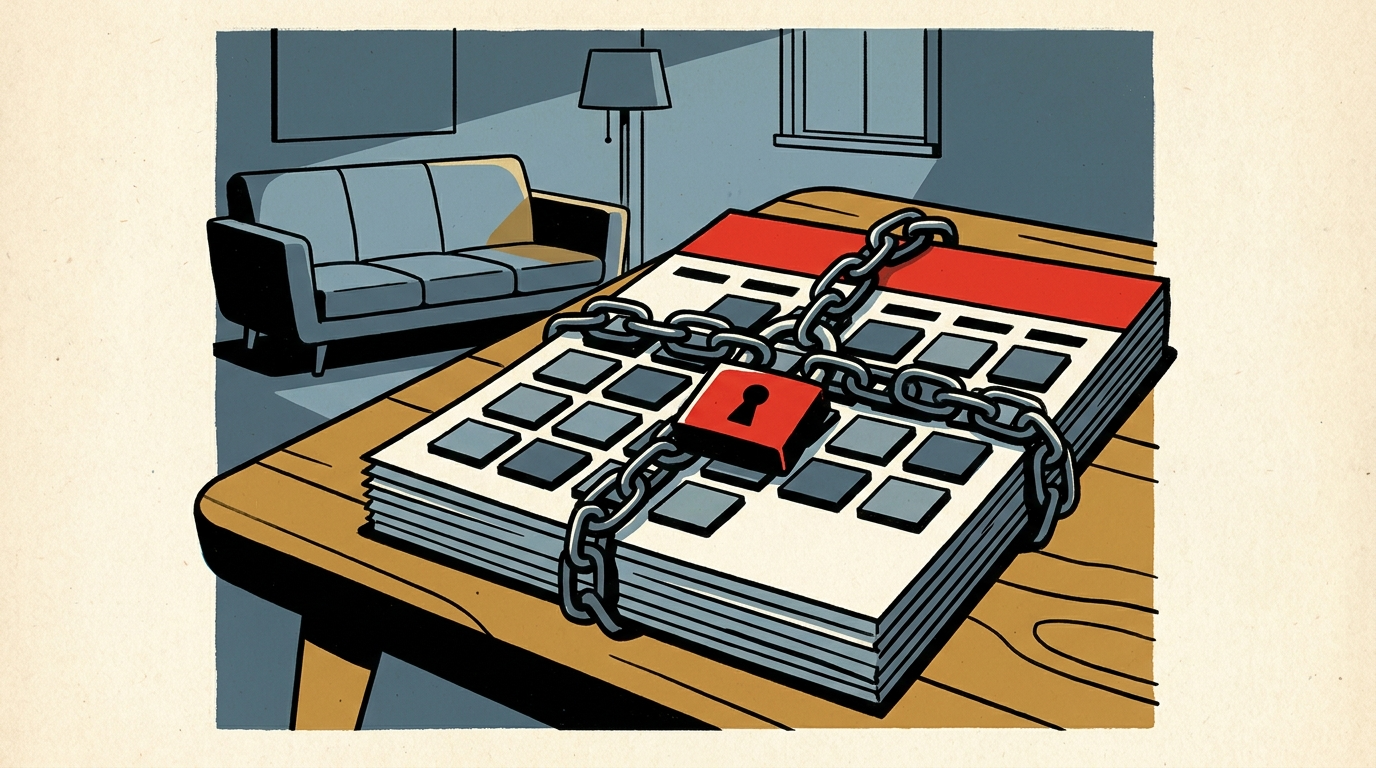
The 30-Night Minimum: A Stealth Ban Erasing Your STR Business
Local governments are using minimum-stay laws to quietly dismantle the nightly short-term rental market, forcing hosts into a complex, often unprofitable mid-term pivot. Don't be fooled by the PR.
They don't call it a ban. They call it a compromise. They call it a regulation. They call it a path to "responsible" tourism. But when the city council or county commission or planning board finally hammers down that gavel, and the news rolls in about a new 30-night minimum stay requirement, every short-term rental host in town knows exactly what just happened. The lights went out. Not with a bang, but with a whisper, and the sound of tens of thousands of dollars vanishing from balance sheets.
This isn't just about limiting parties or making neighborhoods quieter. This is a surgical strike on an entire industry model, executed with precision and a PR-friendly narrative. It's the sophisticated evolution of the anti-STR movement, a regulatory jujitsu move that uses the language of moderation to achieve the goals of prohibition. Don't be fooled by the polite framing. This is a ban. A quiet one, sure, but a ban nonetheless, designed to make your nightly rental business evaporate.
The game has changed. The rules of engagement have been rewritten, not for better coexistence, but for outright economic extermination of the traditional short-term rental operator. What looks like a slight adjustment to policy is, in reality, a fundamental redefinition of who can play in the market, and how they play it. For hosts who built their livelihoods on the flexibility and profitability of nightly stays, these laws aren't a nudge; they're a wrecking ball.
The Political Masterstroke of the Minimum Stay
Local governments have found their new favorite weapon in the war against short-term rentals, and it’s a genius play, politically speaking. They figured out that outright bans create massive backlash. They understood that confiscatory taxes or impossible permitting processes look heavy-handed, drawing cries of overreach and property rights violations from hosts, landlords, and even some tourism advocates. Those tactics lead to front-page headlines screaming about "banning Airbnb" – a public relations disaster for any politician trying to appear balanced. So, they pivoted. They embraced the 30-night minimum.
This isn't a ban, they say. It's just a "minimum stay." It's "aligning with existing zoning for residential properties." It's "preventing hotels from operating in neighborhoods." It sounds reasonable, doesn't it? It sounds like common sense, a measured approach to a complex issue. And that, dear hosts, is precisely why it’s so insidious. It allows politicians to appease the vocal anti-STR lobby – often well-organized residents concerned about noise, parking, and perceived erosion of neighborhood character – without triggering the same level of outrage from the broader public or the industry itself. The headlines are muted. The cries of "ban" seem less justifiable when a property "can still be rented," even if it’s for thirty nights or more.
The strategic brilliance lies in targeting the economic viability of the nightly rental model without explicitly outlawing the concept of a short-term stay. Local authorities know that a 30-night minimum effectively eliminates the vast majority of vacationers, weekend travelers, and business travelers who form the bedrock of the traditional STR market. These are the guests seeking a three-night getaway, a week-long family trip, or a five-day conference stay. They are not looking for a month. By pushing the minimum stay up, local authorities aren't just adjusting a rule; they are redefining the market itself, shifting it away from transient accommodation and towards something resembling a traditional long-term lease, albeit a furnished one.
This maneuver also serves to sidestep potential legal challenges that outright bans often face. Property rights advocates and industry groups have successfully challenged blanket prohibitions in courts, arguing discriminatory practices or unconstitutional takings. A minimum stay, however, can be framed as a zoning regulation, a standard land-use control that's much harder to fight in front of a judge. It’s a legislative sleight of hand: the hand is still taking your business, but it's doing it so smoothly you might not even realize it until your booking calendar goes silent. It’s a move designed to look fair, to sound reasonable, and to dismantle your business without a single protest sign reading "Don't Ban STRs." Because, technically, they didn't. They just made it impossible to survive.
The Host's Financial Nightmare: Nightly vs. Monthly
Let's cut to the chase: the 30-night minimum isn't just an inconvenience; it's an economic execution. The entire financial model of a successful short-term rental unit is predicated on high average daily rates (ADR) and a constant churn of guests, maximizing occupancy throughout the year, often with strategically higher pricing for peak seasons, weekends, and holidays. When that model is disrupted by a mandatory monthly minimum, the numbers simply stop adding up.
The typical nightly rental thrives on high ADR, often $200-$400 depending on location and property type, and robust occupancy, typically 60-80% annually. This model covers substantial fixed costs like mortgages, property taxes, insurance, and utilities, plus the high variable expenses of frequent turnovers: professional cleaning, consumable resupply, and linen services. Cleaning fees are particularly crucial, often absorbing the direct cost of preparing the unit for the next guest and boosting overall profitability, especially for shorter stays. Platform fees, typically 3-5% for hosts or higher for guests, are factored into this dynamic pricing.
Now, impose a 30-night minimum. Suddenly, your potential guest pool shrinks dramatically. The vast majority of travelers do not need accommodation for an entire month. The few who do will expect a significantly lower effective daily rate. A property that commanded $250 a night for a three-day stay will not get $7,500 for a 30-day stay. No chance. Mid-term and long-term renters expect substantial discounts for extended bookings, often 30-50% off the nightly rate, sometimes even more. While your per-night operating costs decrease with longer stays – less frequent cleaning, reduced wear and tear from constant guest turnover, fewer booking inquiries – your revenue drops even faster. Your ADR plunges.
What was $250 a night might become $100-$150 on a monthly booking. If your property needs to generate $4,000 a month to cover its fixed costs, you suddenly need a continuous string of monthly bookings at that lower rate. The pool of renters willing to pay a premium for a fully furnished, professionally managed space for 30+ days is much, much smaller than the pool of weekenders. Your cleaning fee, once a critical part of your income stream, becomes a one-time charge spread over 30 nights, making its per-night impact negligible. Platform commissions still eat into that lower monthly revenue, albeit potentially at a slightly lower effective percentage for longer stays.
The metric that truly matters here is RevPAR (Revenue Per Available Rental). For a nightly STR, RevPAR is driven by high ADR and high occupancy. For a monthly rental, RevPAR is lower, but ideally more stable, relying on consistent bookings at a reduced rate. The problem arises when you are forced into the monthly model but are still configured and priced for nightly. Your RevPAR will collapse because you can't achieve the necessary occupancy at the new, lower ADR. This isn't just a slight adjustment to your spreadsheet. It’s an entirely different business model with a distinct risk profile and income ceiling. The hosts who thrive in the nightly market are often unprepared for the seismic shift required to make a mid-term rental profitable. They bought their property, furnished it, and marketed it with nightly stays in mind, chasing maximum yield on a per-day basis. The 30-night minimum pulls the rug out from under that entire strategy, leaving them with an asset that is suddenly generating a fraction of its former income, or worse, sitting empty. It forces a complete financial re-evaluation, and for many, it means their initial investment thesis for the property is entirely invalid.
The "Mid-Term" Mirage: A Forced Pivot
So, the nightly market is gone. The city says you can still rent it, just for 30 days or more. "Pivot to mid-term," they chirp, as if flipping a switch. But the mid-term rental market isn't just the long-term rental market with nicer furniture. It's a distinct beast, with its own unique ecosystem of guests, pricing, and operational demands. Understanding this difference is crucial for survival, or you'll quickly find yourself in an empty unit, bleeding cash.
Mid-term renters are not typical vacationers. They are often traveling professionals: nurses on contract, corporate relocations, consultants on extended assignments, film crews, construction workers, traveling academics, or people displaced by insurance events who need temporary housing. They might be digital nomads seeking a base for a few months. This demographic is looking for something fundamentally different from a tourist. They want a home, not a hotel experience.
This shift means rethinking everything from your amenities to your marketing strategy. Your carefully curated decor might still be appealing, but now the emphasis is on functionality and comfort for an extended stay. Is there a proper desk and ergonomic chair for working remotely? Is the kitchen fully stocked, not just with basic pots and pans, but with spices, coffee makers, and ample storage? Do you have robust, reliable internet for video calls? Adequate closet space? Laundry facilities, either in-unit or accessible? These become non-negotiables, not just nice-to-haves. Your "starter pack" of coffee pods and mini shampoos won't cut it for a month-long guest.
Pricing is another minefield. Mid-term renters expect significant discounts compared to nightly rates. They are often comparing your furnished unit to unfurnished apartments, meaning you need to factor in the premium your furnishings and utilities (which you will almost certainly include) command. This requires a deep understanding of the local long-term rental market, not just the nightly STR comps. What’s the average rent for a similar unfurnished apartment? What’s the going rate for furnished corporate housing in the area? Your pricing needs to be competitive with both. Overprice, and you’ll sit vacant. Underprice, and you’ll burn through your margins.
Then there’s the marketing challenge. Airbnb and Vrbo still have sections for longer stays, but they are often optimized for vacationers, not necessarily the specific niche of mid-term professionals. You’ll need to explore specialized platforms like Furnished Finder, Corporate Housing by Owner (CHBO), or even traditional real estate listing sites that cater to furnished apartments. Building direct relationships with local hospitals for traveling nurse contracts, corporate relocation firms, or film production companies can become a vital part of your outreach. This is a far cry from simply optimizing your listing description and relying on the platforms' algorithms to send bookings. It requires active, targeted sales and networking.
The "mid-term" pivot is not a gentle sidestep. It’s a complete re-engineering of your business. It means understanding a new customer, equipping your property differently, and marketing through entirely new channels. It often entails more legal paperwork, too, moving closer to traditional landlord-tenant agreements. It is a fundamental transformation, not a minor adjustment, and it often comes with a steep learning curve and a significant investment of time and capital to retool your operation. Many hosts, especially those with only one or two properties, simply don't have the resources or the desire to make such a profound shift, which is exactly what city councils are betting on.
The 30-night minimum isn't just an inconvenience; it's an economic execution.
Operational Overhaul: Beyond Cleaning and Check-ins
Shifting to a 30-night minimum model doesn't just change your guest profile and pricing; it demands a complete overhaul of your operational playbook. The rapid turnover, high-touch hospitality, and automated check-ins that define the nightly STR are replaced by a different set of priorities, risks, and responsibilities. This is where many hosts, accustomed to the platform-centric ease of STR management, often find themselves blindsided.
Cleaning for a nightly rental is frequent, often daily or every few days, focused on quick turns: sanitizing, refreshing linens, resupplying consumables. With a 30-day stay, initial cleaning is still paramount, but ongoing cleaning becomes the guest's responsibility, or an optional, paid service. Your cleaning crew will need retraining or contract renegotiation for fewer, but deeper, cleans between longer bookings. Wear and tear shifts from constant ingress/egress to the prolonged presence of a single individual or family. This means anticipating different maintenance needs – more attention to appliances, plumbing, and general wear on furniture, rather than just quick fixes for broken items from party-goers.
Guest vetting is perhaps the most significant operational change. For nightly stays, platform reviews, ID verification, and payment processing provide a baseline of trust. For a month-long guest, you are essentially becoming a landlord. This means conducting thorough background checks, credit checks, and employment verification. You'll need a robust application process, much like a traditional long-term rental. The risks are higher: a bad monthly tenant can cause far more damage, be harder to remove, and cost significantly more in lost revenue than a problematic two-night guest. This moves beyond merely "setting house rules" to drafting legitimate lease agreements, understanding landlord-tenant law, and potentially navigating eviction processes. This is a legal minefield for the unprepared.
Insurance is another critical area. Your standard STR insurance policy, which often covers liability and property damage specifically for transient guests, may not be adequate or even valid for a 30-day or longer stay. You'll likely need to transition to a landlord policy, which has different coverage limits, exclusions, and premiums. Failure to do so could leave you catastrophically exposed in the event of a major incident, like a fire or significant tenant-caused damage. Check with your carrier; do not assume your existing policy will cover the new reality.
Utilities, often bundled and included in mid-term rentals, introduce new variables. You need to budget accurately for electricity, water, gas, and internet, as these costs now directly impact your bottom line without the ability to pass them on through a higher nightly rate or separate utility charges. Monitoring usage and setting reasonable caps might become necessary, requiring smart home tech or manual oversight.
Finally, consider local regulations beyond just the minimum stay. Many localities have specific landlord-tenant laws that kick in after a certain period, often 30 days or 90 days, granting specific rights to occupants that are far beyond those of a transient guest. These could include protections against "no-cause" evictions, requirements for specific notice periods, and rules regarding security deposit handling. Navigating this new legal landscape requires due diligence and potentially legal counsel, a far cry from the relatively simple terms of service agreements with Airbnb or Vrbo. The operational demands of mid-term rentals transform a hospitality business into a quasi-landlording venture, with all the associated complexities and risks.
The Illusion of Compliance: Why 30-Nights Isn't "Legalizing"
Local governments love to frame the 30-night minimum as a rational, balanced regulatory solution. It’s presented as a way to "legalize" short-term rentals while simultaneously addressing community concerns. They tell you it's about finding a middle ground, ensuring "responsible" tourism, or preventing residential neighborhoods from turning into de facto hotel districts. But let's be crystal clear: this isn't legalization for the short-term rental industry as we know it. It's a strategic demilitarized zone that only the most robust, well-capitalized players can hope to cross.
The rhetoric centers on "housing affordability" and "preserving neighborhood character." The argument goes that short-term rentals remove housing stock from the long-term market, driving up rents for residents. By imposing a 30-night minimum, the city implicitly suggests that these properties will now be available for local workers and families. This narrative resonates with voters and provides political cover. It sounds like they are protecting residents, not just shutting down small businesses.
But the reality is far more complex and often contradictory. A fully furnished, premium mid-term rental, even at a discounted monthly rate, is rarely a direct substitute for an unfurnished, budget-friendly long-term apartment. The target demographics are different. A travel nurse or corporate executive seeking temporary furnished housing is not typically the same individual struggling to find an affordable permanent residence. While some properties might eventually convert to unfurnished long-term rentals, the primary effect for many is simply increased vacancy, or a shift to a niche market that still isn't serving the "housing crisis" in the way implied.
Furthermore, the "neighborhood character" argument, while often genuinely felt by residents, is equally complex. Concerns about noise, parking, and transient populations are valid in some cases, particularly with poorly managed STRs or party houses. However, a blanket 30-night minimum punishes all hosts, including the responsible ones who actively mitigate these issues. It conflates all short-term rentals with the worst actors. More importantly, a guest staying for 30 nights or more is still a "transient" in the eyes of many long-term residents. They aren't integrating into the community in the same way a permanent resident would. The underlying tension about who belongs in a residential neighborhood often remains, even if the frequency of new faces decreases.
The core deception is that this policy offers a "solution" that allows STRs to continue. It doesn't. It redefines what an STR is to such an extent that it’s unrecognizable to most existing operators. It eliminates the very essence of the short-term market – the ability to rent for a few nights or a week. It’s a subtle form of regulatory capture, where the loud voices of opposition dictate policy, and the economic realities of a legitimate industry are simply ignored or dismissed as "unintended consequences." It's a political win for local governments because it appears they've "done something" without incurring the full wrath of an outright ban, but it's a catastrophic loss for the vast majority of short-term rental hosts. They aren't legalizing your business; they are legislating it out of existence under the guise of compromise.
Unintended Consequences and Market Distortions
Every major regulatory shift, especially one as sweeping as mandating a 30-night minimum, creates a ripple effect far beyond its immediate target. While local governments may pat themselves on the back for "solving" their STR problem, these policies inevitably spawn a host of unintended consequences and distort market dynamics in ways that often harm the very communities they purport to protect.
First, and most obviously, there's the blow to local tourism economies. Short-term rentals are not just places to sleep; they are integral components of the tourism ecosystem. They bring visitors who spend money at local restaurants, shops, attractions, and service providers. A family on a five-day vacation might frequent a different set of businesses than a corporate executive on a month-long assignment. When the nightly STR market is erased, so too is a significant portion of that tourist spending. Local businesses, already struggling in many areas, feel the pinch as visitor numbers drop or shift to traditional hotels that may be concentrated in specific commercial zones, rather than distributed throughout neighborhoods. This can lead to job losses in hospitality, retail, and food service sectors that rely on visitor spending.
Then there's the impact on consumer choice and unique visitor experiences. One of the greatest appeals of STRs is the diversity of accommodation they offer: a charming historic cottage, a spacious family home, a quirky apartment in a vibrant neighborhood. These options often provide a more authentic and immersive travel experience than a generic hotel room. When the 30-night minimum takes hold, many of these unique properties either vanish from the market or convert to less distinctive long-term rentals. The result is a homogenization of accommodation options, reducing the attractiveness of a destination for a certain type of traveler and eroding the very charm that drew people there in the first place.
Consider also the potential impact on property values. In areas where STR income was a significant factor in purchasing decisions, especially for second homes or investment properties, the sudden loss of that income stream can devalue assets. If a property can no longer generate the expected revenue, its market value may decline, affecting homeowners, property managers, and local tax rolls. While some might argue this cools an overheated housing market, it can also create financial distress for property owners who relied on that income, potentially leading to forced sales and broader economic instability.
Perhaps most concerning is the inevitable rise of the black market. When legal avenues are closed off or made economically unviable, some hosts will simply go underground. They will operate unlicensed, unpermitted short-term rentals, often using discreet advertising or word-of-mouth. These illegal operations pose a greater risk to guests, as they are likely not subject to safety inspections, insurance requirements, or tax collection. They also undermine the very regulatory goals the city sought to achieve, creating a less transparent, less safe, and untaxed shadow economy. This makes it harder for local authorities to monitor and manage the rental market, fostering a sense of mistrust and creating an enforcement nightmare.
Finally, the policy can foster a sense of unfairness and resentment among property owners who feel targeted and economically disadvantaged by arbitrary rules. This can erode civic engagement and trust in local government. What started as an attempt to "balance" interests often ends up polarizing the community further, creating winners (the hotel industry, perhaps some long-term renters) and clear losers (STR hosts, local businesses, and often, the very tourists who fuel the local economy). The long-term consequences are rarely as simple or as positive as the proponents of the minimum stay suggest.
The Counter-Argument and the Host's Dilemma
It’s crucial, even as we rail against these restrictive policies, to acknowledge the genuine concerns that often fuel the anti-STR movement. No serious columnist can ignore the other side, even if we fundamentally disagree with the proposed solutions. Residents in some communities have legitimate gripes: noise disturbances, parking congestion, increased trash, and a feeling that their neighborhood is losing its residential character. The argument that STRs contribute to housing affordability crises, while often overstated for furnished units, is a powerful political narrative that resonates with many.
Advocates for stricter regulations, including minimum stay requirements, often point to specific instances of problematic STRs. They highlight properties that become de facto party houses, disrupting the peace and quiet of residential streets. They cite data, sometimes selectively, showing a reduction in long-term rental availability in popular tourist areas. They argue that property owners operating STRs are essentially running commercial enterprises in residential zones, bypassing the regulations and taxes that apply to hotels. From their perspective, a 30-night minimum isn't an overreach; it's a justifiable measure to protect quality of life and housing stability for permanent residents.
However, the fundamental dilemma for the host remains. What do you do when the rules change overnight, pulling the rug out from under your business model? Your options are stark, and none are easy.
- Option 1: Pivot to Mid-Term. This means a complete operational and financial overhaul. It requires significant investment in new marketing channels, adjusting amenities, and developing robust guest vetting procedures. It often means accepting lower overall revenue and a much smaller pool of potential guests. This is a viable path for some, especially those with multiple properties or a strong aptitude for traditional property management, but it's a steep climb for the casual host.
- Option 2: Convert to Long-Term Rental. This is the simplest option from a regulatory perspective: become a traditional landlord. But it often means sacrificing the higher revenue potential of even mid-term rentals, as unfurnished long-term leases typically command lower rates. It also means stripping out all your STR furnishings, finding a long-term tenant, and entering a different legal and operational framework. For hosts who bought properties specifically for the STR income, this could mean selling at a loss or significantly reducing their cash flow.
- Option 3: Sell the Property. For many, especially those with mortgages predicated on STR income, selling becomes the only financially prudent choice. This can flood the market with properties, potentially depressing real estate values in the short term. It also represents a personal loss of an investment and a business for the host. The irony here is that these sales might convert properties back to owner-occupied homes or long-term rentals, achieving one of the stated goals of the regulation, but at the cost of forcing small business owners out.
- Option 4: Operate Illegally. This is a dangerous path, fraught with legal and financial peril. Hosts who choose this route face heavy fines, potential lawsuits, and the constant threat of being shut down. It undermines the entire regulatory framework and often leads to the exact "bad neighbor" behavior that fueled the initial crackdown. STR NEWS strongly advises against this. The risks far outweigh any potential short-term gains.
The host's dilemma is one of forced adaptation in the face of policies designed to make their current business unsustainable. It's a question of whether you have the resources, the temperament, and the market conditions to reinvent your operation. For many, especially smaller, independent hosts, the answer will be a painful no, forcing them out of an industry they helped build.
Surviving the Shift: Strategies for the Forced Pivot
If your market has been hit with a 30-night minimum, simply hoping it goes away or ignoring it is a recipe for financial ruin. The time for denial is over. The time for strategic action is now. Surviving this regulatory landmine requires a clear-eyed assessment of your situation and a willingness to fundamentally transform your business.
1. Deep Dive into Mid-Term Market Research: Don't guess. Research. Who needs 30+ day rentals in your specific area? Are there hospitals for traveling nurses? Universities for visiting faculty or students? Major corporations with relocation needs? Film studios? Insurance companies that place displaced residents? Look at job boards for contract positions. Analyze local housing data for furnished apartment availability and pricing. Platforms like Furnished Finder offer market insights. Understand the seasonality of this new demand; it might be completely different from your previous STR seasonality.
2. Rethink Your Amenities for Longer Stays: Your property needs to be a home, not a hotel. This means more than just stylish decor. Invest in a proper workspace: desk, ergonomic chair, reliable high-speed internet. Upgrade kitchen essentials: full sets of dishes, quality cookware, baking sheets, storage containers, a good coffee maker, blender. Ensure ample storage space in closets and dressers. Laundry facilities, either in-unit or easily accessible, are crucial. Consider small appliances like a vacuum cleaner or iron. Comfort items like extra blankets, good lighting, and a well-stocked entertainment system become more important for long-term comfort.
3. Diversify Your Marketing Channels: Relying solely on Airbnb or Vrbo for mid-term bookings is a mistake. While they have options for longer stays, they aren't always the primary source for the professional mid-term renter.
- Specialized Platforms: Furnished Finder is a must for travel nurses. Corporate Housing by Owner (CHBO) and similar sites target corporate clients.
- Direct Outreach: Build relationships with local hospitals, universities, film production companies, HR departments of large employers, and relocation specialists. This takes effort but can yield high-quality, recurring bookings.
- Social Media and Local Groups: Use Facebook groups for traveling professionals or local housing groups.
- Your Own Website: If you have multiple properties, consider a direct booking website to capture leads and avoid platform fees.
- Traditional Real Estate Agents: Some agents specialize in furnished rentals or corporate housing.
4. Implement Robust Guest Vetting and Legal Agreements: This is non-negotiable. For 30+ day stays, you need to operate more like a traditional landlord.
- Application Process: Require a formal application.
- Background Checks: Criminal and eviction history checks are paramount.
- Credit Checks: Assess financial reliability.
- Employment Verification: Confirm stable income.
- Lease Agreements: Draft a comprehensive lease that clearly outlines terms, responsibilities, rules, and includes clauses for damage, early termination, and specific local landlord-tenant laws. Consult legal counsel to ensure compliance.
5. Adjust Your Financial Model: Re-do your projections with realistic mid-term ADRs and occupancy rates. Understand that your RevPAR will likely be lower, but ideally more stable. Factor in included utilities, deeper cleaning costs between stays, and potentially higher insurance premiums for landlord policies. Budget for longer vacancies between bookings. Your profitability will come from stability and reduced turnover costs, not high nightly rates.
6. Re-evaluate Your Insurance: Contact your insurance provider immediately. Ensure your policy covers the risks associated with 30-day+ tenants. A standard STR policy is almost certainly inadequate. You will likely need a specific landlord policy or an equivalent that acknowledges extended stays.
7. Prepare for Property Management or Self-Management: If you previously relied on a property manager specializing in nightly STRs, their services may need to adapt, or you might need a new manager specializing in mid-term or long-term furnished rentals. If self-managing, be prepared for the increased administrative and legal burden.
This pivot is not for the faint of heart. It demands new skills, new tools, and a new mindset. But for those willing to embrace the change and strategically retool their operations, there is a path forward. It’s a different path, to be sure, one that often yields lower overall revenue than the peak STR years, but it can be a path to sustained profitability in a dramatically altered landscape. The alternative is to watch your investment become a liability.
The bottom line for hosts
The message from STR NEWS is stark: the 30-night minimum isn't a minor regulatory hurdle; it's a fundamental redefinition of your business. It's a political maneuver designed to eliminate the nightly short-term rental market without the bad press of an outright ban. For hosts, this means your previous operational model is now largely obsolete.
Your survival hinges on immediate, decisive action. First, understand your local market's true mid-term demand. Who is seeking furnished housing for 30 days or more, and what are they willing to pay? Second, be prepared for a substantial operational pivot. This means re-equipping your property for longer stays, dramatically changing your marketing approach to target specific mid-term niches, and implementing robust tenant screening processes that mirror traditional landlord-tenant relationships. You must also adjust your financial projections for lower ADRs and ensure your insurance coverage is adequate for extended stays.
For many single-property hosts, the cost and complexity of this pivot will be prohibitive. For them, the painful reality may be that selling the property is the most financially responsible decision. For others, particularly those with multiple properties or a strong appetite for traditional property management, the mid-term market offers a new, albeit less lucrative, opportunity. The era of easy, high-yield nightly STRs in regulated markets is ending. The choice is no longer about maximizing nightly revenue; it's about whether you can successfully transform your business to operate in a completely new environment, or if it's time to cash out. Don't be complacent. The future of your investment depends on how quickly and effectively you adapt to this stealth ban.
About this piece
An original expert-analysis column by the STR NEWS desk. Figures are illustrative of how the market behaves; confirm specifics for your own market before you act.




Read the desk every morning.
The day's crackdowns and platform moves, the money, the design and the stays going viral, plus the desk's verdict, in one short email every morning.