
Expedia Unified Loyalty Program Devastates Vrbo Visibility
By forcing independent vacation rentals into the same reward ecosystem as corporate hotel chains, Expedia Group has tilted the playing field against hosts.
The promise was corporate synergy, a marketing masterstroke that would turn business travelers into beach house bookers. When Expedia Group launched its unified One Key loyalty program, the press releases painted a picture of a friction-free ecosystem where points flowed like water between flights, rental cars, hotels, and vacation homes. But on the ground, where independent hosts manage real properties with real capital, that beautiful ecosystem is functioning more like a drainage pipe, siphoning high-intent, high-value vacation rental traffic directly into the pockets of corporate hotel chains.
For years, Vrbo stood as the premier alternative to Airbnb, a platform built specifically for whole-home vacation rentals. It was a destination for families planning multi-day trips, travelers who wanted kitchens and yards rather than lobbies and kitchenettes. By forcing Vrbo into a single, unified rewards engine alongside Expedia and Hotels.com, the parent company has fundamentally altered consumer search behavior. Instead of evaluating vacation rentals on their own unique merits, travelers are now being guided through a search funnel that treats a five-bedroom mountain home and a standard double-queen room at a mid-scale hotel as interchangeable commodities. In this flattened marketplace, the independent host is losing.
This is not a minor algorithmic hiccup or a temporary seasonal dip. It is a structural redesign of how travel is sold online. By analyzing the mechanics of the loyalty program, the realities of search engine placement, and the stark differences in inventory economics between hotels and short-term rentals, we can see how the homogenization of Expedia Group brands has tilted the playing field. The very mechanism designed to retain customers is quietly pushing them away from Vrbo and back into the arms of traditional lodging providers.
How it actually works
To understand why this integration has disrupted Vrbo visibility, one must look at the plumbing of the One Key program. Launched in the United States in July 2023, the program unified Expedia, Hotels.com, and Vrbo under a single rewards tier structure: Blue, Silver, Gold, and Platinum. The currency of this realm is OneKeyCash, which members earn on eligible bookings. A traveler earns a standard rate of two percent in OneKeyCash for every dollar spent on hotels, vacation rentals, activities, and car rentals. They can then redeem that cash on any of those same products across all three major platforms.
On paper, this sounds like a win for hosts. A business traveler who spends thousands of dollars on corporate hotels via Expedia or Hotels.com can now redeem their accumulated OneKeyCash to book a family vacation on Vrbo. In theory, this unlocks a massive pool of corporate travel spend that was previously locked out of the vacation rental market. The platform marketing campaigns leaned heavily on this narrative, presenting the program as a powerful customer acquisition tool for hosts who list on Vrbo.
In practice, the conversion funnel works in reverse. Vacation rentals are, by their very nature, high-basket-value, low-frequency purchases. A family booking a coastal home for a week might spend three thousand dollars, earning sixty dollars in OneKeyCash. That sixty dollars is rarely saved up for another massive vacation rental booking a year later. Instead, it is highly likely to be burned on a quick, spontaneous hotel stay or a car rental booked through Expedia for a weekend getaway. The value generated by the high-ticket vacation rental is captured by the high-frequency hotel ecosystem, while the vacation rental host pays the processing and platform fees associated with that original high-ticket booking.
The conversion rate trap
The core engine of any online travel agency is its search result page. Every square millimeter of screen space on a mobile app or desktop browser is optimized to maximize gross bookings value per impression. This optimization relies heavily on conversion rate, the percentage of users who search for a destination and actually complete a booking. Herein lies the fundamental structural disadvantage for vacation rentals when placed in a unified search ecosystem.
Consider a standard hotel with two hundred identical rooms. If a traveler searches for a stay in a specific city, that hotel can sell those two hundred rooms over and over again. The listing never goes dark because of a single booking; it remains active, converting traffic hour after hour. If a guest cancels, the room goes back into the inventory pool instantly. The hotel has a high, predictable conversion rate because its inventory is dense and standardized. The search algorithm learns that displaying this hotel leads to high transaction volumes and consistent platform fee generation.
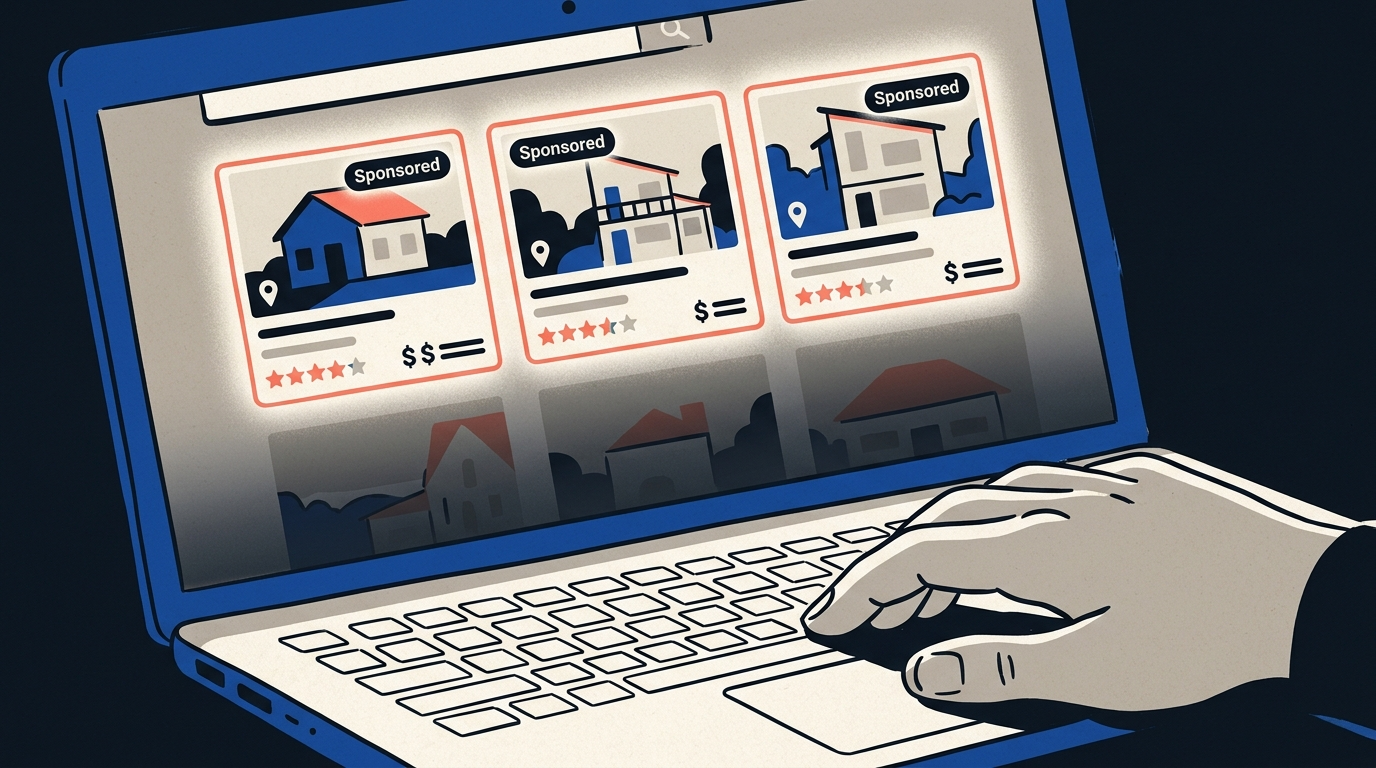
Now consider an independent vacation rental. It is a single, unique property. Once a traveler books a specific week, that property is gone from the search results for those dates. It cannot convert another searcher for that time frame. Furthermore, the decision-making process for booking a whole home is much longer and more complex than booking a hotel room. Families discuss amenities, check bed configurations, read reviews, and coordinate schedules. The conversion rate per search impression for a single vacation rental is orders of magnitude lower than that of a standardized hotel. When an algorithm is designed to maximize immediate booking conversions across a unified platform, the math inevitably pushes hotel listings to the top of the pile, burying individual vacation homes under a mountain of corporate suites.
The plumbing of One Key
The migration to One Key was accompanied by a massive, multi-year back-end technology consolidation. Expedia Group spent years moving its various brands off their legacy independent software architectures and onto a single, centralized platform. This migration was intended to streamline product development, reduce engineering overhead, and allow for rapid deployment of new features across Expedia, Hotels.com, and Vrbo simultaneously.
However, this consolidation meant that Vrbo lost its bespoke search logic. Historically, Vrbo search algorithms were built specifically for the nuances of vacation home shopping. They accounted for things like length of stay, lead times, group sizes, and regional seasonal patterns in a way that hotel-centric search engines did not. The old Vrbo interface encouraged exploration, highlighting properties that matched the specific aesthetic and functional needs of a family gathering.
Under the unified tech stack, the search logic has been standardized. The grid layouts, the filter options, and the sorting algorithms on Vrbo now look and act remarkably like those on Expedia. The interface now prioritizes immediate transactional efficiency over discovery. For a host, this means their listing is subjected to the same rigid search metrics used to rank airport hotels. If a host does not respond to inquiries within minutes, or if they have a slightly higher cancellation rate due to a local utility outage, the unified algorithm punishes their listing visibility across the entire network, regardless of the property's historical performance or unique appeal.
The asymmetry of earning and burning
The financial incentives of the One Key program are heavily weighted in favor of the platform and its largest corporate partners. When a user books a hotel on Expedia or Hotels.com, the platform often captures a commission margin ranging from fifteen to twenty-five percent, particularly with independent or mid-tier hotel brands. Because of these high margins, the platform can easily absorb the cost of loyalty rewards and promotional discounts while still turning a substantial profit on the transaction.
Vacation rentals operate on much tighter platform margins. Vrbo hosts typically pay a host fee of three to five percent, while guests pay a booking fee that generally ranges from six to fifteen percent. Because the host fee is relatively low compared to hotel commissions, Expedia Group has less margin play on a Vrbo booking. To fund the One Key loyalty payouts, the platform must find ways to extract more value from the transaction, either by encouraging hosts to offer exclusive loyalty discounts or by shifting traffic toward higher-margin hotel inventory.
This has led to the introduction of One Key member prices. To maintain search visibility on the unified platforms, hosts are increasingly pressured to opt into loyalty discount programs, offering ten percent or more off their nightly rates to Silver, Gold, and Platinum members. For an independent host managing a single property, a ten percent discount directly eats into their net operating income. Unlike a hundred-room hotel that can dynamic-price its way out of a margin squeeze by raising rates on its remaining inventory, a single-property host has no such luxury. They are forced to choose between sacrificing their search ranking or sacrificing their margin.
Eroding ADR and the margin squeeze
The financial pressure on short-term rental operators has reached a boiling point. Over the past several years, the cost of operating a vacation rental has risen across every line item. Cleaning costs have climbed as professional services adjust to inflation. Local municipalities have introduced strict licensing requirements, with annual permit fees rising in many tourist destinations. Lodging taxes, which hosts must collect and remit, often range from ten to fifteen percent, adding a significant surcharge to the guest's total bill. When you add the cost of specialized commercial insurance, property maintenance, and rising interest rates for those who leveraged properties, the break-even point for a typical host has shifted dramatically upward.
To survive in this environment, hosts must defend their Average Daily Rate (ADR) and maintain a healthy Revenue Per Available Room (RevPAR). However, the unified loyalty system works directly against ADR defense. Because the search engine highlights listings that participate in One Key promotions, hosts who maintain their standard pricing are pushed down the search results. The resulting drop in occupancy forces many hosts into a defensive pricing spiral, lowering their base rates just to secure enough bookings to cover their fixed costs.
Furthermore, the presentation of prices on the unified search page obscures the true value of a vacation rental. When a guest searches for lodging, they see a nightly rate for a vacation home side-by-side with a nightly rate for a hotel room. But the vacation rental rate often includes a one-time cleaning fee and platform service fees that are distributed across the stay, making the initial price look artificially high compared to a hotel that hides its resort fees and parking charges until the final checkout screen. By displaying these options under a single loyalty banner, the platform invites direct, unfavorable price comparisons that do not account for the additional space, privacy, and amenities of a whole home.
The death of the independent travel brand
Historically, Vrbo was supported by a loyal cohort of travelers who actively preferred vacation rentals over hotels. These users did not want a standardized corporate lobby; they wanted a unique base camp for their adventures. They visited Vrbo directly, bypassing the general online travel agencies entirely. This direct brand affinity was the most valuable asset that Vrbo possessed, protecting its hosts from the aggressive customer acquisition wars being fought on Google Search.
By folding Vrbo into the broader Expedia Group identity, the company has diluted this brand affinity. The marketing message is no longer about the unique joy of renting a private beach cottage; it is about the convenience of earning points that can be spent on a flight to Chicago or a rental car in Phoenix. This shifts the consumer mindset from brand loyalty to transaction loyalty. The traveler is no longer a Vrbo customer; they are an Expedia Group customer.
This dilution has opened the door wide for Airbnb to solidify its position as the default verb for short-term rentals. While Expedia Group has spent its energy integrating back-end architectures and aligning loyalty tiers, Airbnb has focused on building a distinct, culturally relevant brand that celebrates the unique nature of its listings. AirDNA data has consistently shown that direct traffic and brand search volume for Airbnb far outpace those of its competitors. By trying to beat hotels at their own game using hotel-style loyalty mechanics, Expedia has compromised Vrbo's unique positioning, leaving its hosts to pay the price in the form of declining direct search volume.
The clash of operational realities
The operational realities of managing a vacation rental are completely different from those of running a hotel, yet the unified platform treats them as identical. A hotel has a front desk staffed twenty-four hours a day, a professional housekeeping department on site, and a maintenance team ready to fix a running toilet at 2:00 AM. If a room has a plumbing issue, the guest is simply moved down the hall to an identical room. The system handles these micro-disruptions without affecting the guest's overall experience or the hotel's platform standing.
For an independent host, a maintenance emergency is a logistical crisis. There is no spare room down the hall. If a pipe bursts or an air conditioner fails in the middle of July, the host must coordinate with local tradespeople, communicate with the guest, and potentially cancel the reservation. Under the unified search algorithms that power Expedia Group, cancellations are treated as severe performance failures. The system does not care that the host acted responsibly by canceling a booking to avoid housing a family in a home without water; it simply registers a failed transaction and drops the listing's visibility score.
This lack of operational empathy in the algorithm is exacerbated by the expectations of loyalty members. A Platinum tier One Key member, accustomed to the standardized service and automatic upgrades of high-end hotel chains, often brings those same expectations to a private cabin in the woods. When they encounter the natural quirks of a vacation rental—such as spotty rural Wi-Fi, local wildlife, or the self-service requirement of taking out the trash—they are more likely to leave negative reviews. These reviews then feed back into the search algorithm, further suppressing the listing's visibility in a self-reinforcing downward spiral.
By trying to beat hotels at their own game using hotel-style loyalty mechanics, Expedia has compromised Vrbo's unique positioning, leaving its hosts to pay the price in the form of declining direct search volume.
What hosts should do now
Professional hosts and property managers cannot afford to sit idly by while their search visibility is eroded by platform-level consolidation. To maintain healthy occupancy rates and protect margins, operators must take active steps to reclaim control of their distribution strategy and reduce their reliance on any single online travel agency.
- Build a Direct Booking Engine: Establish a professional direct booking website using modern property management software. Offer past guests a permanent discount to book directly, bypassing the platform fees and loyalty-driven price cuts entirely.
- Implement Multi-Channel Distribution: Do not rely solely on Vrbo. Ensure listings are optimized on Airbnb, Booking.com, and regional niche listing sites to diversify lead generation and mitigate algorithm changes.
- Audit Loyalty Participation: Review the performance of any opted-in loyalty discount programs. Calculate whether the search lift generated by offering One Key member prices actually offsets the ten percent margin loss. If the math does not work, opt out.
- Optimize for High-Intent Keywords: Adjust listing titles and descriptions to target specific, long-tail search queries that hotels cannot match, such as private fenced yard, multi-family cabin, or steps to beach.
- Leverage Guest Email Marketing: Collect guest email addresses during the booking or check-in process, where legally permissible. Run targeted email campaigns ahead of peak booking seasons to secure repeat stays.
The short-term rental industry was built on the back of unique properties and independent operators who offered travelers an alternative to the sterile consistency of corporate lodging. As platforms consolidate and prioritize their high-margin hotel partners, the hosts who survive will be those who treat their listings not as passive digital products, but as independent hospitality brands capable of standing on their own feet.
Checked by the standards desk (Eleanor Quist): every specific in this story was traced to its source material before publication.
About this piece
An original expert-analysis column by the Stay Gazette desk. Figures are illustrative of how the market behaves; confirm specifics for your own market before you act.



Read the desk every morning.
The day's crackdowns and platform moves, the money, the design and the stays going viral, plus the desk's verdict, in one short email every morning.