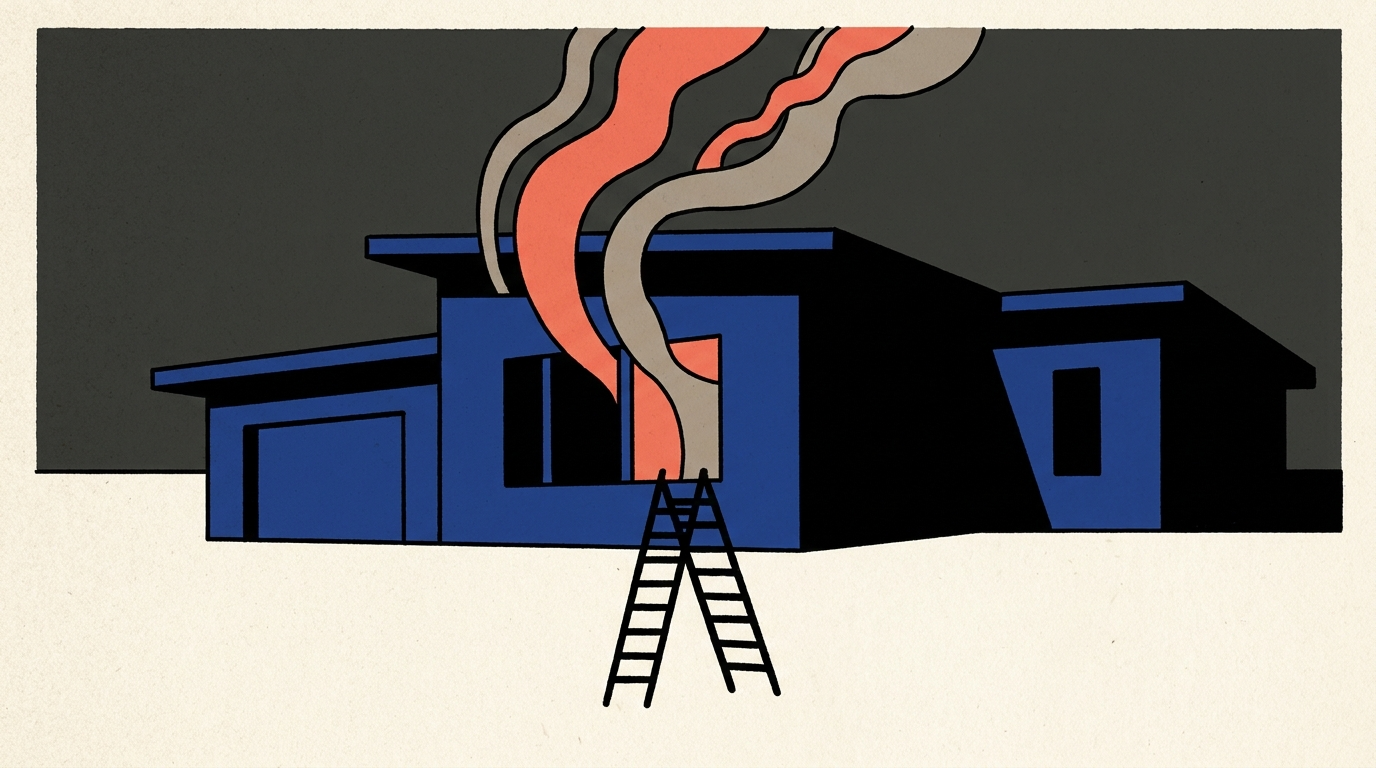
Vrbo Sued Over Fatal Dominican Republic Fire as Safety Shield Cracks
A devastating wrongful death lawsuit over a Caribbean rental fire that killed four family members threatens to dismantle the legal shields of the short-term rental giants.
The corporate firewall that has shielded global short-term rental platforms from the physical realities of their listings is showing deep, structural cracks. For two decades, online travel agencies have operated on a highly profitable double standard: they collect transaction fees as the merchant of record, yet claim they are merely digital bulletin boards when a guest dies. That era of plausible deniability is facing its most severe challenge yet in a courtroom.
A devastating new lawsuit filed against Expedia and its subsidiary Vrbo is stripping away the industry’s favorite legal defenses, exposing the systemic gap between what platforms promise in their marketing and what they actually verify on the ground. This is not a routine slip-and-fall case or an insurance squabble over a stained rug. This is a wrongful death action that strikes at the core of how the short-term rental business model functions, challenging the legality of renting properties that do not meet basic fire-safety requirements.
The implications of this litigation will ripple through every level of the industry, from corporate boardrooms to the group chats of local property managers. If the courts decide that a platform can be held liable for listing properties that fail to comply with its own stated safety standards, the entire economic foundation of the self-policed vacation rental market will shift. Hosts will no longer be able to simply check a box on a screen to satisfy compliance; instead, they will face a new era of mandatory, verified, and expensive physical inspections.
What happened
According to a report by the Banning Record Gazette, a sweeping lawsuit has been filed against Expedia Group and its vacation rental platform, Vrbo, following a horrific house fire in the Dominican Republic. The fire claimed the lives of four members of a single family from Massachusetts who were staying at a property booked through the platform. The lawsuit alleges a systemic platform failure, asserting that Vrbo actively lists and rents thousands of properties that violate its own internal safety guidelines and public-facing fire-safety rules.
The legal complaint goes beyond targeting the individual property owner, pointing the finger directly at the platform’s architecture and business practices. The plaintiffs argue that Expedia and Vrbo create a false sense of security for travelers by promoting safety policies and guidelines that they do not actively enforce or verify. By processing payments, managing bookings, and taking a percentage of the transaction, the platforms are accused of acting as active participants in the rental transaction rather than passive listing services.
The Banning Record Gazette report highlights that the lawsuit seeks to hold the travel giants accountable for systemic negligence. The core of the legal argument is that the platform cannot have it both ways: it cannot advertise safety standards to attract consumers while simultaneously refusing to verify if those standards are actually met in the listings from which it profits. This case brings the terrifying reality of international rental safety into sharp focus, raising critical questions about the legal duties of online booking platforms when tragedy strikes abroad.
The Shield of Section 230 and Its Limits
To understand why this lawsuit is so significant, one must understand the historical legal shield that has protected online travel agencies for decades. In the United States, Section 230 of the Communications Decency Act of 1996 has been the ultimate get-out-of-jail-free card for internet platforms. Under Section 230, interactive computer services are generally not treated as the publisher or speaker of information provided by third-party users. For years, platforms like Vrbo and Airbnb have successfully argued that if a host lists a home with inaccurate information, or if a property is unsafe, the platform cannot be held liable because it did not create the listing content.
But this defense is beginning to fail when physical safety and transaction processing are involved. Courts are increasingly drawing a distinction between publishing content and facilitating a commercial transaction. When a platform acts as the merchant of record—collecting the guest’s credit card payment, holding the funds, deducting a service fee, and then distributing the remaining balance to the host—it is doing far more than just hosting a classified advertisement. It is acting as a broker, a distributor, and an active participant in a commercial chain.
The plaintiffs in the Dominican Republic fire lawsuit are targeting this exact vulnerability. They argue that the platform’s liability does not stem from merely hosting a digital ad, but from its active role in marketing, booking, and profiting from a property that did not meet basic fire-safety requirements. If the court agrees that Section 230 does not immunize a platform from liability for its own negligent business operations and systemic failure to enforce its own safety rules, the legal landscape for the entire short-term rental industry will be permanently altered. Other consumer protection lawsuits have attempted to chip away at Section 230, but a wrongful death case involving four fatalities represents a high-stakes battleground where judges may be far less sympathetic to corporate claims of digital immunity.
Furthermore, the legal theory of negligent undertaking has gained traction in various jurisdictions. This principle holds that if a party voluntarily undertakes to perform a service, such as establishing safety guidelines and advertising them to consumers, it must perform that service with reasonable care. By telling consumers that it has safety rules and that listings must comply with certain standards, Vrbo may have legally assumed a duty of care to ensure those standards are actually met. The lawsuit argues that by failing to verify compliance with its own rules, the platform committed a systemic breach of this duty.
The Safety Gap Between Hotels and Short-Term Rentals
The hospitality industry has long been divided into two separate worlds when it comes to life safety. Traditional hotels operate under incredibly strict, heavily enforced local, national, and international building codes. Under standards like the National Fire Protection Association Life Safety Code, commercial hotels must feature hardwired smoke detection systems, automatic sprinkler systems, clearly marked emergency exit routes, fire-rated doors, and regular municipal inspections. These systems are expensive to install and maintain, but they are the reason why hotel fires rarely result in mass casualties in the modern era.
In contrast, the short-term rental sector has grown exponentially by utilizing residential properties that were never designed for commercial hospitality occupancy. A typical single-family home or condo is built to residential code, which is far less stringent than commercial hospitality standards. More importantly, residential properties are rarely subject to regular, proactive fire inspections. In many jurisdictions, once a home is built, the local fire marshal will never step foot inside it again unless a fire actually occurs.
This regulatory gap has been filled by a self-certification honor system. Platforms like Vrbo and Airbnb ask hosts to check boxes indicating whether they have smoke detectors, carbon monoxide alarms, fire extinguishers, and first aid kits. There is no requirement to upload proof, no mandatory inspection, and no verification process. The platform simply displays these icons on the listing page, transferring all responsibility to the host while presenting a clean, safe-looking interface to the guest. This lawsuit argues that this honor system is not just inadequate; it is a systemic failure that actively misleads consumers into believing that private residential homes booked through a multi-billion-dollar platform meet the same basic safety expectations as a commercial hotel room.
The physical differences in how residential and commercial buildings burn are stark. Modern residential construction relies heavily on engineered wood trusses, lightweight materials, and synthetic furnishings, all of which burn far faster and produce hotter, more toxic smoke than the heavy concrete, steel, and plaster used in traditional commercial hotels. This means that when a fire breaks out in a short-term rental, guests have only a fraction of the time to escape compared to a hotel stay. Without hardwired, interconnected alarms that sound throughout the entire property, or a secondary egress route that remains unblocked, a residential fire can turn deadly in a matter of minutes.
The Merchant of Record and the Fee Incentive
To truly analyze the incentives at play, we must look at the flow of money. In the early days of vacation rentals, websites like HomeAway (which Expedia acquired and later rebranded as Vrbo) operated on a subscription model. Hosts paid a flat annual fee to list their properties, and guests communicated directly with hosts to arrange payment, often mailing personal checks or using external payment services. Under that old model, the platform had a strong argument that it was merely an advertising venue.
That changed when the industry shifted to the transaction-commission model. Today, Vrbo and Expedia act as the merchant of record for the vast majority of their bookings. They control the financial flow. They hold the guest’s money, enforce cancellation policies, manage chargeback disputes, and take a significant cut of both the host’s revenue and the guest’s total payment. This transactional control is incredibly lucrative, but it comes with immense legal exposure.
By inserting themselves directly into the financial stream, platforms have transformed from digital matchmakers into commercial operators. The financial incentive is always to list more properties and generate more bookings, as more volume means more commission. Verifying fire safety at millions of listings worldwide would require a massive, costly infrastructure of physical inspectors or third-party auditors. This would slow down onboarding, reduce listing inventory, and directly eat into profit margins. The platforms have historically made a calculated business decision: trust the hosts to self-certify, accept the risk of occasional litigation, and rely on their terms of service to shift all liability onto the individual property owners.
The shift to the transaction-based model also means that the platforms are actively marketing specific properties to specific users using complex machine-learning algorithms. They are not just passively displaying a list of available homes; they are recommending properties, offering booking guarantees, and providing customer support. When a platform tells a traveler that a specific property is a recommended match and handles the entire payment cycle, it is hard to argue that the platform is not an active participant in the chain of commerce. The lawsuit seeks to exploit this commercial reality, arguing that the platforms’ profit-driven model directly disincentivizes them from conducting the very safety verifications they claim to value.
The Cross-Border Liability Nightmare
The tragedy in the Dominican Republic highlights a particularly dangerous aspect of the global short-term rental business: international jurisdiction. When a traveler from Massachusetts books a property in the Caribbean through a United States-based platform, there is a massive disconnect in expectations, building standards, and legal recourse. The traveler expects the property to comply with the basic safety standards they assume are universal for any reputable booking platform.
However, building codes, electrical standards, and fire-safety enforcement vary wildly across international borders. In many developing nations or popular tourist destinations, local safety regulations are either outdated or unenforced. Gas lines may be installed without proper ventilation, electrical systems may be ungrounded, and emergency exits may be blocked or locked to prevent theft. If a fire or carbon monoxide leak occurs, the local emergency response infrastructure may be slow or unequipped to handle the situation.
When a tragedy occurs abroad, injured guests or grieving families face immense hurdles in seeking justice. Suing a local property owner in a foreign court is incredibly difficult, expensive, and often fruitless, as foreign property owners may lack sufficient assets or liability insurance. This makes the US-based platform the only viable target for litigation. By alleging systemic platform failure, the lawsuit filed in connection with the Dominican Republic fire seeks to hold Expedia and Vrbo responsible for bringing unsafe international properties into the American consumer market without conducting any basic safety verification.
This issue is compounded by the fact that many international listings are managed by local property management companies or individual hosts who may not fully understand the technical safety requirements of the platforms they use. In some cases, hosts may simply check the safety boxes on the listing setup screen because they believe their property is safe by local standards, unaware that their local standards fall far short of the international expectations. This creates a dangerous gap where the platform displays safety icons to the guest, the guest trusts those icons, the host checked them in good faith based on local norms, and yet the physical property remains a death trap.
The Host Group Chat is Right to Worry
For the average property manager or independent host, this lawsuit is not just a corporate headache for Expedia; it is a direct threat to their business model. If Expedia and Vrbo are forced to change their listing requirements to protect themselves from systemic liability, the regulatory burden will immediately be passed down to the hosts. We have seen this pattern repeat in municipal regulations across the globe, and the platform’s response is always the same: comply or be deactivated.
If platforms begin requiring verified fire-safety inspections, hosts will have to pay for certified inspectors to visit their properties, write reports, and upload documentation. For professional property managers with dozens of listings, the administrative and financial cost of such a requirement would be staggering. In some regions, finding a certified inspector who is willing to sign off on a residential property for commercial use is nearly impossible, as inspectors are also wary of liability.
Furthermore, many older residential properties currently operating as short-term rentals cannot easily be retrofitted to meet modern fire codes. Installing hardwired, interconnected smoke alarms throughout an old home can cost thousands of dollars in electrical and drywall work. Adding secondary egress windows or exterior fire escapes can cost tens of thousands more. If platforms make these standards mandatory to preserve their legal safety, a significant portion of the current short-term rental inventory could be wiped out overnight, leaving small investors holding properties they can no longer list.
There is also the very real threat of insurance fallout. Most traditional homeowner’s insurance policies specifically exclude commercial activities, including short-term renting. While some hosts purchase specialized commercial short-term rental insurance, these policies often contain strict clauses requiring the property to be in compliance with all local building and safety codes. If a platform is sued for a safety failure and in turn sues the host for indemnification, the host’s insurance carrier may deny coverage if the property was violating local fire-safety regulations, leaving the individual host personally liable for millions of dollars in damages.
Historical Precedents and the Pattern of Secrecy
This is not the first time a major short-term rental platform has faced litigation over a preventable safety tragedy. In the past, platforms have faced high-profile tragedies involving carbon monoxide poisoning at international listings. In response, Airbnb announced new initiatives to distribute free carbon monoxide detectors to hosts and updated its search filters to allow guests to search specifically for properties with detectors. However, the platform did not make physical verification of these detectors mandatory for all global listings.
Historically, when platforms face lawsuits over wrongful death or severe injury, their legal strategy is clear: fight the case aggressively in court using Section 230 and terms-of-service arbitration clauses, and if those defenses fail, settle the case quietly behind closed doors. These settlements always include strict non-disclosure agreements that prevent the public, regulators, and other hosts from learning the details of the failure or the amount of money paid.
By settling quietly, platforms avoid setting a legal precedent that could strip away their liability shields nationwide or globally. They can maintain the public narrative that these tragedies are isolated incidents caused by individual bad-actor hosts, rather than systemic failures of the platform’s business model. The lawsuit filed against Expedia and Vrbo over the Dominican Republic fire is a major test of whether this strategy of containment and secrecy can continue, or if the sheer scale of the tragedy—four family members lost—will force a public reckoning in open court.
The pattern of secrecy also prevents the wider hosting community from learning valuable lessons about safety compliance. When a safety failure occurs, the specific details—whether it was a faulty water heater, an overloaded electrical panel, or a blocked emergency exit—are buried in confidential settlement documents. Without this information, other hosts cannot proactively audit their own properties for similar hazards, leaving the entire industry vulnerable to the next preventable disaster.
The Evolution of Platform Terms of Service
The legal relationship between platforms, hosts, and guests is governed by incredibly dense, constantly updating terms of service documents. In the infancy of the online travel booking industry, these agreements were relatively simple documents designed to protect the platform from basic digital liabilities, such as website downtime or payment processing errors. Over time, however, these contracts have evolved into highly complex legal shields designed to transfer nearly all real-world operational risk onto the hosts and guests.
If you read the current terms of service for Vrbo or Expedia, you will find page after page of waivers, disclaimers, and indemnification clauses. The platforms explicitly state that they do not verify the accuracy of listings, do not guarantee the safety of any property, and are not responsible for any physical harm, injury, or death that occurs during a stay. Guests are forced to agree to these terms as a condition of creating an account or making a booking, and hosts must agree to them to list their properties.
The central question raised by the Dominican Republic fire lawsuit is whether these unilateral terms of service are legally enforceable when they conflict with public policy and basic consumer protection laws. Many legal scholars argue that a platform cannot use a click-wrap agreement to insulate itself from gross negligence or systemic failures that lead to wrongful death. If a platform is aware that its listing database contains thousands of properties that violate its own public-safety rules, yet continues to book those properties and collect fees, a jury may find that the platform’s conduct exceeds the boundaries of simple negligence and enters the realm of reckless disregard for human life.
Furthermore, these terms of service often contain mandatory arbitration clauses designed to prevent class-action lawsuits and keep individual disputes out of the public court system. By forcing guests and hosts into private arbitration, platforms can resolve disputes quietly without creating public records or legal precedents. The lawsuit filed over the Dominican Republic fire represents a significant challenge to this forced arbitration strategy, as the plaintiffs are seeking to proceed in open court, where the platform’s internal policies, communications, and safety data can be subject to public discovery and scrutiny.
The Role of Local Jurisdictions and Permitting
As the short-term rental industry has grown, municipal governments around the world have struggled to regulate listings and enforce local zoning, tax, and safety laws. In many cities, the response has been to establish licensing and permitting systems that require hosts to register their properties and submit to regular inspections. These local regulations are designed to protect neighborhoods and ensure that short-term rentals meet basic health and safety standards.
However, the enforcement of these local regulations is highly fragmented. Some cities, such as New York, San Francisco, and Barcelona, have implemented extremely strict rules and active enforcement teams that conduct regular physical inspections of registered properties. In these markets, hosts who fail to comply with fire-safety codes face heavy fines, listing deactivation, or even criminal prosecution. In contrast, many smaller towns, rural areas, and international destinations have no specific short-term rental regulations or lack the resources to enforce existing rules, leaving the market entirely self-regulated.
This fragmentation creates a major challenge for global platforms like Expedia and Vrbo, which operate listings across thousands of different jurisdictions. Rather than adapting their safety standards to the highest common denominator, the platforms have historically adopted a localized, reactive approach. They only enforce local licensing or safety rules when forced to do so by local legislation or court orders. In the absence of local enforcement, the platforms rely on their standard self-certification honor system, creating a vast disparity in safety across their global inventory.
The lawsuit over the Dominican Republic fire argues that this localized, reactive approach is no longer acceptable. By listing properties in jurisdictions with weak or non-existent local safety regulations, the platforms are accused of actively importing substandard and dangerous accommodations into the global travel market. The plaintiffs argue that a global brand like Vrbo has a responsibility to maintain a uniform, baseline standard of safety for all its listings, regardless of whether the local municipal authorities have the capacity or political will to enforce their own building codes.
The True Cost of Compliance for Small Investors
For the millions of small-scale investors and mom-and-pop hosts who make up the backbone of the short-term rental industry, the prospect of mandatory safety verifications and physical inspections represents a major financial hurdle. Unlike institutional hotel brands, which have dedicated compliance departments and scale-based purchasing power, individual hosts must bear the full cost of safety upgrades and inspections on a single-property basis.
The financial reality of retrofitting a residential home to meet basic commercial fire-safety standards can be daunting. Installing a hardwired, interconnected smoke and carbon monoxide detection system can be a significant expense, depending on the size and age of the property. If local regulations or platform policies require the installation of fire-rated doors, secondary egress windows, or exterior fire escapes, the costs can easily escalate into the tens of thousands of dollars. For a host who relies on a single rental property to supplement their retirement income or pay their mortgage, these capital expenditures can wipe out several years of rental profits.
In addition to the physical costs of safety upgrades, hosts must also navigate the administrative and operational costs of compliance. Obtaining physical inspections from certified safety professionals can be difficult and expensive, especially in rural or remote areas where qualified inspectors are in high demand. Hosts may also face listing downtime during inspections and retrofitting work, leading to lost revenue and disrupted bookings. For professional property managers who manage portfolios of dozens or hundreds of properties on behalf of individual owners, the logistical challenge of coordinating inspections and safety upgrades across multiple listings is a massive operational headache.
Despite these challenges, the cost of non-compliance is far higher. A single safety failure can lead to catastrophic physical harm, devastating legal liabilities, and the permanent destruction of a host’s business and personal reputation. The lawsuit over the Dominican Republic fire is a stark reminder that safety is not an area where hosts can afford to cut corners. As the legal and regulatory pressure on platforms increases, the hosts who proactively invest in verified safety standards will be the ones who protect their guests, secure their businesses, and survive the coming shakeout in the global short-term rental market.
The platforms cannot ride two horses at once forever. You cannot claim to be a highly selective, trusted hospitality ecosystem when you are collecting booking fees, but then turn around and claim you are just a neutral digital bulletin board when people die in uninspected fire traps.
What hosts should do now
The operational reality of managing risk in a changing regulatory environment is that hosts must take safety into their own hands before the platforms or local governments force them to do so. Here is how to protect your guests and your business:
- Conduct a comprehensive safety audit: Do not rely on the minimal checklists provided by Vrbo or Airbnb. Physically inspect every property for working smoke alarms, carbon monoxide detectors, fire extinguishers, and clear, unblocked emergency exits.
- Document everything: Keep a digital log of all safety checks, battery replacements, and equipment purchases. If a tragedy occurs, having written, dated proof of your proactive safety measures is your best legal defense.
- Review your insurance policy: Ensure you carry a commercial general liability policy specifically designed for short-term rentals, and confirm it does not contain exclusions for municipal code violations or lack of local licensing.
- Provide clear guest instructions: Place a laminated safety card in a prominent location in every rental, clearly showing the property address, emergency contact numbers, and a map of emergency exit routes.
- Standardize your international listings: If you manage properties in countries with lax safety enforcement, hold your listings to the highest US or European safety standards anyway. Your guests expect it, and your legal survival depends on it.
The days of treating short-term rentals as a passive, check-the-box investment are over. As the legal walls close in on the platforms, the hosts who survive and thrive will be those who run their properties like the professional hospitality businesses they actually are.
Checked by the standards desk (Eleanor Quist): 4 specifics were removed or attributed as unverified before publication.
Sources
- Banning Record Gazette - reported September 22, 2026.
Read and analysed by the Stay Gazette desk.




Read the desk every morning.
The day's crackdowns and platform moves, the money, the design and the stays going viral, plus the desk's verdict, in one short email every morning.