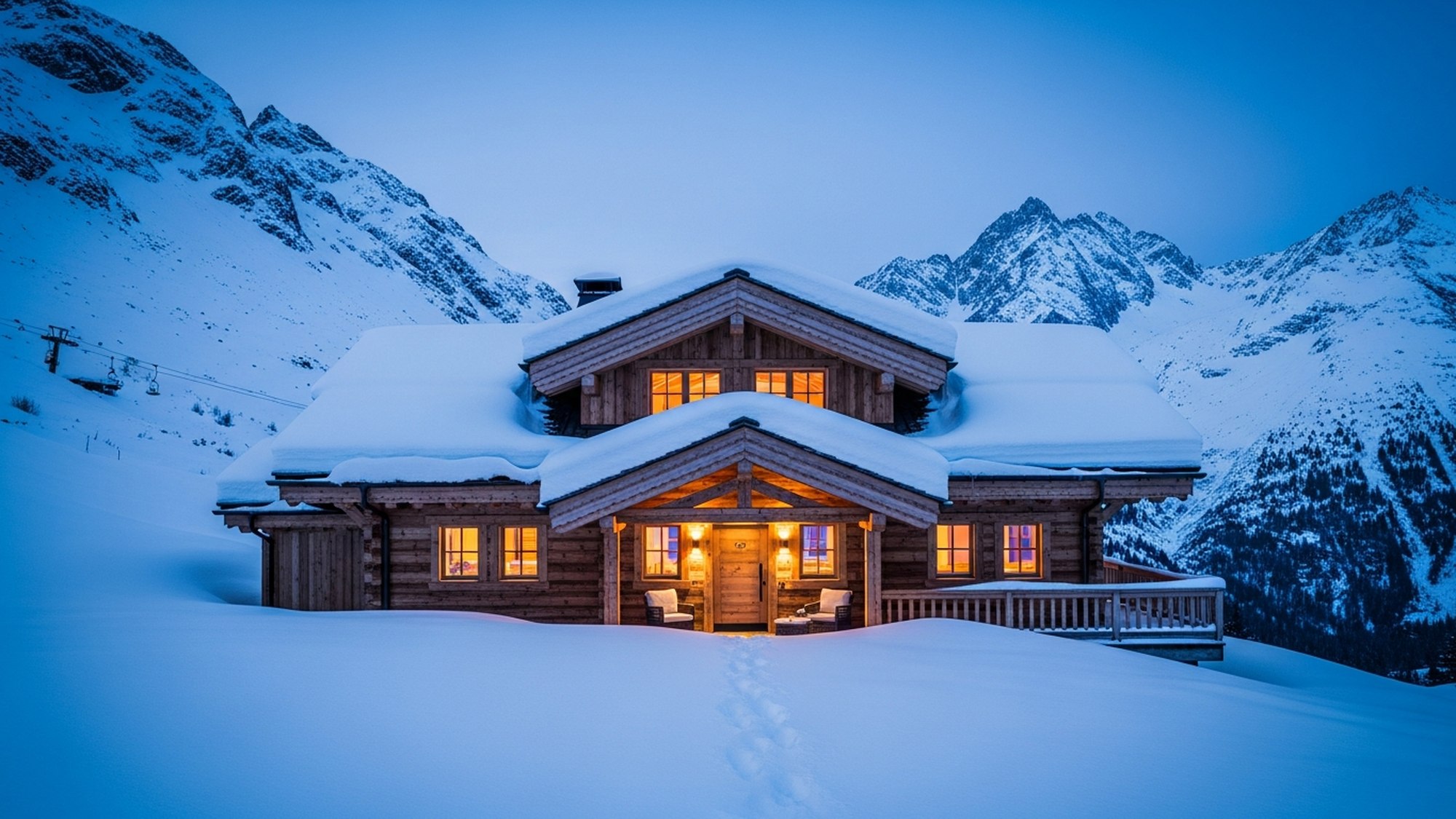
The Smoky Mountains Showdown: How a Cabin Gold Rush Became a Host's Nightmare
A cautionary tale from the country’s hottest rental market: unchecked growth and easy money turned the dream into a race to the bottom, leaving a trail of overleveraged hosts and broken promises.
Strap in, hosts. What happened in the Smoky Mountains wasn't a market correction. It was a market collapse, a full-blown reckoning for every host who bought into the myth of endless growth. This isn't just about Gatlinburg or Pigeon Forge; it's a brutal, unforgiving lesson for every hot short-term rental market across America, a blueprint for what happens when the siren song of quick cash drowns out the basic economics of supply and demand.
For years, the Smoky Mountains region was the undisputed cash-flow darling of the short-term rental world. Cabins, cabins everywhere, pulling in eye-watering revenue. Every other post on social media was a success story from a host who had just bought their third, fifth, tenth property in Sevier County, bragging about their occupancy rates and ADR. Developers couldn't build them fast enough. Lenders couldn't underwrite them fast enough. Out-of-state investors, from seasoned real estate pros to first-time buyers stretching their finances, piled in, convinced they had found a golden goose that would lay eggs forever.
They were wrong. Dead wrong. The goose got cooked, and many hosts are now looking at portfolios that went from gold to lead in what feels like an instant. The Smoky Mountains didn't just build too many cabins; it built a monument to market exuberance, a flashing red warning sign for anyone who thinks their local boom town is immune to the laws of physics. Let's dissect how this happened, because the same forces are at play, right now, in your market, or one just like it.
The Unbearable Lightness of Capital
The story of the Smoky Mountains glut begins, as so many real estate booms do, with access to capital. For years, the short-term rental industry was seen as a niche, even a bit of a gamble. But as Airbnb and Vrbo went mainstream, and as early adopters started posting undeniable revenue figures, traditional lenders and, more importantly, new specialized lenders, took notice. They saw steady cash flow, high demand in popular vacation spots, and the potential for rapid appreciation. The Smoky Mountains, with its year-round appeal – summer tourists, fall foliage, winter skiing, spring wildflowers – seemed like a bulletproof investment.
Specialized mortgage products emerged, tailored for investor-owners of short-term rentals. Debt service coverage ratio (DSCR) loans became commonplace. These loans often required no income verification, relying solely on the projected rental income of the property to qualify. This wasn't just a convenience; it was a fundamental shift. It meant that individuals with limited personal income, but access to a down payment, could acquire multiple high-value properties. It meant developers could leverage new construction with relative ease, projecting high future earnings for properties not yet built. The barrier to entry, particularly for a market with seemingly infinite demand, plummeted.
This easy money fueled a frenzy. Local real estate agents, many of whom had never handled such volume, became instant STR experts. Property management companies sprang up overnight, eager to serve the influx of new owners, often promising unrealistic returns based on historical data that was rapidly becoming obsolete. The narrative was simple: buy a cabin, put it on Airbnb, watch the money roll in. The low-interest rate environment of the preceding years only added fuel to this fire, making the monthly carrying costs of these properties seem even more manageable against the backdrop of projected high revenue. It was a perfect storm for speculative investment, disguised as a prudent business decision.
The Race to Build a Kingdom of Cabins
Once capital became readily available, the floodgates opened on construction. Developers, seeing the demand and the eager pool of buyers, moved in with aggressive plans. Land that was once considered too steep, too remote, or simply undeveloped, was now being cleared for new cabin communities. There were single cabins, duplexes, four-plexes, and sprawling resorts with hundreds of units, all designed with the short-term rental guest in mind. Hot tubs, game rooms, home theaters, and mountain views became standard amenities, driving up construction costs but also justifying higher nightly rates in the marketing materials.
A critical factor here was the regulatory landscape – or lack thereof. Many areas within the Smoky Mountains region, particularly Sevier County, had historically lenient zoning laws when it came to short-term rentals. There were few, if any, restrictions on where a short-term rental could operate, no caps on their numbers, and often minimal permit requirements beyond standard building codes. Local governments, initially thrilled with the economic boost – increased property taxes, sales tax revenue from tourist spending, job creation in construction and hospitality – were slow to react, or simply chose not to react, to the accelerating pace of development. They saw the golden goose laying eggs and didn't want to rock the boat.
This absence of friction meant that supply could swell virtually unchecked. Every successful host served as an advertisement, every new development a testament to the market's perceived strength. The cycle fed itself: more success stories led to more investment, more investment led to more construction, and more construction led to an ever-increasing inventory. This wasn't just organic growth; it was a feverish expansion, driven by the belief that the Smoky Mountains possessed an almost mystical ability to attract an endless stream of visitors, regardless of how many cabins were competing for their dollars.
The Inescapable Gravity of Supply and Demand
For a while, the market seemed to defy gravity. Demand was strong, tourism numbers continued to rise, and even with new units coming online, occupancy rates held relatively steady. But basic economics always win. At some point, the rate of new supply outstrips the growth in demand. In the Smoky Mountains, that point arrived with a crash.
When supply spikes dramatically, the first thing to suffer is occupancy. Hosts who once enjoyed 70-80% occupancy found themselves struggling to hit 50-60%, or even lower, during off-peak seasons. To combat this, they did the only thing they could: they dropped their prices. This led to a cascading effect on Average Daily Rate (ADR). What was once a $300/night cabin might now be struggling to command $200, or even $150, just to get bookings. This isn't just a few dollars here and there; this is a fundamental erosion of revenue.
The combined effect on RevPAR (Revenue Per Available Room/Rental) was devastating. RevPAR, the truest measure of a rental property's performance, plummeted. A property that once generated $5,000 in monthly revenue might now be pulling in $2,500, or even less. But the mortgage payment didn't shrink. The property taxes didn't shrink. The insurance didn't shrink. Many hosts, especially those who had bought at the peak of the market with DSCR loans predicated on robust income, suddenly found their margins evaporating, or worse, turning negative. The easy cash flow that attracted them in the first place became a gaping hole in their wallets.
The Relentless Creep of Operating Costs
While revenue was falling off a cliff, operating costs continued their relentless creep upwards. This is a cruel reality of the short-term rental business: many fixed and semi-fixed costs don't care about your booking calendar. Mortgage payments, as mentioned, are immutable. Property taxes, often reassessed upwards during the boom, remained stubbornly high. Insurance premiums, particularly for properties in popular tourist areas with high visitor traffic, saw increases.
Then there are the variable costs that become painful when revenue is low. Cleaning fees are a prime example. Guests are increasingly resistant to high cleaning fees, especially on lower nightly rates, yet professional cleaning services have their own costs, often increasing due to labor shortages. Hosts in a competitive market might absorb some cleaning costs to make their listing more attractive, further eating into their already thin margins. Maintenance costs don't disappear; wear and tear continues, and guest expectations for pristine conditions remain high. Hot tubs still need servicing, plumbing still leaks, appliances still break.
Platform fees (Airbnb, Vrbo, Booking.com) remain a constant percentage of booking revenue, but when that revenue shrinks, their impact feels heavier. Utilities, while somewhat variable, still represent a significant overhead. Property management fees, typically 15-25% of gross revenue, become an unbearable burden when gross revenue itself is halved. For hosts who went the self-management route to save on these fees, they quickly discovered the immense labor and time commitment required, a commitment that feels increasingly thankless when the financial returns are so paltry. The dream of passive income quickly turned into a second, unpaid job, and for many, a deeply unprofitable one.
The Painful Dilemma of the Exit Strategy
When the going gets tough, many hosts naturally look for the exit. But in a saturated market like the Smoky Mountains, exiting is not a simple matter. Properties bought specifically as short-term rentals, often with unique amenities like multiple master suites, elaborate game rooms, or themed decor, don't always translate well to the traditional long-term rental or primary residence market. The pool of conventional buyers shrinks considerably, and their willingness to pay a premium for STR-specific features is often nonexistent.
This means that hosts looking to sell are competing against a massive inventory of similar properties, many of which are also trying to offload their assets. This drives down sale prices. Properties that were purchased for, say, $800,000 at the height of the boom might now struggle to fetch $600,000. For those with high leverage – a common scenario thanks to those DSCR loans – selling at a loss means bringing cash to the closing table, something many simply don't have. They are underwater, trapped between declining revenue and negative equity. Foreclosures, while often quietly handled, are an inevitable consequence of this scenario.
The alternative, converting to long-term rental, is often equally unappealing. The rental income for a long-term lease typically pales in comparison to even the depressed short-term rates, making it impossible to cover the mortgage. Moreover, many of these cabins are not ideally suited for year-round family living, being relatively remote or designed for transient guests. The market effectively creates a cage for its investors: too expensive to hold, too costly to sell, and ill-suited for any other purpose. This is the bitter pill that comes with market specialization and oversupply.
The short-term rental industry often champions frictionless markets, but the Smoky Mountains prove that 'frictionless' often just means 'unregulated', and unregulated markets inevitably lead to painful corrections.
What Every Hot Market Can Learn
The Smoky Mountains isn't unique in its susceptibility to this boom-and-bust cycle; it's just the most recent, and perhaps most dramatic, example. Every hot market carries this risk. Think about coastal towns with lax regulations, lakeside communities suddenly discovered by remote workers, or urban areas seeing a surge in tourism. The pattern is strikingly similar:
- Low Regulatory Barriers: Markets with few or no restrictions on STRs are highly vulnerable. The easier it is for anyone to convert a property or build a new one for STR, the faster supply will grow.
- Perceived Infinite Demand: A major tourist attraction (national parks, beaches, theme parks) often leads investors to believe demand is endless, regardless of supply. This hubris is dangerous.
- Easy Access to Capital: When lenders are eager, and products like DSCR loans are prevalent, speculative investment accelerates.
- Herd Mentality: The FOMO (Fear Of Missing Out) effect is powerful. When everyone you know is buying a rental, it feels like a safe bet, even when all the data points to saturation.
Markets currently experiencing rapid growth in STR listings, from some parts of Florida's panhandle to mountain towns in Colorado and Arizona, should be looking at the Smoky Mountains not as a distant problem, but as a crystal ball. The forces at play are universal. If your local government isn't actively managing STR growth, if new developments are popping up everywhere, and if financing seems too easy, your market might be next in line for a similar reckoning. Pay attention to local permitting trends, observe new construction starts, and track your market's available listings data on AirDNA or other intelligence platforms. The early warning signs are always there for those willing to look past the hype.
The Role of Local Government: A Tricky Balance
It's easy to point fingers at individual hosts for making poor investment decisions, but local governments play a significant, if often unwitting, role in these market collapses. Many municipalities are caught in a difficult bind. On one hand, short-term rentals bring undeniable economic benefits: increased property tax revenue, sales tax from tourist spending, job creation in construction, hospitality, and cleaning services. They can revitalize local economies and bring tourists who support local businesses.
On the other hand, unchecked growth leads to the very problems seen in the Smoky Mountains: market saturation, declining host profitability, and often, negative impacts on the local housing supply for permanent residents. When investment properties become more profitable than residential homes, the housing stock for local workers shrinks, driving up rents and making it difficult for essential service providers to afford to live in the community they serve. This can lead to community backlash, a decline in quality of life for residents, and eventually, a less attractive destination for tourists.
Thoughtful regulation is not about shutting down the industry; it's about managing growth. This can include: imposing caps on the number of STR permits, zoning restrictions to prevent STRs from dominating residential neighborhoods, stricter safety and maintenance requirements, and transparent data collection on STR activity. While some hosts chafe at any regulation, a well-regulated market is ultimately more stable and sustainable for everyone. It prevents the kind of wild boom-and-bust cycles that destroy wealth and erode community trust. The absence of such regulation, as seen in the Smoky Mountains, proved to be an invitation to over-speculation, with predictable and devastating results.
The Ripple Effect Beyond the Host
A market collapse like the one in the Smoky Mountains doesn't just affect individual hosts. Its tendrils spread throughout the entire local economy, creating a ripple effect that touches everyone from local contractors to service staff and even long-term residents. When STR revenue plummets, hosts cut back. This means less work for cleaning crews, fewer calls for maintenance and repairs, and reduced demand for local service providers who cater to the STR industry, like linen services, pool maintenance, or hot tub repair companies. Jobs are lost, and small businesses that had grown accustomed to the boom find themselves struggling.
Furthermore, the decline in property values for STR-specific cabins can depress the overall real estate market. Lenders who had eagerly financed these properties might become more cautious, making it harder for future borrowers, even those seeking traditional mortgages. The dream of homeownership for local residents, already challenged by the STR boom driving up prices, can be further complicated by a volatile and uncertain market.
Then there's the broader perception. When a market gains a reputation for being 'overbuilt' or 'a bad investment,' it can deter future, more diversified, and potentially more stable investment. It can also sour the guest experience if hosts, desperate for bookings, cut corners on maintenance or amenities, leading to a race to the bottom not just on price, but on quality. The long-term health and reputation of the destination itself are at stake, not just the profitability of a single cabin.
The bottom line for hosts
Look, the STR NEWS mission is to give you the unvarnished truth. The Smoky Mountains is a cautionary tale written in the blood, sweat, and tears of thousands of hosts. If you’re in a similar market, or thinking about entering one, heed this warning. Do not chase the hype. Do not assume past performance guarantees future returns. Growth is not infinite. Demand is not endless.
- Stress Test Your Business: Assume a significant drop in occupancy and ADR. Can your property still cover its costs? What if occupancy falls to 40% for months? What if your ADR drops by 30%? Have enough reserves to weather a prolonged downturn.
- Diversify Your Portfolio: If you have multiple properties, don't put all your eggs in one geographical basket. Spread your risk across different market types and regulatory environments.
- Understand Your Local Market's Supply Pipeline: Don't just look at current listings. Research new developments, permit applications, and zoning changes. Ask local real estate agents about upcoming projects. If dozens or hundreds of new units are planned, factor that into your projections.
- Prioritize Guest Experience, Not Just Price: In a competitive market, quality and unique experiences are your only sustainable advantage. A race to the bottom on price is a losing game. Exceptional service, pristine conditions, and unique amenities can still command a premium, even when the overall market is soft.
- Build Relationships with Local Stakeholders: Understand the local community's sentiment towards STRs. Engage with local government, even if you disagree with potential regulations. A sustainable STR business requires a healthy community around it.
The short-term rental industry often champions frictionless markets, but the Smoky Mountains prove that 'frictionless' often just means 'unregulated', and unregulated markets inevitably lead to painful corrections. Learn from the mistakes made there. Your livelihood depends on it.
About this piece
An original expert-analysis column by the STR NEWS desk. Figures are illustrative of how the market behaves; confirm specifics for your own market before you act.



Read the desk every morning.
The day's crackdowns and platform moves, the money, the design and the stays going viral, plus the desk's verdict, in one short email every morning.