Tokyo Hotspot Bans Short-Term Rentals as Tourist Surge Overwhelms Ward Streets
A premier Tokyo destination cuts off short-term rentals following a spike in neighborhood complaints, exposing the fragile truce between municipal power and global platforms.
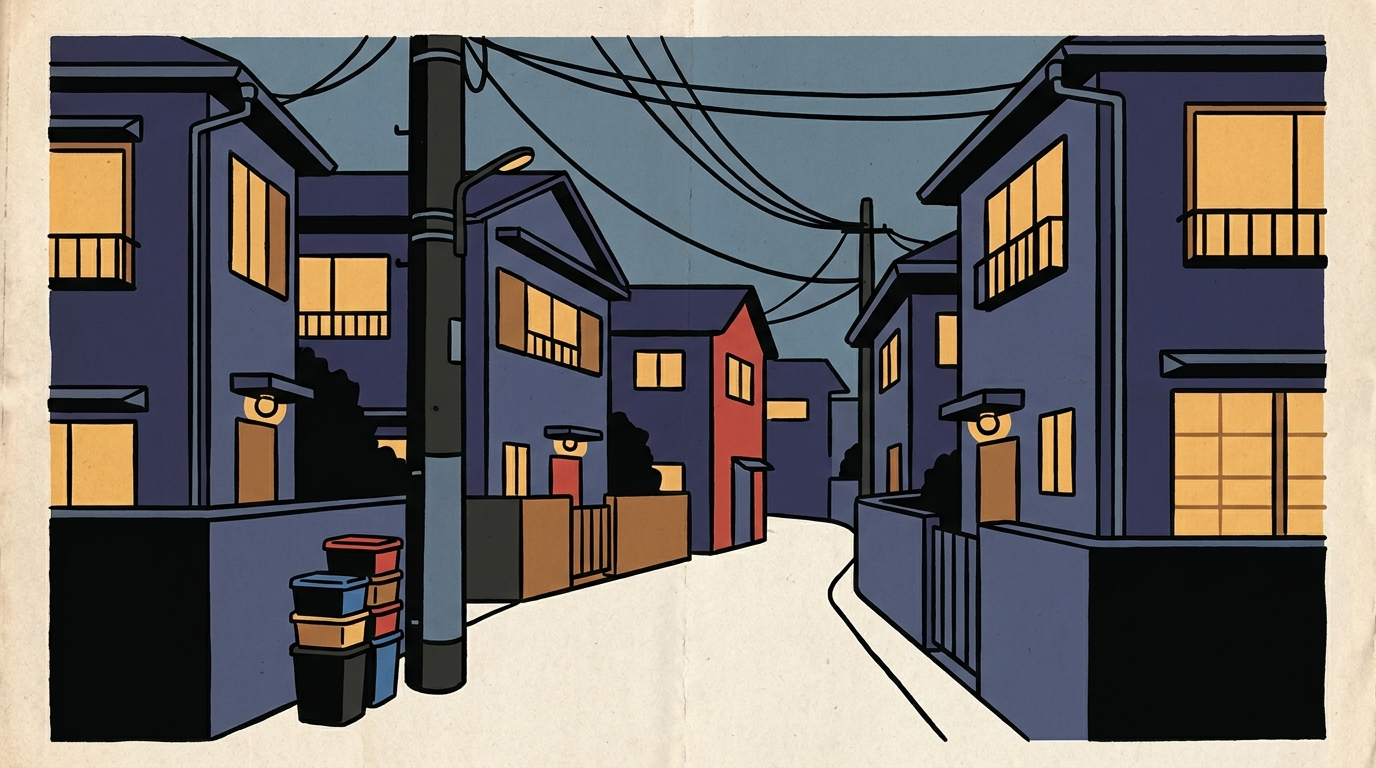
The front door of an ordinary Tokyo apartment building was never engineered to bear the weight of global tourism. It was engineered for shoehorns, neatly stacked plastic slippers, low voices in the communal hallway, and rigid adherence to a five-part domestic waste sorting schedule printed on laminated cardstock. When rolling polycarbonate luggage began clattering down narrow asphalt alleys at two o’clock on a Tuesday morning, rattling the paper-thin quiet of one of the world’s most privacy-obsessed capitals, an administrative reckoning became inevitable.
Now the hammer has fallen in one of Tokyo’s signature tourist districts. Local authorities have stepped in to impose an outright ban on short-term rentals following an unsustainable surge in neighborhood complaints, as reported by The Guardian. The move marks a definitive turning point for urban operators who treated Japan’s national short-term rental framework as an unassailable shield against municipal intervention.
For foreign funds, domestic master-lease arbitrageurs, and mom-and-pop operators who poured capital into Tokyo property off the back of a weak yen and record-shattering inbound tourist arrivals, the signal is unmistakable. The regulatory floor has given way. What began as scattered grumbling about misplaced aluminum cans and loud conversations in shared elevator vestibules has hardened into administrative prohibition, proving once again that in the short-term rental sector, hyper-local politics always defeats national ambition.
What happened
According to reporting from The Guardian, municipal authorities overseeing a key Tokyo tourism hotspot have prohibited short-term holiday accommodations following an escalation in friction between local residents and temporary visitors. The ban comes after a documented surge in complaints filed by neighborhood associations, residential building committees, and individual apartment owners who found their daily lives disrupted by the sheer volume of transient foot traffic.
While specific municipal boundaries in Tokyo have long maintained localized restrictions, the complete shuttering of properties in a primary leisure corridor represents an aggressive escalation. Municipal administrators acted under provisions that permit local governments to introduce binding ordinances whenever short-term lodging poses a verifiable threat to the living environment or public peace of permanent residents.
The administrative action directly targets properties registered under Japan’s residential lodging framework, cutting off platforms such as Airbnb, Vrbo, and Booking.com from supplying inventory in the affected zone. The Guardian noted that the municipal decision followed months of mounting grievances centered on unmanaged garbage disposal, late-night noise violations, safety concerns in mixed-use residential complexes, and the conversion of long-term housing stock into revolving-door tourist units.
Inspectors and ward administrative staff have been tasked with monitoring building entries, auditing platform listings, and notifying property managers that operational rights have been revoked. Operators caught running listings within the restricted area face formal citations, administrative removal from national property registries, and potential referral to law enforcement under Japan’s strict lodging control statutes.
The ward-level trap and the illusion of national permission
To understand why this ban occurred, one has to examine the double-edged architecture of Japanese hospitality law. Japan enacted the Private Lodging Business Act to regulate residential short-term rentals. At the time, global booking channels hailed the legislation as a historic victory. Japan became one of the first major global economies to establish a formal, nationwide legal pipeline for residential short-term rentals, ending years of legal ambiguity and unlicensed black-market operations.
The national statute granted homeowners and registered corporate managers the right to rent residential properties to paying guests. Platform executives celebrated the law as a progressive compromise between hotel interests and the sharing economy. Yet embedded within that national statute was a legal provision that many cross-border investors failed to respect. That provision explicitly gave local prefectures, designated cities, and Tokyo's municipal wards the autonomy to impose far stricter conditions through local ordinances, known as jorei, if necessary to protect the residential tranquility of their districts.
Tokyo’s wards wasted little time flexing those municipal muscles. In the years following the national rollout, individual wards systematically choked the operational calendar. Some wards barred short-term rentals on weekdays in designated residential zones, effectively limiting operations to Friday noon through Sunday noon and destroying the unit economics of professional management. Other wards banned minpaku within 100 meters of schools, kindergartens, and public facilities. What looked on paper like a national business license was, in practice, a fractured checkerboard of micro-regulations that varied from one side of a municipal road to the other.
The ban reported by The Guardian represents the final evolution of this municipal pushback. When the national government opens the door to tourist volumes that municipal infrastructure cannot absorb, the wards do not negotiate with global platforms. They draft an ordinance, close the door, and rely on career civil servants to audit the digital channels until the listings disappear.
When the weak yen broke the residential peace
The immediate catalyst for this latest crackdown is not ideological; it is logistical. Japan’s post-border-reopening recovery coincided with a historic, prolonged decline in the value of the Japanese yen against the US dollar and the euro. For international travelers, Tokyo suddenly transformed from one of Asia’s most expensive destination capitals into an extraordinary bargain. Inbound arrival volumes rebounded at breakneck speed, filling flagship hotels to capacity and pushing average daily rates at luxury properties into the stratosphere.
That pricing pressure created an overwhelming demand vacuum in the middle tier of Tokyo’s hospitality market. Groups of four, six, or eight travelers who found standard Tokyo business hotel rooms far too cramped and conventional boutique hotels priced out of reach flooded directly into residential apartments listed on short-term rental platforms. Properties in prominent lifestyle wards saw calendar occupancies surge, and property managers scaled up operations aggressively to capture the windfall.
The problem is that Tokyo’s urban topography does not possess a buffer zone. In North American and European cities, commercial and entertainment districts are frequently separated from quiet single-family tracts by physical distance or wide arterial boulevards. Tokyo’s zoning, by contrast, is famously fine-grained. A Michelin-starred noodle shop, a 24-hour convenience store, a four-story residential condominium, and a multi-unit short-term rental can sit cheek-by-jowl along a single four-meter-wide side street.
When tourist arrivals broke historical records, the spillover into residential corridors became visceral. Quiet alleys that had seen only morning commuters and neighborhood delivery bicycles suddenly became staging grounds for large tourist parties dragging oversized rolling bags over grooved pavement at midnight. Intercoms in private residential buildings were rung by confused guests looking for digital lockboxes. Taxi drivers idled outside narrow residential entryways with diesel engines running. The residential fabric did not stretch; it snapped.
The Guardian’s report of surging complaints is the direct statistical consequence of this structural friction. In a culture where meiwaku—causing inconvenience or disturbance to others—is considered the cardinal civic sin, the rapid intrusion of unmanaged tourist logistics into private residential space created an intolerable political liability for local ward assembly members. Banning the activity was not a complex policy debate for local lawmakers. It was the only administrative response that satisfied their core voting constituency: permanent property owners who value silence above tourism receipts.
The mansion rebellion and trash politics
To dismiss neighborhood opposition as mere xenophobia or anti-tourist sentiment is to misunderstand entirely how urban Japanese housing functions. In Tokyo, the collective management of multi-unit residential buildings—referred to nationwide as mansions—is governed by strict management associations called kanri kumiai. These associations operate under uniform, democratic, and intensely enforced bylaws designed to maintain structural asset value and civil harmony.
The single greatest operational battlefield in Japanese short-term rentals has never been pricing or dynamic revenue management. It is trash disposal. Tokyo does not utilize a single catch-all garbage shoot or mixed-waste dumpster behind an apartment block. Waste must be sorted meticulously into burnable items, non-burnable plastics, polyethylene terephthalate bottles with labels and caps removed, glass containers, and corrugated cardboard, each deposited only on specific mornings inside designated, netted neighborhood collection points.
When transient guests arrive from overseas, they treat waste disposal as an afterthought. Convenience store bento boxes, half-empty beverage cans, and discarded packaging get jammed indiscriminately into municipal bags or left piled on communal entrance landings. Crows and stray cats tear the bags open at dawn, scattering refuse across private sidewalks. For a permanent resident who has spent thirty years meticulously washing and separating plastic containers to keep their building spotless, waking up to an entryway littered with rotting food packaging from a transient guest is not a minor nuisance. It is an outrage.
Beyond refuse, the issue of building security triggered widespread alarm among building boards. Japanese residential complexes invest heavily in auto-lock security vestibules and video intercom systems to ensure that only verified residents and their guests cross the threshold. The introduction of key lockboxes secured to exterior railings or convenience-store key drops obliterated that security perimeter. Strangers entered the building without oversight, propped open fire doors to move luggage, and shared access codes on public messaging apps. Management associations responded by amending their standard bylaws to formally prohibit minpaku under any legal status, erecting large notices in lobbies warning that short-term rentals are illegal on the premises.
When operators sought to bypass these condominium prohibitions by shifting to detached residential homes or leasing out entire low-rise wooden apartment blocks in residential zones, they merely transferred the friction to the street. The complaints simply shifted from condominium board meetings to ward hall public counters. Once ward administrators realized that voluntary host compliance guidelines were failing to curb violations, administrative prohibition became the only mechanism left on the table.
The hotel lobby’s quiet victory
Every regulatory crackdown has an architect and a beneficiary. While resident complaints provided the emotional fuel and political cover for the ban, Tokyo’s powerful, deeply entrenched traditional lodging lobby provided the structural leverage. In Japan, the hospitality sector is divided between modern hotel operators and the traditional inn association, known as the Ryokan Association. Both groups operate under the strict, decades-old Hotel and Ryokan Management Law (Ryokan Gyoho).
For decades, traditional hotel operators were forced to comply with demanding, capital-intensive mandates: minimum square footage per guest, dedicated front desk facilities, on-site administrative staff, specific fire suppression systems, emergency lighting, commercial-grade evacuation routes, and continuous guest record-keeping. When short-term rental platforms entered Japan, hotel executives argued that tech companies were enabling an asymmetric, unlevel playing field. Residential hosts were offering lodging inventory without bearing the real estate acquisition costs, front-desk staffing expenses, or safety overhead required of licensed hotels.
During the lean years of the pandemic, when domestic travel withered and international tourism collapsed entirely, the traditional lodging sector weathered devastating financial losses. As borders reopened, hotel operators were determined to protect their recovery margins. They did not need to run aggressive public advertising campaigns against short-term rentals. They simply sat back and let the reckless behavior of unmanaged short-term rental properties do the work for them.
Every time a resident lodged a complaint with a ward office about late-night partying, overflowing trash, or unauthorized lockboxes, the hotel lobby’s core argument was validated. They pointed out to municipal regulators that licensed hotels possess on-site security, dedicated front desks, commercial trash handling services, and direct legal accountability. Short-term rentals, by contrast, relied on remote property management agencies that communicated via automated messaging applications and rarely placed a human being on the premises to manage guest conduct.
The ban in this Tokyo hotspot gives the conventional hotel sector exactly what it wanted: the removal of residential supply from high-demand leisure zones. With residential competition sidelined, traditional hotel operators and corporate serviced-apartment brands regain pricing power, ensuring that surging international tourist demand flows exclusively through regulated, high-overhead commercial establishments that pay commercial municipal taxes and maintain permanent physical staff.
From Barcelona to Tokyo: The global playbook tightens
What Tokyo is experiencing is not an isolated cultural anomaly. It is the Japanese chapter of a global regulatory template that has played out across Barcelona, Florence, New York City, and Amsterdam. In every major leisure metropolis, the trajectory follows an identical, predictable script:
- Initial disruption: Platforms enter the market, offering hosts superior yields compared to long-term leases, while local tourism boards celebrate increased visitor capacity and economic decentralization.
- The growth shock: Institutional capital and master-lease operators scale up rapidly, concentrating inventory in historic centers and primary entertainment nodes, outbidding local tenants for housing stock.
- The quality-of-life revolt: Permanent residents find their neighborhoods transformed into transit hubs. Hallways become noisy, municipal services are overwhelmed, and trash disposal systems break down under volume.
- The administrative backlash: Municipal governments step in with blunt regulatory instruments—stringent registration mandates, severe operating day caps, or outright geographic prohibitions.
- The post-ban reality: Supply evaporates overnight, platform listing numbers plunge, enforcement shifts to civil code inspections, and long-term rental yields reassert themselves as the baseline.
Other global cities have crushed their short-term rental markets by imposing highly demanding operational restrictions that wiped out the vast majority of active listings. Barcelona went even further, announcing a scheduled municipal phaseout aimed at terminating all ten thousand registered tourist apartment licenses by 2028 to preserve residential housing supply.
Tokyo’s regulatory approach differs in form but matches in effect. Rather than attempting a sweeping, citywide shutdown across all wards—which would provoke fierce legal and bureaucratic resistance at the metropolitan and national ministry levels—Tokyo executes its clampdowns through targeted, localized ward ordinances. It is surgical, neighborhood-by-neighborhood attrition. By empowering individual wards to ban short-term rentals within specific zones based on resident complaint density, Japanese regulators achieve the exact same operational outcome as other global cities: they systematically dismantle the short-term rental market wherever it conflicts with long-term residential life.
Who cashes in and who eats the loss
A policy shift of this magnitude redistributes capital instantly across the urban balance sheet. The winners and losers in this Tokyo hotspot are already separating into clear camps.
The most immediate casualties are the property management companies and master-lease arbitrageurs who signed multi-year corporate leases on residential units in the affected zone. In the standard Tokyo arbitrage model, an operating company leases an unfurnished apartment from an individual landlord, furnishes the space, installs remote lock systems, secures a national minpaku registration, and sub-leases the unit on global booking platforms. These operators locked in rental expenses based on projected tourist occupancy rates and high average daily rates.
With short-term rentals prohibited, those master leases are underwater. Arbitrageurs cannot pivot these units back to traditional Japanese long-term tenants without taking catastrophic write-downs. In Japan, traditional residential leases typically involve tenant screening, guarantor companies, and structural limitations on rent hikes. Moreover, the capital expended on tourist-specific furnishings, photography, and platform optimization cannot easily be recouped in a domestic market where tenants expect unfurnished units and long-term stability. Uncapitalized management agencies that overleveraged themselves during the post-border-reopening gold rush will simply default on their leases and dissolve their corporate entities.
Individual property owners who purchased condominiums specifically to operate them as tourist rentals face an equally grim balance sheet. Many bought at the peak of Tokyo’s recent residential real estate boom, banking on double-digit short-term yields to service high debt loads. Reverting to the long-term residential market means accepting standard Tokyo gross yields of four to five percent. For highly leveraged owners, that yield compression turns cash-flow positive investments into monthly capital drains.
Conversely, established hotel chains, real estate investment trusts holding commercial hotel assets, and corporate serviced-apartment operators holding full commercial lodging licenses are the undisputed victors. By eliminating residential supply from the local market, the ward has cleared the board of low-cost competitors. Hotels can push room rates higher without fear of being undercut by four-bedroom residential apartments down the block. Furthermore, long-term local residents win back the quiet, clean, predictable streetscapes that define residential Tokyo.
In Japan, local harmony is not a soft cultural preference; it is a hard legal instrument.
What the announcement is quietly not saying
Behind the official statements about resident welfare and noise abatement lies an unstated administrative reality: Tokyo’s ward offices were never equipped to police thousands of decentralized, digital hospitality nodes. The regulatory apparatus of a Tokyo ward is built for static documentation, scheduled health inspections, and paper-based corporate registry filings. It is fundamentally incapable of running real-time enforcement operations against elusive, algorithmically managed booking listings.
When complaints surged, ward officials found themselves trapped in a bureaucratic nightmare. Investigating an unlicensed or non-compliant short-term rental required civil servants to conduct nocturnal stakeouts, monitor key lockboxes, interview neighborhood witnesses, and attempt to trace shadowy corporate shell companies or offshore host profiles registered on foreign platforms. The cost in municipal staff hours, administrative friction, and public frustration was immense.
A total ban is not just a policy tool; it is an administrative shortcut. By enacting a geographic prohibition, ward officials eliminate the burden of proving specific nuisance violations or calculating whether an operator exceeded the operational limit. Under a blanket ban, the legal test collapses into a simple binary: does the listing exist within the restricted boundary? If yes, it is an illegal operation subject to immediate shutdown.
Moreover, the silence surrounding platform accountability speaks volumes. Municipal bans in Tokyo do not penalize the international booking channels that display the prohibited listings and take booking service fees on every night stayed. The administrative penalties fall entirely on the real estate owner, the master leaseholder, and the local operating agent. The booking platforms continue to collect revenues across unregulated global channels, insulated from municipal fines, while local hosts and property managers absorb the entire legal and financial fallout of the ward’s decree.
The death of the remote operator model
This Tokyo ban delivers a lethal blow to the industry’s most popular operational illusion: that a short-term rental business can be operated entirely through software. For years, international real estate courses, social media influencers, and technology vendors promoted the Japanese minpaku market as an ideal passive-income play for cross-border investors. An investor in Singapore, London, or Los Angeles could acquire a small residential footprint in Tokyo, hire a bilingual digital agency to configure automated messaging, connect smart locks, and watch yen deposit into their bank account each month.
That operational model has been completely discredited by reality. In urban Japan, residential peace relies entirely on active, continuous social friction management. When an international guest does not understand that plastic water bottles cannot be thrown into the burnable refuse bin, an automated check-in email does not resolve the issue. When jet-lagged travelers sit on an exterior balcony talking at full volume at three in the morning, a smart-lock ping does nothing to prevent the neighbor from picking up the phone to dial the local ward health bureau.
Managing short-term rentals in high-density Japanese cities requires immediate, physical, human intervention. Operators who survive will be those who operate like miniature boutique hotel groups: employing dedicated ground staff who meet every guest at the train station or building entrance, walk them through the apartment in person, physically demonstrate how to sort each piece of packaging, and enforce curfews with on-call personnel. The moment an operator tries to strip out the cost of human labor to boost net margins, neighbor complaints begin accumulating. In Tokyo, those complaints do not stay confined to online review platforms; they end up on the desk of the ward mayor.
What hosts should do now
For operators, managers, and property investors with exposure to the Tokyo market or other high-density Japanese tourist corridors, this ban requires an immediate, unsentimental audit of your portfolio and operating procedures.
- Conduct an urgent regulatory audit of every property by ward and zoning classification. Do not rely on national Minpaku Law registrations. Pull the exact text of the municipal ordinance (jorei) for each specific ward to verify whether current zoning allows short-term lodging, what operating day restrictions apply, and whether school-district boundary rules impact your building.
- Transition immediately to in-person check-in protocols. Eliminate lockboxes attached to outdoor street furniture, fences, or shared entrance railings. Station physical greeters on site to check guest identification, review house rules face-to-face, and personally demonstrate the property’s waste disposal system before handing over keys.
- Secure formal written consent from building management associations. If operating inside a multi-unit condominium building, review the registered bylaws (kanri kiyaku). If the association has not explicitly approved short-term lodging, begin planning an orderly exit before the board passes an emergency amendment to evict the operation.
- Develop an operational pivot to medium-term and commercial licenses. Evaluate whether properties can be converted to comply with the Hotel and Ryokan Management Law, which requires commercial zoning and stricter fire-safety infrastructure but eliminates the annual cap and shields the business from residential ward bans. Alternatively, prepare properties for the monthly corporate furnished rental market (teiki shakuya) catering to long-stay business professionals.
- Establish direct communication channels with immediate neighbors. Introduce your local operations staff to adjacent residents, provide a dedicated 24-hour Japanese-speaking emergency phone number, and resolve any disturbance reports within fifteen minutes to prevent complaints from ever reaching ward officials.
The operating environment in Tokyo has permanently changed. The era of passive, frictionless residential arbitrage has ended, replaced by an unforgiving regulatory landscape that rewards professional hospitality infrastructure and ruthlessly eliminates everyone else.
Checked by the standards desk (Eleanor Quist): 5 specifics were removed or attributed as unverified before publication.



Read the desk every morning.
The day's crackdowns and platform moves, the money, the design and the stays going viral, plus the desk's verdict, in one short email every morning.