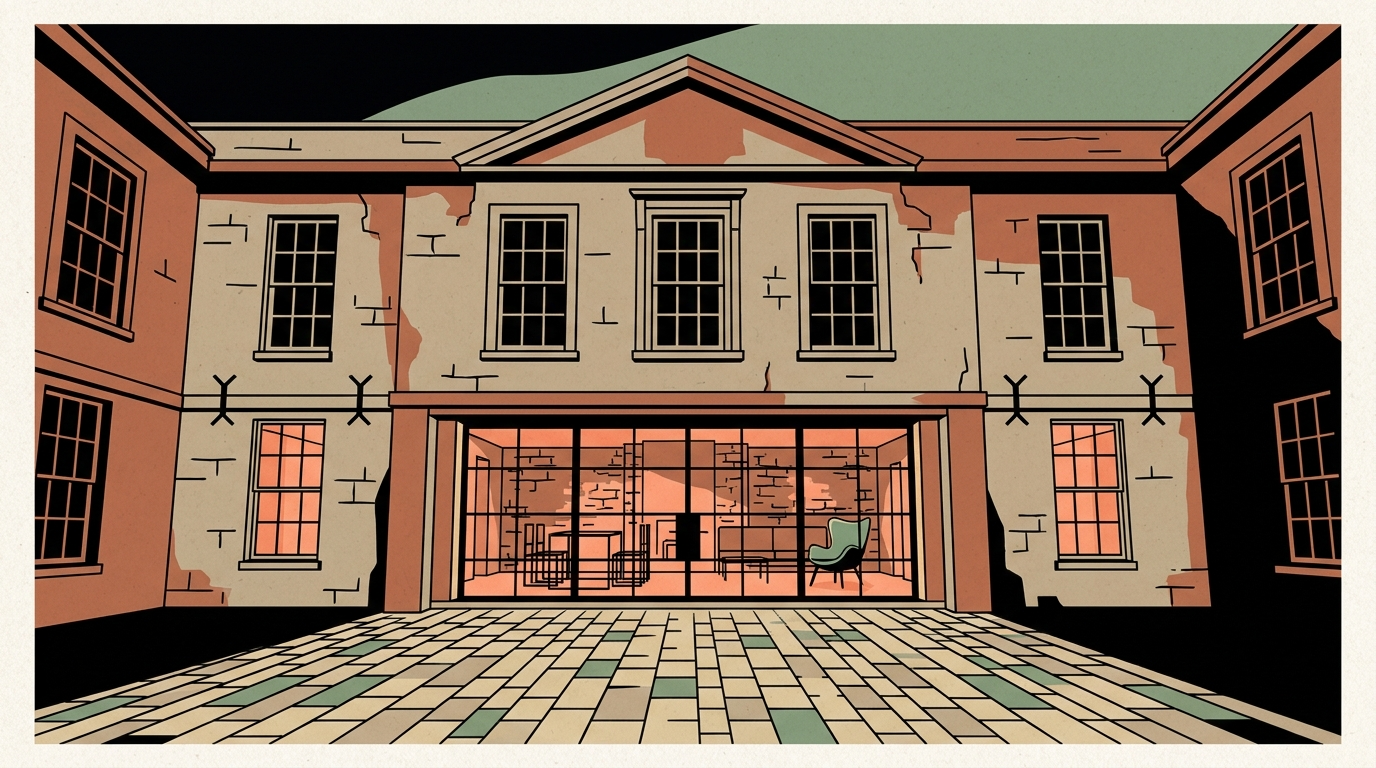
The Demolition of Civic Dignity: How Britain’s Admiralty Estates Became High-Yield Airbnbs
As historic naval assets and public monuments transition into private holiday rentals, a fierce battle is erupting over architectural preservation, tax write-offs, and local resentment.
The brass fittings that once polished the egos of Victorian admirals are now being wiped down with lavender-scented multi-surface spray between a 4:00 PM check-in and an 11:00 AM checkout. Across the coastlines and historic quarters of the United Kingdom, a quiet but massive transfer of architectural custody is taking place. Grand public buildings, naval watchtowers, customs offices, and harbor master headquarters—structures built with public funds to project the power of an empire—are being decommissioned, sold off, and repackaged for the global short-term rental market. What was once the bedrock of civic and military administration is now a collection of high-yield listings on Airbnb and Vrbo, complete with key safes, smart locks, and welcome baskets containing artisanal gin.
This is not merely a story of real estate repurposing; it is a fundamental shift in how society values its physical history. The transition from public monument to private playground represents the ultimate financialization of the built environment. To the property investor, an old Admiralty cottage or a decommissioned Georgian watchtower is the holy grail of short-term rentals: an asset with built-in scarcity, an irreplaceable aesthetic, and a narrative that booking platforms can monetize with ease. But to architectural purists, local communities, and heritage watchdogs, this trend represents a dilution of civic dignity, where history is stripped of its context and reduced to a scenic backdrop for weekend tourists.
As these historic conversions proliferate, they are running headlong into a perfect storm of regulatory backlash, tax restructuring, and local hostility. The operators who have built portfolios around these unique heritage assets are suddenly finding themselves in the crosshairs of planners, tax authorities, and community activists. The golden age of turning public history into private cash-flow is entering a far more complicated, regulated, and expensive chapter. Understanding how this niche of the short-term rental market works—and where the financial and legal traps are buried—is now survival-critical for anyone holding the keys to a piece of history.
What happened
The debate over the commercialization of state heritage has been brought into sharp focus by a critical assessment in The Critic, which examined the architectural and social implications of converting historic state-owned properties—specifically those associated with the British Admiralty and maritime defense—into short-term holiday rentals. The piece highlights a growing uneasiness with the way these grand, institutional structures are being hollowed out to serve the leisure class. It points to a broader systemic trend where public authorities, starved of funding or seeking to shed maintenance liabilities, have systematically sold off historic assets to private buyers who quickly realize that the highest and best use, in purely financial terms, is short-term lodging.
This conversion pipeline is not a minor phenomenon. Over the past two decades, hundreds of historic structures formerly managed by the Ministry of Defence, the Crown Estate, and various municipal harbor boards have passed into private hands. Once inside the private sector, these properties are rarely converted into long-term rental housing, as the cost of bringing centuries-old stone structures up to modern residential energy and insulation standards is often prohibitive when offset against local market rents. Instead, developers and wealthy individual investors turn to the short-term rental market, where the premium nightly rates commanded by unique, historic properties can justify the astronomical capital expenditure required for renovation.
The criticism leveled against this trend is two-fold: architectural and cultural. Architecturally, critics argue that the unique character of these institutional buildings is being erased by a standardized, platform-friendly interior design aesthetic. Culturally, there is a profound sense of loss when buildings that were once symbols of national collective effort and public service are locked behind digital keypads, accessible only to those who can afford hundreds of pounds a night. The Critic’s analysis serves as a warning shot, signaling that the heritage short-term rental sector is no longer viewed merely as a harmless, creative way to preserve old buildings, but rather as an active participant in the erosion of public space and civic memory.
The decommissioning of the state
To understand how we arrived at a point where a tourist can sleep in a room where naval campaigns were planned, one must look at the history of public asset liquidation in the United Kingdom. Following the end of the Cold War, and accelerating through the austerity programs of the 2010s, successive British governments have viewed the state’s massive property portfolio as a cash cow. The Ministry of Defence, in particular, has been under constant pressure to rationalize its estate, leading to the sale of hundreds of coastal forts, barracks, coastguard stations, and administrative headquarters.
At the same time, the modernization of maritime technology rendered many traditional shore-based facilities obsolete. Automated lighthouses, satellite-based coastguard monitoring, and centralized naval operations meant that the physical network of watchtowers, customs houses, and harbor offices that dotted the British coast became redundant. These buildings, often constructed from local granite, limestone, or brick, were built to last for centuries. They were also highly protected, with many carrying Grade I, Grade II*, or Grade II listings under the Planning (Listed Buildings and Conservation Areas) Act 1990.
When these properties hit the market, they presented a unique challenge. Municipal councils and national heritage bodies lacked the capital to maintain them, let alone convert them into museums or community centers. The private sector was the only realistic buyer. However, standard commercial developers often shied away due to the strict preservation covenants that prevent these structures from being demolished or significantly altered. It was the rise of the global short-term rental platforms in the early 2010s that unlocked the economic viability of these assets. Suddenly, a property that was too expensive to convert into a block of flats, and too remote to serve as an office, became a highly profitable holiday let.
This created a highly efficient pipeline. Government agencies sold the properties at public auction; specialized developers bought them, undertook the delicate and expensive process of sympathetic restoration, and then either operated them as high-end holiday lets or sold them to individual investors seeking a yield-bearing trophy asset. For a time, everyone seemed to win: the government got cash, the historic buildings were saved from dry rot and collapse, and tourists got to stay in architecturally significant spaces. But this harmonious cycle was built on financial and regulatory conditions that are now rapidly shifting.
The economics of heritage capital
The financial model of a heritage short-term rental is fundamentally different from that of a standard urban apartment. The acquisition costs can be deceptively low, as historic properties in need of total renovation are often sold at auction for what seem like bargain prices. However, the capital expenditure (CAPEX) required to make these buildings habitable is immense. Historic England and conservation officers require specialized materials—such as lime mortar, single-glazed timber sash windows, and hand-cast lead flashing—which can drive renovation costs to three or four times the price of a standard residential refurbishment.
To recoup this investment, operators must target the absolute top tier of the market. This is where the heritage premium comes into play. Data from AirDNA consistently demonstrates that listings classified as unique or historic command a massive average daily rate (ADR) premium compared to standard regional properties. In coastal hotspots like Cornwall, Devon, and the Northumberland coast, an ordinary two-bedroom apartment might command an ADR of £150 during the peak summer season. A converted watchtower or Admiralty cottage of similar size can easily command £350 to £500 per night, with occupancy rates remaining robust well into the shoulder seasons.
The investment thesis relies on this yield gap. The affluent travelers booking these properties are not just paying for a bed; they are paying for an experience, an architectural narrative, and the social capital that comes with sharing a photo of a medieval stone vaulted ceiling on social media. This allows operators to run high-margin businesses that can absorb the ongoing, elevated operational costs of historic property maintenance. A slate blown off a roof during a winter gale cannot be replaced with cheap concrete tiles; it requires a specialist roofer and matching reclaimed Welsh slate, an expense that would wipe out the cash flow of a standard rental but can be absorbed by a property generating £80,000 in annual gross revenue.
However, this model is highly sensitive to changes in occupancy and regulatory costs. Because the fixed costs of maintaining a listed building are so high, a relatively minor drop in occupancy can quickly push a heritage rental into the red. Furthermore, the specialized nature of these properties means they are highly illiquid. If an investor needs to exit, they cannot simply sell the property to a local family looking for a home, as the layout—often featuring spiral stone staircases, thick damp-prone walls, and lack of parking—is fundamentally unsuitable for modern permanent habitation. The asset is only valuable as long as it is allowed to operate as a holiday let.
The clash of aesthetics: Greige vs. lime mortar
One of the most stinging criticisms leveled by architectural commentators is the standardization of interiors within these historic conversions. There is a profound irony in an investor buying a building for its unique history, only to strip out its soul and replace it with the ubiquitous, algorithmically approved Airbnb aesthetic: light grey walls, mid-century modern reproduction furniture, industrial Edison bulb light fixtures, and a framed print of a local map. This design template, optimized for visual appeal on a five-inch smartphone screen, often sits in jarring contrast to the rugged, functional architecture of a maritime defense building.
The Critic’s analysis highlights this aesthetic dilution, noting that the physical reality of these buildings—their damp, thick walls, their small, defensive window openings, their austere stone floors—is often fighting against the domestic comfort that modern holidaymakers expect. To make an old Admiralty building comfortable, operators often install mechanical ventilation, underfloor heating, and extensive damp-proofing systems. If executed poorly, these interventions can cause catastrophic physical damage to the building. Historic stone walls need to breathe; sealing them with modern gypsum plaster and vinyl paint traps moisture, leading to structural decay, rotting timbers, and the very damp smells that guests complain about in reviews.
This has led to a major escalation in enforcement action by conservation officers. In the UK, carrying out unauthorized works to a listed building is a criminal offense, not just a planning violation. Yet, many short-term rental operators, accustomed to the fast-paced world of residential house-flipping, fail to realize that they cannot simply knock down an internal partition wall to create an open-plan kitchen-diner, or replace drafty historic windows with double-glazed uPVC units. The clash between the operational demands of a high-turnover holiday let—which requires durable, easily cleaned surfaces—and the strict preservation requirements of heritage bodies is a constant source of friction.
The operators who succeed are those who embrace the architectural constraints of the building rather than fighting them. This means moving away from mass-produced furniture and toward heavy, durable, historic pieces that match the scale and material of the property. It means using traditional mineral and lime-based paints that allow the walls to breathe, even if they require more frequent touch-ups between guest stays. It means accepting that a 200-year-old watchtower will have drafty corners and uneven floors, and framing those characteristics as part of the authentic historic experience rather than flaws to be modernized away.
The legislative squeeze and tax reforms
For years, the UK short-term rental sector enjoyed a highly favorable tax environment, particularly through the Furnished Holiday Lettings (FHL) tax regime. This regime allowed holiday let owners to deduct the full cost of their mortgage interest from their rental income before calculating tax, a benefit that was stripped away from long-term residential landlords under Section 24 of the Finance (No. 2) Act 2015. It also provided generous capital gains tax reliefs, such as Business Asset Disposal Relief, and allowed capital allowances for the cost of furniture and equipment.
This tax loophole made the high capital expenditure of historic conversions far more palatable. An investor could spend £200,000 restoring an old coastguard station and write off a significant portion of that expense against their tax bill, while also deducting every penny of their mortgage interest. However, in the UK Spring Budget 2024, the government announced the complete abolition of the FHL tax regime, effective from April 2025. This move, designed to level the playing field between short-term holiday lets and long-term rentals, has sent shockwaves through the industry.
Without the FHL advantages, the financial viability of many heritage conversions is severely compromised. Highly leveraged investors who bought historic properties expecting to offset their massive interest payments against tax are facing a dramatic reduction in net yields. This tax change, combined with the rising cost of borrowing, is likely to force a shakeout in the market, with amateur operators selling up and only well-capitalized, cash-rich investors remaining in the game.
Simultaneously, the regulatory framework governing planning permission for short-term lets is tightening. The UK government is introducing a new planning use class—the C5 short-term let class—alongside a mandatory national registration scheme. This will give local planning authorities, particularly in highly pressured coastal and rural areas, the power to block the conversion of residential properties into short-term rentals. While some historic conversions already hold commercial planning consent, many operate under standard residential consent, leaving them highly vulnerable to enforcement action if local councils decide to restrict the number of short-term lets in their jurisdiction.
The physical reality of these historic buildings is often fighting against the domestic comfort that modern holidaymakers expect.
The international precedent
The phenomenon of converting public state heritage into private holiday accommodation is not unique to the United Kingdom. Across Europe, cash-strapped governments and regional authorities have turned to the short-term rental market to solve the problem of maintaining their vast architectural legacies. In France, the phenomenon of the private château-turned-Airbnb is well established. Many cash-poor aristocrats and private developers have carved up historic estates into self-catering apartments, using the revenue to fund the astronomical cost of roof repairs and estate maintenance.
In Italy, the State Property Agency (Agenzia del Demanio) has periodically auctioned off long-term concession leases for historic lighthouses, coastal forts, and military barracks. These leases, which can run for up to 50 years, are explicitly targeted at tourism developers who can transform these crumbling stone structures into boutique hotels or luxury short-term rentals. The Italian model has been praised for saving highly significant cultural assets that would otherwise have collapsed into the Mediterranean, but it has also faced criticism for gentrifying remote coastal areas and restricting public access to historic viewpoints.
In the United States, the National Park Service has long used historic leasing programs to preserve structures within national parks, including historic lighthouses, life-saving stations, and agricultural homesteads. Private operators are permitted to renovate these structures under strict federal preservation standards and operate them as guest lodging. The revenue generated must be reinvested directly into the maintenance of the historic fabric, creating a self-sustaining loop that protects the asset without relying on taxpayer funding.
These international examples demonstrate that when public-private partnerships are structured correctly, with clear conservation guidelines and community benefit clauses, the conversion of historic assets can be a highly effective preservation tool. However, when left entirely to the unregulated market, the process can quickly degenerate into exploitation, where the public loses both a piece of its history and its local housing stock, while receiving very little in return but congested roads and empty winter towns.
The community toll and local backlash
The conversion of historic public buildings into holiday lets does not happen in a vacuum. It takes place within real, living communities, many of which are already suffering from acute housing crises driven by the proliferation of short-term rentals. When a prominent local building—one that has stood as a symbol of community identity for generations—is sold to an offshore investor and turned into an exclusive holiday let, the symbolic blow to the community can be far greater than the loss of a standard residential home.
In coastal towns like St Ives in Cornwall, Whitby in North Yorkshire, and Dartmouth in Devon, the sheer density of short-term rentals has hollowed out local communities. Schools are closing due to a lack of permanent families, local businesses struggle to find staff because workers cannot afford to live within commuting distance, and the towns become virtual ghost resorts during the winter months. In this context, a grand old Admiralty building or coastguard station operating as a high-end Airbnb becomes a lightning rod for local anger and resentment.
This resentment manifests in increasingly hostile local planning policies. Parish councils and neighborhood plan groups are inserting primary residency covenants into local planning frameworks, which mandate that any new residential development or major conversion must be occupied as a principal residence. While these covenants are difficult to apply retroactively to existing holiday lets, they represent a clear statement of intent: local communities are actively fighting back against the financialization of their built environment.
Operators of heritage holiday lets must understand that local goodwill is a critical, though intangible, business asset. A property that is constantly targeted by local complaints, where guests are met with hostile glares from neighbors, and where planning applications for minor repairs are routinely contested by the parish council, is a highly stressful and risky business to run. Building relationships with the local community—by employing local tradespeople, supporting local charities, and ensuring that guests respect the peace and quiet of the neighborhood—is no longer a public relations exercise; it is a core operational requirement.
“The conversion of historic assets can be a highly effective preservation tool when structured correctly, but when left entirely to the unregulated market, it can quickly degenerate into exploitation.”
What hosts should do now
If you currently operate a historic, heritage, or listed short-term rental, or if you are considering acquiring a redundant public building for conversion, the ground beneath your feet is shifting. To protect your investment and navigate the tightening regulatory and tax environment, you must take immediate, proactive steps to professionalize your operations and secure your asset's future.
- Conduct a comprehensive tax audit: With the abolition of the Furnished Holiday Lettings (FHL) tax regime in April 2025, you must work with a qualified specialist accountant to restructure your finances. This may involve transferring the property into a limited company structure, reassessing your mortgage arrangements, or exploring capital allowances that can still be claimed under general commercial property rules.
- Audit your planning and conservation compliance: Ensure that every physical alteration made to your property—including internal plumbing, electrical routing, and secondary glazing—has the explicit Listed Building Consent and planning permission. Unapproved works on listed buildings have no statute of limitations for enforcement, and discovery can lead to criminal prosecution and a massive drop in property value.
- Pivot your design strategy away from templates: Ditch the standardized grey-and-white Airbnb aesthetic. Invest in bespoke, high-quality interiors that reference the building’s original institutional or maritime function. Use traditional, breathable materials like lime wash, solid timber, and reclaimed metals. This not only satisfies conservation officers but also justifies the premium nightly rates that offset your rising operational costs.
- Establish a local reinvestment initiative: Mitigate local community hostility by actively contributing to the local economy. Hire local property managers and cleaning staff at living wages, source your welcome hampers from independent local businesses, and consider donating a percentage of your off-season booking revenue to local community land trusts or housing charities.
- Diversify your distribution channels: Do not rely solely on Airbnb or Vrbo. Historic and heritage properties appeal to a highly specific demographic of travelers who value architecture and history. List your property on specialized heritage booking platforms, build your own direct-booking website with rich content about the building’s history, and target architectural tourism groups and historical societies.
The transition from Admiralty to Airbnb is a complex chapter in the history of our built environment. While the critics are right to warn against the dilution of civic dignity and the standardization of historic spaces, the reality remains that short-term rental capital is often the only force standing between a historic building and its physical destruction. By operating with architectural sensitivity, regulatory compliance, and community respect, professional hosts can prove that private tourism and public heritage preservation can successfully coexist.
Checked by the standards desk (Eleanor Quist): every specific in this story was traced to its source material before publication.



Read the desk every morning.
The day's crackdowns and platform moves, the money, the design and the stays going viral, plus the desk's verdict, in one short email every morning.