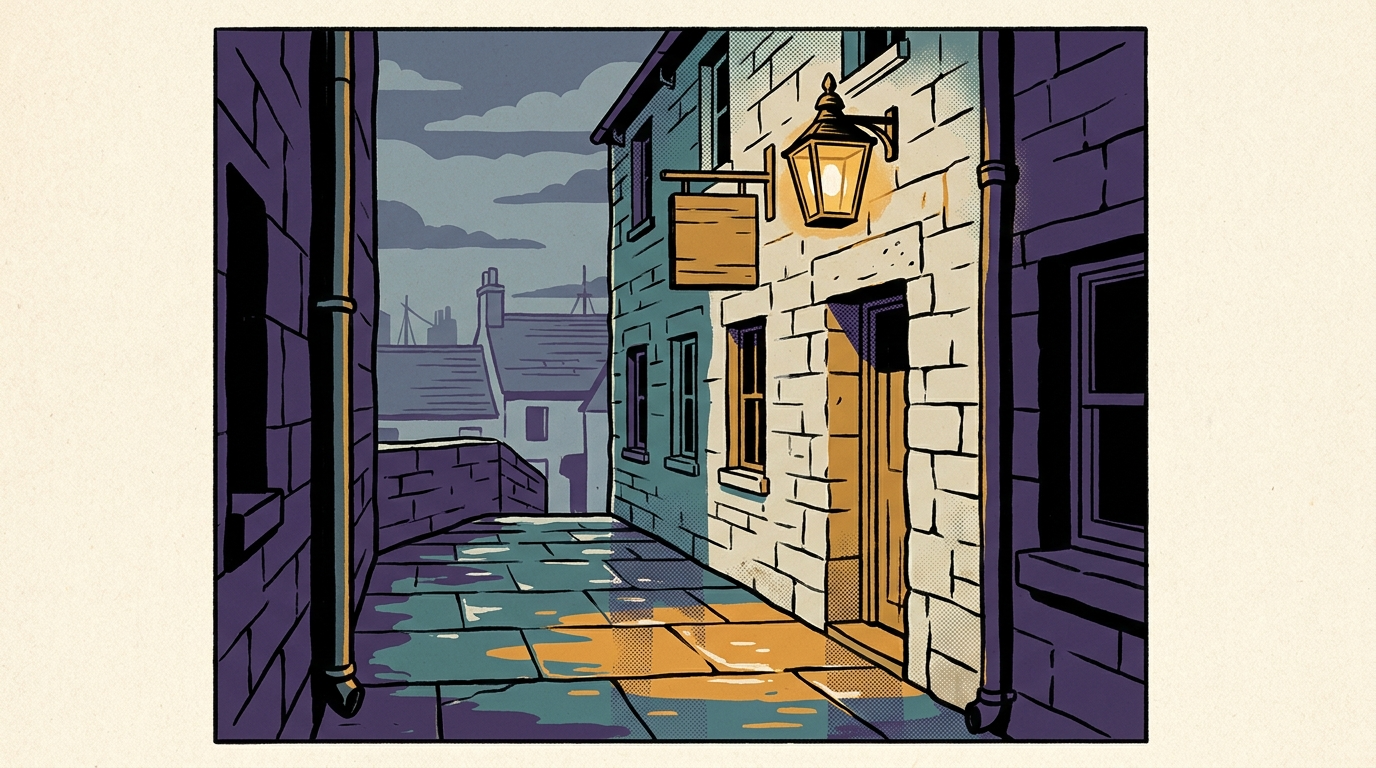
Airbnb Bullies a Portland Bed and Breakfast Over Its Logo
A small Portland inn is refusing to bow to corporate legal threats after Airbnb demanded it abandon its logo. Here is why the bully tactic backfired.
A corporate legal department with an unlimited retainers budget picked a fight with a small coastal bed and breakfast, and the Goliath in the room did not expect the innkeeper to say no. When word broke via the BBC that an independent lodging operation in Portland linked with B-side had flatly refused Airbnb’s demand to strip down and replace its visual logo, the reaction across operator chat channels was immediate, caustic, and deeply familiar. Every independent operator who has ever tried to carve out a distinct identity while operating in the shadow of the tech giants recognized the dynamic in seconds.
This was not a collision between two multinational conglomerates disputing patent portfolios or global distribution rights across dozens of jurisdictions. This was the dominant short-term rental broker on the planet dispatching trademark correspondence to an independent bed and breakfast, demanding that the micro-business discard its branding because corporate attorneys decided the local mark uncomfortably echoed their own. The inn refused to kneel. That refusal exposes the sheer absurdity of modern platform expansion, where tech giants demand that small accommodations exist purely as nameless inventory on their servers while simultaneously treating any independent regional identity as an existential threat to their intellectual property portfolio.
For more than a decade, the short-term rental giant spent hundreds of millions of dollars convincing the world that it stood for community, personal connection, and the democratization of hospitality. It co-opted the very phrase bed and breakfast, built a multi-billion-dollar valuation by turning neighborhood residential spaces into commercial stock, and sold itself as the champion of the regular person running a side enterprise. Yet the moment a real, physical bed and breakfast in Portland puts up a sign that corporate software flags as vaguely similar to the tech behemoth’s loop, the masquerade vanishes. The neighborhood protector disappears. The corporate IP enforcement machine takes the wheel.
What happened
According to coverage broadcast by the BBC and subsequently reported by Yahoo News Canada, the dispute centers on an independent bed and breakfast affiliated with B-side on the Isle of Portland. Corporate representatives acting on behalf of Airbnb approached the accommodation provider with an explicit instruction: alter the business logo or face legal repercussions. The Silicon Valley firm asserted that the graphic mark used by the Portland operation strayed too close to Airbnb’s own intellectual property, claiming potential confusion or brand conflict.
Rather than quietly folding under the weight of corporate paper, the Portland bed and breakfast took a public stand. The operators declined to dismantle their signage, strip their promotional collateral, or scrub their established graphic mark. Instead, they signaled their intention to resist the platform’s demands, bringing the standoff into the international press. While corporate trademark attorneys routinely issue pre-action notices designed to secure rapid, confidential capitulation from small business owners who lack the war chest to litigate, this particular operation refused to sign away its visual identity in silence.
The core grievance in the reporting is as straightforward as it is lopsided. Airbnb, an enterprise commanding tens of billions of dollars in enterprise value, determined that an independent bed and breakfast in a coastal British enclave posed an intolerable hazard to its global brand equity. The platform’s legal apparatus pushed for a mandatory rebrand. The local business stood its ground, leaving the global broker holding an aggressive legal demand that suddenly looks less like routine brand defense and more like petty institutional overreach.
The corporate panopticon and the trademark dragnet
To understand how an independent inn on the English coast lands in the crosshairs of a Silicon Valley conglomerate, one must look past the romance of hospitality and inspect the bureaucratic machinery of modern brand protection. Publicly traded tech giants do not employ paralegals to comb through regional tourism pamphlets by hand. They hire external brand intelligence agencies and deploy enterprise monitoring software that scours global trademark registries, domain registrations, social media handles, and visual databases every hour of every day.
These algorithmic scrapers do not possess human judgment, geographical perspective, or an understanding of neighborhood charm. They evaluate graphic marks through mathematical geometry, vector matches, and classification categories. When an automated scanner detects an enclosed loop, an overlapping line, or an abstract letterform registered or displayed under hospitality, travel, or lodging codes, it triggers an internal ticket. A junior lawyer or an outsourced intellectual property firm reviews the algorithmic match, confirms that the subject operates within International Classes 35, 42, or 43, and generates a standardized cease-and-desist letter. The entire process takes minutes and costs the corporation almost nothing.
For the recipient on the other end of that automated pipeline, the arrival of that correspondence is a traumatic shock. A registered letter bearing the letterhead of an international intellectual property practice lands on the reception desk of a working guest house. The tone is cold, formal, and freighted with implied financial catastrophe. It sets arbitrary deadlines for compliance. It demands the immediate destruction of physical signage, the surrender of promotional print assets, the deletion of digital accounts, and written undertakings that the business will never use any confusingly similar design again. It is designed to intimidate, because in ninety-nine cases out of a hundred, intimidation works.
The economics of corporate trademark policing are structurally perverse. Under intellectual property statutes in both the United States and the United Kingdom, trademark proprietors must actively demonstrate that they are policing their marks against dilution. If an owner fails to challenge third-party usage that could plausibly confuse a consumer, defense attorneys in future, high-stakes litigations can argue that the mark has been weakened or abandoned. This legal reality produces an aggressive corporate reflex: legal teams are incentivized to challenge every peripheral, microscopic, or benign design that enters their peripheral vision, regardless of whether any real-world human traveler would ever confuse a historic coastal inn with a digital software platform.
The mythology of the Bélo and the billion-dollar loop
The irony of Airbnb asserting moral and legal ownership over simple, universal geometric forms is written into the platform’s own corporate history. Back in 2014, when the company retired its original blue bubble lettering and unveiled its stylized icon, designed in partnership with London-based DesignStudio, the rollout was accompanied by an extraordinary volume of corporate philosophy. The platform christened the mark the Bélo, declaring that it was not a mere commercial logo, but a universal symbol of belonging that transcended borders, languages, and commercial self-interest.
In promotional films and public addresses, the company’s executive leadership went so far as to invite the public to draw, modify, and repurpose the symbol. They framed it as a shared global emblem, an open-source visual shorthand for warmth, shelter, and community. The design was explicitly deconstructed into four primary components: people, places, love, and the letter A. Every marketing campaign insisted that the symbol belonged to the hosts and the guests just as much as it belonged to the corporate entity headquartered in San Francisco.
That populist rhetoric, however, existed solely within the marketing department. Within the patent and trademark registries, the corporate machine moved with ruthless commercial orthodoxy, locking down the vector files across every conceivable jurisdiction and commercial class. The moment a working bed and breakfast employs a looped motif, a continuous line, or an abstract spatial curve in its independent regional branding, the utopian sermon about a universal symbol of belonging evaporates. What remains is a hard-nosed public corporation warning an independent inn that simple line work belongs exclusively to Silicon Valley.
No traveler traveling along the coast of Dorset books a weekend at a local bed and breakfast under the mistaken impression that they are reserving a room directly from the corporate balance sheet of a Delaware-registered holding company. The suggestion that consumer confusion exists between an authentic coastal guest house and an asset-light tech broker is a legal fiction manufactured to satisfy trademark litigation checklists. The reality is far more transactional: the platform wants total visual hegemony over the visual vocabulary of contemporary travel.
The asymmetry of legal intimidation in hospitality
When an enterprise of Airbnb’s scale decides to lean on an independent hospitality operator, the fight is never decided on artistic merit or genuine market confusion. It is decided by cash reserves. A platform with billions in liquidity treats litigation as a rounding error on its quarterly general-and-administrative balance sheet. A single cease-and-desist letter dispatched from an international firm represents ten minutes of partner billing. A fully contested trademark opposition hearing before an intellectual property registry costs tens of thousands of pounds or dollars; a full-blown High Court or federal infringement action can easily devour hundreds of thousands before a single witness takes the stand.
For an independent bed and breakfast, that math is ruinous. A traditional accommodation operator operates on real, physical operating margins. Every pound or dollar that comes through the door goes directly toward mortgage payments, commercial utility bills, local staff wages, property insurance, linen laundering, breakfast ingredients, and routine maintenance. An unexpected five-thousand-dollar legal consultation bill wipes out the profit from a dozen room nights. An extended trademark dispute with a corporate behemoth can bankrupt a small proprietor before the matter ever reaches an evidentiary review.
This financial chasm creates an environment where small operators are forced into submission even when they hold valid legal defenses. A local business might have designed its emblem in complete isolation, drawing inspiration from regional geography, nautical knots, local stone carving, or historic architectural details that predate the existence of Silicon Valley by centuries. But having a solid legal argument means nothing if you cannot afford the hourly rates required to present that argument before a registry magistrate. Small businesses routinely abandon cherished regional logos, discard thousands of dollars worth of custom uniforms and physical signs, and pay to reconstruct their websites simply because they cannot absorb the risk of defending their rights.
The Portland operator’s decision to plant its feet and resist this pressure is an exception that proves the rule. It requires steel nerves and an appetite for risk that most small business owners, understandably, cannot stomach. By taking the dispute to the BBC and letting the glare of public opinion shine on the platform’s legal aggressive tactics, the Portland B&B effectively equalized the battlefield. What was intended to be a routine, low-cost legal mugging carried out behind non-disclosure agreements suddenly transformed into an international public relations embarrassment for the tech platform.
The original sin of erasing the actual bed and breakfast
The confrontation in Portland cuts to the absolute core of the structural grievance that traditional hospitality operators harbor against the tech giants. For fifteen years, Airbnb built its global empire by literally hijacking the name, the concept, and the cultural goodwill of the bed and breakfast sector. The founders famously inflated three air mattresses in a San Francisco apartment, slapped the letters B&B onto their URL, and rode that pastoral shorthand into international ubiquity.
In doing so, the platform systematically degraded what the term actually meant. For generations, running a bed and breakfast was a regulated, accountable, and deeply personal vocation. It required an on-site innkeeper who cooked fresh food, complied with commercial kitchen inspections, maintained commercial fire exits, paid commercial property taxes, and carried specialized public liability insurance. The traditional B&B was a pillar of regional tourism, firmly anchored to its geography and accountable to its municipality.
The tech platform unbundled that reality. It allowed anyone with a master lease or a vacant condominium to list keys without cooking a meal, without greeting a guest, and without complying with traditional commercial safety and zoning frameworks. The platform took the cultural warmth associated with the historic bed and breakfast trade and used it as human camouflage for what rapidly transformed into an industrialized, automated, absentee property arbitrage market. Traditional innkeepers watched in frustration as residential apartment blocks filled with lockboxes, street parking vanished, and municipal authorities blamed the entire crisis on short-term rentals, lumping professional guest houses and unpermitted corporate apartments into the same regulatory basket.
To watch that same corporate entity turn around years later and instruct a real, physical bed and breakfast in Portland that its logo violates the platform’s proprietary brand rights is an insult of historic proportions. It demonstrates how far the tech aggregator has traveled from its supposed roots. The platform did not invent the bed and breakfast; it commercialized its good name, drained its vocabulary, and is now deploying corporate lawyers to police the graphic identity of the people who actually sweep the front steps and serve the morning tea.
Direct booking independence and the branding battlefield
This standoff over a logo is not an isolated intellectual property squabble. It is a skirmish along the front lines of the short-term rental industry’s most critical structural conflict: the battle for direct guest relationships. For the past decade, major online travel agencies and listing platforms have done everything in their technological power to anonymize independent hospitality providers. They hide host contact numbers until a reservation is secured. They penalize listings that include external URLs or telephone numbers in their profile copy. They route guest communication through proprietary messaging applications, stripping out email addresses to prevent operators from building independent customer relationship lists.
The rationale behind this platform policy is entirely financial. If an operator develops an independent visual brand, secures regional customer recognition, and establishes an independent web presence, guests book directly. When a guest books directly, the platform loses its substantial take-rate, which routinely reaches anywhere from fifteen to twenty percent when host and guest service fees are combined. The platforms do not want distinctive hospitality brands; they want fungible inventory. They want a consumer to believe that they are booking an Airbnb, not booking the Portland Bed and Breakfast.
The platforms do not want distinctive hospitality brands; they want fungible inventory.
When an independent operator invests in a professional, custom visual identity, registers a distinctive domain, and produces bespoke physical collateral, that operator is staging a quiet rebellion against platform vassalage. A strong, memorable logo is the foundational anchor of a direct booking operation. It appears on the luggage tags, the morning menu, the business cards placed on the bedside table, and the digital receipts sent to returning corporate visitors. It teaches the traveler to associate their positive holiday experience with that specific physical property and its human hosts, completely uncoupled from the software intermediary that originally facilitated the introduction.
By attacking the visual branding of independent operations, corporate legal teams, whether consciously or instinctively, are defending the platform’s proprietary lock-in. When a platform forces an independent property to water down its logo, abandon its signage, or live under the perpetual threat of trademark litigation, it suppresses that property’s capacity to grow into an autonomous, recognizable hospitality enterprise. The platform prefers an environment where every host looks identical, behaves identically, and remains completely dependent on the algorithmic distribution engine to fill its rooms next weekend.
Precedent and pushback when Goliaths overreach
The history of trademark enforcement in the hospitality and digital sectors is littered with examples of corporate overreach blowing up in the faces of the aggressors. Whenever an international tech firm or a corporate hotel chain unleashes its legal department on a micro-enterprise, it risks activating the classic public relations pitfall known as the Streisand effect. What would have remained a quiet, localized visual identity known to a few hundred seasonal guests suddenly becomes an international news item broadcast across television networks and syndicate wires.
Consider the famous trademark clashes of the past two decades. Major multinational brewers have threatened family-owned microbreweries over the use of localized geological names, only to retreat in public disgrace when local communities boycotted their mainstream lagers. Tech giants have attempted to trademark common linguistic phrases, basic descriptive terms, and primary colors, igniting immediate regulatory scrutiny and widespread consumer scorn. In almost every instance where a small business possesses the courage and the public forum to push back, the public intuitively sides with the independent operator.
By taking this fight to the BBC, the Portland bed and breakfast fundamentally flipped the economic leverage. The primary currency of a tech platform targeting younger, travel-oriented consumers is brand sentiment. Millions of marketing dollars are deployed every quarter to convince travelers that Airbnb is an authentic, friendly, and ethically sound enterprise. A single widely read news story detailing corporate lawyers attempting to bully a small coastal inn over an abstract logo inflicts far more damage on the platform’s consumer goodwill than any theoretical confusion caused by a local signpost ever could.
If the Portland operators had quietly folded and spent their own capital to change their visual materials, Airbnb’s legal department would have closed the file with a tick mark and moved on to the next independent target. By standing firm, the operators demonstrated an essential tactical truth for the modern hospitality trade: corporate legal power is formidable, but it hates sunlight. When a demand is visibly unreasonable, taking the documentation straight to the regional press is often the fastest way to turn an expensive legal crisis into a corporate retreat.
The systemic risk of brand complacency for hosts
This incident is a wake-up call for the tens of thousands of independent operators, boutique innkeepers, and professional property managers who still treat their graphic branding as an afterthought. Too many short-term rental entrepreneurs rely on generic online logo generators, cheap vector stock packs, or hastily assembled graphic assets that pull from common design libraries. In doing so, they leave their businesses wide open to legal vulnerability.
When an operator uses off-the-shelf icon packs or simple clip-art geometry to build their direct booking website and property signage, they run a massive systemic risk. The international brand intelligence algorithms that scan the web for trademark conflicts do not care about your artistic intent. If your downloaded graphic asset bears a twenty-percent geometric resemblance to an international corporate mark, you will eventually receive a registered cease-and-desist letter. For an operator who has just invested thousands of dollars in embroidered linens, roadside pylon signage, vehicle wraps, and printed welcome collateral, receiving that notice means throwing all of that capital straight into the trash.
Furthermore, operating without formal trademark registration in your domestic market is a profound strategic mistake. Many small hospitality businesses operate for years under common-law protection, assuming that because they have been trading locally for a decade, their brand is secure. But common-law rights are notoriously expensive to prove in contested litigation. They require documenting decades of local reputation, customer perception, and regional market penetration through extensive witness statements and localized accounting records.
A formal trademark registration on the national registry provides an immediate, unyielding line of defense. Had the Portland business or any independent operator secured registered rights early in their operational lifespan, the calculus shifts dramatically. When an international corporate scraper detects a registered trademark, corporate counsel cannot simply issue a bullying cease-and-desist letter demanding immediate destruction of materials; they are forced to initiate a formal, expensive invalidation proceeding before an administrative tribunal. That single procedural hurdle is often enough to convince corporate legal teams to pass over the target and look for softer, unregistered victims elsewhere.
What hosts should do now
The lesson of the Portland bed and breakfast is not that independent hospitality operators should live in fear of corporate legal departments, but that they must professionalize and protect their visual identity before an algorithmic scraper flags their website. Building a resilient, legally defensible independent brand is the most critical operational insurance an owner can purchase.
- Audit your visual assets immediately: Conduct a comprehensive review of your logos, icons, and graphic collateral across your direct booking site, social media channels, and physical signage. If your current mark relies on generic vector loops, stylized letters, or stock housing icons that vaguely mimic major travel platforms, commission an original, bespoke mark that draws distinctly on your unique architecture, local geography, or heritage.
- Run rigorous image-matching and registry searches: Before spending capital on physical signage, uniforms, or web development, run your graphic assets through reverse-image engines and the public trademark search portals of your national intellectual property office. Ensure that no existing mark in Class 43 (temporary accommodation) or Class 35 (business management) shares vector geometry with your design.
- Register your independent mark early: Do not rely on informal common-law trading status. File for formal trademark protection in your core operational classes with your domestic intellectual property authority. A registered trademark is an impenetrable initial shield against routine corporate legal harassment.
- Never capitulate to an initial demand letter in panic: If a corporate entity serves you with a cease-and-desist letter claiming logo similarity, do not immediately destroy your materials or sign their unilateral undertakings. Consult an experienced intellectual property attorney, assess the genuine likelihood of consumer confusion, and evaluate whether your local use predates their filing.
- Understand the power of public leverage: If a corporate giant initiates bad-faith intimidation against a demonstrably distinct local small business, recognize that public transparency is your strongest weapon. Corporate public relations departments are terrified of stories where tech aggregators pick on small, authentic hospitality providers.
The Portland innkeeper who refused to bow to Airbnb’s legal machinery did a service to the entire independent hospitality industry. The tech platforms may control the algorithms, the distribution rails, and the multi-million-dollar legal retainers, but they do not own the concept of an authentic bed and breakfast. When independent operators build defensible, original brands and stand behind their regional identities, the platform giants quickly discover that their corporate threats carry far less weight in the real world than they do in a Silicon Valley boardroom.
Sources
- BBC - reported September 15, 2026.
- Yahoo News Canada - B&B resists calls from Airbnb to change logo - Yahoo News Canada.
Read and analysed by the Stay Gazette desk.




Read the desk every morning.
The day's crackdowns and platform moves, the money, the design and the stays going viral, plus the desk's verdict, in one short email every morning.