
The Automated Dragnet: How Algorithmic Noise Patrols Are Killing Short-Term Rentals
Municipalities are writing connected decibel sensors and private security dispatches into local ordinances, shifting the entire cost of policing onto property owners.
The quiet of a residential neighborhood is no longer broken by a screaming neighbor or the sudden flash of a police cruiser. Instead, the night is fractured by the silent, digital ping of an API call. High up on the stucco eave of an empty vacation rental, a small, battery-powered plastic dome registers a sustained sound pressure level of seventy-two decibels for more than six minutes. No human being has complained. No neighbor has looked out their window. No local deputy has been dispatched. Yet, halfway across the county, an algorithmic routing engine has already processed the alert, matched the geographic coordinates with a private security patrol contractor, and sent an automated dispatch order to a guard sitting in an idling sedan.
This is the new reality of short-term rental enforcement: the total privatization and automation of noise compliance. Across the global short-term rental market, municipal governments are quietly shifting the burden of neighborhood peace away from public police forces and onto automated, host-funded surveillance networks. What began as a voluntary tool for anxious remote property managers to protect their investments has morphed into a mandatory regulatory regime. In cities across North America and Europe, local ordinances are increasingly requiring the installation of connected decibel monitors, turning what was once a private operational choice into an absolute, non-negotiable condition of doing business.
But this is not merely a story of technological adoption. It is a fundamental realignment of the economic incentives that govern the short-term rental industry. By outsourcing enforcement to automated sensors and private security firms, local governments have found a way to police neighborhoods without spending a single dollar of taxpayer money. The entire cost of this apparatus—the hardware, the monthly software subscriptions, the private guard dispatch fees, and the resulting administrative fines—is loaded squarely onto the balance sheets of property owners. For hosts already battling rising interest rates, flattening occupancy, and escalating platform fees, this algorithmic dragnet represents a structural threat to the very viability of the asset class.
How it actually works
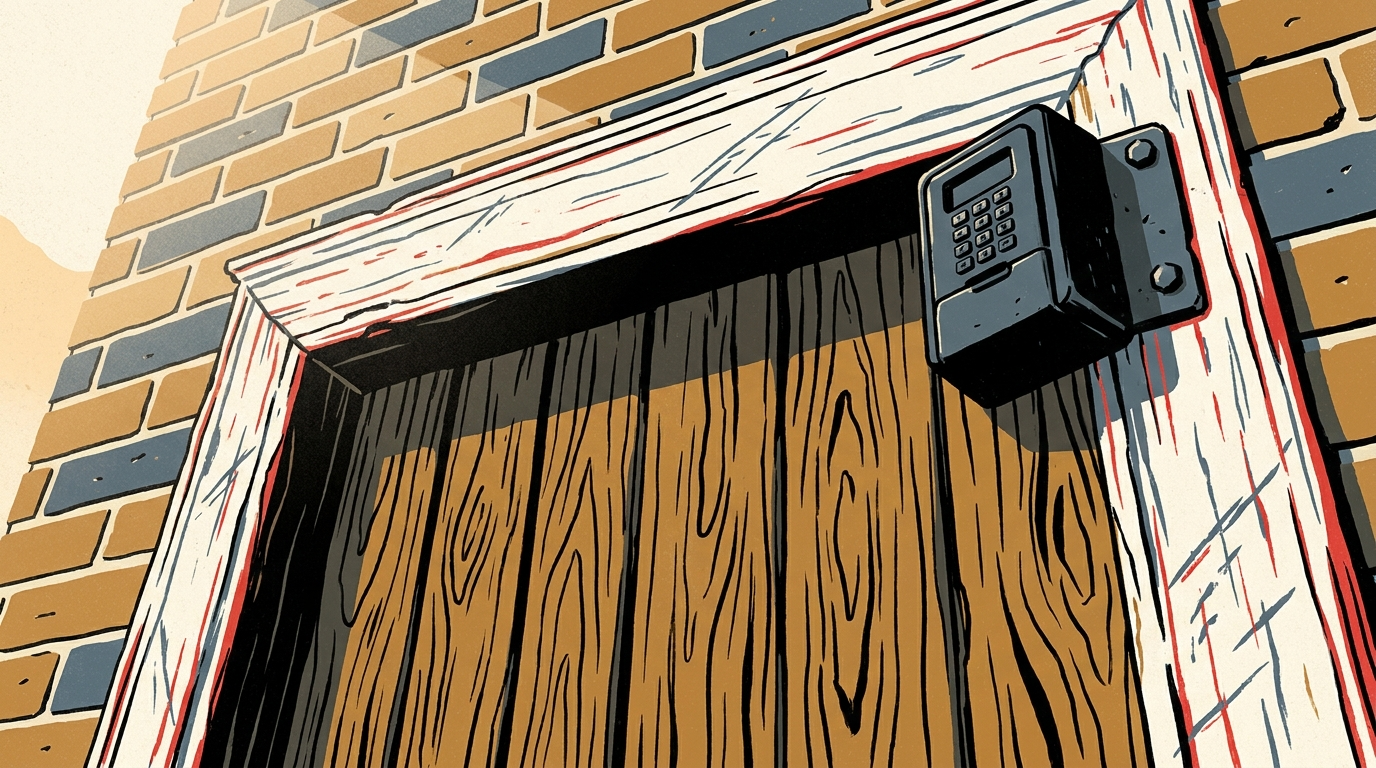
To understand the gravity of this shift, one must understand the precise technical mechanism that links a guest's laughter to a security guard's arrival. The process relies on a chain of hardware, cloud software, and physical contractors working in automated unison. At the center of the system is the decibel monitor. These devices, manufactured by companies like NoiseAware and Minut, do not record raw audio files or stream conversations; doing so would run afoul of federal and state wiretapping laws, as well as platform terms of service. Instead, they measure Sound Pressure Level (SPL) at regular intervals, typically every few seconds.
These measurements are weighted to reflect how the human ear perceives sound, usually using the A-weighting scale (dBA), which downplays extremely low and high frequencies, or the C-weighting scale (dBC), which captures the low-frequency bass that easily penetrates walls and windows. The raw decibel data is transmitted via local Wi-Fi to the manufacturer's cloud servers. Here, proprietary algorithms analyze the data stream. A single sharp spike, such as a dropped plate or a car backfiring, is ignored. However, if the decibel level remains above a pre-set threshold—for example, seventy decibels during the day or fifty-five decibels during municipal quiet hours—for a sustained duration, the system flags a “noise event.”
Once an event is flagged, the automation engine takes over. The software immediately sends an automated text message or places a robotic phone call to the guest, warning them that they have exceeded the property's noise limits. Simultaneously, an alert is sent to the host or property manager. If the sound levels do not drop below the threshold within a strictly defined grace period, usually ten to fifteen minutes, the platform triggers an API webhook. This webhook connects directly to a private security dispatch network.
These networks operate much like ride-hailing apps for physical security. The API routes the request to the nearest available private patrol officer, regardless of whether they work for a national giant like Securitas or a localized neighborhood watch service. The guard receives the dispatch on a mobile terminal, complete with the property address, access instructions, and a digital copy of the local noise ordinance. The guard is instructed to drive to the property, document any visible or audible disturbances, request that the guests move indoors or quiet down, and file a digital report. This entire sequence, from the initial laugh on a patio to the security guard standing in the driveway, occurs without a single human being in the neighborhood ever picking up a phone.
The municipal shift from reactive to proactive
For decades, neighborhood noise complaints were handled through the traditional, messy channels of municipal life. A neighbor grew annoyed by a loud party, waited until they could no longer tolerate the noise, and called the local police non-emergency line. The police department, prioritizing violent crime and active emergencies, would place the call at the bottom of the queue. If officers arrived at all, it was often hours later, long after the guests had gone to sleep or the party had dispersed. The neighbor remained frustrated, the host remained oblivious, and the city council eventually faced a room full of angry residents demanding a total ban on short-term rentals.
This reactive model was a failure for all parties involved. It created a toxic political climate where short-term rentals were painted as unpoliceable nuisances. Local governments, facing intense pressure from traditional hotel lobbies and neighborhood associations, realized that they did not have the manpower or the budget to police thousands of residential properties at 2:00 AM. Code enforcement departments are notoriously understaffed, rarely operating outside of standard business hours, and municipal police forces are facing chronic recruitment shortages across the globe.
The solution was a structural pivot toward proactive, automated enforcement. By writing mandatory decibel monitoring into local ordinances, cities discovered they could outsource the entire policing pipeline. The city of Palm Springs, California, became an early pioneer of this approach, establishing a dedicated, host-funded enforcement department and strict rules regarding outdoor noise. Other municipalities quickly realized the beauty of this model: by requiring hosts to install certified monitoring hardware and secure a contract with a private security company, the city could mandate peace without hiring a single new code enforcement officer.
Under these modern ordinances, the burden of proof is flipped. Historically, a city had to prove a property was violating the peace through officer testimony or physical sound readings taken from the property line. Today, the algorithmic log from a proprietary sensor is increasingly treated as prima facie evidence of a violation. If the sensor registers a breach, the property is deemed in violation, and the host is fined. The city has successfully transformed a public policing challenge into a private operational cost.
The brutal math of automated dispatches
To appreciate why this system is causing panic in host group chats, one must look at the cold reality of vacation rental economics. The margin structure of a short-term rental is highly sensitive to unexpected operational expenses. Consider a typical professional host managing a property with an Average Daily Rate (ADR) of $350 and a steady 65% occupancy rate. This yields a gross monthly rental revenue of approximately $6,825.
Out of this gross sum, the host must subtract a mountain of fixed and variable expenses. Local transient occupancy taxes (TOT) often chew up 10% to 15% of the gross rate. Platform fees, such as Airbnb's standard host fee or Vrbo's commission, take another cut. Property management fees, if the owner uses a professional firm, typically range from 15% to 25% of gross revenue. Then come the standard holding costs: mortgage payments, property taxes, specialized short-term rental insurance policies, utility bills, landscaping, pool maintenance, and the constant replenishment of linens and amenities. Cleaning fees are collected from guests, but they are a pass-through cost that barely covers the rising wages of professional cleaning crews.
After all these deductions, a healthy property might yield a net operating income margin of 15% to 20%, translating to roughly $1,000 to $1,300 in monthly cash flow. Now, inject the automated security dispatch system into this delicate equation.
A single automated dispatch event is not cheap. The private security firms contracted to respond to these API alerts charge a premium for immediate, on-demand night dispatches. A typical roll fee ranges from $75 to $150 per visit, regardless of whether a violation is actually occurring when the guard arrives. If the guard confirms a violation, the municipal fine is tacked on. In strict jurisdictions, these fines start at $500 for a first offense, climbing to $1,500 for a second, and $5,000 or absolute permit revocation for a third.
If a host suffers just two automated dispatches in a single month—perhaps triggered by a group of guests who refuse to go inside, combined with a false positive triggered by a leaf blower during the day—the financial damage is catastrophic. The combined cost of the dispatch fees and the municipal fines can easily exceed $1,300, completely wiping out the property's entire net profit for the month. If the permit is suspended, the property becomes a non-performing asset overnight, while the mortgage and holding costs remain stubbornly due.
The regulatory capture of the decibel cartel
The rapid spread of these mandatory monitoring laws is not an organic response to an escalating noise crisis. It is the result of a highly coordinated, incredibly successful lobbying campaign waged by the hardware and software companies that profit from these mandates. This is a classic case of regulatory capture, where a small group of commercial interests shapes public policy to guarantee demand for their products.
The business model of noise monitoring companies has shifted over time. Initially, these firms sold directly to hosts as a risk mitigation tool. It was a tough sell: convincing a host to pay $150 for a hardware sensor plus a recurring monthly SaaS subscription of $15 to $30 per property required constant marketing effort. The breakthrough came when these companies realized they could use the municipal legislative process to bypass the need for voluntary sales.
By presenting themselves to city councils as the scientific, objective solution to short-term rental friction, these tech firms positioned their hardware as a public good. They drafted model ordinance language that cities could copy-paste directly into their local codes. This language explicitly requires any registered short-term rental to install an “approved, continuously operating noise monitoring device capable of logging sound pressure levels.”
The moment a city council passes such an ordinance, every host in that jurisdiction is legally forced to become a paying subscriber to the decibel cartel. The hardware companies no longer have to convince hosts of the value of their product; the local police department and code enforcement office do the selling for them. This has created a highly lucrative, recurring revenue stream for these tech platforms, built entirely on the backs of a captive audience of property owners who have no choice but to pay.
The ruinous cost of false positives
The fundamental flaw in this algorithmic loop is the unshakeable belief that a decibel reading is an objective measure of bad human behavior. Sound is a complex physical phenomenon, and a simple microphone cannot distinguish between a group of rowdy partygoers and the natural environment.
A sound pressure level of seventy decibels is relatively quiet, roughly equivalent to the sound of a vacuum cleaner or a running shower. In an outdoor setting, this threshold can be crossed by a multitude of completely benign occurrences. A strong gust of wind rustling dry palm fronds directly next to an eave-mounted sensor can easily register seventy-five decibels. A passing landscaping crew with a leaf blower two houses down, a low-flying police helicopter, a barking dog in a neighbor's yard, or a heavy summer downpour hitting a metal roof will all register as sustained “noise events” on a standard decibel monitor.
Because the system is automated, it operates on a model of absolute liability. The algorithm does not pause to analyze the acoustic signature of the sound; it simply registers that the threshold was breached for the specified duration. The automated text warning is sent to the guest, and the alert is pushed to the host.
If these events occur during the day, they are a nuisance. If they occur at 11:30 PM on a Friday night while the host is asleep or out of cell service, they are an operational disaster. The automated system wait-time expires, the API fires, and a private security guard is dispatched to the property. The guard arrives to find a completely dark, silent house where the guests have been asleep for hours, oblivious to the fact that a gust of wind triggered a security dispatch. Yet, the host is still billed for the dispatch, and the system logs a “strike” against the property. The financial and administrative penalties are real, even when the violation is entirely fictional.
The legal fiction of unalterable algorithmic truth
When a human police officer issues a noise citation, there is a clear, established path for legal recourse. The officer must appear in administrative court, present their notes, describe what they personally observed, and face cross-examination by the property owner or their legal counsel. The host can argue that the officer was biased, that the sound was coming from a different property, or that the officer's equipment was uncalibrated.
The algorithmic enforcement model destroys this entire framework of due process. In many jurisdictions that have mandated these sensors, the local administrative code has been rewritten to treat the digital logs of approved decibel monitors as unchallengeable, objective truth. The host is presented with a graph showing a red line crossing a black threshold, and that graph is treated as the beginning and end of the legal inquiry.
This is a dangerous legal fiction. Consumer-grade decibel monitors are not precision scientific instruments. They are built with cheap, mass-produced microphone capsules that degrade over time when exposed to outdoor heat, humidity, dust, and insects. Unlike the specialized sound level meters used by professional acousticians or police departments, these residential sensors are rarely, if ever, calibrated after they leave the factory.
Furthermore, the software that processes this data is proprietary and closed-source. Neither the host, the city, nor the administrative judge has any way of auditing the algorithm to see how it filters out background noise or handles sensor anomalies. Yet, this unverified, uncalibrated consumer hardware is being given the power to strip property owners of their business licenses, levy thousands of dollars in fines, and destroy real estate values.
The death of hospitality
Beyond the legal and financial dangers lies a deeper, more insidious threat to the short-term rental industry: the complete destruction of the guest experience. The core appeal of a vacation rental has always been the promise of a home away from home—a place of privacy, comfort, and relaxation where families can gather without the sterile constraints of a hotel corridor.
The algorithmic surveillance state completely shatters this promise. When a guest arrives at a property and is greeted by signs warning them that their sound levels are being actively monitored by decibel sensors, the atmosphere shifts instantly from welcoming hospitality to active suspicion. The guest is immediately put on edge, feeling as though they are being watched and judged by an invisible landlord.
This anxiety is not unfounded. If a family is sitting by the pool in the afternoon, laughing and playing water games, they can easily trigger a daytime threshold warning. The sudden arrival of an urgent, automated text warning telling them to keep the noise down is a jarring, clinical experience. It ruins the vacation vibe, replaces joy with paranoia, and makes the guest feel like an unwanted intruder in a high-security facility.
If the host is forced to dispatch private security due to a false positive or a minor, temporary sound spike, the guest experience is permanently ruined. Having an armed or uniformed private security guard pull up the driveway at midnight to investigate a “noise event” is an incredibly stressful, intimidating experience for a traveler. The immediate result of these automated escalations is a wave of demands for full refunds, retaliatory one-star reviews on Airbnb and Vrbo, and a permanent loss of repeat business. In a market where search algorithms punish low reviews with immediate drops in visibility, a single automated security dispatch can doom a listing's performance for months to come.
The physical barriers to noise
Faced with the relentless march of automated enforcement, many hosts feel powerless, trapped between aggressive city ordinances and unpredictable guests. However, the solution is not to accept the inevitability of automated security dispatches. The solution is to shift the operational focus away from reactive electronic policing and toward proactive, physical sound mitigation.
Instead of relying on a digital sensor to tell them when a guest is being too loud, smart operators are investing in physical interventions that prevent sound from leaving the property boundaries in the first place. Sound is a physical wave that travels along the path of least resistance. By understanding the basics of acoustics, hosts can design their properties to absorb, deflect, and contain noise.
This begins with the landscaping. High, dense hedges of evergreen shrubs, such as arborvitae or clusia, act as highly effective natural sound dampeners. Unlike wooden fences, which can act as sounding boards if not properly constructed, dense foliage absorbs high-frequency sounds, such as laughter and voices. For properties with outdoor living spaces, the installation of acoustic fencing—fencing designed with dense, sound-absorbing materials and no gaps—can reduce the transmission of noise to neighboring yards by up to ten decibels, a reduction that the human ear perceives as a halving of the volume.
Furthermore, hosts can use smart home automation to physically limit the activities that lead to late-night noise violations. Instead of waiting for an outdoor television or sound system to trigger a decibel alert at 10:15 PM, the host can install smart relays that automatically cut power to outdoor entertainment systems, patio lights, and pool pumps at exactly 10:00 PM. By gently guiding the guest's behavior through physical and environmental cues, the host can eliminate the risk of an algorithmic trigger before it ever has a chance to fire.
The insurance and liability transfer
The rise of automated security dispatches has caught the attention of another major player in the short-term rental ecosystem: the specialized insurance industry. For years, underwriting a short-term rental property was a high-risk proposition. Standard homeowner policies do not cover commercial activity, and commercial policies are expensive and difficult to obtain for residential properties. The introduction of smart home sensors was initially welcomed by insurers as a way to mitigate risks associated with wild parties, property damage, and unauthorized events.
However, the automation of security dispatches has introduced a new layer of legal and operational liability. When a private security contractor is dispatched to a property via an automated API call, they are acting as an agent of the host. If that security guard oversteps their authority, enters the property unlawfully, or becomes involved in a physical altercation with a guest, the legal liability does not stop with the security firm. It flows directly back to the property owner who contracted the service.
Many hosts do not realize that their standard short-term rental liability policies may not cover claims arising from the actions of private security contractors. If a guest sues for unlawful detention, assault, or emotional distress following an aggressive late-night security visit, the host may find themselves defending a costly lawsuit entirely out of pocket. The insurance companies, ever eager to minimize their exposure, are increasingly writing exclusions into policies for any incidents involving private security dispatches, leaving hosts exposed to catastrophic legal risks.
The platform policy paradox
The shift toward automated enforcement is also deeply intertwined with the policies of the major booking platforms. In June of 2022, Airbnb codified its temporary party ban into a permanent global policy. The platform introduced new features to screen high-risk reservations and banned properties that repeatedly violated the party policy. Vrbo followed suit with similar restrictions, emphasizing their commitment to being good neighbors in residential communities.
While these platform-level bans were celebrated by municipal governments and neighborhood groups, they created a massive paradox for hosts. On one hand, the platforms demand that hosts prevent parties and maintain strict order. On the other hand, the platforms do not accept algorithmic decibel logs as valid evidence in guest disputes.
If a host cancels a reservation midway through a stay because their decibel monitor registered a violation and triggered a security dispatch, the guest will almost certainly contact Airbnb or Vrbo customer support to demand a refund, claiming they were wrongfully evicted. When the host presents the decibel logs as proof of the violation, platform representatives frequently reject the evidence, citing the lack of direct human verification or the possibility of sensor error. The host is left in the impossible position of being forced by local law and platform policy to enforce noise rules, while being financially penalized by the booking platforms for doing so.
We are entering an era where proprietary, uncalibrated, consumer-grade hardware is treated with the same legal weight as a certified police radar gun.
What hosts should do now
To survive the transition to this automated municipal dragnet, property managers must shift from reactive technology to proactive, physical, and human-centered management practices.
- Disable automatic third-party dispatches: If you use decibel monitoring software, configure the alerts to go exclusively to your team; never let the system automatically call a private security patrol.
- Invest in physical sound barriers: Plant dense, evergreen perimeter landscaping and install high-quality acoustic fencing to absorb and deflect sound waves before they cross the property line.
- Implement hard cutoff times for outdoor power: Use smart home relays to automatically cut power to outdoor televisions, sound systems, and patio lights at exactly 10:00 PM.
- Calibrate and audit your sensors: Regularly test and clean your physical decibel monitors to prevent dust, insects, or environmental wear from triggering costly false positives.
- Maintain a trusted local contact network: Build a reliable network of local co-hosts or property managers who can physically verify noise alerts before escalating to formal security dispatches.
The future of short-term rental operations belongs to those who recognize that hospitality cannot be automated. By taking control of the physical environment and keeping a human in the loop, operators can protect their margins, preserve their guest reviews, and keep the algorithmic police at bay.
Checked by the standards desk (Eleanor Quist): every specific in this story was traced to its source material before publication.
About this piece
An original expert-analysis column by the Stay Gazette desk. Figures are illustrative of how the market behaves; confirm specifics for your own market before you act.




Read the desk every morning.
The day's crackdowns and platform moves, the money, the design and the stays going viral, plus the desk's verdict, in one short email every morning.