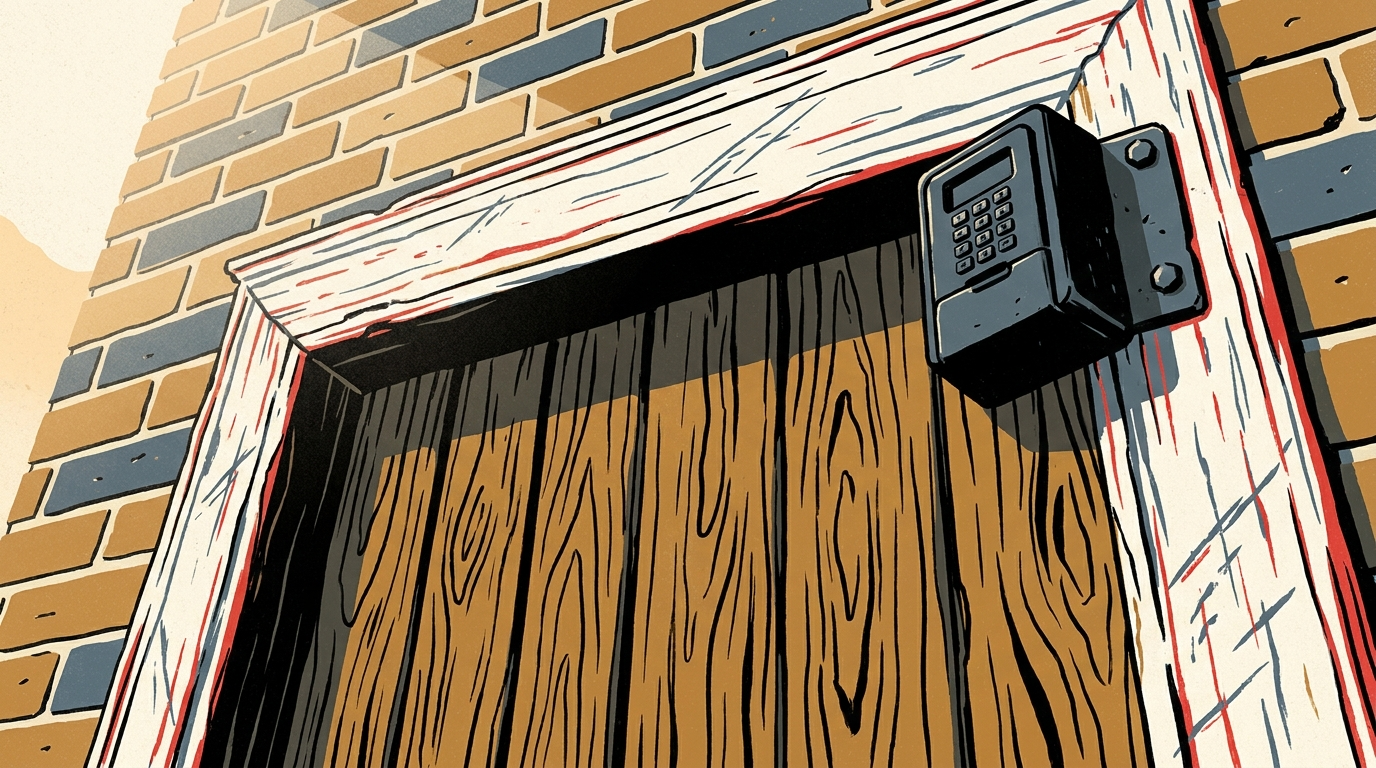
Historic Districts Are Banning Exterior Lockboxes to Deter short-term rentals
Preservation boards are using aesthetic guidelines to block automated check-ins, forcing physical key handoffs and pricing out remote investors.
The plastic lockbox clinging to a historic wrought-iron railing is the universal flag of the modern short-term rental. It is a gray, utilitarian lump of zinc alloy, locked with a four-digit combination, hanging like a parasite on the architecture of the past. To an investor, it represents freedom, automation, and passive income. To a local resident, it represents the quiet displacement of their neighborhood. For years, opponents of short-term rentals fought these operations through zoning laws, tax audits, and platform registries. Now, they have discovered a far more potent, low-tech weapon: the historic district aesthetic guideline.
Across the country, historic preservation boards are quietly updating their rulebooks to ban exterior lockboxes, smart keypads, and digital locks. By classifying these devices as unauthorized physical alterations or visual clutter, commissions are doing what zoning boards have struggled to achieve for a decade. They are cutting the cord of automated check-in. They are forcing a return to the physical key handoff, and in doing so, they are systematically dismantling the operational model of the remote short-term rental investor.
This is not a minor administrative hurdle. It is a structural threat to the scalability of the short-term rental industry. When a historic commission bans an exterior lockbox, they are not just protecting a door frame; they are intentionally injecting labor costs, operational friction, and geographical limitations back into a business that spent billions trying to escape them. It is a backdoor regulatory strategy that works precisely because it avoids the messy, litigious arena of zoning law and plays instead on the unassailable ground of architectural preservation.
How it actually works
To understand how this mechanism operates, one must look at the unique legal authority of historic preservation commissions. Unlike standard planning commissions or zoning boards, which govern land use, historic districts govern physical appearance. When a property is located within a designated historic district, any modification to the exterior of the structure visible from the public right-of-way requires a Certificate of Appropriateness. This certificate is not a rubber stamp; it is a hard-fought permit that requires matching paint colors, material compositions, and architectural styles to strict historical baselines.
A standard lockbox or a digital keypad does not meet these baselines. Mounting a modern, mass-produced plastic and steel lockbox to a Greek Revival porch column, a Federal-style door casing, or a historic wrought-iron fence is, by definition, an unauthorized alteration of a historic resource. Similarly, removing a historic mortise lockset to install a plastic-faced smart lock with a glowing blue LED screen violates almost every historic district guideline written since the 1970s.
When a neighbor or a municipal inspector spots an unapproved lockbox, the enforcement mechanism is swift. Unlike zoning violations, which often require lengthy investigations, hearings, and appeals, an aesthetic violation is a matter of simple visual fact. The inspector takes a photograph, issues a notice of violation, and orders the immediate removal of the offending device. Fines are assessed on a daily basis, often starting at fifty dollars and compounding until the property is brought back into compliance. Because these commissions operate under police powers granted by state conservation laws, their authority to regulate these details is highly protected by courts, leaving operators with almost no legal recourse but to comply.
The Death of the Remote Investor
The modern short-term rental market was built on the promise of frictionless, remote operations. The rise of property management systems, dynamic pricing algorithms, and automated guest messaging allowed an investor sitting in California to buy a portfolio of historic row houses in Savannah or Charleston and run them with minimal hands-on management. The entire economic model relied on a chain of automation. A guest books a property on Airbnb, the PMS generates a unique door code, the code is sent via automated message three hours before arrival, the guest checks themselves in, and the housekeeping team uses their own code to clean the property after departure.
The moment you remove the lockbox and the smart lock from this equation, the chain of automation breaks. Without a digital code or a secure key box on-site, the guest cannot access the property independently. The operator is forced to introduce a human intermediary. This means someone must physically travel to the property, stand on the porch, verify the guest's identity, and hand over a physical metal key.
For a remote investor, this requirement is a death sentence for their operating margins. Hiring a local property manager or a dedicated greeter to handle check-ins introduces a variable cost that cannot be easily scaled. While a smart lock has a one-time hardware cost and negligible software subscription fees, a human greeter requires payment for every single check-in. If a property has eighty check-ins a year, and each check-in costs fifty dollars in labor, that is four thousand dollars wiped directly off the bottom line. More importantly, it eliminates the passive nature of the investment. The remote syndicator can no longer manage fifty properties from a single dashboard; they must manage fifty human schedules, flight delays, and midnight key handoffs.
During the peak of the short-term rental investment boom, yield-hungry syndicators and retail investors alike flocked to historic tourist towns. They were attracted by the high ADRs driven by the historic charm of these locations. These buyers were not local operators; they were spreadsheets-first investors who analyzed acquisitions based on a completely automated operational model. The entire underwriting was predicated on the assumption that property management could be outsourced to software.
In this software-driven model, the physical unit is treated as a remote server. The smart lock is the port of entry, and the digital code is the access token. The moment a historic commission mandates the removal of this digital port of entry, they force the investor to move from a Software-as-a-Service model to a high-touch, labor-intensive operations model. This changes the capitalization rate of the asset. A property that underwrote at an eight percent cap rate under fully automated management can easily drop to a five percent cap rate when loaded with the physical labor costs of manual key handoffs. For institutional syndicates that pool capital from passive investors, this compression of yield makes the entire asset class unviable, forcing them to liquidate their portfolios and exit the market.
The Economics of the In-Person Mandate
Let us look at the actual numbers that short-term rental operators live and die by. In a typical historic tourist destination, an operator might achieve an Average Daily Rate of two hundred and twenty dollars with an average occupancy of seventy percent. This yields an annual gross revenue of approximately fifty-six thousand dollars. From this, the operator must deduct platform fees, cleaning costs, utilities, property taxes, insurance, and maintenance. In a historic district, maintenance costs are already elevated due to the requirement for specialized materials and artisans.
Now, introduce the in-person check-in mandate. In-person check-ins are not simple fifteen-minute tasks. Guests arrive late. Flights are delayed, traffic is congested, and travel schedules are unpredictable. A greeter scheduled for a four o'clock arrival might end up waiting until eight o'clock. To retain reliable staff, operators must pay for this waiting time. If the average cost of a physical check-in rises to seventy-five dollars when accounting for delays, the financial impact is severe.
On a typical three-night stay, a seventy-five-dollar check-in cost represents more than eleven percent of the total room revenue. This expense cannot be easily passed on to the guest as a cleaning fee or a resort fee without making the listing uncompetitive against local hotels. If the operator absorbs the cost, their Net Operating Income shrinks. This reduction in NOI directly depresses the asset value of the property, making it less attractive to future buyers and lowering the return on investment for the current owner. Furthermore, the operational complexity increases the likelihood of bad reviews. If a guest is forced to wait on a sidewalk for thirty minutes because the greeter was stuck in traffic, that frustration translates directly into a four-star review for check-in accuracy, pushing the listing down in the platform search rankings and further depressing future occupancy.
Let us construct a realistic scenario that every professional operator will recognize. A guest books a historic row house for a four-night stay. The booking is made through a major OTA, which charges the host a three percent commission. The property management system coordinates the housekeeping schedule, which costs a flat rate of one hundred and fifty dollars per turnover. The property has a strict check-in window between four o'clock and seven o'clock in the evening.
Under an automated system, the cost of check-in is virtually zero. Under a mandated in-person handoff system, the operator must pay a local greeter. If the guest’s flight is delayed, a very common occurrence in modern air travel, the greeter cannot simply leave. They must wait. Many local management companies charge a late-arrival surcharge or an hourly wait fee of twenty-five to thirty-five dollars after the scheduled window. If a guest arrives at midnight instead of five o'clock, the host is faced with an unexpected labor bill of over one hundred dollars for a single check-in. Over the course of a busy season, these unpredictable labor surcharges can quickly wipe out the entire profit margin of multiple bookings.
Furthermore, the physical key itself introduces a massive liability. If a guest loses a digital door code, the host can generate a new one instantly from their smartphone at no cost. If a guest loses a physical brass key to a historic mortise lock, the consequences are disastrous. The host cannot simply go to a local hardware store and cut a new key; historic mortise locks often use specialized skeleton keys or vintage blanks that are difficult to reproduce. If the entire lockset must be replaced to ensure security for the next guest, the host is looking at a locksmith bill that can easily exceed three hundred dollars, not to mention the operational downtime of having the property un-rentable while the lock is being serviced.
The Smart Lock Bypass and Why It Fails
Confronted with these regulations, many operators attempt to find technological workarounds. The most common strategy is to install a smart lock that fits within a traditional deadbolt housing or uses a standard key cylinder. These devices, often called smart cylinders, allow the exterior of the lock to look perfectly traditional, while the interior mechanism is motorized and controlled via Bluetooth or Wi-Fi.
While this sounds like an elegant solution, it fails under the harsh realities of historic district enforcement and guest logistics. First, many historic preservation guidelines do not just regulate the appearance of the lock; they regulate the physical integrity of the historic door itself. Most historic homes built before the mid-twentieth century utilize mortise locks, which are large, rectangular brass boxes set into a deep pocket in the edge of the door. Standard modern smart locks are designed for modern tubular bores. Retrofitting a smart lock onto a historic door often requires drilling new holes, patching old wood, and altering the door structure. This is a direct violation of historic guidelines that can result in massive fines and orders to replace the entire door with a custom-milled, historically accurate replica costing thousands of dollars.
Second, smart locks that do not use an exterior keypad must rely on guest smartphones for access. This requires the guest to download a specific application, enable Bluetooth, grant location permissions, and follow a series of technical steps to unlock the door. In practice, this is a customer service nightmare. Guests arrive tired, with low phone batteries, poor cellular reception, or limited technical literacy. The rate of guest lockouts increases exponentially compared to a simple physical keypad or lockbox. Each lockout requires immediate, urgent intervention, dragging the operator back into the manual, high-touch management style they were trying to avoid.
The architectural reality of historic homes is the greatest enemy of the modern smart lock. Most homes built in the nineteenth and early twentieth centuries were constructed with doors of non-standard thicknesses, often ranging from one and three-eighths inches to over two inches, with custom-carved stiles and rails. These doors do not feature the standard two-and-three-eighths or two-and-three-quarters inch backsets found in modern construction.
To mount a standard smart deadbolt from brands like August, Yale, or Schlage, an installer must often perform extensive modification to the door. This process, known as prepping the door, involves drilling a large circular hole through the face of the wood and chiseling out a pocket for the latch bolt. In a historic district, this type of physical modification is highly restricted. The wood of a historic door is often irreplaceable old-growth heart pine or mahogany. Damaging this wood to install a temporary electronic lock is viewed by preservationists as a form of architectural vandalism.
If an inspector notes that a historic door has been drilled out for a modern smart lock without a Certificate of Appropriateness, the penalties are severe. The commission can order the property owner to restore the door to its original condition. Because you cannot easily restore a two-inch hole in a solid wood door, this usually means purchasing a custom-made replacement door. A custom millwork shop charging historical preservation rates will easily bill five thousand dollars or more to replicate a historic panel door, completely erasing multiple months of rental revenue.
Historical Precedents of Aesthetic Warfare
This use of aesthetic guidelines to achieve social and economic outcomes is not a new invention. Historic preservation has long been used as a tool of exclusion and control. In cities like Charleston, South Carolina, and New Orleans, Louisiana, the preservation movement was founded as much on the desire to control neighborhood demographics and commercial activity as it was on saving old brick and plaster.
In the Vieux Carré of New Orleans, the historic commission has used its sweeping authority to control everything from the type of light bulbs used on porches to the placement of trash receptacles. By making it physically and financially exhausting to operate a commercial business within the historic residential quarters, the commission successfully preserved the residential character of the neighborhood long before modern zoning laws were established.
Similarly, in international markets like Edinburgh, Scotland, the city council has utilized conservation area regulations to target short-term rentals. Rather than fighting the platforms on a national scale, local authorities have used the physical common stairwells of historic tenement buildings as a regulatory choke point. They argue that the constant movement of wheeled luggage over historic stone stairs constitutes an unacceptable level of wear and tear on the public fabric of the building, thereby justifying the denial of planning permission for short-term use. This is the playbook that modern municipal attorneys are studying: when you cannot ban the activity directly, you make the physical execution of that activity impossible.
To fully comprehend why historic commissions are so effective at this style of regulation, one must examine their origins. The historic preservation movement in the United States began in earnest in the 1930s with the creation of the Old and Historic Charleston District. From its inception, preservation was never merely about the passive appreciation of old buildings. It was a highly active form of urban planning designed to maintain social order, property values, and the cultural narrative of the local elite.
Over the decades, historic commissions have developed a highly sophisticated administrative apparatus. They operate under detailed guidelines that govern every microscopic detail of the built environment, from the composition of the lime mortar used in brick repointing to the exact alloy of brass used in window hardware. This level of detail allows them to act as a highly effective filter for the types of businesses and residents that can occupy a neighborhood.
By using aesthetic guidelines as a regulatory tool, historic commissions can achieve outcomes that would be illegal under standard zoning laws. For example, a city cannot legally pass a zoning ordinance that bans low-income residents or transient workers from a specific neighborhood, as this would violate state and federal fair housing laws. However, a historic commission can mandate that all exterior surfaces be maintained to a level of historical perfection that is so expensive to achieve that it naturally filters out anyone without significant capital. The ban on exterior lockboxes is simply the modern application of this traditional filter, designed to exclude the high-volume, automated commercial operator in favor of the owner-occupant who has the time and resources to manage the property manually.
The Collateral Damage of the Key Police
While the target of these regulations is the institutional investor and the corporate operator, the collateral damage is felt across the entire local short-term rental ecosystem. The mom-and-pop host, who rents out a carriage house or an accessory dwelling unit to help pay their own high mortgage and maintenance costs, is hit just as hard. These small-scale hosts often have full-time jobs and cannot leave their offices to hand over a key at two o'clock on a Tuesday afternoon. By banning the simple lockbox, the city effectively strips these local residents of their ability to participate in the sharing economy.
The impact also ripples outward to local service providers. Independent cleaning crews, handymen, and property managers rely on predictable, automated access to properties to schedule their work. When access requires coordinating with human keyholders or navigating complex physical handoffs, the efficiency of these service providers drops. A cleaner who could previously service three properties in a day might now only manage two, reducing their earning potential and driving up the cost of turnover services for every operator in the market.
Furthermore, the ban on secure, on-site lockboxes often forces hosts to resort to highly insecure alternatives. Out of desperation, some operators begin hiding keys under doormats, behind planters, or inside fake rocks on public sidewalks. These practices do not just violate historic district aesthetics; they create serious security risks for the property, the guests, and the surrounding neighborhood. A key left in an unsecured outdoor location is an open invitation to theft and unauthorized entry, undermining the very community safety that historic districts claim to protect.
In larger metropolitan areas, some operators attempt to mitigate the lockbox ban by utilizing third-party key-holding networks like Keycafe or Sharebox. These services partner with local convenience stores, cafes, and gas stations to house physical keys in automated locker systems. The guest receives a digital code, walks to the partner business, and retrieves the physical key from the locker.
While this is a viable solution in dense urban neighborhoods like Boston’s Beacon Hill or Philadelphia’s Society Hill, it is completely unavailable in the majority of historic tourist destinations. In smaller historic coastal towns, historic mountain communities, or sprawling historic districts in mid-sized southern cities, there are no twenty-four-hour convenience stores or partner cafes within walking distance of the residential properties. The infrastructure simply does not exist.
This forces hosts into highly compromised operational positions. Some attempt to establish informal agreements with local businesses, paying a nearby boutique or restaurant a monthly fee to act as a key drop. However, these arrangements are highly fragile. If a restaurant manager decides the constant flow of lost tourists with luggage is disrupting their dining room, they will terminate the agreement with no notice, leaving the host without a check-in solution on a Friday afternoon. Others resort to the highly risky practice of leaving properties unlocked for the guest's arrival, a practice that invalidates standard commercial general liability insurance policies and exposes the property to immediate occupancy by squatters or vandals.
The Regulatory Backdoor as a Legal Strategy
The brilliance of the aesthetic lockbox ban, from the perspective of city planners, lies in its legal durability. When a municipality attempts to pass an outright ban on short-term rentals, they are immediately met with lawsuits from property owners and platform-backed advocacy groups. These lawsuits argue that the ban constitutes an unconstitutional taking of property rights, violates vested rights, or exceeds the zoning authority granted by the state. These legal battles can drag on for years, costing the city millions of dollars in legal fees with no guarantee of success.
Aesthetic regulations, on the other hand, enjoy a highly favored status in the American legal system. Since the landmark Supreme Court decision in Penn Central Transportation Co. v. New York City, courts have consistently held that local governments have a broad and legitimate interest in preserving the aesthetic and historical character of their communities. Historic commissions are treated as expert administrative bodies, and their decisions are given a high level of deference by judges.
If a historic commission determines that a plastic lockbox on a historic railing detracts from the visual integrity of a designated historic district, a court is highly unlikely to overturn that decision. The platform legal teams, which have successfully challenged zoning bans in various jurisdictions, find themselves completely disarmed when facing a simple aesthetic guideline. They cannot argue that a lockbox is a constitutionally protected right, nor can they argue that a historic commission is acting outside its statutory authority. By shifting the regulatory mechanism from the use of the property to the appearance of the property, cities have constructed a regulatory backdoor that is virtually bulletproof.
The legal strength of historic district commissions is rooted in the doctrine of police power, the fundamental authority of local governments to regulate private property to protect the public health, safety, morals, and general welfare. While the definition of public welfare was historically limited to tangible threats like fire hazards and sanitation, the courts have expanded it to include aesthetic and cultural preservation.
In the landmark 1954 Supreme Court case Berman v. Parker, Justice William O. Douglas wrote that the concept of the public welfare is broad and inclusive, stating that the values it represents are spiritual as well as physical, aesthetic as well as monetary. This legal foundation was further solidified by the Penn Central decision in 1978, which established that aesthetic regulations do not constitute a taking under the Fifth Amendment as long as they do not deny the property owner all economically viable use of their land.
Because a lockbox ban does not prevent a property owner from renting their home on a long-term basis, or even on a short-term basis with manual check-ins, it is virtually impossible for an operator to claim a regulatory taking. The courts view the ban as a minor, reasonable aesthetic regulation designed to preserve the historic character of the district for the benefit of the entire community. This makes the historic commission’s decision-making process nearly immune to judicial review, leaving short-term rental operators with no legal avenue to challenge the rules.
The API Delusion and the Search for a Tech Fix
Many operators believe that platform giants like Airbnb or Vrbo will step in to solve this problem by integrating with local key-delivery startups or lobbying municipal governments. This is a profound misunderstanding of the platform business model. The platform is a marketplace; its primary goal is transaction volume. While they will lobby heavily against wholesale zoning bans that threaten their entire supply in a major market, they are highly unlikely to expend political capital or legal fees fighting hyper-local historic district aesthetic guidelines.
To the platforms, the operational friction of a lockbox ban is the host’s problem to solve. The platforms' API integrations are designed to connect with hardware manufacturers, not human courier networks. While a host can easily link their Airbnb account to a Schlage or Yale smart lock system to automatically generate guest access codes, there is no standardized API that can reliably dispatch a human greeter to a historic property in Savannah at midnight. Any attempt to build such a network would require massive operational overhead, human logistics management, and liability coverage that the platforms have spent their entire existence trying to avoid. The host is left entirely on their own to bridge the gap between digital marketplace and physical reality.
The True Cost of Compliance and Industry Consolidation
The long-term consequence of these aesthetic bans is the rapid consolidation of short-term rental inventory in historic districts. When the cost of operation rises due to the requirement for manual check-ins, the first operators to be squeezed out are the local, middle-class hosts. These are the individuals who own a single property, perhaps a carriage house behind their main residence, and manage it themselves to offset the high cost of living in a historic neighborhood.
These small-scale hosts do not have the scale to hire a dedicated property management company that employs full-time greeters. They cannot afford to take two hours off from their day jobs to meet a guest who is running late. As a result, they are forced to either convert their properties to long-term rentals, which generate significantly less revenue, or sell their properties to larger, institutional real estate firms.
These institutional firms, conversely, can absorb the cost of manual check-ins by distributing the labor across a large portfolio of properties within the same historic district. A single full-time greeter employed by a large management company can handle check-ins for twenty or thirty properties spread across a few blocks, making the marginal cost per check-in significantly lower than it would be for an individual host. Thus, the very regulations designed to deter corporate investors and protect the community character end up achieving the exact opposite: they squeeze out the local, independent host and hand the keys of the historic district over to corporate property management syndicates.
When you cannot ban the activity directly, you make the physical execution of that activity impossible.
What hosts should do now
To handle this shifting regulatory environment without sacrificing operating margins, operators in historic districts must take immediate, proactive steps to adapt their check-in logistics.
- Audit the specific guidelines of the local historic preservation commission to determine what constitutes an exterior alteration and if any historic hardware exemptions exist.
- Form strategic key-holding partnerships with nearby independent businesses, such as cafes, boutiques, or dry cleaners, to act as a secure, local key drop.
- Transition to internal smart locks that do not alter the exterior door hardware, utilizing Bluetooth-enabled solutions that are invisible from the street.
- Incorporate the labor costs of manual check-ins directly into the property’s financial model, adjusting rates and minimum stay requirements to preserve Net Operating Income.
- Engage directly with the historic preservation board to propose standardized, aesthetically acceptable key-box enclosures that preserve both security and historical character.
The battle for historic districts is no longer being fought in the halls of state legislatures; it is being won on the historic porch. Operators who fail to adapt their operational models to these aesthetic realities will find themselves locked out of the most lucrative travel markets in the world.
Checked by the standards desk (Eleanor Quist): every specific in this story was traced to its source material before publication.
About this piece
An original expert-analysis column by the Stay Gazette desk. Figures are illustrative of how the market behaves; confirm specifics for your own market before you act.



Read the desk every morning.
The day's crackdowns and platform moves, the money, the design and the stays going viral, plus the desk's verdict, in one short email every morning.