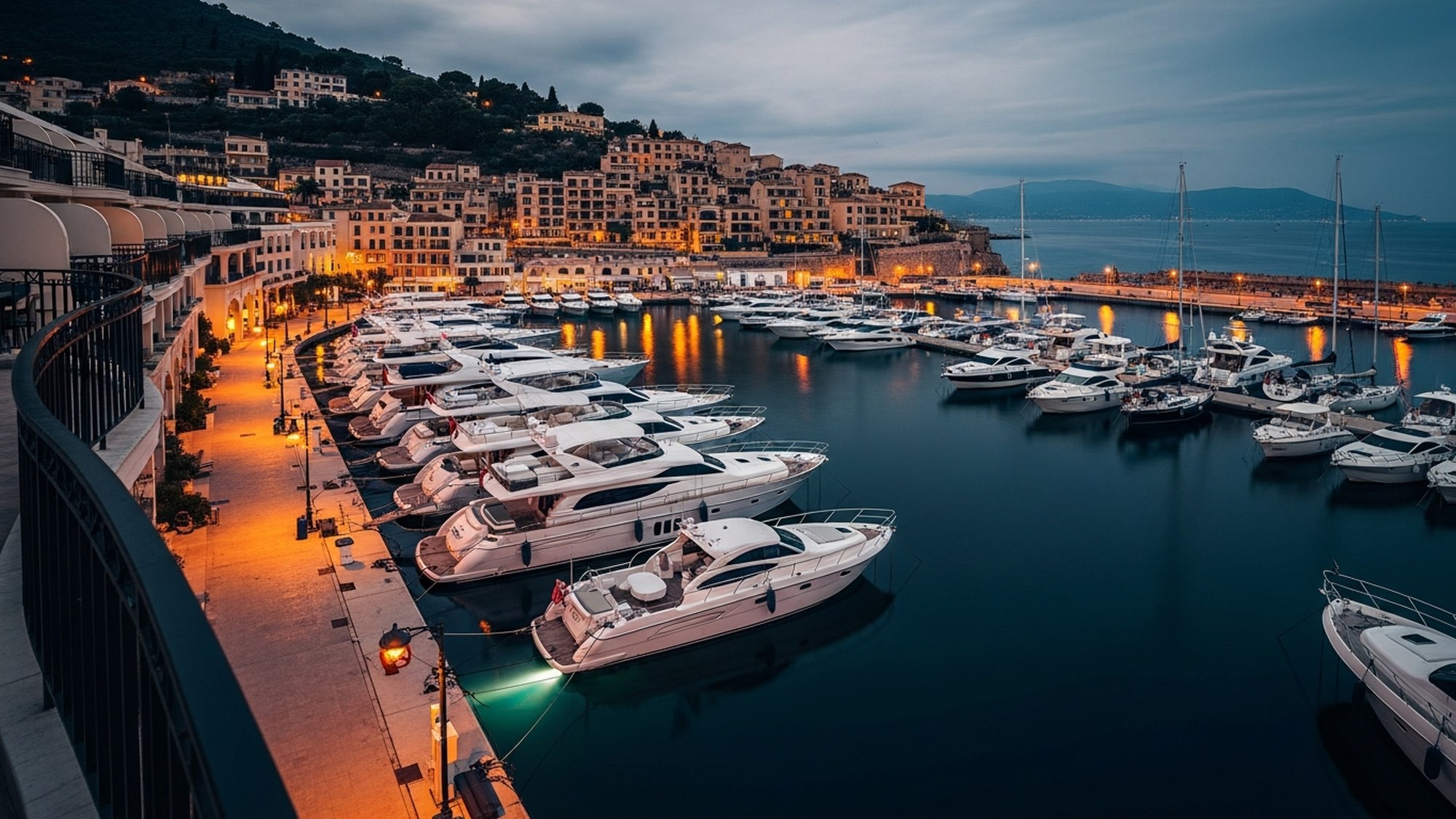
Coastal Carnage: The Summer Season Ban That Blindsided Beach-Town Hosts
A sudden wave of summer-only restrictions and permit freezes in America’s most sought-after coastal markets is gutting host incomes and reshaping the industry overnight. Are you next?
The hammer dropped without warning for many. One day, a host in a quintessential American beach town is planning their peak summer season, calculating the occupancy rates that will carry them through the lean months. The next, a municipal notice lands: a new ordinance, an emergency permit freeze, or a 'temporary' ban on short-term rentals during the very months that make the entire business viable. It's a gut punch. A financial decapitation. And for countless operators, it's the nightmare scenario nobody truly believed would happen, until it did.
This isn't a slow burn, a gradual tightening of the screws. This is a sudden, often politically motivated, amputation of a property's income-generating capacity precisely when it matters most. For STRs in coastal markets, summer isn't just a good season; it’s *the* season. It’s the period when daily rates surge, when demand is insatiable, and when the bulk of annual revenue is captured. Take away the summer, and you don’t just reduce profits; for many, you erase the entire year’s viability.
The fallout is immediate and catastrophic. Investments made years ago, business models meticulously crafted around peak-season performance, and the very livelihoods of hosts and local service providers are being vaporized. This isn't just about a few individual properties. This is a systemic shock to an entire segment of the short-term rental industry, exposing the precariousness of operating in markets where local sentiment and political will can override established economic realities with frightening speed.
The Sudden Hammer Drop: How Bans Emerge
The genesis of these summer-only restrictions often follows a predictable, if infuriating, pattern. Local governments, facing increasing pressure from long-term residents, advocacy groups, and sometimes the traditional hotel lobby, look for a quick fix to complex problems. Housing affordability, noise complaints, parking congestion, and the perceived 'character' of a neighborhood are common battle cries. The short-term rental industry, visible and often poorly represented at the local level, becomes an easy target.
These crackdowns rarely come with a lengthy public consultation period for the STR community. Instead, they often materialize as emergency ordinances, amendments tacked onto existing zoning laws, or sudden declarations from city councils. The language used is frequently framed around 'preserving community welfare' or 'addressing housing shortages,' even if the actual impact on housing stock is debatable or the measures primarily target properties that would never enter the long-term rental market anyway, such as dedicated vacation homes.
A permit freeze, a particularly insidious tactic, can halt new applications indefinitely, stifling growth and competition. But the summer-only ban is different. It’s a direct attack on the revenue stream of existing operators. Sometimes, it's a blanket prohibition on all STRs for specific months. Other times, it's more nuanced – a ban on rentals under a certain number of days, effectively eliminating weekly summer vacationers, or a 'primary residence only' rule that conveniently excludes dedicated vacation properties during high season. The end result, however, is the same: the most lucrative part of the year is deemed off-limits, often with minimal lead time for hosts to adapt.
The lack of foresight and planning on the part of municipalities is staggering. They pass these measures, often driven by a vocal minority or a political agenda, without fully understanding the economic ripple effects. They disregard the tax revenues generated, the local jobs supported – cleaners, maintenance, landscapers, local businesses patronized by STR guests – and the property value implications for owners who have invested heavily under a different regulatory regime. This isn't about reasoned policy; it's about reactive governance, and hosts are paying the price.
The Crushing Blow to Occupancy and ADR
For any short-term rental business, occupancy rate and Average Daily Rate (ADR) are the twin pillars of profitability. In coastal markets, especially those with distinct high and low seasons, these metrics behave in a specific, delicate dance. High summer ADRs and near-100% occupancy are essential to offset lower rates and sparse bookings during the shoulder and off-seasons. A summer ban doesn't just reduce these numbers; it fundamentally breaks the seasonal economic model.
Imagine a property that historically achieves 80% occupancy in July and August at an ADR of $600. For the rest of the year, perhaps it averages 40% occupancy at $250 ADR. The summer months aren't just a bonus; they are the financial engine, generating a disproportionate share of annual revenue. If those two months are suddenly off-limits, the entire annual revenue projection collapses. The remaining 10 months simply cannot generate enough income to cover fixed costs, let alone turn a profit, at their lower occupancy and ADR.
Hosts might attempt to compensate by drastically increasing ADR in the remaining permissible months. This is often a fool's errand. Demand in the off-season is inherently lower, and prices are already largely dictated by market forces, not wishful thinking. Pushing rates too high leads to further reductions in occupancy, creating a vicious cycle of diminishing returns. The pool of potential guests looking for a beach vacation in November is significantly smaller and less price-sensitive than in July.
Furthermore, the pressure to make up for lost summer revenue can lead to desperate pricing strategies, undercutting the market for other hosts who might still be able to operate. This creates a race to the bottom, destabilizing pricing structures for everyone. The fundamental problem remains: a property's peak earning potential, its scarcity value during the hottest months, has been artificially removed. There is no simple way to recoup those lost bookings and the premium rates they commanded, because that demand simply does not exist at other times of the year.
The Math of Disaster: Fixed Costs, Vanishing Revenue
The short-term rental business, like any real estate venture, is built on a foundation of fixed and variable costs. When income is slashed, these costs don't magically disappear. They become an anchor dragging the operation into the red, fast. This is where the true financial pain of a seasonal ban becomes horrifyingly clear.
Consider the fixed costs: property taxes, insurance premiums, mortgage payments, annual HOA fees, and any existing permit renewal fees. These expenses accrue regardless of whether a single guest checks in. For a host whose property generates 60-70% of its annual revenue in just three or four summer months, removing that income stream means these fixed costs now represent a far greater percentage of their remaining, diminished income. What was once a manageable overhead becomes an insurmountable burden.
Then there are the permit costs themselves. Many coastal markets require annual or biennial permits, which can range from a few hundred to several thousand dollars, depending on the municipality and the property type. Paying a substantial fee for a permit that allows operation for only a fraction of the year, and crucially, excludes the most profitable months, feels like an insult added to injury. It’s paying for a license to operate a severely handicapped business.
Variable costs also become disproportionately heavy. Cleaning fees, for instance, are often paid per booking. While fewer bookings mean fewer cleaning events, the overhead of maintaining a reliable cleaning crew, especially in a seasonal market, doesn't vanish. Many professional cleaning services structure their teams around peak-season demands. With a suddenly truncated season, these services may struggle to retain staff, leading to higher per-clean costs or reduced availability during the remaining open windows. Similarly, supplies, utilities (which still run even when vacant), and maintenance remain. Platform fees, typically a percentage of booking revenue, are the only cost that truly scales down with lost bookings, but that offers little solace when the overall revenue base has collapsed.
Even income tax rates, while applied to actual revenue, don't account for the lost opportunity. The effective tax burden on a profitable, full-year operation is fundamentally different from a business barely breaking even or losing money due to an imposed shutdown. The host is left with all the obligations of a property owner, but without the primary means to fulfill them through their chosen business model.
Why Now? The Undercurrents of Coastal Conflict
The surge in summer-only bans isn't random; it's the culmination of several converging pressures unique to coastal markets. These areas often experience a dramatic influx of visitors during peak season, stretching local infrastructure, increasing traffic, and putting a strain on community resources. While tourism is the lifeblood for many, the sheer scale of the short-term rental phenomenon has altered the traditional dynamic.
Long-term residents frequently voice concerns about housing affordability, a critical issue exacerbated by a national housing crisis. They see properties converting to STRs and connect it, often inaccurately or oversimplifying, to rising rents and home prices. The argument that STRs 'take away' housing from residents gains traction, even when many coastal STRs are second homes or dedicated vacation properties that would never enter the long-term rental market. The perception, however, is a powerful political tool.
Beyond housing, quality of life issues loom large. Noise complaints from vacationers, parking shortages on residential streets, and even trash management become flashpoints. These concerns, while sometimes legitimate, often escalate in the emotionally charged environment of local politics. Homeowners who reside year-round feel a sense of displacement or a loss of their community's character as neighborhoods transform into de facto hotel districts during the summer.
Political incentives also play a significant role. Local politicians, facing re-election or seeking to curry favor with their long-term resident base, find that taking a strong stance against STRs is a potent campaign promise. It’s an easy win for a demographic that votes and is often more organized than the transient STR community. The economic benefits of STRs – increased tax revenue, support for local businesses, jobs – are often less visible or harder to quantify for the average voter than the immediate frustrations of a noisy neighbor or a crowded beach access point.
Furthermore, coastal markets, by their very nature, attract a high concentration of second homeowners. These owners, while contributing to the local economy, often lack the local voting power of permanent residents. This disparity creates a fertile ground for policies that favor the resident voter base at the expense of property owners who are perceived as 'outsiders' or 'investors' rather than integral community members.
This isn't just about a few individual properties. This is a systemic shock to an entire segment of the short-term rental industry, exposing the precariousness of operating in markets where local sentiment and political will can override established economic realities with frightening speed.
The Ghost of Grandfathering: A False Sense of Security
One of the most dangerous assumptions made by hosts, particularly those who have operated for years, is the belief in 'grandfathering.' This is the idea that because their property was an STR before new regulations came into effect, they will be exempt from those new rules. In the face of summer-only bans, this assumption is proving to be a costly illusion.
While some jurisdictions may offer a temporary grandfather clause for existing STRs when a new, broad ordinance is passed, these clauses are rarely ironclad or permanent. They are often subject to expiration dates, periodic reviews, or can be overridden by subsequent, more aggressive legislation. A municipality can, and often does, decide that 'community welfare' or 'housing emergency' supersedes prior agreements. They might allow existing permits to continue, but then restrict *when* those permits can be utilized, effectively gutting the business without technically revoking the permit itself.
The legal landscape surrounding grandfathering is complex and varies wildly from state to state and even city to city. What might offer protection in one jurisdiction provides absolutely none in another. Moreover, legal challenges against new ordinances are expensive, time-consuming, and carry no guarantee of success. Many hosts simply cannot afford to mount a protracted legal battle against a city hall with deep pockets and legal teams on retainer.
The lesson here is brutal: never assume your current operational status is immutable. Regulations in the short-term rental space are dynamic, and increasingly, municipalities are willing to push the boundaries of what is permissible. The concept of 'grandfathering' provides a false sense of security, lulling hosts into complacency when they should be actively engaged in advocacy, diversification, and contingency planning. The rules of the game can, and do, change without respect for past investments or established business models.
The Hidden Costs of Uncertainty: Property Values and Lender Jitters
The immediate financial impact of a seasonal ban is stark, but the long-term ramifications extend far beyond lost bookings. The specter of regulatory uncertainty casts a long shadow over property values and can send shivers through the lending market, affecting current and future homeowners alike.
Real estate valuations are inherently tied to a property's income-generating potential. A dedicated short-term rental property in a coastal market, purchased at a premium because of its STR income capabilities, sees its value plummet the moment those capabilities are curtailed. Who wants to pay top dollar for a property that can only be rented for part of the year, especially if that part is the less lucrative off-season? The pool of potential buyers shrinks dramatically, often limited to cash buyers not reliant on financing or those willing to convert to long-term residency, which may not be the optimal use for a vacation-oriented property.
This erosion of property value isn't just theoretical; it’s a tangible hit to a host's balance sheet. For those who leveraged their investment, a significant drop in value could put them underwater, owing more than the property is worth. This isn't just a concern for individual hosts; it can have broader implications for local real estate markets, potentially leading to distress sales or a general slowdown in transactions.
Lenders, too, are becoming increasingly wary. Mortgage underwriters assess risk based on a property's ability to generate income to cover debt service. When a market suddenly introduces seasonal bans or permit freezes, the income predictability of STRs evaporates. This translates into higher perceived risk, which can lead to stricter lending criteria, higher interest rates, or even a refusal to finance properties designated for short-term rental use in specific areas. Existing loans might not be called in, but refinancing or securing new loans for expansion becomes significantly more challenging, if not impossible.
The uncertainty itself is a cost. The constant threat of new regulations, the lack of a stable operating environment, makes long-term business planning a nightmare. This discourages new investment, stunts growth, and ultimately harms the very local economies that these properties once supported. The 'hidden cost' is the chilling effect on investment and the devaluation of an entire asset class.
Beyond the Beach: Lessons from Other Crackdowns
While summer-only bans in coastal markets feel uniquely punitive, the STR industry has weathered similar regulatory storms in other contexts. The patterns of municipal action and host response offer critical lessons, if hosts are willing to learn them.
Consider the city-wide bans seen in various major urban centers. These often began with permit freezes, then moved to 'primary residence only' restrictions, and finally to outright prohibitions for non-owner-occupied units. The trajectory often starts with seemingly benign regulations and escalates rapidly. Hosts who believed their properties were too valuable to be targeted, or that their local government was 'different,' often found themselves scrambling when the full force of the crackdown hit.
Another common tactic is the 'cap' on STRs, limiting the total number of permits issued in a given area. This creates a lottery system or a de facto monopoly for existing permit holders, but it stifles growth and makes it impossible for new entrants. While not a ban, it fundamentally alters the market dynamics and property values for those without a golden ticket.
What these varied crackdowns share is a common thread: they rarely happen in a vacuum. They are often preceded by years of vocal resident complaints, increased media attention on 'party houses,' and a general narrative of STRs being a problem, not a solution. The specific mechanism of the ban – seasonal, city-wide, primary residence – is simply the tool chosen by the local authority to achieve a desired outcome, which is usually to reduce the presence of non-owner-occupied STRs.
The critical takeaway from these comparable cases is that inaction or underestimation of political will is a fatal mistake. Advocacy, organization, and proactive engagement are not optional; they are essential. Hosts who dismiss a proposed regulation as 'unlikely to pass' or 'not applicable to me' are often the ones who find their businesses decimated when the unexpected becomes reality. The pattern is clear: once a municipality decides to act, the direction is almost always towards stricter control, not less.
The Unspoken Truth: Who Truly Benefits?
When a city council imposes a summer-only ban, the rhetoric is always about 'the community.' But a cold, hard look at the incentives reveals a more complex picture of winners and losers, often with unintended consequences.
The most obvious beneficiaries are often the traditional hotels and resorts. With a significant portion of the STR supply removed from the market during peak season, demand naturally shifts towards established lodging options. This allows hotels to command higher rates, increase occupancy, and boost their bottom line. It's no secret that the hotel lobby often plays a quiet, but influential, role in pushing for stricter STR regulations.
Long-term residents who have vocalized complaints about STRs also perceive themselves as winners. They might experience a decrease in noise, less traffic, and a subjective feeling that their neighborhood has returned to its 'original character.' However, this 'win' often comes with a trade-off. The local businesses that relied on tourist foot traffic – restaurants, boutiques, souvenir shops – will see a decline in revenue, potentially leading to job losses or even closures. The overall vibrancy of the local economy can suffer, which ultimately impacts all residents.
Local governments might claim a victory in addressing housing affordability, but the reality is more nuanced. Many dedicated vacation rentals, especially those in prime coastal locations, are simply not suitable or financially viable for long-term rental conversion. The property owners often rely on peak-season income to cover their significant carrying costs. Forcing these properties out of the STR market might lead to them being sold to other vacation homeowners (who may not even use them for long-term rentals), or in some cases, sitting vacant for extended periods, rather than magically transforming into affordable housing units. The housing problem is too complex for such a simplistic solution.
The biggest losers, of course, are the hosts and property managers. Their businesses are decimated, their investments devalued, and their financial futures thrown into chaos. But the ripple effect extends to the entire ecosystem built around STRs: cleaners, landscapers, maintenance workers, local tour operators, and countless small businesses that thrived on the short-term rental economy. The 'unspoken truth' is that while some specific groups may benefit, the overall economic vitality of the community often takes a significant hit, masked by the political narrative of 'solving' a problem.
The bottom line for hosts
The era of passive short-term rental operation in coastal markets is over. If you're currently operating in such a location, or considering investing in one, understand that the ground beneath you is shifting rapidly. The threat of seasonal bans isn't theoretical; it's a harsh reality that demands immediate, decisive action.
First, **get politically active, immediately.** Join local STR associations, attend city council meetings, and make your voice heard. Unite with other hosts. This isn't about individual properties; it's about collective action. Educate your local representatives on the economic contributions of STRs. Provide data, not just anecdotes. If a local association doesn't exist, start one. Your silence is consent to your own demise.
Second, **diversify your income streams and build financial resilience.** Do not rely solely on peak-season STR income. Explore options for longer-term rentals during the off-season, or consider hybrid models where possible. Build up significant cash reserves to weather regulatory storms and potential income droughts. Re-evaluate your debt load. Can your property sustain itself with a drastically reduced operating window? If not, you need a contingency plan, fast.
Third, **cultivate strong local relationships.** Be an exemplary neighbor. Educate your guests on local rules and etiquette. Support local businesses. Become an active, positive contributor to your community, not just a distant property owner. Goodwill, while not a shield against all regulation, can sometimes influence the severity or targeted nature of restrictions.
Finally, **stay informed and be prepared to adapt.** Regulations will continue to evolve. Subscribe to local government news, set up alerts for ordinance changes, and consult with legal counsel specializing in STR law. The landscape is dynamic, and survival depends on foresight and agility. The summer-only ban is a clear signal: adapt or risk being swept away by the changing tides.
About this piece
An original expert-analysis column by the STR NEWS desk. Figures are illustrative of how the market behaves; confirm specifics for your own market before you act.



Read the desk every morning.
The day's crackdowns and platform moves, the money, the design and the stays going viral, plus the desk's verdict, in one short email every morning.