The Scottish Bookshop Let That Proves Guests Will Pay to Work Your Shift
A tiny bookstore in Wigtown challenges everything we know about hosting. Inside the high-margin world of sweat-equity tourism and the regulatory maze of modern Scotland.
The ultimate goal of the modern short-term rental has long been the elimination of friction. For a decade, the industry has chased a seamless, automated, touchless ideal. Smart locks replace human greetings. Algorithmic pricing engines update rates every hour. Automated messaging templates check in on guests at predetermined intervals. The goal is to turn hospitality into a passive income stream, a clean utility that operates with the cold efficiency of a vending machine. But while the rest of the world spends millions of dollars trying to remove the host and the labor from the equation, a small property in a remote corner of southwest Scotland has achieved global fame by doing the exact opposite. It charges guests a nightly fee to perform manual retail labor.
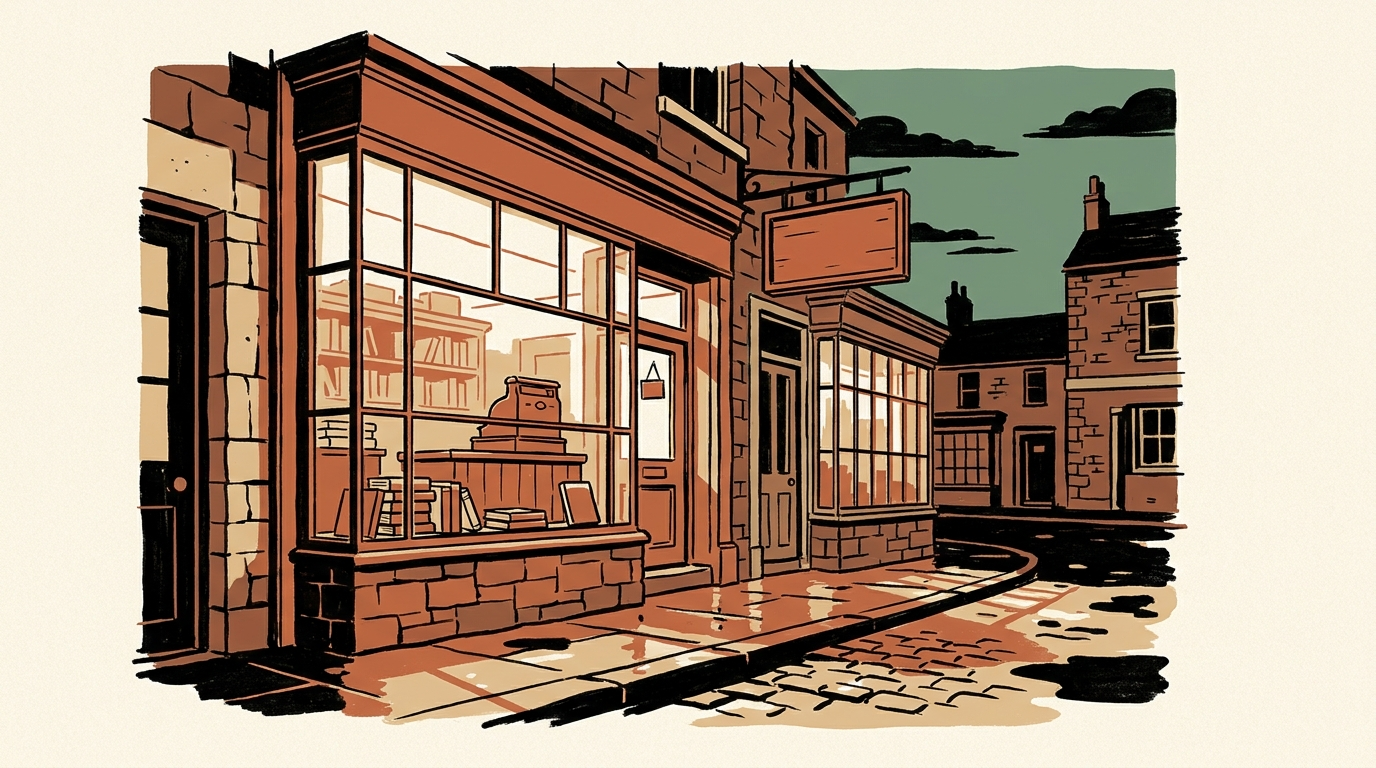
At The Open Book in Wigtown, Scotland, the guest is not merely a occupant of a bed. The guest is the shopkeeper. According to a report by hypefresh.com, those who book this specific short-term rental are given the keys to a fully operational, independent bookstore on the ground floor of a traditional stone building, along with a quiet apartment upstairs. For the duration of their stay, these paying travelers are responsible for opening the shop, sorting stock, pricing inventory, arranging window displays, and running the cash register for the local community. There are no staff members to cover their shifts. There is no automated checkout for the books. If the guest decides to sleep in, the shop stays closed. If the guest fails to count the change correctly, the till is short. It is the ultimate expression of sweat-equity tourism, and it has a waiting list that stretches years into the future.
For the professional short-term rental operator, this setup is both a provocation and a masterclass. It challenges the fundamental assumption that guests want to be pampered, served, and left alone. It proves that in a saturated market where every third listing features identical mid-century modern furniture and a generic welcome basket, the most valuable commodity you can sell is not comfort, but a role to play. But behind the charming facade of this Scottish bookstore lies a complex web of modern real estate economics, regulatory hurdles, liability risks, and psychological shifts that every serious host must understand. This is not just a quirky story to share in the group chat; it is a blueprint for the future of high-margin, narrative-driven hospitality in an era of tightening regulations and platform fatigue.
What happened
The concept of The Open Book is simple, yet its execution requires a precise alignment of community, real estate, and branding. Located in Wigtown, a small town in Scotland, the property operates as a non-profit venture managed by the Wigtown Festival Company. Wigtown was officially designated as Scotland's National Book Town in 1998, a move designed to revive a struggling rural economy by attracting book dealers, tourists, and literary events. The Open Book was conceived as a way to allow book lovers from around the world to experience their dream of owning a bookshop without the crushing financial risk of commercial leases and inventory overhead.
According to the project's public records, guests book their stay through Airbnb, paying a weekly rate that covers their accommodation in the apartment above the shop. In exchange, they agree to run the bookstore during their stay. A volunteer support group from the Wigtown Festival Company is on hand to help them find their footing, but the day-to-day operations are entirely in the hands of the guests. The inventory consists of secondhand books, and all profits from the book sales go directly to supporting the Wigtown Festival Company, a registered charity that organizes the town's annual literary festival.
The listing has become a viral phenomenon, attracting international coverage and a permanent backlog of bookings. It is not uncommon for the calendar to sell out within minutes of being released, with thousands of hopeful bookkeepers waiting for a slot. The appeal is global, drawing travelers from the United States, East Asia, and mainland Europe to a remote corner of Scotland that lacks major airport access or high-speed rail connections. It is a triumph of destination marketing, achieved without a massive advertising budget or corporate backing.
The Tom Sawyer economy
To understand why travelers are willing to pay for the privilege of working a retail job, one must look to the classic tale of Tom Sawyer whitewashing the fence. By framing a chore not as labor, but as an exclusive privilege, Tom convinced his friends to pay him for the chance to do his work. The Open Book operates on the exact same psychological mechanism, adapted for a burnt-out, digital-first workforce. The modern traveler is often a knowledge worker who spends forty to sixty hours a week staring at spreadsheets, writing code, or managing digital communications. Their labor is abstract, invisible, and frequently unsatisfying. They suffer from a profound lack of tangible, physical accomplishments.
For this demographic, physical retail work in a quiet Scottish village is not labor; it is therapy. Sweeping a wooden floor, dusting old hardcovers, and chatting with local retirees about poetry offers a level of tactile satisfaction that a corporate office can never match. The work has a clear beginning, middle, and end. You put a book on the shelf; it is there. You hand a customer their change; the transaction is complete. This is the financialization of nostalgia. The host is not selling a bed; they are selling an identity. For one week, the guest is not a middle manager from Chicago; they are a character in a cozy British novel.
This psychological shift explains why traditional amenities are losing their pulling power. A hot tub, a giant television, or high-speed internet are no longer differentiators; they are baseline expectations. To stand out in a crowded market, hosts must offer experiences that allow guests to step outside their daily lives and try on a different existence. The Open Book has tapped into this desire with clinical precision. They have turned a cost center (staffing a retail store) into a revenue driver (charging guests to be the staff). It is a brilliant inversion of hospitality economics that every operator should study.
Scotland's regulatory headwinds
While the operational model of The Open Book is fascinating, it must be viewed through the lens of Scotland's increasingly hostile regulatory environment for short-term lets. In recent years, the Scottish Government has introduced some of the strictest short-term rental regulations in Europe. Under the Civic Government Scotland Act 1982 Licensing of Short-term Lets Order 2022, all short-term let operators in Scotland were required to apply for a license by October 1, 2023, to continue operating. This legislation was designed to address housing shortages, anti-social behavior, and the hollowing out of local communities in hotspots like Edinburgh and the Isle of Skye.
The licensing process is rigorous and expensive. Hosts must prove compliance with strict safety standards, including gas safety, electrical inspections, fire safety, and legionella risk assessments. Local councils have the power to refuse licenses if they believe a property is unsuitable or if the local area is over-saturated with rentals. In Edinburgh, the council has designated the entire city as a Short-Term Let Control Area, meaning that hosts must obtain planning permission before they can even apply for a license. This has led to a massive reduction in the number of active listings and a wave of litigation from hosts who argue the regulations are unfair.
For a unique property like The Open Book, these regulations present a significant administrative burden. Even a charitable, community-backed venture must comply with the same safety standards and licensing fees as a commercial investor with a portfolio of fifty apartments. The survival of such listings depends on their ability to prove their value to the local community. Because The Open Book brings tourists directly to Wigtown, supports local businesses, and funds a registered charity, it enjoys strong local political support. For private hosts, however, the lesson is clear: if your rental does not contribute positively to the local economy or community, you will find yourself increasingly unwelcome in regulated markets.
The economics of narrative over amenities
In the traditional short-term rental market, yields are heavily dependent on capital expenditure. To increase your average daily rate, you are told to install quartz countertops, purchase high-thread-count sheets, build outdoor fire pits, or install hot tubs. This creates a capital-intensive arms race where hosts must constantly reinvest their profits just to maintain their positioning. If your neighbor installs a bigger pool, your listing suffers. This is a race to the bottom that benefits nobody but the contractors and the furniture retailers.
The Open Book proves that a powerful narrative can completely bypass this arms race. The apartment above the shop is simple, clean, and functional, but it is by no means a high-end property. It does not have a private spa, a gourmet kitchen, or smart-home integration. Yet, it commands an occupancy rate that any professional property manager would kill for. Why? Because the value is in the narrative, not the real estate. The bookshop is the amenity. The interaction with the local community is the amenity. The feeling of belonging to a historic village is the amenity.
For the average host, this realization should be liberating. It means that instead of spending tens of thousands of dollars on physical renovations, you should be investing in the story of your property. What is the unique history of your building? What local experience can you offer that cannot be replicated elsewhere? Can you partner with a local business to offer a behind-the-scenes experience? If you can connect your listing to a compelling narrative, you can charge premium rates while keeping your capital expenditure low. You stop selling real estate by the square foot, and start selling experiences by the hour.
Labor, liability, and the legal gray zone
While the sweat-equity model is highly attractive, it introduces a minefield of legal and operational risks that would make most corporate lawyers break out in a cold sweat. The moment a guest performs labor that benefits the property owner or a third party, you enter a legal gray zone regarding employment status, liability, and commercial insurance. In many jurisdictions, paying a fee to work does not exempt the arrangement from labor laws. If a guest is injured while performing duties for the shop, who is responsible? Are they covered by a standard short-term rental liability policy, or do they require commercial business insurance?
A typical homeowner's policy, or even a specialized short-term rental policy like Airbnb's AirCover, is designed to cover standard residential use. It covers slip-and-fall accidents in the kitchen or damage to the building. It is not designed to cover commercial retail operations, workplace injuries, or public liability arising from a customer slipping on a wet floor inside a shop run by your guest. If a guest at The Open Book drops a heavy box of books on their foot, or if a customer sues because the guest blocked an aisle with a box, the legal liabilities could be catastrophic if the correct commercial policies are not in place.
Furthermore, there is the question of labor exploitation. While the guests at The Open Book are happy volunteers supporting a registered charity, a private, for-profit host attempting to replicate this model would quickly attract the attention of labor unions and regulatory bodies. If you charge a guest to stay at your farm, and then require them to perform hours of manual labor harvesting crops that you then sell for a profit, you are skating on thin ice. You could easily be accused of violating minimum wage laws, even if the guest signed a waiver. The line between a fun holiday activity and illegal unpaid labor is paper-thin, and regulatory authorities are rarely known for their sense of humor.
The limits of the sweat-equity model
It is tempting for hosts reading about The Open Book to immediately start plotting how they can get their guests to paint their fences, weed their gardens, or manage their check-ins. But before you post a listing offering a cozy painting experience, you must understand the strict limits of this model. The Open Book succeeds because it is built on a foundation of genuine authenticity and community integration. It is run by a respected local charity, it supports a designated book town, and the work itself is culturally prestigious. There is a world of difference between running a historic bookstore in Scotland and doing chores for a private landlord.
If the guest suspects, even for a second, that they are being exploited for cheap labor, the illusion is shattered. The experience immediately degrades from a romantic adventure into a cynical cash grab. To make this model work, the labor must be intrinsically rewarding, culturally interesting, and deeply connected to the local environment. It must also be entirely optional in spirit, even if it is contractual in the listing. The moment you start micromanaging your guests' work performance or complaining about their efficiency, you will receive a one-star review that will destroy your listing's visibility.
The lesson here is not that you should turn your short-term rentals into work camps. The lesson is that you should identify the unique, rewarding activities that are native to your property's location, and find ways to grant your guests access to them. If you own a cabin near a vineyard, do not ask your guests to pick grapes for you. Instead, partner with the vineyard owner to let your guests participate in a private blending session. If you own a historic home, do not ask them to scrape paint. Instead, provide them with a historical archive and invite them to contribute to a logbook of the house's history. Keep the experience rewarding, and leave the chores to the professionals.
The modern traveler is often a knowledge worker who spends forty hours a week staring at spreadsheets; for this demographic, physical retail work in a quiet Scottish village is not labor, it is therapy.
The community integration imperative
One of the most significant, yet frequently overlooked, aspects of The Open Book's success is its deep integration into the local community of Wigtown. In the current political climate, short-term rentals are often viewed as extractive forces. Critics argue that they drive up local rents, displace long-term residents, turn quiet neighborhoods into transient tourist zones, and contribute nothing to the local economy beyond cleaning fees. In many cities, this perception has led to outright bans or highly restrictive zoning laws that have wiped out entire portfolios overnight.
The Open Book stands as a direct counter-narrative to this extractive model. It is a regenerative force. Because the guests are tasked with running a local shop, they are forced to step outside the tourist bubble and interact directly with the residents. They buy their groceries at the local butcher, drink at the local pub, and swap stories with the regulars who walk through the bookstore doors. They become, for one week, active participants in the civic life of the town. This creates a powerful sense of goodwill that protects the property from the local backlash that so many other rentals face.
For private hosts, the strategic takeaway is immense. If your property operates in a silo, ignored or resented by your neighbors, your business is highly vulnerable. The moment a local council proposes a ban on short-term rentals, your neighbors will vote for it. But if you can prove that your guests are actively supporting local businesses, engaging with the community, and preserving local heritage, you build a powerful defensive shield. You must find ways to integrate your properties into the local economic fabric. Recommend the independent coffee shop down the street, partner with local tour guides, and ensure your guests are seen as assets to the neighborhood, not nuisances.
Operational realities of the working holiday
For those who manage properties, the operational logistics of a working-holiday listing like The Open Book are incredibly demanding. In a standard rental, your operational checklist is straightforward: cleaning, laundry, restocking basic amenities, and ensuring the smart lock works. Once the guest is inside, your work is largely done until they check out. But when your guest is also running a retail business on your property, your operational surface area expands dramatically.
At The Open Book, the management team must ensure that the bookstore inventory is constantly replenished, the cash register is balanced between guest rotations, the commercial utility bills are paid, and the shop's physical infrastructure is maintained. They must also manage the transition between guests, which involves not just cleaning the apartment, but training the incoming guest on how to run the shop, handle the keys, and deal with local customers. This requires a highly organized, localized support network that can step in at a moment's notice if a guest gets sick, locked out, or overwhelmed by the responsibilities of the shop.
This is not a business model that can be managed remotely from an office in another country. It requires boots on the ground, local relationships, and a deep understanding of retail operations. For property management companies looking to diversify into experiential listings, this means you must build local operational partnerships. You cannot rely on automated systems to handle the complexities of a working-holiday let. The human element is not just part of the experience; it is the core of the operations.
What hosts should do now
The success of Scotland's bookstore let offers valuable, actionable strategies for modern hosts looking to elevate their businesses in a highly competitive market.
- Identify the unique, authentic narrative of your property's location and build your listing's branding entirely around that story rather than generic amenities.
- Partner with local independent businesses, artisans, or historical societies to offer your guests exclusive, hands-on experiences that cannot be booked elsewhere.
- Audit your liability and commercial insurance policies to ensure you are fully covered if guests engage in any activities beyond simple residential occupancy.
- Ensure your properties are active contributors to the local economy to build community goodwill and protect your business from regulatory crackdowns.
- Focus on building a memorable, experiential listing to command high occupancy rates and premium pricing without entering a capital-intensive renovation race.
Ultimately, the story of The Open Book is a reminder that the short-term rental business is, at its core, a business of human connection. While technology and automation have made our operations more efficient, they have also made our listings more sterile. By finding ways to reintroduce narrative, community, and active participation into the guest experience, we can build more resilient, profitable, and respected hospitality businesses that stand the test of time and regulation.
Checked by the standards desk (Eleanor Quist): 2 specifics were removed or attributed as unverified before publication.

Related from the desk



Read the desk every morning.
The day's crackdowns and platform moves, the money, the design and the stays going viral, plus the desk's verdict, in one short email every morning.