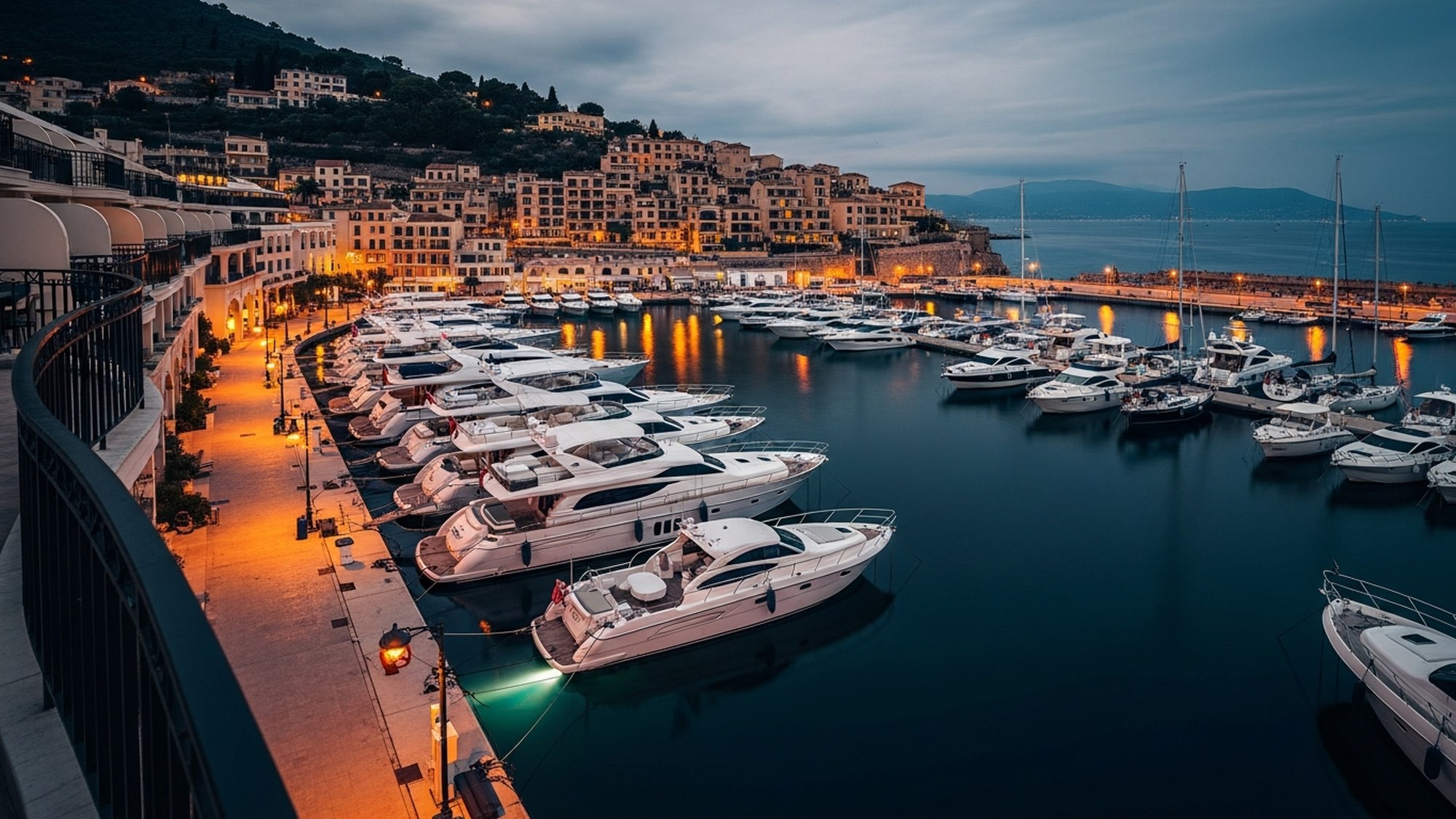
Coastal STRs Face Insurance Apocalypse: Carriers Flee, Premiums Soar, Markets Implode
The once-golden goose of beachside short-term rentals is under siege. As climate risk escalates, insurers are abandoning the coast, leaving hosts with impossible choices and sparking a seismic shift in STR investment.
The tide is out, and it's taking more than sand with it. It's dragging away the very foundation of coastal short-term rental profitability. For years, beach and waterfront properties have been the crown jewels of the STR portfolio, offering consistent demand, premium average daily rates (ADR), and the allure of a perpetually desirable market. The dream of owning a piece of the coast, generating passive income through guest stays, was a powerful one, drawing legions of hosts and substantial investment capital into seaside towns across America.
But that dream is becoming a nightmare. A silent, insidious force is reshaping the coastal STR landscape, and it's not a new permit ordinance or a platform algorithm change. It's the insurance industry, which is quietly, systematically, and brutally redrawing the map of insurable property. What many hosts are experiencing as a sudden, inexplicable jump in their annual premiums or a curt cancellation notice is, in fact, the sharp edge of a massive, industry-wide re-evaluation of risk. And the verdict for many coastal STRs is clear: you're too expensive, or simply too dangerous, to cover.
The consequences ripple outward, far beyond a host's balance sheet. This isn't just about higher operating costs; it's about the fundamental viability of an entire sector. Property values are under threat, mortgage accessibility is eroding, and investment capital is making a frantic dash for safer, drier ground. The golden goose isn't just laying fewer eggs; it's becoming an endangered species in its traditional habitat.
The Gathering Storm: How Coastal Risk Exploded
For decades, owning property on the coast came with an understood premium. Hurricanes, tropical storms, and nor'easters were part of the deal. Insurance rates reflected this elevated risk, but they remained within a predictable range, allowing hosts to factor them into their operational budgets. A property manager could forecast annual costs with reasonable accuracy, understanding that a percentage of gross revenue would always be earmarked for the inevitable. The market absorbed these costs, and guests, eager for beachfront access, paid the prices.
However, the past decade has brought an undeniable shift. The frequency and intensity of extreme weather events have ratcheted up. We are witnessing more powerful storms, rising sea levels encroaching on previously safe zones, and a general destabilization of coastal ecosystems. What was once considered a rare, catastrophic event is now seen by actuaries as an increasingly common occurrence. Scientific consensus, which the insurance industry relies heavily upon for its risk modeling, points to these trends accelerating. This isn't a political debate for insurers; it's a cold, hard calculation of their potential payouts.
Consider the cumulative effect. A single major hurricane might devastate a region, leading to billions in claims. Historically, these were isolated incidents that could be diversified across a national portfolio. But when multiple regions are hit repeatedly, or when storms strengthen dramatically just before landfall, the financial models break down. The “100-year storm” seems to be arriving every few years. Insurers aren't just looking at the risk of one bad year; they're looking at a sustained pattern of escalating losses that threatens their solvency. Their core business model relies on collecting more in premiums than they pay out in claims, plus investment income. When the payout side of the equation consistently outweighs the premium collection, the model becomes unsustainable.
Furthermore, the very nature of coastal property development has exacerbated the problem. Many coastal communities, eager for tourism dollars and property tax revenue, have permitted extensive development in vulnerable areas, often building larger, more expensive structures closer to the water's edge. This means that when a storm hits, the financial damage is exponentially greater. A single storm can now wipe out entire neighborhoods of high-value homes, each requiring complex, multi-million dollar repairs. The density of high-value assets in high-risk zones is a self-inflicted wound, making the insurance industry's position even more precarious.
This escalating risk isn't hypothetical; it's being priced into every policy. For STR operators, whose properties often command higher replacement costs due to their furnishings and amenity expectations, and whose business interruption losses can be severe, the increased risk translates directly into astronomical premium adjustments. The honeymoon for coastal STRs is over, replaced by the harsh reality of a planet in flux, and an insurance industry that is no longer willing to underwrite the fantasy.
The Great Exodus: Why Carriers Are Fleeing the Coast
The insurance industry is not a charity. It's a complex, highly regulated financial sector driven by profit and risk management. When a market becomes unprofitable or excessively risky, carriers have two primary options: dramatically increase prices to offset the risk, or withdraw entirely. On many American coastlines, we are seeing a full-scale retreat, a great exodus of major national and even regional insurers.
The mechanism behind this exodus is multi-layered. First, there's the direct loss ratio. When claims consistently exceed premiums collected in a given geographic area, that area becomes a drain on the insurer's overall profitability. Shareholder pressure, regulatory scrutiny, and competitive dynamics demand that carriers address these underperforming segments. It's a simple business decision: stop losing money.
Second, and perhaps more critically, is the role of reinsurance. Reinsurers are effectively insurers for insurance companies. They absorb a portion of the risk that primary carriers take on, spreading it across a global market. When catastrophe losses mount, reinsurers raise their prices. These higher reinsurance costs are then passed directly down to the primary carriers, who, in turn, pass them on to policyholders. For coastal properties, reinsurance rates have soared, making it prohibitively expensive for primary insurers to offload their risk. Some reinsurers are simply refusing to cover certain high-risk coastal areas altogether, leaving primary carriers fully exposed and with little choice but to shed those policies.
Regulatory environments also play a role. In some states, particularly those with significant coastal exposure, state insurance departments can attempt to limit how much insurers can raise rates. While intended to protect consumers, these caps can create an untenable situation for carriers. If they cannot charge rates that accurately reflect their actuarial risk and reinsurance costs, they will inevitably stop writing new policies or non-renew existing ones. This has been a recurring theme in states like Florida and California, where major national players have either scaled back operations significantly or announced full withdrawals from certain markets or policy types.
This isn't about individual homes or even individual communities; it's about entire zip codes, counties, and even states being deemed too volatile. When a carrier pulls out, it doesn't just affect new policies. Existing policyholders often find their renewals either denied outright or offered at rates that are multiples of what they paid previously, sometimes with significantly higher deductibles. This creates a cascading effect: fewer options, less competition, and ultimately, a market dominated by state-backed insurers of last resort, which often come with their own limitations, higher costs, and more restrictive coverage.
For the STR industry, this means an existential threat. A property cannot be legally mortgaged without adequate insurance. Many vacation rental platforms also require hosts to carry specific levels of property and liability insurance. Without it, the entire business model collapses. The great exodus of carriers isn't just an inconvenience; it's an unravelling of the financial fabric that supports coastal STRs.
Redlining By Another Name: The Price of Protection
The term "redlining" conjures images of historical discrimination, where banks and insurers literally drew red lines on maps to designate minority neighborhoods as high-risk, denying services to residents regardless of individual creditworthiness. While the current insurance crisis for coastal properties is not based on race or ethnicity, the *effect* is strikingly similar: entire geographic areas are being deemed too risky, and thus, too expensive or impossible to insure. This is redlining by another name, a quiet, actuarial redlining driven by environmental realities rather than social prejudice, but with equally devastating economic consequences for property owners.
How does this modern redlining manifest? It's not always an outright refusal to insure. More often, it's a death by a thousand cuts. Premiums that soar by 200%, 300%, or even 500% in a single year. Deductibles that jump from a manageable $5,000 to an eye-watering 5% of the dwelling's value, meaning a $1 million property carries a $50,000 deductible before coverage kicks in. Coverage types are also being pared back. What was once a comprehensive "all perils" policy might now exclude wind damage, flood damage, or mold – precisely the perils most relevant to coastal properties. Hosts are left with a choice: pay exorbitant rates for diminished coverage, or go without.
For many small-to-medium STR operators, these new insurance costs simply cannot be absorbed. A host who previously paid $3,000 annually for insurance on a modest beachfront cottage might now face a $10,000 or $15,000 bill. For a property generating, say, $50,000 in gross revenue, that's a massive hit to the net operating income. Cleaning fees, permit costs, property taxes, platform commissions, and mortgage payments already carve out significant chunks. An additional $7,000-$12,000 in insurance expense can easily erase profit margins, turning a cash-flowing asset into a liability.
This effectively prices out a significant segment of the market. Only the wealthiest individuals or highly capitalized investment firms can absorb such costs. The everyday host, the retired couple supplementing their income, or the family who saved for years to buy a vacation rental, finds themselves in an impossible position. They are forced to sell, often at a loss, or risk operating an uninsured asset, a gamble no responsible host or lender would take.
The concept of "uninsurable" is terrifying, but it's becoming a stark reality. If a property cannot obtain insurance at any price, or if the available coverage is so limited and expensive that it renders the property unmortgageable or unprofitable, it is, in practical terms, uninsurable. This isn't just an abstract problem; it's a direct threat to property ownership and wealth accumulation in coastal communities. The market is effectively telling owners in these zones: your asset is no longer a viable investment for a broad range of buyers, because the cost of protecting it has become prohibitive. This quiet redlining is reshaping who can own and operate properties in America's most desirable locations, creating a new economic divide where only the ultra-rich can afford to shoulder the escalating risks.
Collateral Damage: The Impact on STR Valuations and Operations
The ripple effect of the insurance crisis extends far beyond the annual premium statement. It's creating significant collateral damage, profoundly impacting property valuations, mortgage accessibility, and the day-to-day operational realities for coastal STR hosts. The very foundation of what makes a property a desirable investment is being eroded.
First, property valuations are taking a hit. A property's value is inherently linked to its future income-generating potential and its ability to be bought and sold. When insurance costs skyrocket, or when coverage becomes difficult to obtain, the net operating income (NOI) for an STR property plummets. A lower NOI directly translates to a lower valuation for income-producing properties. Furthermore, the pool of potential buyers shrinks dramatically. If a property is difficult to insure, a conventional lender will be hesitant to offer a mortgage. This means only cash buyers or those willing to take on extreme risk can acquire such assets, further depressing prices. The perceived value of a beach house that was once a prime asset now comes with a massive, disclosed liability.
The insurance industry is quietly, systematically, and brutally redrawing the map of insurable property.
Mortgage availability is another critical casualty. Lenders require borrowers to maintain adequate property insurance throughout the life of the loan. If a host cannot secure a policy that meets the lender's requirements, or if the premiums are so high that they make the debt service ratio unworkable, obtaining or refinancing a mortgage becomes impossible. This is a particularly brutal blow for hosts who rely on leverage to expand their portfolios or who need to refinance maturing loans. The lack of conventional financing options essentially locks property owners into their current loans, or forces them to sell to cash buyers at potentially distressed prices. This is not just a problem for new purchases; it's a ticking time bomb for existing homeowners whose policies are up for renewal or whose mortgages are nearing their terms.
Operationally, the higher costs force hosts to make agonizing choices. Do you absorb the higher premiums, eating into your already tight margins? Do you try to pass them on to guests through higher ADRs or added fees? Raising ADRs too much risks pricing your property out of the market, reducing occupancy, and ultimately lowering RevPAR. Adding specific "insurance surcharges" is rarely well-received by guests and can negatively impact reviews. Many hosts find themselves caught between a rock and a hard place, unable to raise prices sufficiently without losing competitiveness, but unable to maintain profitability without doing so.
Moreover, the increased risk often means hosts must invest more heavily in property hardening measures. While this is a smart long-term strategy, it represents significant upfront capital expenditure. Installing hurricane-rated windows, reinforcing roofs, elevating utilities, or even raising the entire structure can cost tens or hundreds of thousands of dollars. While these investments might qualify for insurance discounts or make a property more insurable, they add to the financial burden and extend the payback period, further challenging the profitability of the STR operation. The dream of a low-effort, high-return coastal STR is rapidly fading, replaced by a demanding, high-cost reality.
The Great Migration: Where The Smart Money Is Moving
Capital, like water, always seeks the path of least resistance and greatest return. As the coastal STR market becomes a quagmire of escalating costs and unmanageable risks, smart money isn't just sitting still; it's actively seeking new pastures. This is leading to a significant geographical redistribution of STR investment, a great migration away from the perilous coastlines and towards areas perceived as more stable and profitable.
Where are investors going? Inland, for starters. Lakeshore properties, mountain retreats, and desert oases are experiencing a surge in interest. These markets, while not entirely immune to natural disasters (wildfires in the West, severe thunderstorms in the Midwest, blizzards in the mountains), generally present a far more predictable and manageable risk profile for insurers. Premiums are typically lower, coverage is more readily available, and the likelihood of total loss from a single catastrophic event is reduced. Hosts in these markets can still tap into the desire for unique experiences and natural beauty, often at a lower entry cost and with higher net returns due to reduced operating expenses.
Urban and suburban markets are also attracting renewed attention. Cities with strong event calendars, business travel demand, or proximity to major attractions offer a different kind of stability. While urban STRs face their own unique challenges – often grappling with restrictive local ordinances, high property taxes, and increased competition – they generally don't contend with the same level of existential threat from natural disasters. The risks are more often regulatory or economic, which, while significant, are often more predictable and potentially mitigable than the wrath of Mother Nature.
Consider the metrics. While a coastal property might still command the highest ADR on peak weekends, the soaring insurance costs can easily erase that advantage. An inland lake house with a slightly lower ADR but significantly lower operating expenses (including insurance) can deliver a superior cash flow and return on investment (ROI). Investors are increasingly running these calculations, prioritizing net profit over gross revenue, and finding that the numbers no longer pencil out for many coastal locations.
This migration also impacts the very type of property being sought. Instead of the massive, multi-bedroom beachfront mansions that are difficult and expensive to insure, investors might opt for smaller, more resilient properties in less exposed areas. There's a growing focus on properties that are inherently easier to protect or located in zones where the risk assessment is more favorable. This shift isn't just about location; it's about a fundamental re-evaluation of what constitutes a "safe" STR investment in an increasingly unpredictable world. The exodus of capital from the coast is not a retreat; it's a strategic repositioning, seeking higher ground where the financial currents are less treacherous.
Mitigation and Adaptation: Playing Defense Against the Tides
For hosts determined to stay in coastal markets, or for those whose properties are still somewhat viable, playing defense is no longer an option; it's a mandate. Mitigation and adaptation strategies are becoming essential tools, not just for property protection, but for maintaining insurability and financial viability. This involves a proactive, often expensive, approach to making properties more resilient to the escalating risks.
The most direct form of mitigation is property hardening. This means investing in structural improvements designed to withstand extreme weather. Hurricane-rated windows and doors, reinforced roofing (especially with secondary water barriers), and hurricane shutters are critical. Elevating a structure above base flood elevation, or at least elevating critical utilities (HVAC units, electrical panels) to prevent water damage, can make a monumental difference in post-storm recovery and, crucially, in insurance premiums. Some coastal towns now offer grants or incentives for such improvements, recognizing the broader community benefit.
Understanding specific local building codes and flood zone designations is paramount. These regulations are not static; they evolve as risk assessments change. Hosts must stay abreast of new requirements and proactively seek out certifications for their hardening efforts. Insurers often offer discounts for properties that meet certain wind-resistive or flood-resistant standards. A "wind mitigation inspection" can sometimes unlock significant savings, demonstrating to the carrier that the property is less susceptible to damage.
Beyond physical hardening, hosts must also adapt their operational strategies. This includes building robust emergency plans for guest evacuation, having reliable local contractors on standby for immediate post-storm repairs, and investing in smart home technology that can monitor conditions remotely. The ability to quickly secure a property, assess damage, and initiate repairs can minimize business interruption and prevent secondary damage (like mold growth). A well-documented history of proactive maintenance and disaster preparedness can also serve as a strong argument for insurers.
Exploring alternative insurance products is another avenue. In some states, particularly those where private carriers have fled, state-backed insurers of last resort (like Florida's Citizens Property Insurance Corporation) may be the only option. While these often come with higher premiums, lower coverage limits, and stricter underwriting, they provide a lifeline. Additionally, some hosts are exploring captive insurance options or working with specialized brokers who deal exclusively with high-risk coastal properties. These brokers often have access to non-admitted carriers (also known as surplus lines carriers) who are willing to take on higher risks but charge significantly more and are less regulated.
Finally, diversification of assets remains a key strategy. For hosts with multiple properties, having some in lower-risk inland areas can offset the increasing costs and volatility of coastal holdings. This isn't just about financial prudence; it's about strategic survival in a market that is fundamentally recalibrating its risk.
The Regulatory Quagmire: Government's Hand in the Crisis
The insurance crisis gripping coastal STRs is not solely a market phenomenon; it's deeply entangled in a regulatory quagmire where state governments play a complex, often contradictory, role. The tension between protecting consumers, ensuring insurer solvency, and addressing climate change creates a Gordian knot that few jurisdictions have managed to untangle effectively. This political and legislative dance directly impacts the availability and affordability of insurance for hosts.
State insurance departments, tasked with overseeing the industry, often face immense pressure to keep rates low for homeowners. This populist stance, while understandable, can tie the hands of insurers, preventing them from charging actuarially sound rates that reflect true risk. When rates are artificially suppressed, carriers are left with an impossible choice: operate at a loss, or exit the market. As we've seen, many choose the latter, leaving a vacuum that state-backed insurers are then forced to fill.
These state-backed "insurers of last resort" become a critical safety net, but they are not a panacea. Often, they are designed to cover only primary residences, or they come with significant limitations on coverage for secondary homes or investment properties like STRs. Their premiums, while sometimes lower than the few remaining private options, can still be substantial, and their claims processes can be slower and more bureaucratic. Furthermore, these entities are often funded by assessments on all policyholders in the state, meaning even those not directly impacted by coastal storms indirectly subsidize the high-risk properties. This creates political friction and questions of fairness.
The lack of a cohesive national strategy for climate adaptation and disaster insurance further complicates matters. While federal programs like the National Flood Insurance Program (NFIP) exist, they are often underfunded, politically charged, and have historically encouraged development in flood-prone areas through subsidized rates. Reforming these programs to reflect true risk and incentivize mitigation is a slow, arduous process, with powerful lobbying interests pushing back against changes that would raise costs for their constituents.
Local zoning and building codes also enter the picture. Many coastal communities, eager for property tax revenue, have historically permitted extensive development in vulnerable areas, or have been slow to update building codes to reflect new climate realities. While some progressive municipalities are now taking steps to restrict new construction in high-risk zones or mandate elevated structures, these changes often come too late for existing properties. The tension between economic development and environmental protection is a constant battle, with STR hosts often caught in the middle.
Ultimately, the regulatory environment can either exacerbate the crisis by creating artificial market distortions or mitigate it by incentivizing resilience and allowing market forces to operate more efficiently. The current quagmire suggests that many governments are still struggling to find the right balance, leaving STR hosts to navigate a landscape where political expediency often trumps actuarial reality, and where long-term solutions remain elusive.
The Long-Term Forecast: A Permanent Shift in the STR Landscape
This isn't a cyclical downturn. This isn't a temporary market correction that will resolve itself in a few years. The insurance crisis for coastal STRs represents a fundamental, permanent re-evaluation of risk that will irrevocably alter the landscape of the short-term rental industry. The long-term forecast for coastal properties is one of increased financial stratification, reduced accessibility, and a significant reshuffling of investment priorities.
We are moving towards a future where coastal STR ownership becomes increasingly concentrated among the ultra-wealthy. Only those with deep pockets, capable of self-insuring, absorbing exorbitant premiums, or making massive investments in property hardening, will be able to sustain profitable operations. The democratization of hospitality, where everyday individuals could generate income from a vacation property, will diminish significantly in these highly desirable but highly vulnerable locations. The dream of a modest family beach rental, a consistent cash cow, will be replaced by exclusive, high-end compounds catering to a clientele that can afford both the stay and the underlying operational costs.
This shift will have broader implications for coastal communities. Property values will diverge sharply: highly protected, resilient properties may retain or even increase their value, while vulnerable, uninsurable assets could see significant depreciation, creating a new class of distressed real estate. The property tax base in some areas might erode, leading to cuts in public services or increased tax burdens on remaining properties. The very character of these communities, once vibrant with a mix of full-time residents and STR visitors, could transform, becoming enclaves of extreme wealth or, conversely, areas of economic decline.
For the broader STR industry, this means a continued redirection of investment capital. The "great migration" away from the coast will accelerate, pushing more money into inland lake, mountain, desert, and urban markets. This influx of capital will, in turn, intensify competition in these "safer" markets, potentially driving up property values and compressing margins there. Hosts who have diversified their portfolios or who pivoted early to less risky geographies will be better positioned to thrive in this new environment.
Innovation in insurance will also be forced to adapt. We may see the rise of more specialized, parametric insurance products that pay out automatically based on pre-defined triggers (e.g., wind speed, flood depth), rather than traditional damage assessment. Community-based insurance pools or even municipal-level insurance schemes might emerge as desperate measures to fill the void left by exiting private carriers. But these solutions are complex, slow to implement, and often come with their own set of limitations and costs.
Ultimately, the era of treating coastal STRs as an easy, low-risk investment is definitively over. The industry is being forced to confront the true costs of operating in an environment increasingly shaped by climate change. This isn't just about higher expenses; it's about a fundamental redefinition of what is economically viable, and where the smart money chooses to play. The forecast is clear: prepare for a dramatically different coastline, or prepare to be washed out.
The bottom line for hosts
The message for STR hosts, particularly those with coastal properties, is stark and unambiguous: ignorance is no longer an option. The insurance crisis is a foundational shift, not a temporary blip. You must confront this reality with clear eyes and decisive action. First, meticulously audit your current insurance coverage and costs. Understand every exclusion, every deductible, and the exact terms of your renewal. Do not simply accept the new premium; investigate every available option. Seek quotes from multiple specialized brokers, even if they deal with surplus lines carriers.
Second, seriously evaluate your property's resilience. Can it be hardened? What are the costs versus the potential insurance premium reductions or improved insurability? Look into grants or state programs that might incentivize mitigation efforts. Investing in hurricane-rated windows, roof reinforcement, or elevation can be a significant upfront expense, but it may be the only way to retain coverage or make your property a viable asset for future sale.
Third, revisit your financial projections. Recalculate your net operating income and ROI with projected insurance costs that are 2x, 3x, or even 5x what you pay now. Can your property still generate a profit? Can it cover its mortgage and other operating expenses? If the numbers no longer make sense, it's time for a difficult but necessary conversation about the future of that asset. Holding onto an unprofitable, uninsurable property is a recipe for financial ruin.
Fourth, for those not yet invested, or those looking to expand, pivot your market search. The smart money is moving inland. Explore lakefront, mountain, desert, or even robust urban markets where the risk profile for natural disasters is significantly lower. These markets offer stability, more predictable operating costs, and often, less regulatory turbulence concerning STRs. Diversifying your portfolio across different risk geographies is a powerful strategy to hedge against future uncertainties.
Finally, engage with your local community and industry associations. Advocate for sensible zoning changes, updated building codes, and state-level regulatory reforms that balance consumer protection with insurer solvency. This is a collective problem that requires collective action, but individual hosts must also take immediate, decisive steps to protect their investments. The era of easy coastal STR profits is over. The era of calculated risk and strategic adaptation has begun.
About this piece
An original expert-analysis column by the STR NEWS desk. Figures are illustrative of how the market behaves; confirm specifics for your own market before you act.


Read the desk every morning.
The day's crackdowns and platform moves, the money, the design and the stays going viral, plus the desk's verdict, in one short email every morning.