Renting to Film Crews Requires Massive Premium Pricing
When location scouts offer triple your nightly rate, it sounds like easy money. The reality is a high-risk commercial operation that can wreck your property.
The message arrives in the inbox with the flattering tone of a love letter. A location scout, working on behalf of a production agency, has stumbled across your short-term rental listing. They describe the architecture as perfect for an upcoming digital commercial, a television episode, or an independent film. They promise a fast, low-impact shoot with a small, respectful crew. To seal the deal, they offer to pay three times your standard nightly weekend rate for a single twelve-hour day of access. To the average operator, this proposal looks like a financial jackpot, an effortless way to supercharge monthly revenue without the wear and tear of a standard multi-day guest stay.
Accepting this offer without understanding the mechanics of commercial production is one of the most expensive mistakes a property manager can make. What scouts pitch as a light, non-invasive artistic endeavor is, in reality, a full-scale industrial operation. The moment a production crew steps onto your property, your residential home is converted into a temporary factory floor. Heavy metal equipment stands will drag across your wooden floors, high-amperage lighting rigs will strain your electrical panels, and dozens of under-rested crew members will treat your walls, landscaping, and furniture with the casual disregard of workers on a tight deadline.
To survive this transition from hospitality provider to commercial location host, you must throw out your standard pricing models, your regular house rules, and your reliance on platform-provided protections. Commercial filming demands a massive premium not because you are greedy, but because the operational costs, the legal exposure, and the physical risks associated with production are astronomical. If you do not price these risks correctly, you are not running a profitable business; you are simply subsidizing a production company's budget at the expense of your own real estate asset.
How it actually works
The operational reality of a film shoot bears zero resemblance to a standard short-term rental stay. When a typical guest books your property, they arrive with suitcases, buy some groceries, and spend their time sleeping, cooking, and exploring the local area. The physical impact is minimal, concentrated on the beds, the bathrooms, and the kitchen appliances. The utility usage remains within predictable parameters, and the neighborhood experiences almost no disruption.
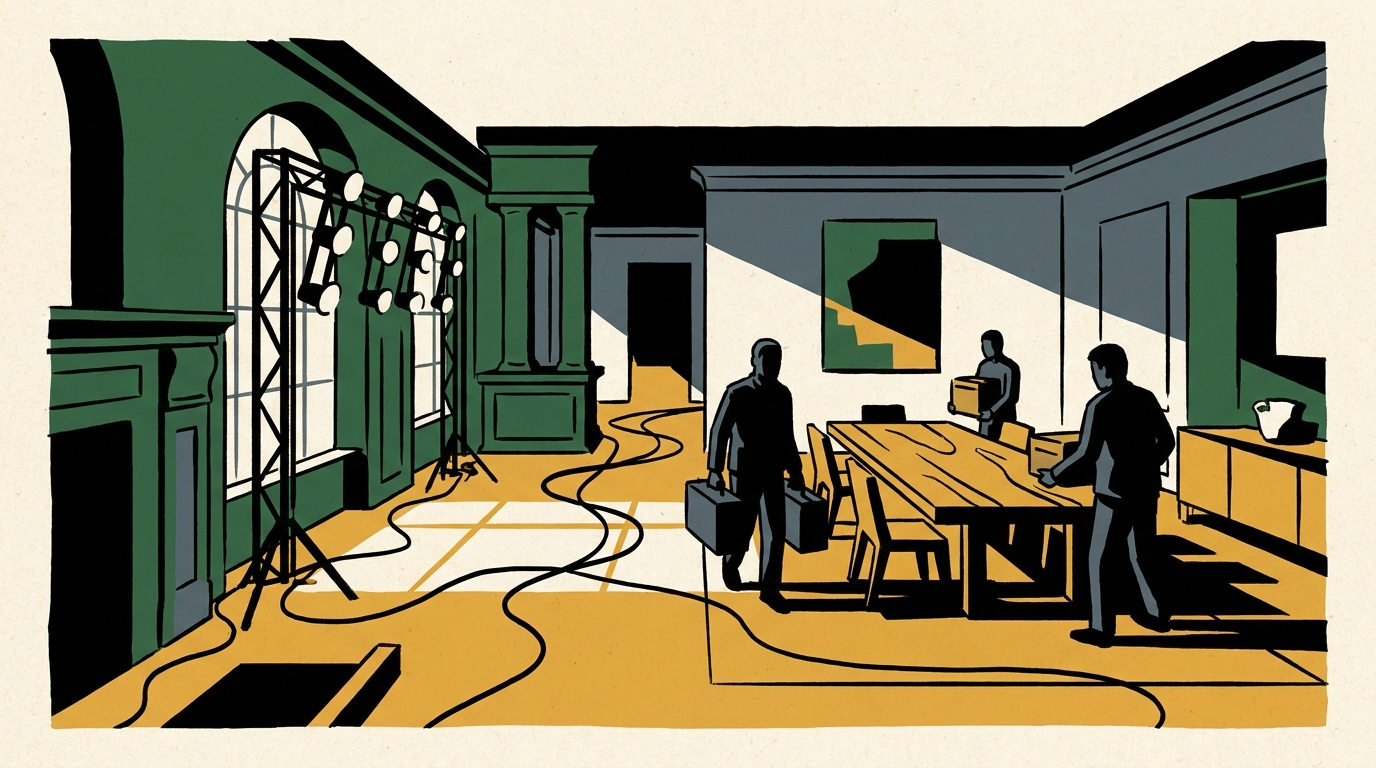
A film crew operates under an entirely different set of incentives. Their primary goal is to capture a specific set of images before the sun goes down or the union clock triggers overtime penalties. To achieve this, they must physically alter your space to suit the director's vision. This means moving your furniture out of the rooms, replacing your art with their own cleared props, and rigging heavy equipment to your ceilings or walls. The crew does not consist of three or four quiet creatives; a standard crew for even a modest commercial ranges from twenty-five to fifty people, including grips, electrics, camera operators, hair and makeup artists, wardrobe assistants, clients, agency executives, and production assistants.
This crowd does not sit quietly on your sofa. They are constantly moving, carrying heavy metal cases, dragging thick electrical cables, and setting up heavy steel supports known as C-stands. They will set up a catering station, a hair and makeup station, and a holding area for actors. They will park massive grip trucks and generator trailers on your street, blocking neighbors' driveways and occupying every available parking space. The sheer volume of foot traffic will wear down your carpets, scuff your paint, and place immense stress on your heating, ventilation, and air conditioning systems as doors are left wide open to run cables to the outside.
The illusion of the triple nightly rate
The classic trap is accepting a rate that is simply a multiple of your standard short-term rental pricing. If your average daily rate is four hundred dollars, a scout's offer of twelve hundred dollars for a single day of filming feels like a massive win. But a sober analysis of the actual costs reveals that this multiplier is a financial illusion that frequently results in a net loss for the property.
First, you must account for the actual time required for a shoot. A twelve-hour shoot is never just twelve hours. It requires a preparation day for the art department to dress the set, paint walls, and move furniture. It requires the shoot day itself, which routinely runs over schedule, triggering late-night disruptions. Finally, it requires a strike day to tear down the equipment, restore your furniture, repaint any altered walls, and clean the property. A single day of filming actually consumes three full days of your booking calendar. If those days fall over a weekend, you have sacrificed prime booking dates that could have been sold to high-paying leisure guests.
Second, the administrative burden of coordinating a shoot is immense. Unlike a self-check-in guest, a film production requires multiple site visits before a single camera rolls. You will host a scout visit, a director's scout, a technical scout with the department heads, and endless email chains regarding logistics, parking, and insurance. This represents dozens of hours of labor for you or your property manager, none of which is compensated by a simple triple-rate night. When you factor in the administrative overhead, the lost booking calendar days, and the inevitable operational friction, a triple nightly rate is actually a discount for the production company.
The insurance black hole of commercial use
The single greatest risk of hosting a film production is the immediate and total voiding of your standard insurance coverages. Many hosts operate under the comforting belief that their commercial short-term rental insurance policy, or the protection programs offered by major booking platforms, will cover any damage or liability that occurs during a shoot. This belief is entirely false.
Platform-provided protection programs, such as Airbnb's AirCover, are strictly designed to cover residential lodging activities. Their terms of service explicitly exclude commercial activities, business operations, and filming. If a production crew member trips over a cable in your living room and breaks their wrist, or if a grip drops a heavy light stand and cracks your granite countertop, the platform will deny the claim instantly. Your private short-term rental insurance policy will do the same, as these policies contain standard commercial use exclusions that nullify coverage the moment the property is rented for non-lodging business purposes.
This leaves you completely exposed to catastrophic financial liability. A major fire caused by an overloaded electrical panel, a structural collapse from heavy equipment, or a severe personal injury on your property could result in litigation that threatens your entire business. To protect yourself, you must require the production company to provide a comprehensive Certificate of Insurance. This document must show a commercial general liability policy of at least two million dollars, name your specific property ownership entity and LLC as additionally insured, and include a waiver of subrogation. Without this verified paperwork in hand before anyone crosses your threshold, letting a crew inside is financial suicide.
The anatomy of a production contract
Production companies will invariably ask you to sign their standard location agreement. These documents are drafted by studio attorneys whose only objective is to protect the production company and minimize its liability. They are incredibly one-sided, and signing one without modifications is a recipe for disaster.
A typical studio location agreement contains clauses that grant the production company the right to depict your property in any manner they choose. This means they can portray your home as a run-down crack house, a haunted mansion, or the scene of a violent crime. While this might seem harmless, such depictions can permanently damage the reputation of your property, making it less appealing to future high-end short-term rental guests who do not want to stay in a home associated with negative imagery. Furthermore, these contracts often grant the studio the right to use the footage in perpetuity, across all media, meaning your home's likeness could be used in advertisements or films decades after the shoot.
Most dangerously, standard location agreements contain weak restoration clauses. They often state that the production will restore the property to its original condition, "normal wear and tear excepted." In the context of a film shoot, "normal wear and tear" can include deep wall gouges, stained carpets, and scratched floors. You must counter these agreements with a custom contract rider that overrides their terms. Your rider must state that the production is responsible for all damage, with no allowance for wear and tear, and that all repairs must be completed by licensed, bonded contractors of your choosing, paid for entirely by the production company.
Structural assault: the physics of a shoot
To understand why premium pricing is necessary, one must understand the physical toll a shoot takes on a residential structure. Homes are built to withstand the quiet movement of a few individuals, not the frantic, repetitive heavy lifting of a commercial crew. The physical damage is rarely intentional, but it is an inevitable byproduct of the physics of production.
Consider the floors. A standard production uses C-stands made of heavy solid steel to hold lights, flags, and modifiers. These stands have sharp metal feet. While professional grips are supposed to place tennis balls or rubber pads on these feet, in the rush of a shoot, stands are frequently dragged across hardwood floors or dropped onto delicate tile, leaving deep gouges and cracks. To protect your floors, productions will lay down protective cardboard sheets known as layout board, taping it together with heavy adhesive tape. If the wrong tape is used, or if the layout board is left down too long, removing it can strip the protective polyurethane finish right off your oak floors, requiring a complete sanding and refinishing job.
Then there is the electrical system. A commercial film shoot requires an immense amount of power to run high-intensity lights, cameras, video villages, and battery charging stations. If the production tries to plug all of this equipment into your standard residential outlets, they will repeatedly trip your breakers. Worse, they can overheat your electrical wiring, melting insulation and creating a severe fire hazard hidden behind your drywall. Professional productions must bring their own tow-behind generators and run heavy-duty power lines through windows or doors, but smaller, cheaper productions will always try to siphon your domestic electricity, putting your entire property at risk.
The neighbor tax and community blowback
Your short-term rental business does not operate in a vacuum. It relies heavily on the tolerance of your neighbors and the goodwill of your local community. A single unpermitted or disruptive film shoot can destroy years of neighborly goodwill in a matter of hours, leading to noise complaints, city investigations, and the potential revocation of your short-term rental permit.
When a film crew arrives, they bring a fleet of vehicles. This includes grip trucks, camera vans, catering trucks, honeywagons, and passenger vans for the crew. These vehicles will line your residential street, taking up parking spaces that your neighbors rely on, blocking driveways, and idling their diesel engines early in the morning. The crew will set up catering tables on the sidewalk, stand outside talking loudly on walkie-talkies at dawn, and leave trash in parkways. For your neighbors, this is a massive, uncompensated nuisance that turns their quiet street into an industrial park.
Furthermore, most municipalities have strict permitting laws governing commercial filming on private property. In cities with active film offices, such as Los Angeles or New York, filming without a valid permit can result in immediate shutdowns by law enforcement, heavy fines, and a blacklisting of your property. If you host an unpermitted shoot and a neighbor calls the city to complain about the parking or the noise, you will not only face municipal fines for filming, but you may also trigger an audit of your short-term rental license, exposing you to further regulatory scrutiny and potential shutdown.
The administrative and logistical drain
The time investment required to manage a film shoot is a hidden cost that most hosts fail to calculate. With a standard guest, the interaction is largely automated through messaging templates and self-check-in codes. With a production, you are entering into a complex, customized commercial negotiation that requires hands-on management at every stage.
The process begins weeks before the shoot with the scout visits. A scout will want to see the property, take hundreds of photos, and ask detailed questions about the direction of the sun, the electrical capacity, and the parking situation. If they like the space, they will return with the director and the director of photography for a second visit. Then, a technical crew will visit to plan the equipment placement. Each of these visits requires you or your property manager to travel to the property, open the doors, and spend hours answering questions. This is unpaid labor that takes you away from managing the rest of your portfolio.
During the shoot itself, you cannot simply leave the crew unattended. You must act as the on-site location manager, monitoring the crew to ensure they do not damage the property, go into restricted areas, or violate municipal permit conditions. You will spend twelve to fourteen hours standing on your feet, acting as a hall monitor for adults who are moving at high speed. You will have to police where they eat, where they smoke, and where they place their heavy equipment. This is exhausting, high-stress work that requires a level of vigilance far beyond standard hospitality management.
A film crew is not a group of guests; they are an industrial workforce temporarily converting your residential asset into a high-impact commercial workspace.
The stakeholder imbalance
When analyzing the economics of film rentals, it is useful to look at who actually wins and who loses in the transaction. The booking platforms, if the transaction is kept on-platform, win by taking a percentage of the highly inflated booking fee while taking absolutely zero responsibility for the physical damage or legal liability that may occur during the commercial shoot. Their terms of service shield them from any exposure, leaving the host to carry the entire risk.
The production company wins by securing a unique, realistic location for a fraction of the cost of building a set on a professional soundstage. Soundstage rentals are incredibly expensive, costing thousands of dollars a day, plus the cost of set designers, carpenters, and painters. By renting your home, they get a fully dressed, highly realistic location for a tiny fraction of their overall budget. They have a strong incentive to push the boundaries of what they can do on your property to save money on their end.
The host is the one who carries all the risk. You are risking your physical property, your relationship with your neighbors, your municipal short-term rental license, and your insurance coverage, all for a temporary cash injection. If something goes wrong, the production company's insurance might cover it after a long, drawn-out legal battle, but in the meantime, your property is out of commission, your calendar is blocked, and your revenue stream is frozen. This is why you must demand a massive premium; you are the only stakeholder in the entire equation who stands to lose everything.
What hosts should do now
If you decide to open your property to film shoots, you must transition from a hospitality mindset to a commercial leasing mindset immediately. Do not treat these requests as standard bookings, and do not use standard platform channels to finalize the deals.
- Charge a minimum premium of five times your standard weekend nightly rate for any filming activity, ensuring you cover prep, shoot, and strike days.
- Demand a comprehensive Certificate of Insurance showing at least two million dollars in general liability, naming your holding company as additionally insured.
- Require a separate, non-refundable holding deposit and a substantial cash damage deposit held in escrow before allowing any equipment on site.
- Draft and execute a custom location agreement rider that overrides the standard studio contract and mandates complete property restoration by your chosen contractors.
- Verify with your local municipality that the production has secured all necessary filming and parking permits before the shoot begins.
- Act as the on-site location manager during the entire shoot, monitoring the crew's activities and enforcing strict property protection rules.
By treating film crews as the high-impact commercial operations they are, you can protect your physical property, preserve your standing in the local community, and ensure that when a production company uses your home, you are the one who actually profits from the deal.
Checked by the standards desk (Eleanor Quist): every specific in this story was traced to its source material before publication.
About this piece
An original expert-analysis column by the Stay Gazette desk. Figures are illustrative of how the market behaves; confirm specifics for your own market before you act.




Read the desk every morning.
The day's crackdowns and platform moves, the money, the design and the stays going viral, plus the desk's verdict, in one short email every morning.