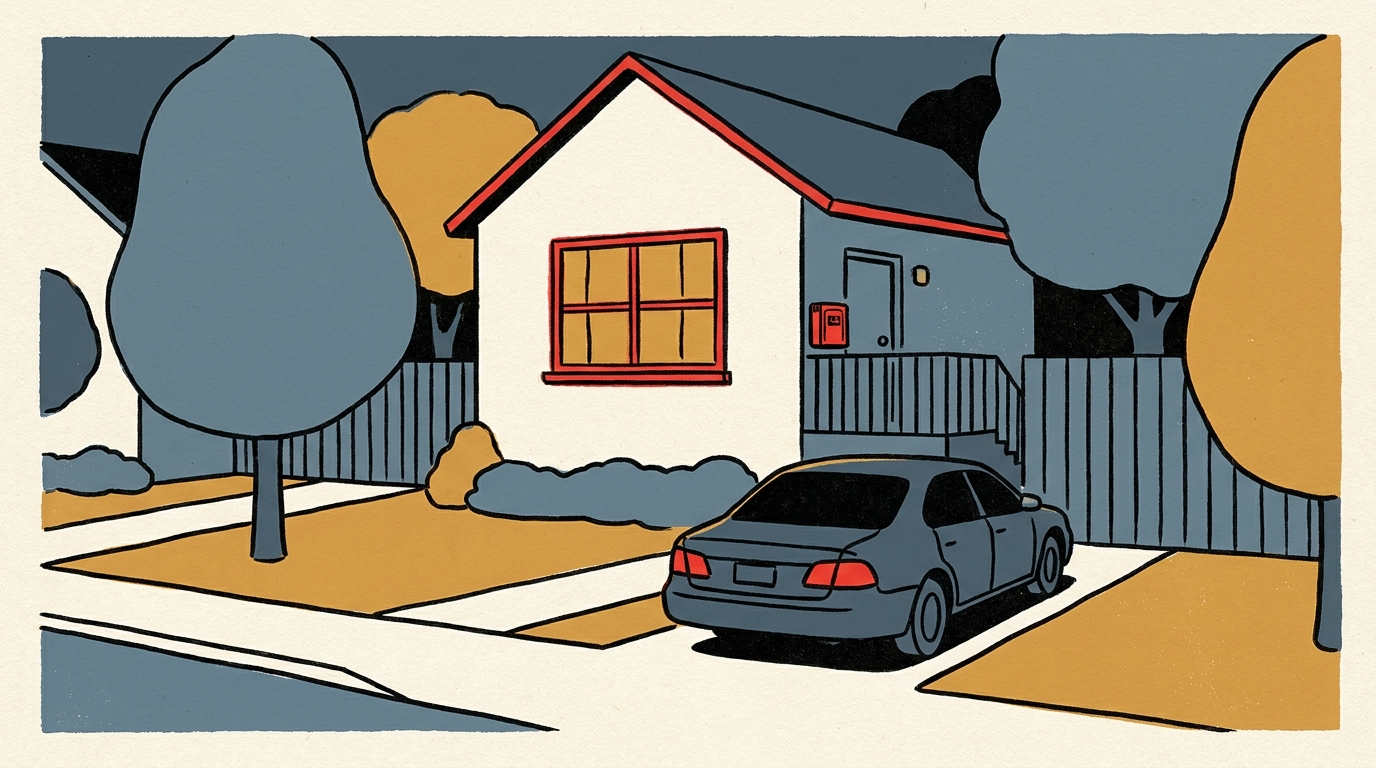
Skokie Rolls Back Rental Rules as Suburban Crackdowns Hit a Wall of Reality
When high taxes met high enforcement costs, this Chicago suburb realized that punishing local home-sharers was a losing game. Other towns are watching.
The regulatory pendulum that has spent half a decade swinging like a wrecking ball through the short-term rental industry has finally hit a wall of hard municipal math. For years, the playbook for suburban town boards across America was simple, reactive, and politically cheap: when neighbors complain about parking, copy-paste the most restrictive metropolitan ordinance you can find, slap a four-figure annual licensing fee on hosts, and declare victory. But as the village of Skokie, Illinois, recently demonstrated, writing an aggressive law is much easier than defending its economics or its politics when local taxpayers start feeling the squeeze.
In a quiet but highly significant policy pivot, the Skokie Village Board has voted to roll back fees and operational restrictions on certain short-term rentals, as first reported by local news outlet The Record North Shore. The decision represents a rare, public retreat by a municipality that had previously joined the regional rush to restrict platforms like Airbnb and Vrbo. By lowering financial barriers and easing operational rules for specific categories of hosts, this major Cook County suburb, bordering Chicago to the north, has exposed a growing crack in the national suburban consensus on short-term rental crackdowns. It is a signal that the era of treating every retired teacher renting out a spare bedroom like a commercial hotel conglomerate may be reaching its natural limit.
For the broader short-term rental industry, the Skokie rollback is not merely a local victory; it is a blueprint. It highlights a critical shift in how local governments are viewing the balance between neighborhood preservation and property owner rights. When municipal budgets are tight and property taxes are rising, punishing local residents who use short-term rentals to stay afloat financially is no longer a winning political strategy. As towns across the country find themselves buried under the administrative costs of enforcing complex, over-engineered short-term rental codes, many are quietly reaching the same conclusion that Skokie did: over-regulation is a luxury that suburban balance sheets can no longer afford.
What happened
According to reporting by The Record North Shore, the Skokie Village Board enacted a series of amendments to its municipal code that significantly ease the regulatory and financial burdens on certain short-term rental operators within the village limits. The rolling back of these fees and rules marks a deliberate departure from the highly restrictive framework that the suburb had previously maintained. Under the updated rules, the village has created a more permissive environment for hosts who meet specific criteria, primarily focusing on those who operate owner-occupied properties or primary residences.
The specific adjustments focus on reducing the steep annual registration fees that had previously acted as a major barrier to entry for casual hosts. By lowering these fees, the village is effectively distinguishing between local, primary-resident hosts and outside commercial investors who buy up single-family homes solely to run them as unstaffed lodging businesses. In addition to the financial relief, the amendments address operational restrictions that had made hosting practically difficult for many residents, signaling a desire by the village board to simplify the compliance process and bring underground operators into the legal fold.
The decision to ease these restrictions was not made in a vacuum. It followed sustained feedback from local residents and host advocates who argued that the previous fee structure and regulatory burdens were disproportionate and regressive. By adjusting its code, the Skokie village government has acknowledged that its original regulatory framework was catching the wrong targets in its net, making it too difficult for middle-class homeowners to earn supplemental income while doing little to address the root causes of neighborhood nuisances.
The suburban copycat epidemic
To understand why Skokie’s rollback matters, one must first understand the historical pattern of suburban short-term rental regulation. In the mid-2010s, as Airbnb and Vrbo evolved from niche home-sharing platforms into mainstream travel options, major cities like Chicago, New York, and San Francisco scrambled to draft regulatory frameworks. These metropolitan areas faced genuine, systemic pressures: housing shortages, corporate investor buyouts of entire apartment buildings, and professional property managers operating hundreds of listings without local oversight.
Suburbs, observing the headlines from their metropolitan neighbors, panicked. Suburban trustees and city managers, who rarely had to deal with the housing density or tourism volumes of a major city, began adopting metropolitan-style ordinances. They copy-pasted complex registration systems, mandatory inspection regimes, and hefty fees directly into their local codes. This copycat approach ignored the fundamental differences between urban and suburban hosting dynamics. In a major city, a short-term rental is often an investment property owned by a limited liability company; in a suburb, it is far more likely to be a primary residence rented out by a family during a vacation, or a garden apartment used to host visiting relatives.
The result was a wave of over-regulation that swept through suburban collar counties nationwide. In places like Cook County, Illinois, where property taxes are among the highest in the Midwest, these regulations quickly became a double blow for homeowners. Not only were residents facing skyrocketing tax bills, but they were also blocked from using their own properties to offset those costs unless they paid thousands of dollars in licensing fees and navigated a labyrinth of municipal bureaucracy. The copycat ordinances did not solve local problems because the problems they were designed to combat—like institutional investors buying up entire apartment complexes—were largely absent in quiet residential suburbs.
The balance sheet of enforcement
The quiet tragedy of most suburban short-term rental crackdowns is that they are administrative money pits. When a town of fifty thousand people passes a highly restrictive ordinance, the board rarely calculates the actual cost of enforcement. To police a market of perhaps fifty to one hundred active listings, a municipality must dedicate staff to monitor compliance, track down unregistered hosts, and manage the licensing pipeline. This has created a lucrative industry for third-party compliance software companies that charge towns tens of thousands of dollars annually to scrape booking platforms and cross-reference listings with local tax records.
For a suburb like Skokie, the financial math of this enforcement loop quickly falls apart. If the town charges a high annual fee, say five hundred or one thousand dollars, to cover the cost of the compliance software and staff hours, it discourages casual hosts from registering at all. These hosts simply go underground, changing their listing titles or moving to unmonitored platforms, which makes the enforcement job even harder and more expensive. If the town lowers the fee but keeps the complex inspection and registration requirements, the administrative cost of processing each application far exceeds the revenue generated.
When municipal managers audit these programs, they find that they are spending thirty thousand dollars in staff time and software contracts to collect fifteen thousand dollars in fees, all while generating endless paperwork and citizen complaints. It is a textbook example of regulatory friction yielding negative returns. Skokie’s decision to roll back fees is a pragmatic admission that the previous system was costing more to run than it was worth, both in hard dollars and in goodwill among the electorate.
The primary vs. investor divide
The most significant structural trend highlighted by the Skokie rollback is the growing policy distinction between primary-resident hosts and commercial investors. For years, the short-term rental industry argued that all hosting is home-sharing. Critics countered that all short-term renting is commercial lodging. The truth, as is usually the case, lies in the middle, and municipalities are finally beginning to draft rules that reflect this reality.
By easing rules specifically for certain types of properties—typically those that are owner-occupied—Skokie is joining a smart minority of local governments that are using surgical tools rather than sledgehammers. This approach recognizes that an owner-occupied listing is fundamentally different from an investor-owned property. When a host lives on the property or nearby, noise complaints are rare, trash is managed, and parking disputes are settled over the back fence rather than through a call to the police. The incentives are naturally aligned with the neighborhood’s well-being.
Conversely, the absentee investor who buys a single-family home, furnishes it from a catalog, and manages it via an automated messaging app poses a different set of challenges. By maintaining reasonable rules for commercial operators while lowering the bar for local residents, suburbs can protect their housing stock without punishing their own citizens. This dual-track system is proving to be the only sustainable path forward for municipal short-term rental policy, allowing towns to preserve the character of their residential streets while acknowledging the modern economic realities of homeownership.
Comparable retreats across the map
Skokie is far from alone in its regulatory retreat. Across the United States, several mid-sized cities and suburbs have been forced to rethink their aggressive short-term rental bans and fee structures over the past twenty-four months. In many cases, these rollbacks were driven not by a sudden love for Airbnb, but by the threat of expensive litigation or the harsh light of budget deficits.
In various jurisdictions, municipal attorneys have warned town boards that their sweeping bans or residency requirements may not survive constitutional challenges. For example, ordinances that restrict short-term rentals to local residents only have faced legal headwinds under the dormant commerce clause, which prohibits states and municipalities from discriminating against out-of-state economic actors. Confronted with the prospect of spending hundreds of thousands of dollars in federal court defending a poorly drafted ordinance, many small towns have quietly chosen to amend their rules, reducing fees and removing the most legally vulnerable restrictions.
In other regions, the rollback has been driven by pure tourism economics. When local governments pass near-total bans on short-term rentals, they often see a corresponding drop in local sales tax revenues, restaurant bookings, and occupancy tax collections. This is particularly true in suburban and semi-rural areas that lack traditional hotel infrastructure. When the local business community realizes that the short-term rental ban has cleared out the weekend visitors who keep main street shops alive, they apply pressure on city council members to reverse course. The result is a quiet, pragmatic dismantling of the rules, very similar to what has played out in the Chicago suburbs.
The power of organized local hosts
One of the most overlooked factors in the Skokie rollback is the role of local advocacy. For years, the defense of short-term rentals was left to the corporate public affairs departments of San Francisco-based tech platforms. These corporate giants would fly in lobbyists, run expensive ad campaigns, and attempt to pressure local boards. This strategy often backfired, as suburban trustees resented being lectured by tech executives who had never set foot in their towns.
The tide began to turn when local hosts took matters into their own hands. In suburbs across the country, hosts have organized grassroots alliances, using group chats, social media, and local meetups to coordinate their strategy. They did not talk about platform economics or global travel trends. Instead, they showed up to village board meetings with their property tax bills, their grocery receipts, and their medical invoices. They explained to their local representatives that the three hundred dollars they earned renting out their guest suite on autumn weekends was the only reason they could afford to stay in the community they had lived in for thirty years.
This humanized narrative is incredibly difficult for local politicians to ignore. A suburban trustee might be happy to vote against a multi-billion-dollar tech company, but they will think twice before voting to bankrupt a retired neighbor who lives three doors down. The Skokie decision is a testament to the power of this localized, personal advocacy. When hosts organize, present clear data, and speak as resident taxpayers rather than platform apologists, they can change the minds of even the most skeptical local officials.
Over-regulation is a luxury that suburban balance sheets can no longer afford.
The broader implications for Cook County
The regulatory shift in Skokie must also be analyzed within the specific, high-pressure context of Cook County real estate. Illinois property taxes are notoriously high, and Cook County, with its complex assessment system and frequent rate hikes, is the epicenter of this financial strain. For many suburban homeowners, the annual property tax bill has transitioned from a standard household expense to a significant financial threat. In this environment, the ability to generate supplemental income through short-term renting is not a hobby; it is a vital tool for wealth preservation and housing stability.
When local governments in Cook County restrict short-term rentals, they are effectively cutting off a financial lifeline for their own residents. This creates a direct conflict between a municipality’s desire for quiet streets and its residents’ need to pay their bills. By rolling back fees, Skokie has acknowledged this conflict and chosen to prioritize the financial survival of its homeowners. This decision will not go unnoticed by neighboring suburbs like Evanston, Wilmette, and Glenview, which face similar property tax pressures and are watching Skokie’s experiment closely.
If Skokie can successfully manage its short-term rental market with lower fees and fewer restrictions without seeing a spike in neighborhood complaints, it will provide a powerful proof of concept for the entire region. It will demonstrate that a lighter regulatory touch can actually lead to better compliance, higher tax revenues, and happier residents. Conversely, if other suburbs continue to maintain their high-fee, high-barrier systems, they risk pushing their local hosting communities entirely underground, losing both regulatory control and potential tax revenue in the process.
What hosts should do now
For short-term rental operators navigating the suburban landscape, the Skokie decision is a clear call to action. The regulatory environment is not fixed; it is highly responsive to economic pressure, local organizing, and common-sense advocacy.
- Audit your local code: Do not assume your suburban ordinance is set in stone. Check if your town has a clear distinction between primary-resident hosts and commercial operators, and identify any high fees that are ripe for a rollback challenge.
- Organize a local host alliance: Build a simple communication network with other hosts in your suburb. A shared group chat or a monthly meeting is the foundation for coordinated advocacy when municipal rules are proposed or updated.
- Collect your personal economic data: Be prepared to show your local trustees exactly how much of your rental income goes back into the local economy, from hiring local cleaning services to paying property taxes and supporting neighborhood shops.
- Advocate for the primary-resident carve-out: If your town is considering a crackdown, lobby for a compromise that keeps fees low and registration simple for owner-occupied properties, while keeping reasonable standards for commercial listings.
- Maintain impeccable guest standards: The best defense against suburban regulation is being a great neighbor. Manage your parking, set strict quiet hours, and ensure your guests respect the quiet character of your residential street.
Ultimately, the Skokie rollback proves that local governments are capable of changing their minds when presented with the practical realities of municipal finance and resident advocacy. For the modern host, the path forward is clear: move away from defensive isolation and toward active, organized participation in the local regulatory conversation.
Checked by the standards desk (Eleanor Quist): every specific in this story was traced to its source material before publication.
Sources
- therecordnorthshore.org - reported September 18, 2026.
Read and analysed by the Stay Gazette desk.




Read the desk every morning.
The day's crackdowns and platform moves, the money, the design and the stays going viral, plus the desk's verdict, in one short email every morning.