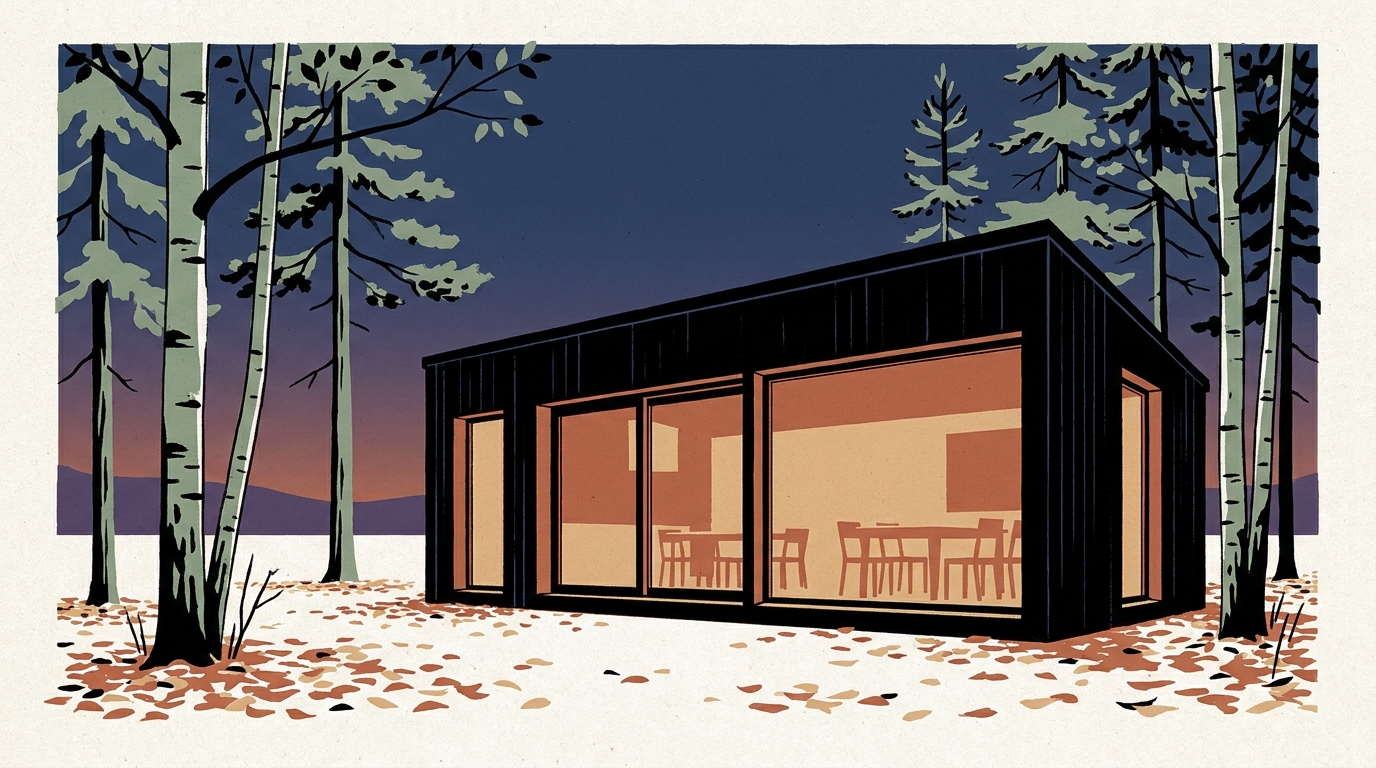
The Death of the Twenty Seven Thousand Dollar Cabin Dream
A Connecticut carpenter built a design-forward empire on five cheap acres in upstate New York. Ten years later, his playbook is both legendary and impossible to replicate.
Ten years ago, the math of the short-term rental business was delightfully, deceptively simple. You did not need an institutional syndicate, a multi-million-dollar credit line, or a complex dynamic-pricing algorithm to build a highly profitable hospitality brand. You needed some decent dirt, a clear vision, and the physical capability to swing a hammer. When a Connecticut carpenter and his wife bought five acres of vacant land in upstate New York for just twenty-seven thousand dollars in 2015, they were not trying to disrupt an industry. They were simply looking to build something beautiful with their own hands. But in doing so, they accidentally wrote the master playbook for the design-led short-term rental boom that would define the next decade of the platform economy.
That five-acre plot became the canvas for a custom home built entirely by the carpenter himself. It was a project born of sweat equity, architectural restraint, and an understanding of how natural light interacts with raw wood. When the property eventually hit the short-term rental market, it did not just book out; it became a viral sensation. It was shared in group chats, saved to thousands of aspirational wish lists, and featured in national design publications. It proved that in the digital-first marketplace of Airbnb and Vrbo, high-end design was not just an aesthetic choice. It was the ultimate marketing hack, yielding occupancy rates and average daily rates that defied traditional hotel economics. It was a beautiful, hyper-profitable proof of concept.
But as we look at the landscape of the short-term rental market today, that 2015 fairy tale feels like it belongs to a different geological era. The window that allowed a working-class craftsman to turn a twenty-seven thousand dollar land purchase into a high-yielding hospitality asset has slammed shut. The cheap land is gone, swallowed by a wave of pandemic-era urban flight. The cost of raw building materials has climbed to historic highs, and the regulatory environment in upstate New York has transformed from a laissez-faire paradise into a legal minefield. To understand where the short-term rental market is going, we must first dissect how this legendary build succeeded, why the economics of the owner-builder model have broken down, and what the survival strategy looks like for the modern host who can no longer buy their way in on a shoestring budget.
What happened
According to real estate records and local design features, the journey began in 2015 when the Connecticut-based carpenter and his wife made their modest land acquisition. Upstate New York, particularly the forested stretches of Ulster, Sullivan, and Delaware counties, still contained pockets of highly affordable, undeveloped acreage. The purchase of five acres for twenty-seven thousand dollars represented a low-leverage entry point that is virtually non-existent today. The carpenter then spent months sourcing materials, clearing the site, and framing the structure himself. By bypassing the traditional general contractor markup, which typically accounts for twenty to thirty percent of a total build budget, and eliminating third-party labor costs, he was able to construct a premium architectural home for a fraction of its market value.
The resulting home was a masterclass in modern rustic minimalism. It utilized large glass panes to bring the surrounding forest inside, featured exposed structural timber, and relied on a clean, neutral color palette that photographed exceptionally well. When listed on short-term rental platforms, the home capitalized on a structural shift in consumer behavior. Guests from New York City were no longer looking for generic country bed-and-breakfasts or dusty, dated cabins. They wanted a highly photogenic, quiet retreat that offered an aspirational lifestyle. The property quickly commanded premium nightly rates, proving that design-forward properties could generate significant cash flow even in rural, non-traditional vacation markets.
This success story helped trigger a gold rush. Over the next five years, thousands of amateur developers, inspired by similar design-build projects, flooded into upstate New York. They purchased old A-frames, old barns, and vacant plots of land, attempting to replicate the carpenter's high-margin aesthetic. This influx of capital completely transformed the regional real estate market, driving land prices up and catching the attention of local town boards. What started as an organic, design-led movement eventually collided with the harsh realities of supply gluts, soaring construction costs, and municipal crackdowns.
The economics of sweat equity
To truly understand the genius of the 2015 build, one must look at the brutal reality of modern construction spreadsheets. In today's market, building a custom home from scratch is a financial bloodbath for anyone who is not a licensed trade professional. When an investor hires a general contractor, they are paying for several layers of overhead. There is the contractor's fee, the subcontractor markups, the cost of permitting expediters, and the premium placed on materials by suppliers who know that retail buyers have no bargaining power. For a standard high-end modern cabin in upstate New York, build costs can easily exceed four hundred to five hundred dollars per square foot.
A professional carpenter, however, operates on an entirely different economic plane. Their labor is not an out-of-pocket expense; it is equity. By acting as their own general contractor, architect, and primary laborer, they convert their own hours into hard asset value. In 2015, when lumber prices were stable and supply chains ran smoothly, the cost of raw materials was incredibly predictable. A skilled carpenter could buy studs, plywood, and siding directly from local yards, negotiate trade discounts, and execute complex architectural details that would cost an ordinary investor tens of thousands of dollars in custom labor fees. They could build a architectural masterpiece for the price of a prefabricated kit home.
This labor arbitrage changes the entire debt-service equation. An investor who spends six hundred thousand dollars to build a modern cabin using general contractors must carry a massive mortgage. To break even, they are forced to chase maximum occupancy and sky-high nightly rates, leaving them highly vulnerable to seasonal downturns and platform fee changes. The owner-builder, conversely, enters the market with a incredibly low cost basis. With minimal debt service to cover, their break-even point is remarkably low. This financial runway allows them to curate the guest experience, maintain the property to an immaculate standard, and weather any temporary drops in tourism without facing foreclosure.
The rise and fall of the Catskills gold rush
The success of early design-build properties in upstate New York did not occur in a vacuum. It coincided with a massive cultural and demographic shift. For decades, the Catskills and the Hudson Valley had been seen as somewhat faded vacation destinations, relics of the mid-century Borscht Belt era. But by the mid-2010s, a new generation of creative professionals from Brooklyn and Manhattan began rediscovering the region. They were drawn by the preservation of historic towns, the burgeoning farm-to-table food scene, and the ease of access via the New York State Thruway. They brought with them a distinct aesthetic preference: clean lines, natural materials, and an aversion to corporate hotel design.
When the pandemic hit in 2020, this steady stream of urban travelers turned into a tidal wave of permanent and semi-permanent refugees. Demand for rural short-term rentals skyrocketed. Suddenly, any property with a wood-burning stove and a fire pit could command four hundred dollars a night. Airbnb operators who had entered the market early found themselves swimming in cash. The success of the Connecticut carpenter's model was amplified a hundredfold. Land that had sat ignored for decades was snapped up by speculative buyers, many of whom had never built a birdhouse, let alone a custom home. They assumed that the easy-money era of rural hosting would last forever.
It did not. By 2023, the market began to normalize. Travel restrictions lifted, and international destinations reopened, drawing American travelers back to Europe and the Caribbean. At the same time, the sheer volume of short-term rental listings in upstate New York had exploded, leading to what hosts on community forums began calling the Airbnb Bust. Occupancy rates in rural vacation markets began to slide as supply outpaced demand. The amateur hosts who had bought at the top of the market, paying inflated prices for properties that required expensive renovations, suddenly found themselves struggling to cover their monthly carrying costs. The party was officially over.
In the digital-first marketplace of Airbnb and Vrbo, high-end design was not just an aesthetic choice. It was the ultimate marketing hack.
How design became the ultimate algorithm hack
Why did some properties continue to thrive during the post-pandemic cooldown while others sat empty? The answer lies in the visual mechanics of the booking platforms. In 2022, Airbnb rolled out its controversial Categories release, a massive redesign of its search interface that de-emphasized specific geographic locations in favor of curated architectural styles and activities. Properties were sorted into buckets like Design, Cabins, OMG!, and Treehouses. This algorithmic shift was a direct endorsement of the design-build philosophy that our Connecticut carpenter had embraced years prior.
Under the new search algorithm, a standard, boring three-bedroom house in a generic subdivision was buried deep in the search results. But a custom-built timber cabin with a green roof, a cedar hot tub, and perfectly framed views of the forest was pushed directly to the homepage of millions of users worldwide. Design had become the ultimate search engine optimization strategy. It allowed a property located in an obscure town with no major tourist attractions to out-perform properties situated in prime resort destinations. The platform was actively rewarding visual uniqueness, and guests were willing to pay a massive premium for it.
This algorithmic preference created a stark divide in the hosting community. On one side were the commodity hosts: investors who bought suburban homes, decorated them with cheap, flat-pack furniture from online retailers, and relied on generic gray vinyl flooring. These properties quickly became commoditized, forced to compete solely on price in a race to the bottom. On the other side were the design-first hosts: those who understood that a short-term rental is not just a place to sleep, but a temporary escape. By investing in custom carpentry, handmade tile, historic light fixtures, and thoughtful landscaping, they created a product that could not be easily replicated. They insulated themselves from the price wars by offering an experience that felt highly personal and irreplaceable.
The regulatory wall upstate tightens
As the density of short-term rentals in upstate New York grew, so did the resentment of local residents. Longtime community members found themselves priced out of the housing market, while quiet country roads were suddenly filled with the traffic of weekend tourists. The backlash was swift, organized, and devastatingly effective. Over the past three years, town after town across Ulster and Sullivan counties has enacted strict regulations designed to curb the growth of non-owner occupied short-term rentals.
Across the Catskills and Hudson Valley, local governments introduced permit caps, waiting lists, and residency requirements. Some municipalities banned corporate-owned short-term rentals entirely, requiring the permit holder to be a natural person or a resident of the county. Others instituted strict occupancy limits, noise ordinances, and mandatory safety inspections that required expensive upgrades to older septic systems and electrical grids. For an investor looking to buy land and build a rental today, these regulatory hurdles represent a massive risk. A project that takes two years to design and build could find itself illegal by the time the final occupancy permit is issued.
This regulatory tightening has shifted the power dynamic back toward the early adopters who managed to secure grandfathered permits. For a host who built their property in 2015, these regulations act as a protective moat. They prevent new competitors from entering their immediate market, keeping supply artificial low and preserving their pricing power. But for the aspiring host, the barrier to entry has never been higher. The days of buying a plot of land, putting up a stylish cabin, and quietly listing it on Airbnb without asking the neighbors are gone. Today, you need a team of land-use attorneys, surveyors, and engineers just to get through the planning board approval process.
The institutionalization of the handcrafted cabin
Seeing the massive success of individual design-build projects, institutional capital eventually entered the chat. Over the last few years, venture-backed hospitality startups and real estate syndicates have attempted to industrialize the handcrafted cabin experience. They raise tens of millions of dollars, buy up large tracts of land, and deploy prefabricated modular cabins designed by high-profile architects. They promise a standardized, frictionless version of the rustic retreat, complete with smart locks, high-speed fiber internet, and branded bath amenities.
Yet, these corporate attempts to scale the cabin aesthetic often miss the very essence of what made the early owner-built properties so compelling. A modular cabin built in a factory and dropped onto a cleared lot by a crane often feels sterile. It lacks the idiosyncratic charm of a home built by a local craftsman who spent months figuring out how to frame a window around a specific oak tree. Guests are highly sensitive to this difference. They can sense when a property has been designed by a spreadsheet to maximize return on equity, rather than built by a human being with a deep passion for the craft. The corporate cabins must charge astronomical rates to service their massive venture debt, leaving them highly exposed when the travel market softens.
Furthermore, these institutional operators face immense operational friction in rural markets. Unlike an owner-operator who lives nearby and can fix a leaky pipe or clear a snowed-in driveway themselves, corporate platforms must rely on third-party property management networks. In remote areas of upstate New York, finding reliable cleaning staff, plumbers, and electricians is notoriously difficult. A single missed clean or a broken heating system during a sub-zero winter weekend can result in terrible reviews that destroy a property's listing ranking overnight. The small-scale, hands-on host who understands the physical realities of their property still holds a massive operational advantage over the distant institutional fund.
The cost of the modern build
To put the 2015 acquisition into perspective, let us look at what it would cost to build that exact same five-acre property today. In 2015, a twenty-seven thousand dollar land budget was a reasonable starting point. Today, a comparable five-acre parcel in a desirable Catskills town will cost significantly more than it did in 2015, depending on road access, electric hookups, and whether the land has been boarded for septic approval. That is a five-fold increase in land acquisition costs alone, before a single spade of dirt is turned.
Then comes the site prep. Clearing trees, putting in a gravel driveway, drilling a deep well, and installing a modern septic system can easily cost fifty thousand to eighty thousand dollars before you even pour a foundation. In 2015, these costs were significantly lower, and local excavation contractors were far easier to schedule. Today, you might wait six months just to get a septic designer to visit your property. If the land requires significant grading or encounters unexpected ledge rock, your site prep budget can quickly spiral out of control, wiping out your investment capital before construction even begins.
Finally, there is the cost of materials and labor. The Producer Price Index for construction materials shows that the cost of goods like lumber, concrete, and gypsum remains significantly higher than pre-pandemic averages. When you factor in the current high interest rate environment for construction loans, the financial math of building a custom cabin from scratch becomes nearly impossible for the average investor. The barrier to entry is no longer just a willingness to work hard; it is a requirement for massive liquid capital up front. The era of the bootstrap builder has been replaced by the era of the well-capitalized developer.
What hosts should do now
If you are looking to enter the short-term rental market today, you cannot rely on the strategies of a decade ago. You must adapt to a highly regulated, high-cost environment where guest expectations are higher than ever. Here are the concrete steps you need to take to build a resilient, profitable hosting business in the current market climate:
- Prioritize regulatory due diligence above all else: Never buy a piece of property or land without a written, verified confirmation from the local town clerk regarding their short-term rental laws, permit caps, and residency requirements.
- Focus on cosmetic transformation over structural builds: Instead of building from scratch, look for structurally sound but visually dated properties that you can purchase below market value and transform through high-impact interior design.
- Develop your own direct-booking infrastructure: Stop relying entirely on Airbnb and Vrbo. Build a professional website, collect guest emails, and offer incentives for repeat visitors to book directly, saving you fifteen to twenty percent in platform fees.
- Invest in experiential amenities that cannot be easily copied: Add features like wood-fired saunas, custom-designed cold plunges, or professional-grade outdoor kitchens that elevate the guest experience and justify a premium nightly rate.
- Design for durability and low maintenance: Avoid cheap materials that look good in photos but wear out quickly. Use commercial-grade fabrics, durable local hardwoods, and smart home systems that protect your investment from careless guests.
The short-term rental landscape has grown up. The wild west days of cheap land, easy builds, and unchecked platform growth are gone, replaced by a mature, highly competitive hospitality sector. While the Connecticut carpenter's twenty-seven thousand dollar cabin is a beautiful reminder of what was once possible, the future belongs to the hosts who can combine that same passion for design with rigorous financial discipline and a deep understanding of local regulatory realities. The dream is not dead; it has simply evolved.
Checked by the standards desk (Eleanor Quist): 3 specifics were removed or attributed as unverified before publication.

Related from the desk
Read the desk every morning.
The day's crackdowns and platform moves, the money, the design and the stays going viral, plus the desk's verdict, in one short email every morning.