The Single Feature That Drives Listings Viral
Forget scattered upgrades. The short-term rental market's new arbiters are algorithms, and they demand a singular, jaw-dropping visual hook that sells itself in three seconds flat.
The algorithm has no taste. It cares nothing for your handcrafted linens, your thoughtfully sourced local art, or the subtle interplay of natural light across your bespoke built-ins. What it wants, what it devours and then spews into millions of feeds, is a punch. A single, undeniable, three-second visual punch that stops the scroll dead. For short-term rental hosts, this algorithmic truth is reshaping design, marketing, and the very economics of the business.
Hosts have spent years refining the art of the multi-feature home: a little bit of everything, tastefully done, offering broad appeal. A good kitchen, a comfortable bed, a decent view, a hot tub, a fire pit, maybe a game room. These are good homes, well-appointed, capable of earning solid reviews and consistent bookings. But in the age of short-form video – TikTok, Instagram Reels, YouTube Shorts – 'good' doesn't travel. 'Tasteful' rarely goes viral. What travels is the unapologetic, singular wow.
How it actually works
The mechanics of virality on short-form video platforms are deceptively simple yet profoundly impactful. Unlike traditional search engines, where users actively input queries for specific needs, these platforms are primarily discovery engines. Their core function is to keep users engaged by serving up an endless stream of novel, compelling content. This content is judged almost instantly, not by human editors, but by algorithms that prioritize engagement metrics: watch time, shares, saves, comments. A listing that can generate a collective gasp, a double-tap, or a quick share in under three seconds holds immense power.
Consider the typical user’s scroll behavior. They are not looking for a place to stay; they are looking to be entertained, to be surprised, to see something extraordinary. A video showcasing a home with ten 'nice' features — a new sofa, an upgraded coffee machine, fresh paint — fails this test. It’s too much information, too little immediate impact. The brain registers it as 'another nice house' and moves on. There’s no single, easily digestible concept to latch onto, no immediate hook that differentiates it from the millions of other aspirational lifestyle clips. These platforms are not designed for nuance or appreciation of subtle quality; they are designed for instant gratification and easily shareable concepts.
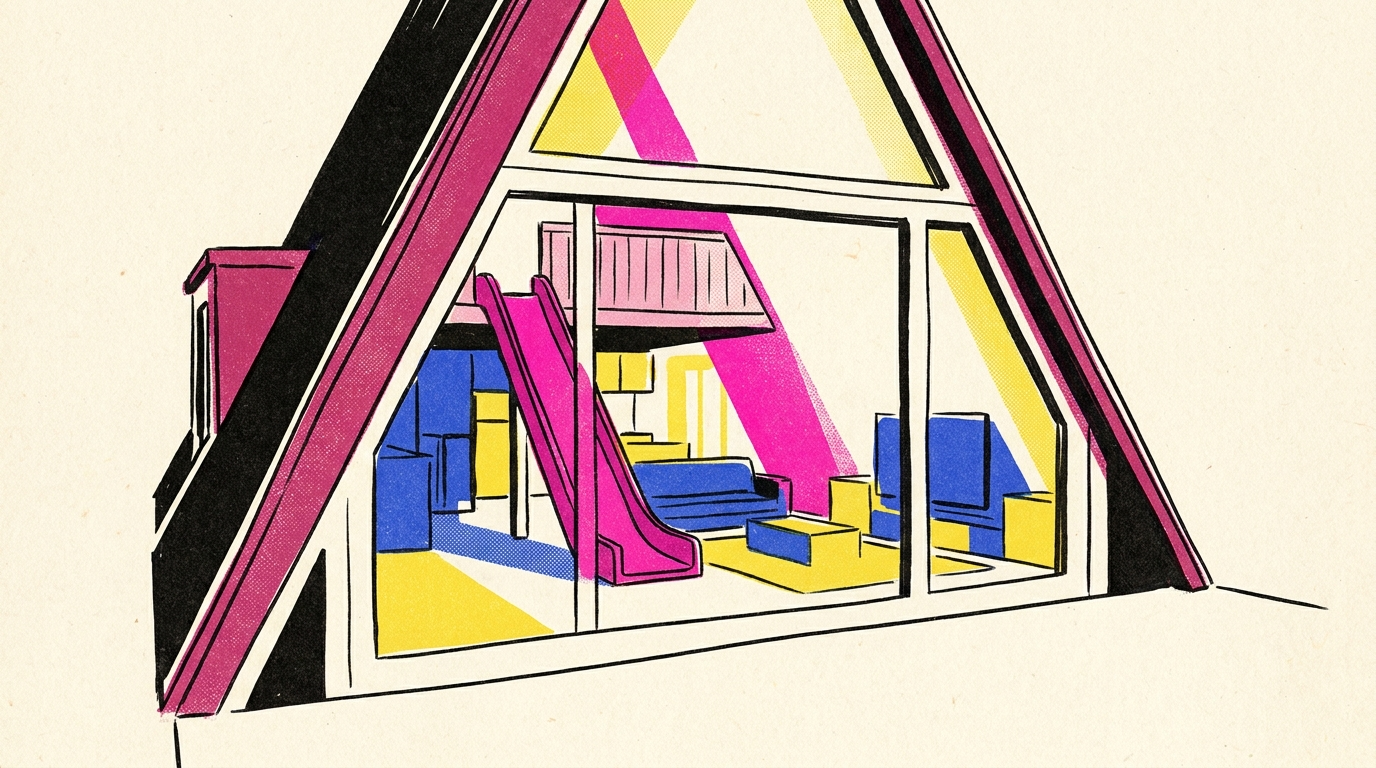
A single, legible 'wow' feature, however, cuts through the noise like a laser. A glass floor overlooking a canyon. A bedroom built into a simulated cave. An indoor slide connecting two levels. A custom-designed pool with an integrated waterfall grotto. These features are instantly recognizable, visually arresting, and immediately comprehensible. They provide a clear, concise visual narrative that doesn't require explanation. The brain processes the novelty, the uniqueness, the aspirational fantasy, and prompts an immediate reaction. This reaction – a share, a comment, a save – signals to the algorithm that the content is valuable, triggering further amplification. The video isn't just seen; it's spread, turning potential guests into unpaid, highly effective marketers.
This mechanism fundamentally alters the marketing landscape for short-term rentals. Traditional marketing efforts, whether paid ads on booking platforms or social media campaigns, require continuous investment. A viral video, however, represents an exponential return on a design investment. It’s a form of earned media that can reach millions of potential guests globally without additional cost. This organic reach can lead to a significant spike in direct bookings, inquiries, and brand recognition, far beyond what even a substantial advertising budget might achieve. The algorithm, in essence, becomes a powerful, unblinking curator, sifting for the most compelling visual story and rewarding it with unparalleled exposure. Hosts who understand this dynamic are no longer just furnishing homes; they are crafting algorithmic bait.
The Tyranny of the Three-Second Scroll
The modern attention span is fractured, constantly bombarded by stimuli. On short-form video platforms, this translates to a relentless, unforgiving scroll. Users make split-second decisions about what to watch and what to skip. A listing’s visual appeal must be so immediate, so compelling, that it interrupts this flow. This is the tyranny of the three-second rule: if your listing video, or even its opening frame, cannot convey its unique value proposition within that tiny window, it is effectively invisible.
Tasteful multi-feature homes, while excellent in practice, are inherently complex in their visual messaging. They require a longer gaze, a more detailed exploration, to appreciate their collective merits. A viewer needs to see the well-appointed kitchen, then the cozy living room, then the manicured garden, to understand the home’s holistic appeal. This sequential appreciation is antithetical to the quick-hit, instant-gratification model of viral video. A host might spend considerable capital on ten different upgrades – perhaps a new set of high-end appliances, designer bedding, a custom-built patio, a refreshed bathroom, a smart home system, improved landscaping, updated flooring, a dedicated workspace, premium toiletries, and a small library. Each of these enhances the guest experience, contributing to a sense of comfort and quality that might earn five-star reviews for the stay itself. But none, individually or collectively, provides the immediate, singular visual shock needed to stop a scroll. The visual narrative is too diffuse, too conventional. The sum of its parts, while good, doesn't create a 'stop and stare' moment.
Conversely, a home with a single, highly concentrated design budget investment – a unique architectural element, an immersive themed room, or an unexpected functional feature like an indoor treehouse – offers a singular, unambiguous visual hook. The moment the camera pans to that one feature, the message is clear: this place is different. This is the moment a viewer stops, re-watches, and shares. The feature itself becomes the story, the selling point, and the viral trigger. It bypasses the need for detailed explanation or slow appreciation, delivering its punch immediately. This means that hosts chasing virality are no longer competing on a broad spectrum of amenities; they are competing on the sharpness and originality of one, central visual concept.
The impact of this cannot be overstated for revenue management. A listing that goes viral often sees an immediate and sustained increase in inquiries and bookings. This increased demand allows hosts to command a higher Average Daily Rate (ADR). Even if the occupancy rate remains constant, a higher ADR directly translates to increased Revenue Per Available Rental (RevPAR), a critical metric for profitability. Furthermore, viral exposure can reduce the need for expensive paid advertising on booking platforms, effectively lowering customer acquisition costs. The visibility gained from a viral moment isn't just about bookings; it's about establishing a property as a destination in itself, attracting a premium-paying demographic actively seeking out unique experiences to share online.
The Budget Dilemma: Spread Thin or Go Deep?
Every host operates within a budget, whether it’s for initial setup, renovations, or ongoing improvements. The fundamental choice boils down to allocation: do you spread your capital across numerous minor enhancements, aiming for broad appeal and consistent quality, or do you concentrate it heavily on one standout feature designed to generate buzz? For hosts aiming for virality, the answer is becoming increasingly clear, if counter-intuitive to traditional hospitality wisdom.
Consider a hypothetical budget of $50,000 for property enhancements. A host might traditionally allocate this by improving several areas: perhaps $5,000 for a kitchen refresh (new countertops, backsplash), $7,000 for bedroom upgrades (new mattresses, high-quality linens, blackout curtains), $3,000 for bathroom renovations (updated fixtures, tiling), $10,000 for outdoor space improvements (patio furniture, small fire pit, string lights), $5,000 for smart home technology (thermostat, keyless entry, sound system), $5,000 for new flooring, $5,000 for general decor and art, and $10,000 held for unexpected issues or further minor enhancements. This approach yields a comfortable, attractive, and highly functional home. It will likely earn good reviews and consistent bookings at a respectable ADR. However, none of these individual upgrades, nor their sum, screams 'viral potential.' They are incremental improvements that cater to a wide audience seeking comfort and convenience, not spectacle.
Now, consider the same $50,000 budget concentrated on a single, bold feature. This could mean a custom-built indoor climbing wall, a bedroom with a transparent dome for stargazing, a fully immersive themed movie theater, or a unique architectural addition like a cantilevered glass balcony. Such a feature might consume the entire budget, potentially leaving other areas of the home with more basic, but functional, amenities. The bed might not be the absolute highest-end, the kitchen might be perfectly adequate but not gourmet, and the bathrooms might be standard but clean. This strategy involves a calculated risk: sacrificing across-the-board polish for a singular, unforgettable element. But for the purpose of viral marketing, this concentrated approach yields significantly higher dividends.
The financial incentives are compelling. A multi-feature, tastefully appointed home might command an ADR of, for example, $250. A viral listing, due to its unique appeal and high demand, could easily push its ADR to $400, $500, or even higher, depending on the market and the feature’s uniqueness. This dramatic increase in nightly rate can lead to substantially higher gross revenue, even if the occupancy rate is only marginally better. While the maintenance costs for a unique feature might be higher, and it might not appeal to every demographic, the sheer volume of organic reach and the resulting demand allows for premium pricing that far outstrips the incremental gains from a broadly 'nice' property. The initial investment, while seemingly focused on a single element, pays off in marketing reach that traditional advertising simply cannot buy.
The Experience Economy and Niche Markets
The short-term rental industry has evolved beyond merely providing a place to sleep. It has firmly entered the 'experience economy,' where guests are increasingly seeking memorable, shareable moments rather than just transactional accommodation. This shift is amplified by social media, where travelers actively seek out and document unique experiences to share with their networks. For hosts, this means understanding that the 'product' is no longer just the bed and roof, but the entire narrative a guest can construct and broadcast about their stay.
In this landscape, a home with a singular, 'wow' feature isn't just a property; it's a content generator. Guests don't just stay there; they participate in its story. They take photos, record videos, and actively promote the unique aspect of the listing. This organic, user-generated content is the holy grail of modern marketing. It’s authentic, highly trusted, and inherently shareable. The host, in effect, outsources their marketing efforts to their guests, who become enthusiastic brand ambassadors simply by enjoying and documenting the unique feature.
This strategy also allows hosts to carve out incredibly lucrative niche markets. While a broadly appealing home aims for mass market penetration, a property with a distinct, viral feature targets a specific segment: those who prioritize uniqueness, visual appeal, and the opportunity for social media content. This niche, though smaller in absolute terms, is often far more willing to pay a premium. They are not merely booking a room; they are buying into an experience, a photo opportunity, a story. This demographic is often less price-sensitive and more likely to book further in advance, leading to more predictable revenue streams.
Consider the growth of highly themed rentals – treehouses, tiny homes with specific designs, converted vehicles, or architectural oddities. These properties often lack the full suite of amenities found in a conventional home, yet they consistently achieve higher ADRs and impressive occupancy rates. Their success isn't despite their narrow appeal, but precisely because of it. They don't try to be everything to everyone; they aim to be extraordinary for a select few. The single, distinguishing feature is the magnet, drawing in a dedicated audience that values novelty and Instagrammability above all else.
This approach also carries implications for the ongoing maintenance and operational costs. While a unique feature might require specialized care or higher insurance premiums, the higher ADR and strong booking calendar can easily absorb these additional expenses. Furthermore, a property that is consistently booked by guests actively seeking a unique experience often sees less wear and tear from general use, as guests are often more respectful of a property they perceive as special and curated. The perceived value of the unique feature transcends minor imperfections elsewhere, allowing hosts to prioritize their budget on what truly drives demand and virality.
The Regulatory Squeeze and Strategic Spending
The operating environment for short-term rentals has become increasingly complex and expensive. Cities worldwide, from New York City to Amsterdam, have implemented stringent regulations, permit requirements, and increased taxation. These costs directly impact a host’s bottom line and, crucially, their available capital for property enhancements. When every dollar is stretched thin by licensing fees, occupancy taxes (which can add 10-15% or more to guest cost in many markets), increased insurance premiums, and compliance overheads, the decision of where to invest remaining funds becomes a stark choice between necessity and spectacle.
Platform fees, such as Airbnb's typical 3% host fee (with guest service fees on top) or Vrbo's tiered models, also cut into gross revenue. While these are a cost of doing business, they underscore the need for maximum return on every dollar spent on the physical property. If a host has, say, $50,000 for upgrades after accounting for permit applications, legal fees, and increased property taxes, they must assess which investment will yield the greatest net benefit. Spreading that $50,000 thin across multiple 'nice-to-have' improvements might marginally increase the ADR or occupancy, but it will not generate the kind of organic marketing amplification needed to truly stand out.
Conversely, investing that entire $50,000 into a singular, viral-worthy feature becomes a strategic play. Yes, it might mean foregoing a kitchen renovation or a bathroom overhaul. But the potential for increased ADR and sustained high occupancy from viral exposure can far outweigh the lost revenue from minor improvements. The calculation shifts from 'how can I make this home universally appealing?' to 'how can I make this home exceptionally noteworthy, given my constrained capital?' In a highly regulated market, where operating margins are tighter and competition is fierce, the ability to generate free, global marketing through virality becomes an invaluable asset.
The very existence of these regulatory hurdles pushes hosts towards more extreme differentiation. When it's harder and more expensive to operate, only the most compelling properties will thrive. A host might decide that fighting for bookings on price or generic quality in a saturated, regulated market is a losing battle. Instead, they pivot to creating a destination property, a place so unique that guests are willing to navigate platform fees, higher cleaning fees (often $100-$300 depending on property size, potentially more for specialized features), and even travel further, just for the experience of the viral feature. This strategy acknowledges the economic realities: when operational costs rise, revenue must rise disproportionately to maintain profitability, and viral demand is one of the most effective ways to achieve this without endlessly increasing marketing spend.
Who Cashes In and Who Eats the Loss?
The short-term rental market's pivot towards viral-driven design creates clear winners and losers, shifting the competitive landscape and rewarding a very specific type of entrepreneurial spirit. Understanding these dynamics is crucial for any host or property manager navigating the industry's evolving currents.
The clear winners are hosts with vision, capital, and the courage to take a calculated design risk. These are the individuals who identify a market gap for unique experiences and are willing to invest heavily in a single, standout feature. They understand that while a glass floor or a cave bedroom might not appeal to every single potential guest, it will intensely appeal to a highly lucrative segment willing to pay a premium. Their properties garner disproportionate attention, leading to higher ADRs, better occupancy rates, and often, more direct bookings, reducing reliance on platform algorithms for discovery. They benefit from massive organic reach on social media, essentially getting free, high-impact marketing from their guests. This success can also translate into higher property values, as these unique homes become sought-after assets.
Niche designers, architects, and specialized contractors also cash in. The demand for truly unique and innovative features creates a market for bespoke solutions. Builders who can execute complex, unconventional designs, or artists who can create immersive environments, find themselves in high demand. These professionals are no longer just building houses; they are crafting experiences, charging premium rates for their specialized skills and creative input.
Conversely, the hosts who eat the loss are often those who adhere to traditional notions of good design and broad appeal. These hosts invest in quality across the board – premium furniture, high-end appliances, tasteful decor, and comprehensive amenities. Their homes are undeniably comfortable, functional, and well-reviewed. However, they struggle to stand out in a crowded market driven by visual novelty. Their marketing efforts remain traditional, often reliant on paid advertisements on Airbnb or Vrbo, which provide diminishing returns compared to viral organic reach. They find themselves competing on price, or on a long list of 'nice' features that don't translate into viral content. Their ADRs remain stagnant, and their occupancy rates, while potentially solid, don't benefit from the demand surges that viral properties experience.
Another group that struggles are hosts in highly restrictive regulatory environments where unique architectural features or structural changes are difficult or impossible to permit. If local ordinances prohibit unusual construction or require extensive, costly approvals, it stifles the innovation needed for a viral feature. These hosts are often confined to more conventional property types, limiting their ability to compete on novelty and forcing them to focus on service, location, or price.
Finally, platforms like Airbnb and Vrbo benefit from the virality trend. While they don't directly fund the unique features, they profit from the increased activity and bookings these properties generate. Viral listings bring new users to the platforms, create buzz, and reinforce the platforms' image as sources of unique and exciting travel experiences. The free marketing generated by hosts' viral content ultimately benefits the platforms' top lines and brand equity, all while charging their standard service fees on every booking.
The algorithm has no taste; it only devours and amplifies what stops the scroll.
What hosts should do now
The short-term rental landscape demands adaptability. For those aiming to capture the attention of the viral machine, a shift in investment strategy is essential. The goal is to move from broad appeal to singular impact, maximizing the return on every design dollar by focusing on organic social media reach.
- Identify your 'legible wow': Brainstorm a single, unique, visually arresting feature that can be captured and understood in a three-second video clip. This could be an architectural element, an immersive room theme, or an unexpected amenity.
- Concentrate your budget: Instead of allocating funds across multiple minor upgrades, dedicate a significant portion of your design capital to executing this single, standout feature with uncompromising quality and visual flair.
- Prioritize basic functionality elsewhere: While the 'wow' feature is paramount, ensure that other essential aspects of the home – cleanliness, comfortable beds, functional utilities – meet basic guest expectations, even if they aren't luxurious.
- Design for shareability: Think about how guests will interact with and film the feature. Provide good lighting, clear sightlines, and opportunities for compelling photo and video content.
- Research regulatory feasibility: Before committing to an unconventional design, thoroughly investigate local zoning laws, building codes, and permit requirements to ensure your unique feature is achievable and compliant.
The market is telling us that distinctiveness, when properly framed for the digital age, is the new premium. Hosts who embrace this will find themselves riding the wave of algorithmic amplification, while those who stick to the tried and true risk being left in the digital dust.
About this piece
An original expert-analysis column by the Stay Gazette desk. Figures are illustrative of how the market behaves; confirm specifics for your own market before you act.



Read the desk every morning.
The day's crackdowns and platform moves, the money, the design and the stays going viral, plus the desk's verdict, in one short email every morning.