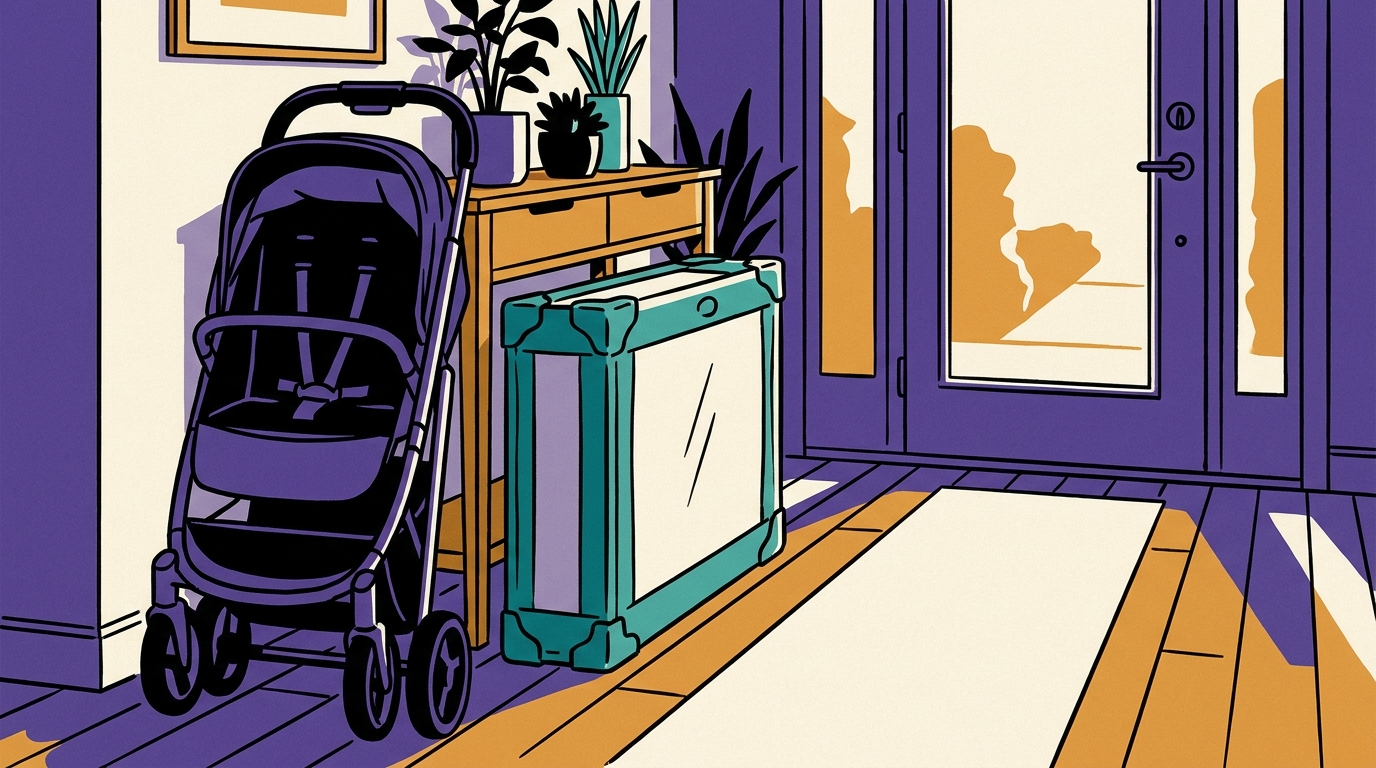
Airbnb Targets Family Travel Markets with Integrated Baby Gear Rental Partnership
A new partnership signals a major shift in the platform's battle for high-value family bookings, transferring operational headaches and liability off the host.
Travel with small children is a masterclass in logistical misery. Ask any parent who has ever dragged a sixty-pound double stroller, an infant car seat, a portable crib, and a mechanical white-noise machine through a crowded airport terminal. By the time they reach the baggage claim, they have paid more in oversized luggage fees than some travelers spend on their entire flight. When they finally arrive at their short-term rental at midnight, only to find a dusty, structural puzzle of a pack-and-play hidden in the back of a closet with missing instructions, the vacation is already off to a disastrous start. For years, this friction has been a quiet tax on the family travel market, keeping millions of parents of young children grounded, or steering them toward predictable, full-service hotels where a call to the front desk can summon a sanitized crib in ten minutes.
Now, Airbnb is making a direct bid to eliminate that friction, launching an initiative to offer baby-gear rentals to traveling families in the United States, according to a report by Bloomberg. By integrating baby-gear rental options into the booking flow, the platform is attempting to solve one of the most stubborn pain points in family hospitality. The move is not just a polite nod to parents; it is a calculated land grab for the most valuable demographic in the entire lodging sector. Families do not book tiny studio apartments or basement rooms. They book three-bedroom homes, stay longer, cook meals in-house, and generate the kind of high-average-order-value bookings that keep the platform fee engine humming.
But beneath the surface of this corporate announcement lies a complex web of operational friction, liability shifting, and platform positioning. For professional hosts and property managers, the introduction of third-party baby-gear rentals at the platform level changes the calculus of property preparation. It raises immediate questions about property access, vendor coordination, liability insurance, and the future of host-provided amenities. In typical fashion, Airbnb is building a service layer on top of properties it does not own, leaving the people who actually run the real estate to figure out how to manage the boots on the ground.
What happened
According to a report by Bloomberg, Airbnb is courting traveling families in the United States by integrating baby-gear rental options directly into its ecosystem. Under this new initiative, guests booking stays on the platform will be given the option to rent essential childcare equipment, including cribs, strollers, high chairs, and car seats, to be delivered directly to their destination. The program is designed to alleviate the burden of packing heavy, bulky gear, making the logistics of family travel significantly more manageable.
The service relies on partnerships with specialized baby-gear rental platforms that operate across the country. These third-party networks utilize localized supply chains and gig-economy providers to source, clean, sanitize, and deliver the equipment directly to properties before the guest arrives. By partnering with established players in the baby-gear space, Airbnb avoids the logistical nightmare of owning physical inventory, managing warehouses, or handling the hands-on sanitization process themselves.
The roll-out comes at a time when the short-term rental market is facing normalization after the pandemic-era boom. With occupancy rates stabilizing and competition among listings intensifying, platforms are looking for ways to capture specific high-value cohorts. Traveling families represent a resilient, high-spending market segment, and this partnership is a clear attempt to make Airbnb the default choice for parents who might otherwise opt for traditional resorts or competitors like Vrbo.
The lucrative math of family travel
To understand why Airbnb is focusing so heavily on babies and toddlers, you have to look at the micro-economics of the family traveler. In the short-term rental industry, not all bookings are created equal. A solo business traveler or a couple booking a weekend getaway might generate a decent daily rate, but they are highly price-sensitive and prone to canceling if their plans shift. They also tend to book smaller properties with lower overall margins.
Families, on the other hand, are the white whales of hospitality. When a multi-generational family or a group of parents with young children plans a trip, their booking behavior is fundamentally different. They require larger properties with kitchens, laundry facilities, and multiple bathrooms. These listings command significantly higher average daily rates than the platform average. Furthermore, families tend to plan their trips months in advance, resulting in longer lead times and lower cancellation rates. They stay longer, too, often booking full-week or multi-week stays to align with school breaks and remote-work schedules.
According to industry data from sources like AirDNA, multi-bedroom properties suitable for families consistently outperform smaller units in terms of revenue stability during economic downturns. Parents are less likely to compromise on space when traveling with children. By removing the logistical barrier of transporting gear, Airbnb is actively trying to increase the frequency of these high-value bookings. If a parent knows they can book a home and have a clean stroller and a safe crib waiting for them at the door, the psychological barrier to booking a trip drops dramatically.
The ghost in the crib: Liability and the host's dilemma
For years, professional hosts have faced a frustrating double-edged sword when it comes to accommodating children. On one hand, offering family amenities like cribs and high chairs makes a listing highly competitive and attracts premium bookings. On the other hand, providing these items directly carries immense operational risk and legal liability.
Consider the humble pack-and-play. If a host provides a portable crib, they are legally and operationally responsible for its safety. If a guest improperly assembles the crib and it collapses, or if the manufacturer issues a recall that the host fails to track, the host could face catastrophic legal liability in the event of an injury. In the United States, product liability and personal injury laws are notoriously unforgiving. Insurance companies that write policies for short-term rentals often have strict clauses regarding child-care equipment, and some explicitly exclude coverage for injuries related to host-provided cribs, bunk beds, or high chairs.
Then there is the issue of sanitization. A high chair or a stroller is a magnet for germs, spilled milk, and ground-in organic matter. Properly deep-cleaning and sanitizing this equipment between every stay is a time-consuming process that standard cleaning crews are rarely equipped to handle. A housekeeper rushing to turn over a five-bedroom house in a four-hour window does not have the time to disassemble a high chair tray, scrub dried food out of nylon straps, and sanitize every crevice of a stroller wheel. If a guest arrives to find a sticky high chair or a stained crib mattress, the host is rewarded with a scathing one-star review.
How third-party rentals shift the risk
This is where Airbnb's new initiative becomes highly attractive to the supply side of the marketplace. By outsourcing baby-gear fulfillment to third-party rental services, the platform effectively shifts the operational burden and the associated liability away from both the host and the platform itself.
When a guest rents a crib through an integrated third-party partner, that partner assumes the legal responsibility for the equipment's safety and sanitation. These specialized companies have dedicated protocols for tracking product recalls, inspecting gear for structural integrity, and sanitizing items using hospital-grade, child-safe cleaning products. They carry their own robust liability insurance policies, which cover the equipment in use.
For hosts, this is an elegant escape hatch. They can confidently market their properties as family-friendly without having to purchase, store, maintain, or clean expensive baby gear. When a guest asks if the home has a high chair, the host no longer has to choose between saying no and risking a lost booking, or saying yes and risking a lawsuit. They can simply direct the guest to the platform's integrated rental options. The guest gets professional-grade, guaranteed-clean equipment, and the host keeps their storage closets free of bulky plastic gear.
The logistics battlefield on the ground
While the theory of third-party delivery is pristine, the operational reality on the ground is bound to introduce friction. Property managers and hosts operate in a world of tight margins, strict schedules, and delicate community dynamics. Introducing external, independent delivery drivers into this ecosystem is not without its challenges.
The first major issue is access control. How does the rented baby gear get inside the property before the guest arrives? Most professional hosts use smart locks with unique codes that only activate at the guest's official check-in time. If a baby-gear delivery driver arrives two hours early to set up a crib, they will find themselves locked out. If the host creates a temporary access code for the delivery service, they must coordinate the timing with their cleaning crew to ensure the delivery does not disrupt the property turnover. If the delivery happens after the guest arrives, it defeats the purpose of having a prepared home and creates an annoying interruption for the traveler.
There is also the question of property damage and security. If a delivery driver carrying a heavy wooden crib scratches a freshly painted hallway wall, or chips a door frame, who pays for the repairs? Tracking down liability for minor property damage caused by third-party vendors is notoriously difficult. If the guest is responsible for coordinating the delivery themselves, the host has even less control over who is entering their home and when. Property managers will need to establish clear protocols and communication channels to manage these external touchpoints without inflating their own labor costs.
The battle for the family crown: Airbnb vs. Vrbo
Airbnb's push into baby-gear rentals is not happening in a vacuum. It is a direct shot across the bow of its chief rival, Vrbo. Historically, Vrbo has held a dominant position in the traditional, multi-generational family vacation market. Vrbo's brand identity has long been built around whole-home rentals in leisure destinations like beaches, lakes, and mountain towns, where families gather for annual vacations.
Vrbo has traditionally captured the older, wealthier family demographic that plans extensive vacations. Airbnb, conversely, began as an urban, millennial-focused platform. However, those urban millennials have grown up. They now have mortgages, careers, and young children of their own. They are fiercely loyal to the Airbnb brand, but their accommodation needs have changed. They can no longer squeeze their lives into a shared apartment or a minimalist loft.
By integrating services like baby-gear rentals, Airbnb is attempting to retain this aging user base and prevent them from migrating to Vrbo or traditional family resorts. It is an acknowledgment that to win the next decade of travel, Airbnb must evolve from a platform that sells cool spaces to a platform that sells comprehensive travel solutions. If Airbnb can offer a superior, more integrated logistical experience for parents, it can successfully capture the lifetime value of this maturing demographic.
The broader trend: The platform as a service hub
This initiative represents a significant step in Airbnb's long-term strategic evolution. For years, the company has experimented with ways to monetize the entire travel journey, rather than just the accommodation itself. We saw this with the launch of Airbnb Experiences, which met with mixed success and has undergone various pauses and re-evaluations. We have seen it in rumors of flight booking integrations, car rentals, and local concierge services.
The baby-gear partnership is a highly pragmatic application of this strategy. Rather than trying to build a brand-new marketplace from scratch, Airbnb is acting as a curated gateway to existing, highly specialized local service providers. This allows the platform to generate high-margin referral or integration fees without taking on any inventory risk, operational overhead, or local regulatory headaches.
We are likely entering an era where the short-term rental booking flow looks more like an airline checkout process. When you buy a plane ticket, you are prompted to add baggage, select a seat, rent a car, and purchase travel insurance. In the near future, booking an Airbnb will likely involve a menu of add-on services: pre-arrival grocery delivery, mid-stay cleanings, airport transfers, and, yes, specialized equipment rentals. For Airbnb, this is a way to extract more revenue per booking without having to increase service fees on the core accommodation, which are already facing consumer pushback.
Let the gig-economy specialists take the risk; your job is to provide the real estate.
What hosts should do now
As this program rolls out across the United States, professional hosts and property managers need to adapt their operational workflows to protect their properties and capitalize on the shift.
- Audit your current inventory: Inspect every baby item currently stored in your properties. If you have outdated, unbranded, or worn cribs and high chairs, phase them out to eliminate safety and recall liabilities.
- Update your house rules and arrival guides: Clearly state your policy regarding third-party deliveries. Specify that any external rental deliveries must be scheduled within the guest's official booking window to prevent lockout issues.
- Prepare your access control systems: Ensure your smart lock systems allow for easy, temporary access code creation in case you need to coordinate pre-arrival deliveries with trusted local vendors.
- Update your listing copy: Explicitly state in your property description that the home is family-friendly and that baby gear can be rented and delivered directly to the property through Airbnb's integrated partners.
The short-term rental industry is maturing, and the hosts who win are those who know how to manage risk while maximizing guest convenience. By embracing professionalized, third-party service integrations, operators can focus on what they do best: delivering clean, secure, and beautiful spaces, while letting specialized networks handle the complex mechanics of family logistics.
Checked by the standards desk (Eleanor Quist): every specific in this story was traced to its source material before publication.


Read the desk every morning.
The day's crackdowns and platform moves, the money, the design and the stays going viral, plus the desk's verdict, in one short email every morning.