Why Real Plants Are the Ultimate Trust Signal in Short-Term Rental Photography
In a marketplace saturated with sterile, white-walled listings and clinical corporate design, the presence of real living greenery acts as a powerful psychological cue that someone actually cares.
The listing photo is a transaction waiting to happen, but most short-term rental hosts are treating it like a police lineup. Scroll through any major booking platform in any mid-to-high-density market today and the visual fatigue is instant. You are confronted with row after row of identical white walls, gray vinyl plank flooring, flat-pack blue velvet sofas, and the sterile, hollow atmosphere of an unpopulated staging environment. These spaces do not look like places where people live, relax, or make memories; they look like temporary holding cells for travelers who ran out of options. In this sea of generic corporate aesthetics, the presence of a single, thriving, organic element does not just soften the room. It changes the entire financial calculus of the listing.
Integrating real, living plants into a short-term rental is not an interior design whim. It is a calculated operational choice that speaks directly to the subconscious anxieties of the modern traveler. When a prospective guest browses listings on Airbnb, Vrbo, or Booking.com, they are not merely comparing prices and square footage; they are assessing risk. The primary risk in the short-term rental market is the gap between expectation and reality. Guests fear the neglected property, the dusty corner, the absentee host, and the clinical coldness of a space managed solely by a spreadsheet. A healthy, living plant is a visual proof of life. It is an undeniable signal that someone with a pulse has recently stepped into that room, looked at a living thing, and tended to it. It is the cheapest, most effective trust signal a host can deploy.
Yet, the execution of this strategy is where the amateur host and the professional operator part ways. The amateur reads a design blog, gets enthusiastic, and transforms their two-bedroom apartment into an indoor jungle filled with temperamental ferns and high-humidity tropicals that curl up and die the moment the thermostat is adjusted. The professional understand that botany in a commercial hospitality setting must be subjected to the same rigorous systems engineering as keyless entry locks, dynamic pricing algorithms, and laundry turnover times. It is not about creating a botanical garden; it is about deploying a small, carefully selected fleet of low-maintenance, high-impact green assets that can survive guest indifference and cleaner time constraints while continuing to radiate warmth in every thumbnail photo.
How it actually works
The mechanism behind the botanical trust signal is rooted in evolutionary psychology and visual hierarchy. The human eye is naturally drawn to organic curves, varying textures, and biological forms—a phenomenon known as biophilia. In a digital environment dominated by the hard, straight lines of television screens, kitchen countertops, and rectangular coffee tables, a plant breaks the geometric monotony. When a user scrolls through a search page containing twenty properties, their eyes naturally linger on the images that contain organic green hues. This split-second pause is the difference between a clicked listing and a bypassed one, directly impacting the click-through rate (CTR) that platforms use to rank search results.
Beyond the initial click, the plant functions as an operational proxy. The logic of the guest is simple, even if it remains entirely subconscious. A living plant requires ongoing human intervention to stay alive. It cannot be ignored for months like a framed print or a plastic knick-knack. Therefore, if a listing shows a thriving, dust-free plant, the host must be active, attentive, and physically present in the management of the property. The guest reasons that if a host has the attention to detail required to keep a delicate green organism healthy, they are highly likely to have checked the cleanliness of the linens, the functionality of the air conditioning, and the sanitation of the bathroom. The plant stands as a visual guarantee of active stewardship.
Conversely, the absence of living elements or, worse, the presence of dead or dying plants, has a catastrophic psychological effect. A brown, drooping leaf or a dried-out palm in a listing photo instantly signals neglect. It tells the viewer that the property is run on autopilot, that the host is distant, and that the physical space is left to decay between bookings. The visual message is clear: if the host does not care enough to throw away a dying plant, they will not care when the hot water heater fails or the Wi-Fi drops out during an important video call. In the digital marketplace, visual neglect translates directly to financial underperformance.
The economics of visual trust
To understand the monetary value of this visual signaling, one must look at how modern booking platforms structure their search ranking algorithms. Platforms like Airbnb and Vrbo operate on a simple commercial objective: maximize the transaction value of every search query. To achieve this, their algorithms prioritize listings that demonstrate high conversion rates and strong engagement metrics. When a user clicks on a listing, stays on the page to view multiple photos, and ultimately bookings the stay, the platform notes this success and pushes the listing higher in the search results. Visual assets are the primary drivers of this engagement loop.
Consider the performance metrics of a typical urban short-term rental. In a highly competitive market, a properties occupancy rate and Average Daily Rate (ADR) are directly constrained by how well the property converts traffic. If a listing receives ten thousand impressions in search results but only has a conversion rate of one percent, it generates one hundred bookings. By making small, strategic adjustments to the cover photo—such as framing a healthy green plant in the corner to soften a sharp architectural edge and add warmth—a host can lift that conversion rate to one point two percent. That seemingly minor adjustment results in twenty additional bookings over the course of a year. In a property with an ADR of two hundred dollars and an average stay of three nights, that represents twelve thousand dollars in additional top-line revenue, achieved with a minimal capital outlay.
Furthermore, the presence of real plants directly influences the text of the reviews left by guests. Review sentiment is a crucial component of long-term platform success. When guest reviews repeatedly contain words like calm, warm, inviting, homey, and cared-for, the platforms natural language processing systems register these positive emotional indicators. These reviews build a fortress of social proof that allows hosts to maintain high rates even during seasonal downturns. A room that feels like a home because of thoughtful green touches can command a premium over a sterile corporate apartment of identical square footage down the street. The investment is not in the plant itself, but in the premium pricing power that the plant unlocks.
The botanical maintenance trap
The most common mistake made by hosts attempting to implement this strategy is failing to account for the harsh operational realities of the short-term rental business. A vacation rental is not a private residence where an attentive homeowner can monitor soil moisture levels daily. It is a high-traffic commercial space subjected to extreme temperature fluctuations, variable lighting conditions, and long periods of vacancy or guest neglect. Guests will not water your plants. In fact, they should never be asked to do so. Expecting a guest paying hundreds of dollars a night to perform light gardening duties is a recipe for negative reviews and dead plants.
Therefore, any plant introduced into a short-term rental must be selected based on its biological resilience rather than its aesthetic trendiness. The Fiddle Leaf Fig, for example, has become the darling of interior design magazines over the past decade. It is also the absolute worst choice for a short-term rental. It is notoriously finicky, dropping its leaves in response to minor drafts, shifts in light, or slight overwatering. A naked, woody stem with three yellowing leaves clinging to the top is not a trust signal; it is an embarrassment. Similarly, delicate ferns, peace lilies, and high-maintenance tropicals that require daily misting have no place in a professional hospitality operation.
Instead, the professional host relies on a strict, limited list of near-unkillable species that possess a high tolerance for drought, low light, and physical disturbance. These species are the true workhorses of the hospitality industry. They can survive weeks of neglect, thrive in dim corners, and maintain their lush, green appearance even when guests crank the air conditioning down to sixty degrees or turn the heating up to eighty. By limiting the botanical palette to these ultra-resilient species, hosts can build a sustainable green footprint that requires minimal ongoing maintenance and carries a near-zero replacement cost.
The holy trinity of rental botany
For the professional manager looking to build a scalable botanical program, three species stand head and shoulders above the rest. These plants offer the perfect balance of visual impact, structural presence, and biological resilience. They are the foundation upon which any successful short-term rental green strategy should be built.
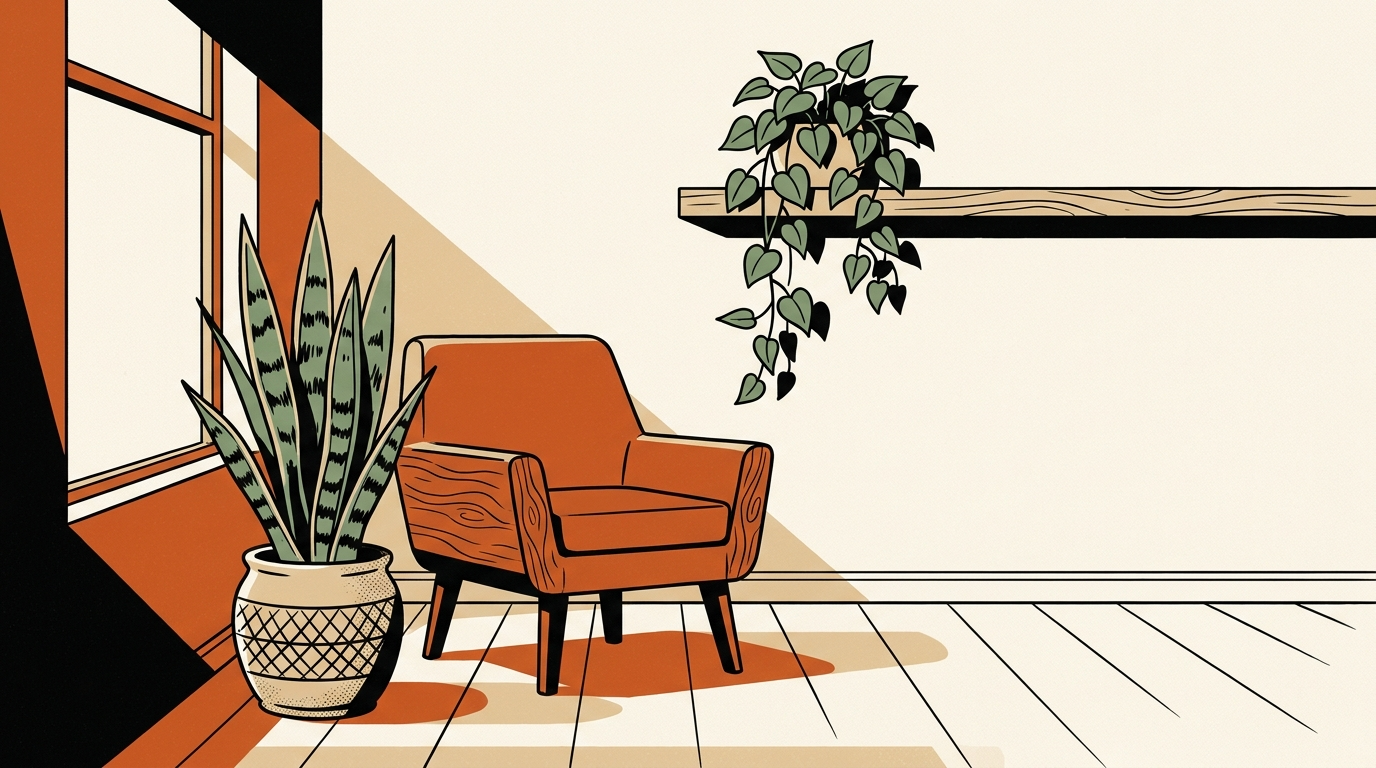
First is the Snake Plant, historically known as Sansevieria. This plant is a marvel of evolutionary adaptation. It features upright, sword-like leaves with striking variegated patterns that add a strong vertical element to any room. From a design perspective, the Snake Plant is invaluable for filling narrow corners, flanking television consoles, or placing next to entryways where floor space is limited. Biologically, it is virtually indestructible. It can survive in low-light conditions that would kill almost any other plant, and its water requirements are minimal. In fact, the quickest way to kill a Snake Plant is to water it too frequently. It can easily go four to six weeks without a single drop of water, making it immune to the gaps between guest bookings and the occasional oversight of cleaning staff.
Second is the ZZ Plant, short for Zamioculcas zamiifolia. With its thick, fleshy stems and glossy, deep green leaves that look almost polished, the ZZ Plant adds an air of richness and health to any surface. It is highly effective when placed on coffee tables, sideboards, or bathroom vanities where its reflective leaves catch the light. The ZZ Plant grows from underground rhizomes that store water, meaning it carries its own emergency water reservoir at all times. It thrives on neglect, tolerates extremely low light, and is highly resistant to common household pests. A ZZ Plant can be placed in a windowless bathroom or a dark hallway and will still look perfectly healthy and vibrant for months without intervention.
Third is the Pothos, specifically the Golden Pothos or Devil's Ivy. This trailing vine is the ultimate tool for softening hard, high-up horizontal lines. Placed on top of a bookshelf, a kitchen cabinet, or a wall-mounted shelf, the Pothos cascades downward in a graceful curtain of heart-shaped green leaves. It is incredibly fast-growing and easy to propagate, allowing hosts to multiply their green assets across multiple properties at zero cost. The Pothos is also a highly communicative plant; when it is thirsty, its leaves droop slightly, providing a clear visual cue to cleaners that it requires water, only to bounce back completely within hours of being watered. It is the perfect choice for adding a sense of lush abundance to a room without the associated maintenance headaches.
Operationalizing the greenery
A beautiful plant strategy on paper is worthless if it breaks down in the field. To ensure that your living assets remain an asset rather than a liability, plant care must be thoroughly integrated into the properties standard operating procedures (SOPs). It cannot be left to the memory or goodwill of your cleaning crew. Cleaners are already working under intense time pressure, managing tight turnover windows, checking for guest damage, restocking amenities, and ensuring the property meets rigorous sanitation standards. If you simply tell them to water the plants, they will either overwater them out of panic or ignore them entirely due to lack of time.
The solution is to turn plant care into a highly structured, binary task that requires zero subjective decision-making. This begins with the selection of the pots themselves. Never plant a short-term rental specimen directly into a decorative ceramic pot without drainage holes. This is a guarantee of root rot, sour-smelling soil, and eventual plant death. Instead, keep the plant in its plastic nursery pot and place that nursery pot inside a decorative, waterproof outer container—a setup known as a cachepot. This allows for easy removal, watering, and drainage, preventing water from pooling at the bottom and keeping the roots healthy.
Furthermore, the turnover checklist must be updated to include explicit, timed instructions for plant care. Rather than watering on every single turnover, which will quickly drown resilient species like the Snake Plant or ZZ Plant, assign a specific day of the week as Watering Day across your portfolio. On that day, the cleaner is instructed to perform a simple, binary check using a cheap soil moisture meter. The cleaner sticks the metal probe of the meter into the soil; if the needle points to dry, they pour a pre-measured cup of water into the pot. If the needle points to moist or wet, they do nothing. This simple system removes all guesswork, protects your plants from the dangers of overwatering, and ensures that the task takes less than sixty seconds per property.
To further minimize water damage risks, always place protective coasters or cork mats beneath every pot. A slow leak or condensation from a cold pot can quickly ruin expensive hardwood floors, custom cabinetry, or mid-century sideboards, completely wiping out the financial returns of your green strategy. By treating plants as physical assets that require proper containment, protective barriers, and structured maintenance schedules, you protect both the health of the plants and the integrity of your property.
The psychology of guest reviews
The ultimate test of any hospitality strategy is its impact on the guest experience, as reflected in the reviews they leave behind. In the short-term rental industry, a five-star rating scale means that even a minor drop in guest satisfaction can have severe consequences for a listings visibility and booking volume. To secure consistent five-star ratings, hosts must look beyond basic cleanliness and functional amenities; they must actively manage the emotional atmosphere of the space. This is where the presence of real greenery pays the highest dividends.
When guests step into a rental that features healthy, living plants, their biological response is immediate. The natural green tones and organic shapes signal safety, comfort, and freshness. This initial emotional lift acts as a powerful buffer against the minor friction points that inevitably occur during a stay. If a guest arrives to find a slightly slow Wi-Fi connection or a missing kitchen utensil, their reaction is heavily influenced by the overall vibe of the property. In a cold, sterile, plastic-filled environment, the guest is already in a state of heightened alertness, making them more likely to find fault and write a critical, detail-oriented review. In a space that feels warm, calm, and genuinely cared-for, they are far more forgiving, viewing minor issues as temporary anomalies rather than systemic failures.
This psychological shift is clearly visible in the language of guest reviews. Properties that feature thoughtful, living greenery consistently receive reviews that use words like sanctuary, peaceful, homey, and beautiful. These terms are not just flattering; they are highly profitable. When future guests read these reviews, they form a strong emotional connection to the property before they even book. They are not just buying a place to sleep; they are buying an emotional experience of comfort and security. By investing a small amount of capital in a few resilient plants, hosts can systematically nudge their reviews toward the high-value emotional descriptors that drive long-term booking success.
Fake versus real: The plastic penalty
The temptation to bypass the operational complexity of real plants by purchasing plastic or silk alternatives is immense. On the surface, the argument for faux plants seems logical: they require no water, they never die, they do not need sunlight, and they carry zero ongoing maintenance costs. However, this logic completely ignores the sophisticated visual and psychological capabilities of the modern guest. Cheap plastic plants are not a neutral design choice; they are an active negative signal that can severely damage a listings credibility.
Human beings are remarkably adept at identifying fake natural materials, even from a distance. The static, unnatural sheen of polyester leaves, the perfectly uniform green coloring, and the visible plastic seams on the stems are instantly recognizable. When a guest spots a fake plant, the illusion of quality and care is shattered. The guest immediately registers the shortcut. The thought process is simple: if the host is willing to cut corners on something as visible as a plant, where else are they cutting corners? Are the sheets truly clean, or did they just spray them with fabric freshener? Is the cleaning fee being spent on thorough sanitation, or is the property receiving a superficial wipe-down?
Worse, fake plants are notorious dust magnets. Because they do not grow, shed leaves, or require watering, they are often completely ignored by cleaning staff during turnovers. Within a few months, a thick layer of grey dust, hair, and environmental grime accumulates on the artificial leaves. When a guest sees a dusty fake plant, the psychological impact is intensely negative. It suggests long-term neglect and a complete lack of deep cleaning. A real plant, by contrast, is dynamic; it grows, sheds old leaves, and receives regular watering, which naturally keeps it cleaner and fresher. If a host must use a faux plant due to an absolute lack of natural light, it must be of museum-grade quality, placed high up out of reach, and subjected to a strict dusting schedule. But in almost every scenario, a real, resilient living specimen is the vastly superior choice.
Comparable cases and hospitality precedents
The short-term rental industry does not exist in a vacuum. To understand where the market is heading, one must look at the design and operational strategies of the broader hospitality and commercial real estate sectors. Traditional boutique hotels have long understood the economic value of biophilic design. Brands like Ace Hotel and Soho House have built global empires by rejecting the sterile, corporate aesthetic of traditional luxury and embracing a warm, lived-in, residential feel. They do not place plastic plants in their lobbies; they invest heavily in massive living walls, potted trees, and lush window boxes because they know these elements drive food and beverage revenue, increase dwell times, and allow them to command premium room rates.
Consider also the shift in modern office design. Over the past two decades, commercial developers and corporate tenants have spent billions of dollars integrating real plants into workspaces. Research in environmental psychology has consistently demonstrated that the presence of living greenery in offices reduces employee stress, lowers absenteeism, increases productivity, and improves cognitive function. The human brain simply performs better in the presence of life. When travelers choose a short-term rental over a traditional hotel room, they are seeking a space that supports their well-being, whether they are traveling for business, leisure, or a hybrid of both. A space that incorporates real greenery meets this deep-seated need in a way that a sterile, plant-free room never can.
Even the retail sector has embraced this botanical revolution. High-end boutiques and shopping centers use real plants to create a sense of refuge and luxury, encouraging shoppers to slow down, relax, and spend more money. The short-term rental hosts who recognize this trend and treat their properties as boutique hospitality assets rather than mere real estate transactions are the ones who consistently capture the highest RevPAR in their local markets. The future of short-term rentals belongs to those who understand that the physical environment is not just a container for a bed, but an active participant in the guest experience.
A healthy, living plant is a visual proof of life—the cheapest, most effective trust signal a host can deploy in a digital marketplace.
What hosts should do now
For hosts and property managers ready to capitalize on the economic power of living greenery, the transition does not require a massive budget or a degree in horticulture. It requires a disciplined, systematic approach to selecting, placing, and maintaining your botanical assets. By following a clear set of operational steps, you can quickly upgrade your properties visual appeal, build guest trust, and protect your bottom line from the pitfalls of poor execution.
- Conduct a plant audit across your entire portfolio, immediately removing any cheap plastic greenery, dusty silk arrangements, or struggling, dying real specimens.
- Purchase three to five large, healthy Snake Plants or ZZ Plants in sturdy, neutral ceramic pots that match your existing interior design palette.
- Ensure every single plant is kept in its plastic nursery pot and placed inside a waterproof cachepot with protective cork coasters underneath to prevent water damage to floors and furniture.
- Equip your cleaning staff with cheap, binary soil moisture meters and update your turnover checklists with explicit, step-by-step instructions for watering based on meter readings.
- Re-photograph your key rooms, placing your new living green assets strategically in the frame to soften hard corners, draw the eye, and create a warm, inviting cover photo for your digital listing.
Ultimately, the integration of real plants into your short-term rental strategy is a testament to the power of thoughtful hospitality. In a digital world where every listing is trying to shout louder than the next, the quiet, calming presence of a healthy green plant speaks volumes. It tells your guests that you care about their comfort, that you are active in the management of your property, and that you have taken the time to create a space that feels genuinely like a home. By making this simple, disciplined investment today, you set your property apart from the sterile competition, build lasting guest trust, and pave the way for consistent, long-term booking success.
Checked by the standards desk (Eleanor Quist): every specific in this story was traced to its source material before publication.
About this piece
An original expert-analysis column by the Stay Gazette desk. Figures are illustrative of how the market behaves; confirm specifics for your own market before you act.



Read the desk every morning.
The day's crackdowns and platform moves, the money, the design and the stays going viral, plus the desk's verdict, in one short email every morning.