
Airbnb's AI-Powered Juggernaut: Record Profits, Deeper Control, and the Looming Hotel War
Airbnb just posted another quarter of explosive growth and eye-watering profits. But beneath the numbers, a radical platform re-engineering is underway, reshaping the very definition of 'host' and 'guest' — and launching
The numbers hit like a thunderclap: $3.6 billion in revenue, $816 million in net income, a staggering 35 percent Adjusted EBITDA Margin. Airbnb's Q2 2026 financial results aren't just strong; they're a declarative statement of intent. This isn't a company merely recovering from past disruptions; it's a platform accelerating into a new era, fundamentally rebuilding itself from the ground up, with a clear vision of total travel market dominance. The headline figures paint a picture of relentless growth, but the real story is in the operational shifts and strategic maneuvers hidden between the lines of the earnings report.
For the American short-term rental industry, this isn't just another quarterly update. It's a seismic event. Every host, every property manager, every small investor watching their numbers, needs to understand what this means. Airbnb is not just making incremental improvements; it is forging a new, AI-native operating system for travel, one that promises more bookings and deeper efficiency for the platform, but also brings with it a subtle, yet undeniable, shift in power dynamics. The question is no longer whether Airbnb will continue to grow, but how its aggressive expansion into every corner of the travel ecosystem will redefine the role of the independent host and the competitive landscape of the entire industry.
This is a pivot point. The platform that built its empire on the backs of individual homeowners is now moving to control more of the guest journey, from pre-booking services to post-stay feedback, and is openly embracing direct competition with its traditional suppliers. The implications for anyone operating an STR are profound, and ignoring them would be a critical mistake. STR NEWS has dug into the details to expose the real winners, the quiet losers, and the strategic plays that will shape your business for years to come.
The Unrelenting March of the Numbers
Let's not mince words: Airbnb's Q2 2026 was a financial blowout. The company reported revenue growth of 17 percent year-over-year, hitting $3.6 billion. Gross Booking Value (GBV) climbed 16 percent year-over-year to a massive $27.2 billion. Nights and Seats Booked, a crucial metric for measuring actual activity on the platform, grew a solid 10 percent year-over-year, accelerating from Q1 2026. Net income landed at $816 million, and Adjusted EBITDA surged 21 percent year-over-year to $1.3 billion, pushing their Adjusted EBITDA Margin to a robust 35 percent. These aren't just good numbers; they are the kind of numbers that make Wall Street analysts drool and competitors sweat.
What's particularly striking, as the company itself highlighted, is that this acceleration wasn't confined to emerging or expansion markets. Core markets like the U.S., France, the UK, and Australia all saw net origin nights booked accelerate. This signals a broad-based resurgence, suggesting that the platform's strategies are resonating even in its most mature and often most regulated territories. For hosts operating in these established markets, this implies continued, robust demand, which is a welcome relief after periods of regulatory uncertainty or saturation concerns. The "moderate increase in Average Daily Rate (ADR)" also indicates that pricing power is holding, a critical factor for host profitability, even if the definition of "moderate" can feel different on the ground.
This financial strength provides Airbnb with an immense war chest and the confidence to pursue its ambitious, multi-pronged expansion strategy. When a company is this profitable and growing this fast, it has the luxury to experiment, to invest heavily in new technologies like AI, and to acquire or build out new revenue streams. For the typical host, these numbers confirm that Airbnb remains the dominant player in the game, the primary channel for reaching a vast global guest base. But that dominance comes with a price, and that price is often paid in increasing platform control and a shifting competitive landscape. The days of Airbnb being a simple listing service are long gone; it is now a full-spectrum travel conglomerate, and its financial might ensures it can play that role with unprecedented aggression.
The AI-Native Rebuild: A New Operating System for Travel
The biggest, most profound, and perhaps most overlooked takeaway from this earnings report isn't a dollar figure; it's a philosophical declaration: "We’ve rebuilt Airbnb from the ground up to be an AI-native company." This isn't just marketing fluff. This is a fundamental re-engineering of the entire platform, impacting everything from product development to customer support, and it's already showing up in their results.
Airbnb claims to have reduced the time from concept to delivery for new features by as much as 60 percent. They’ve increased the number of features and improvements shipped by nearly 80 percent compared to last year. This accelerated pace of innovation is a genuine differentiator. While competitors are still playing catch-up on basic functionalities, Airbnb is iterating at a speed that makes them look like they're operating in a different dimension. For hosts, this means a constantly evolving platform, which can be both exciting and daunting. New tools and features could boost bookings, but they also require constant adaptation and learning. The platform will never be static again.
Nowhere is AI's impact more immediately felt than in customer support. Airbnb's AI assistant, now fluent in over 50 languages, is resolving nearly 45 percent of issues without human intervention, a significant jump from Q1. This has directly contributed to a 16 percent year-over-year decline in customer support-related cost per booking. Later this year, an AI voice assistant is coming. This is a game-changer for Airbnb's bottom line. For hosts, it means faster resolution times for common issues, which is undeniably positive. But it also means less human interaction, less nuance, and potentially more frustration when an issue falls outside the AI's programmed parameters. The trade-off is efficiency for personalization, and Airbnb has clearly chosen efficiency.
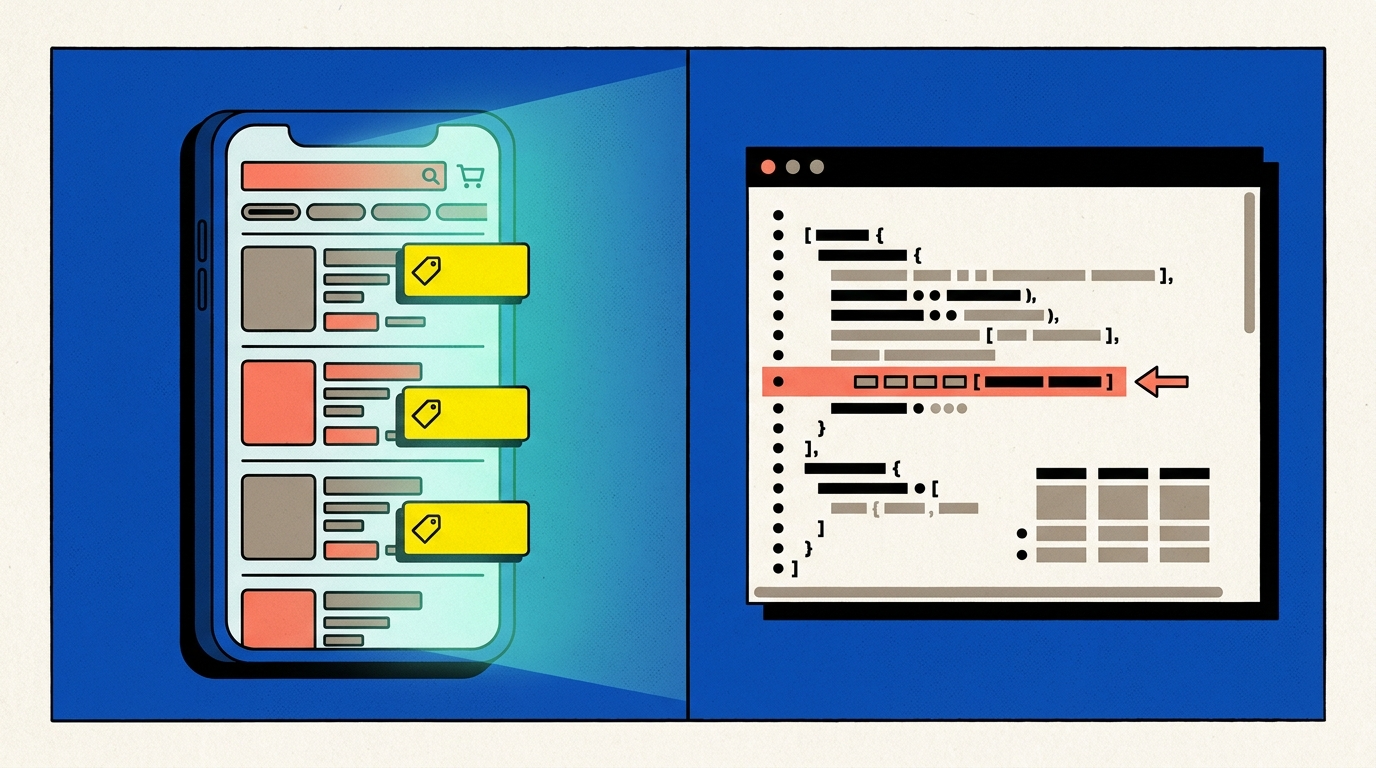
AI is also being woven directly into the guest and host experience. For guests, AI models generate highlights from listing descriptions and reviews, making it easier to parse information about location, amenities, or suitability for families. AI-generated home comparisons are on the way. For hosts, AI-assisted tools are rolling out to simplify listing creation and provide insights into pricing and earning opportunities. This is where the rubber meets the road for hosts. These AI tools promise to make listing management easier and more effective, particularly for new hosts. But they also subtly push hosts towards platform-preferred behaviors and pricing strategies. The "personalized recommendations" and "quality insights" are not just suggestions; they are algorithmic nudges designed to optimize for Airbnb's overall platform performance, which may not always align perfectly with an individual host's specific goals or local market nuances.
The Guest Experience: Frictionless, But At What Cost?
Airbnb's relentless focus on the guest journey is a masterclass in conversion optimization. Every reported improvement for guests is designed to remove friction, simplify choices, and ultimately, drive more bookings. A redesigned homepage now surfaces more relevant recommendations for listings, experiences, and destinations. Smarter search rankings prioritize "higher-quality homes that are a better fit for each trip." Detailed neighborhood maps help guests understand their surroundings before they book. These are not trivial changes; they are sophisticated efforts to guide the guest through the booking funnel with minimal effort.
The login and sign-up process has been redesigned for ease, adding flexibility and reducing failures, which directly translates to more potential bookers. Payments and checkout have also seen significant upgrades: Reserve Now, Pay Later is available on more listings in more countries, prominently displayed throughout the booking journey. Flexible cancellation policies are now easier for guests to understand. Updated checkout surfaces promotions and credits, along with eligible payment options. For guests in Mexico and Brazil, interest-free installments are now an option. Every single one of these changes is a direct attack on cart abandonment. Airbnb understands that every extra click, every moment of confusion, every perceived risk, costs them bookings.
For hosts, the implications are mixed. On one hand, a more frictionless guest experience should lead to higher conversion rates and more bookings across the platform. If guests find it easier to book, more of them will book. On the other hand, some of these guest-centric changes come with trade-offs for hosts. The expansion of Reserve Now, Pay Later, while increasing booking flexibility for guests, can sometimes lead to higher cancellation rates if guests are less committed upfront. The emphasis on "flexible cancellation policies" for guests is a direct precursor to the changes in host policies, which we'll address next. Airbnb is clearly prioritizing the guest experience above all else, betting that a happy, easily-converting guest base will ultimately benefit everyone on the platform. But it also means hosts must adapt to policies that are increasingly designed with the guest, and Airbnb's conversion rates, in mind, sometimes at the expense of host control or certainty.
The Host Experience: Simplified, Guided, and Reined In
This section of the report is where the rubber truly meets the road for the independent host. Airbnb is making a concerted effort to "simplify" and "guide" the host experience, ostensibly to help them succeed. But beneath the surface, these changes represent a subtle, yet significant, tightening of the reins. For new hosts, "simplified pricing in Airbnb Setup" makes it easier to set weekday and weekend rates. A "single service fee for API hosts" aims to streamline pricing for property managers. These are presented as improvements, and for some, they genuinely will be. The new earnings dashboard and improved listing editor also make management more intuitive, providing more data and easier ways to highlight property details.
However, the most contentious change, and one that has already sparked heated discussions in host group chats, is the migration of "eligible listings from Strict to Firm cancellation policies." For years, hosts have valued the Strict policy for the protection it offered against last-minute cancellations, allowing them to secure bookings with more confidence. The Firm policy, while still offering some protection, is inherently more flexible for guests, giving them a full refund if they cancel at least 30 days before check-in, and a 50% refund for cancellations between 7 and 30 days. This shift, while framed as helping hosts "attract more bookings" by appealing to guest flexibility, is a direct erosion of host autonomy and risk management. It forces hosts to absorb more of the cancellation risk, or to adjust their pricing strategies to account for it. This isn't a suggestion; it's a platform-level mandate that impacts profitability and operational planning.
Then there are the "personalized recommendations" and "quality insights." While presented as helpful guidance, these are the algorithmic levers Airbnb uses to steer hosts. Tailored suggestions on pricing, calendar availability, and listing improvements, coupled with proactive notifications, mean the platform is constantly evaluating and nudging hosts toward optimal performance as defined by Airbnb. Quality insights, based on recent guest reviews, offer specific suggestions for improvement. While valuable for identifying issues, they also create an expectation of compliance. The platform is becoming less of a marketplace and more of a managed ecosystem, where hosts are increasingly guided by AI-driven directives rather than purely independent decision-making. This is the subtle cost of "simplification": increased platform control.
Airbnb is not just making incremental improvements; it is forging a new, AI-native operating system for travel, one that promises more bookings and deeper efficiency for the platform, but also brings with it a subtle, yet undeniable, shift in power dynamics.
Beyond Homes: The Empire Expands Into Every Corner of Travel
The biggest long-term strategic play detailed in the report is Airbnb's aggressive expansion beyond its core homes business. This isn't just about offering more options; it's about capturing a larger share of the total travel spend and becoming the single, indispensable platform for every aspect of a trip. The 2026 Summer Release marked a significant acceleration in this strategy.
First, "Airbnb Services" are rapidly expanding. Grocery delivery, car rentals, airport pickups, and luggage storage are now part of the offering, directly addressing common guest pain points. More recently, resort passes have been introduced, giving guests day access to amenities at premium hotels. This is a brilliant move to capture ancillary revenue and deepen guest engagement before, during, and after their stay. For hosts, this means Airbnb is becoming a more comprehensive travel partner for guests, potentially making their platform even stickier. However, it also means Airbnb is competing for guest spend that might otherwise go to local businesses or independent service providers that hosts might recommend.
Second, "Airbnb Experiences" are surging. The platform added thousands of new Experiences, increasing supply by nearly 80 percent year-over-year in Q2 2026. Demand grew alongside it, with seats booked accelerating. This is a natural extension of the platform, leveraging local hosts and experts to offer unique activities. For hosts, this can be an opportunity to diversify income if they have the skills or connections to offer an Experience. It also makes a destination more attractive to guests, potentially driving more bookings to homes in that area.
But the most significant, and potentially most contentious, expansion is into "Boutique and independent hotels." Airbnb added thousands of these properties across more than 20 top destinations, including major markets like New York, Paris, London, Madrid, Rome, and Singapore. These featured hotels come with a price match guarantee and up to 15 percent Airbnb credit for future bookings. The numbers are stark: while hotels still represent a single-digit percentage of nights booked, "hotel nights booked grew approximately three times as fast as our homes business." Airbnb highlights that "approximately 35 percent of first time guests who book a hotel on Airbnb return to book a home."
This is a direct, undeniable shot across the bow of the independent host. Airbnb is no longer just enabling homeowners; it is actively onboarding and promoting professional hotel inventory, often with aggressive incentives like price matching and booking credits. While the company frames this as a way to introduce new guests to the platform who might eventually book a home, the reality is that it puts independent hosts in direct competition with established hotel brands on their own platform. Hotels have professional marketing teams, 24/7 service, and often superior amenities. This strategy fundamentally alters the competitive landscape for hosts, particularly those in urban markets or destinations with a strong hotel presence. It's a clear signal: Airbnb is chasing total market share, and if that means competing with its original supply base, so be it.
Major Events: The Ultimate Growth Engine
Airbnb's strategy to leverage "Major events as a growth engine" is a brilliant, repeatable playbook for driving both supply and demand. By partnering with organizers of global, regional, and local events, Airbnb introduces millions of people to its brand, encourages new hosts to list, and helps cities manage visitor surges. The FIFA World Cup 2026™ was a recent, massive success story, hosting millions of guest arrivals and bringing over 150,000 new homes onto the platform across host cities. This provided a significant economic uplift for local communities, and for Airbnb, it generated brand awareness and trust that lasts long after the final whistle.
The company is now scaling this playbook, with partnerships spanning the International Olympic Committee, Tour de France, Art Basel fairs, Lollapalooza festivals, La Liga in Spain, and NASCAR. These are not small-time endorsements; these are global powerhouses. For hosts, this strategy presents a clear opportunity: if you are in or near a city hosting one of these major events, prepare for a surge. These events drive massive, concentrated demand, often allowing hosts to command premium rates and fill calendars that might otherwise be slow. The World Cup example shows the potential for new supply, indicating that Airbnb is actively recruiting hosts in these specific markets, which means increased competition during these peak times, but also a larger overall pool of listings to meet demand.
However, it's a double-edged sword. While event-driven demand can be incredibly lucrative, it also creates volatility. Markets can swing from feast to famine outside of these specific windows. Hosts who rely solely on event-based income need to be strategic about their pricing and availability, and understand that such demand is often temporary. For Airbnb, these partnerships are low-cost, high-impact marketing. They generate PR, drive first-time users, and create compelling narratives around economic impact, all while strengthening their brand in key demographics. It's a win-win for Airbnb and the event organizers, and a potentially lucrative, albeit volatile, opportunity for hosts who are positioned correctly.
The Outlook: More of the Same, But Faster
Looking ahead, Airbnb's confidence is palpable. They are raising their full-year outlook for both revenue growth and Adjusted EBITDA Margin, now expecting "at least mid teens" revenue growth and an Adjusted EBITDA Margin of "at least 35.5 percent." This isn't just optimism; it's a reflection of sustained momentum driven by product innovation, strong demand, and effective execution.
For Q3 2026, they anticipate revenue between $4.69 billion and $4.77 billion, representing 15 percent to 17 percent year-over-year growth. GBV growth is expected to be in the mid-teens, driven by "low double-digit growth in Nights and Seats Booked and a moderate increase in ADR due to mix shift and price appreciation." This phrase, "mix shift and price appreciation," is worth dissecting. "Mix shift" could imply a growing proportion of higher-value bookings, potentially from larger homes, more premium listings, or indeed, the rapidly expanding hotel segment. "Price appreciation" suggests a continued ability to command higher average rates across the platform. While this sounds good for hosts, it also begs the question of how much of that "appreciation" is driven by organic demand versus algorithmic nudges and the introduction of more professional, higher-priced inventory.
The outlook confirms that Airbnb intends to continue its aggressive investment in talent, technology, and marketing. This means the pace of change and innovation will not slow down. For hosts, this translates to a constantly evolving platform that demands vigilance and adaptability. The market will become even more competitive, not just from other hosts, but from new types of inventory and a platform that is increasingly orchestrating the entire travel experience. The core message from Airbnb's outlook is clear: they are doubling down on what's working, accelerating their strategic initiatives, and are fully committed to capturing a larger and larger share of the global travel market, with or without the full, unbridled autonomy of their original host base.
The Bottom Line for Hosts
Airbnb's Q2 2026 results are a powerful declaration from a company at the peak of its powers. For hosts, this means navigating a landscape that is simultaneously more opportunity-rich and more complex. Here’s what you need to understand and act on:
- Embrace (or Understand) AI: Airbnb is an AI-native company now. The AI tools for hosts are not optional; they are the new standard. Learn how they work, use them to your advantage for efficiency, but critically, understand their limitations and biases. Do not let the algorithm entirely dictate your pricing or listing strategy. Your local knowledge and unique property insights are still invaluable.
- Master the New Guest Journey: Airbnb is making it incredibly easy for guests to find, book, and pay. Ensure your listing is optimized for this frictionless experience. High-quality photos, detailed descriptions, and quick response times are more crucial than ever. Understand the implications of Reserve Now, Pay Later and flexible cancellation policies for your cash flow and booking certainty.
- Adapt to Cancellation Policies: The migration from Strict to Firm cancellation policies is a non-negotiable shift for many. Review your pricing strategy. Can you absorb more cancellation risk, or do you need to adjust rates to compensate? Communicate clearly with guests about your updated policies. Consider offering different policy tiers if the platform allows it.
- Strategize Against Hotel Competition: Airbnb is actively onboarding hotels. This means direct competition on your own platform. Focus on what hotels cannot offer: unique local experiences, personalized touches, and the distinct charm of a home. Double down on exceptional hospitality and differentiate your offering. Consider niche market segments that hotels don't serve well.
- Leverage Major Events: If you are in a market that hosts major events (sports, concerts, festivals), pay attention to Airbnb's partnerships. These are clear signals for high-demand periods. Plan your availability and pricing to capitalize on these surges, but also recognize the potential for demand volatility.
- Diversify Your Channels: While Airbnb remains dominant, its increasing control and competition from within underscore the importance of not putting all your eggs in one basket. Explore Vrbo, Booking.com, and direct booking strategies to maintain some independence and control over your business.
- Focus on Quality and Reviews: With smarter search rankings prioritizing "higher-quality homes" and AI-driven insights from reviews, maintaining a stellar guest experience and accumulating positive feedback is paramount. This is your best defense against algorithmic shifts and increased competition.
The bottom line is this: Airbnb is a powerful, innovative, and increasingly dominant force in travel. Its success is undeniable, and its vision is bold. For hosts, the path forward is one of informed adaptation, strategic differentiation, and a keen awareness of the evolving power dynamics. The platform will continue to grow, but the terms of engagement are shifting. Your success depends on understanding those shifts and positioning your business to thrive within them, rather than being swept away by the tide.
Source
Airbnb Newsroom — reported August 6, 2026. Read and analyzed by the STR NEWS desk.




Read the desk every morning.
The day's crackdowns and platform moves, the money, the design and the stays going viral, plus the desk's verdict, in one short email every morning.