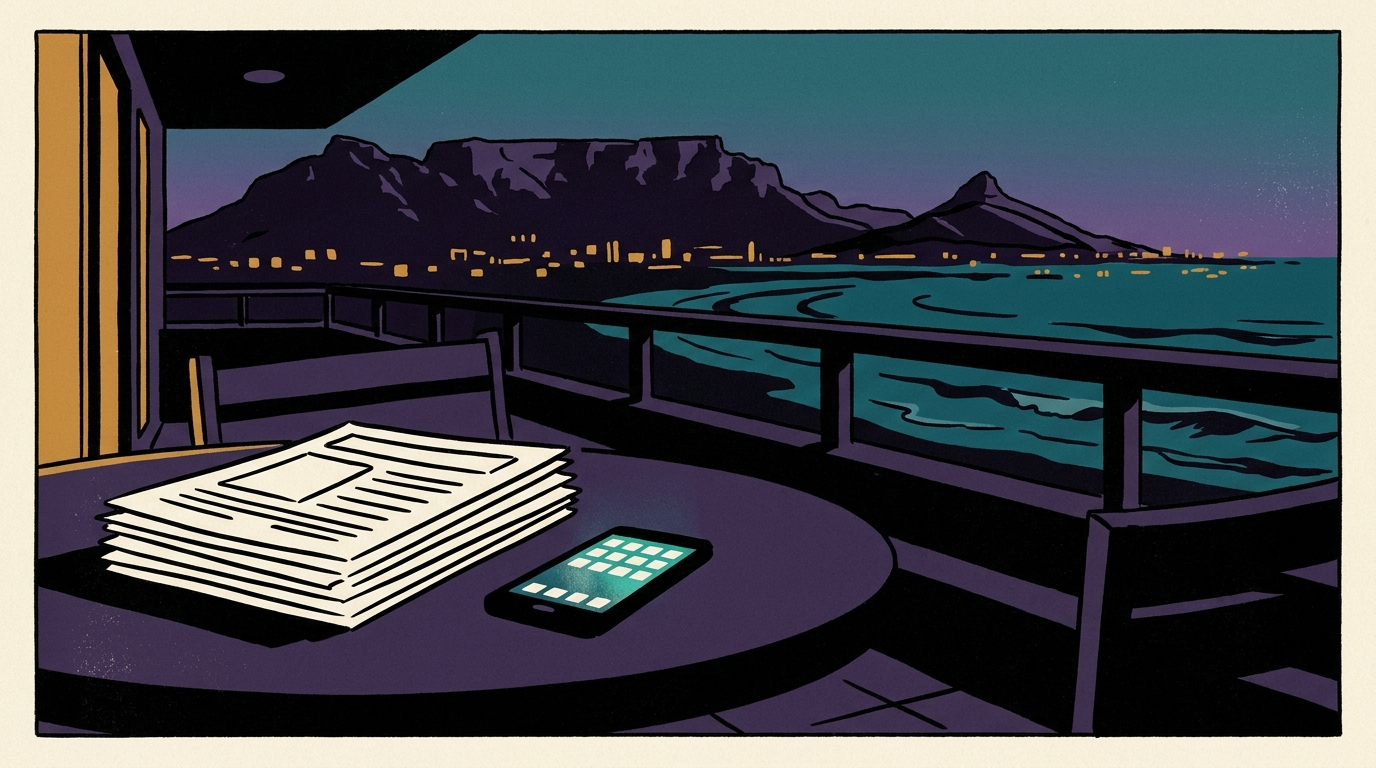
Cape Town Airbnb Hosts Hit by Triple Property Rates and Utility Shock
A compounding crisis of aggressive tax reclassifications, soaring valuations, and punitive utility tariffs threatens to wipe out short-term rental margins in South Africa’s tourism crown jewel.
The winter wind blowing off the Atlantic Ocean and rattling the floor-to-ceiling glass doors of high-end apartments along Cape Town’s Atlantic Seaboard has brought a distinct chill to the local short-term rental market. For years, property owners in Clifton, Camps Bay, Sea Point, and the City Bowl have operated under a golden sky of exceptional yields, driven by a weak South African Rand and an insatiable global appetite for the city’s dramatic coastal landscapes. Investors spoke of their properties not as mere real estate, but as highly efficient yield engines, capable of generating double-digit returns that easily outperformed traditional asset classes. But behind the postcard-perfect facades, a quiet and devastating fiscal realignment is underway, threatening to fundamentally alter the economics of short-term letting in South Africa’s premier tourist destination.
It is a reckoning that has arrived in the form of a triple-pronged fiscal squeeze. Short-term rental hosts across the metro are finding themselves at the intersection of three compounding municipal cost escalations: soaring property valuations, the aggressive reclassification of residential properties into punitive commercial tax brackets, and escalating municipal utility tariffs. This combination of pressures is systematically dismantling the financial models that justified high-priced property acquisitions over the past decade. For many hosts, what was once a highly profitable business is rapidly turning into an operational cash-flow drain, leaving property management group chats buzzing with anxiety as owners scramble to calculate whether they can survive the upcoming seasonal cycle.
The municipal government, widely praised for its administrative efficiency compared to the rest of South Africa, has quietly deployed its most potent weapon to regulate the short-term rental market. Rather than pursuing the heavy-handed, politically charged bans seen in European and American cities, Cape Town is using the dry, administrative machinery of municipal finance to achieve its goals. By shifting the tax burden onto short-term rental properties, the city is extracting maximum revenue while simultaneously addressing growing public pressure over housing affordability. It is a brilliant, cold-blooded exercise in municipal engineering, and the consequences for the short-term rental sector are going to be profound, permanent, and painful.
What happened
According to reports from 2oceansvibe News and local property sector analysts, Cape Town short-term rental hosts are facing an unprecedented financial squeeze described as a triple rates shock. This crisis is not the result of a single regulatory decree, but rather the convergence of three distinct municipal policy shifts that have hit property owners simultaneously. The first element of the shock is the implementation of the City of Cape Town’s updated General Valuation Roll. This valuation process, which reassesses the market value of all properties within the municipal boundaries, has resulted in massive paper appreciation for properties in high-demand tourist corridors, thereby inflating the baseline property tax liability of owners, regardless of their operational performance.
The second, and most controversial, element of the shock is the city’s aggressive moves toward reclassifying properties used primarily for short-term letting from residential property rates to business and commercial rates. Under South African municipal frameworks, commercial property rates are significantly higher than residential rates. For a host operating a full-time short-term rental, this reclassification can instantly double or even triple their monthly property tax bill. The City of Cape Town has begun identifying properties that are consistently marketed on platforms like Airbnb, Vrbo, and Booking.com, arguing that these properties are operating as commercial guesthouses and should be taxed accordingly.
The third component of the shock is the steep escalation of municipal utility tariffs, specifically for electricity, water, and sanitation. The City of Cape Town, which operates as the sole distributor of these services within its borders, has implemented tariff hikes that far outpace the national inflation rate. For short-term rental hosts, who typically offer all-inclusive nightly rates where guests do not pay directly for their utility consumption, these rising operational costs cannot be easily passed on. The compounding effect of higher valuations, commercial tax reclassification, and soaring utility bills has created a perfect storm, drastically compressing net operating margins across the short-term rental sector.
The mechanics of municipal extraction
To understand the depth of this crisis, one must understand how South African municipalities fund their operations. Unlike municipal governments in many Western nations, which may rely on a mix of local income taxes, sales taxes, and state transfers, South African cities are heavily dependent on property rates and utility distribution surcharges to balance their budgets. Under the Local Government: Municipal Property Rates Act, municipalities have broad powers to categorize properties and apply different tax rates, known as the cent-in-the-rand factor, to each category. This factor is the multiplier applied to a property’s assessed value to determine the annual tax bill.
Historically, short-term rentals existed in a comfortable regulatory blind spot. An investor could purchase a residential apartment in a sectional title scheme, furnish it, list it on Airbnb, and pay the standard residential property rate. This rate factor is historically the lowest in the municipal tariff structure, designed to protect homeowners and keep living costs manageable. However, as the short-term rental market matured and expanded into a highly organized commercial industry, the city treasury began to view this as a massive leakage of potential revenue. A property operating as a full-time commercial enterprise, generating tourist-grade revenue in foreign currency, was essentially being subsidized by the residential tax base.
By reclassifying these properties as commercial, the city is not changing the zoning of the land; instead, it is changing the rating category for tax purposes. The commercial cent-in-the-rand factor is typically two to two-and-a-half times higher than the residential factor. This means that if a property’s valuation remains completely unchanged, the tax bill will double overnight simply due to the category shift. When this policy is applied systematically, it transforms property rates from a minor, predictable line item on an expense report into one of the largest fixed overhead costs a host must carry, completely shifting the break-even occupancy rate required to stay solvent.
The valuation trap of the Atlantic Seaboard
The timing of this reclassification policy could not be worse for hosts, coming on the heels of the implementation of the General Valuation Roll. Cape Town’s real estate market, particularly on the Atlantic Seaboard and in the City Bowl, has experienced an extraordinary run of capital appreciation. Driven by a combination of international buyers seeking lifestyle properties, a national trend of semigration where wealthy South Africans move from Johannesburg and Durban to the Western Cape, and a limited supply of land hemmed in by Table Mountain and the sea, property prices have reached astronomical heights.
When the city conducts its valuation roll, it assesses properties based on market transactions at a specific date. The recent valuation roll captured the peak of the post-pandemic real estate rebound, when buyers were paying premium prices for Cape Town property. For many hosts, their assessed property values increased by thirty, fifty, or in some cases, over one hundred percent. While paper wealth is always pleasant to contemplate, the reality of a municipal valuation hike is an immediate, corresponding increase in cash-flow obligations. The city’s valuation roll essentially locked in these peak-market valuations, ensuring that the base upon which property rates are calculated is as high as possible.
This has created a classic valuation trap. A host who bought an apartment in Sea Point five years ago might find that while their nightly rental rates have grown modestly in line with inflation, their municipal valuation has doubled. If that property is then reclassified from residential to commercial, the tax increase is exponential. The host is forced to pay commercial tax rates on an highly inflated asset value, regardless of whether they have a ninety percent occupancy rate in the peak summer month of January or a twenty percent occupancy rate during the wet, quiet month of July. The fixed cost of ownership has been permanently elevated, while the revenue remains highly seasonal and volatile.
The utility squeeze and the backup power mandate
The third element of the triple shock, rising utility tariffs, is deeply tied to South Africa’s broader infrastructural challenges. The country has spent more than a decade grappling with a severe electricity supply crisis, managed by the state-owned utility Eskom through rolling blackouts known as load shedding. To protect their reputations and secure positive reviews, Cape Town hosts have been forced to invest heavily in backup power solutions, installing inverters, lithium-ion battery packs, and solar arrays. These backup systems are not optional; they are a basic market requirement. A guest paying premium dollar for an apartment expects uninterrupted high-speed internet, working lights, and functional appliances, regardless of the state of the national grid.
These backup systems represent massive, non-productive capital expenditures that do not increase the nightly rate a host can charge; they merely prevent a catastrophic drop in bookings and reviews. But the electrical squeeze does not end with capital expenditure. To fund municipal operations and transition toward more resilient local infrastructure, the City of Cape Town has implemented steep, double-digit annual increases in electricity tariffs. Because short-term rentals are billed on commercial or high-usage residential tariffs, the cost per kilowatt-hour is exceptionally high. Guests, unaware of or indifferent to the local energy crisis, frequently run air conditioning units, pool pumps, and underfloor heating without restriction, leaving the host to foot a utility bill that can easily swallow a significant portion of the booking revenue.
The situation is equally fraught when it comes to water. Ever since Cape Town’s historic Day Zero water crisis, when the city came perilously close to running out of water, municipal water tariffs have been highly structured and aggressively priced. The city uses a stepped tariff system, where the cost per kiloliter escalates dramatically as consumption increases. A multi-bedroom villa with a swimming pool and a high turnover of guests can easily push into the highest, most expensive consumption brackets. For hosts, utilities have shifted from a minor, variable operating expense into a major, highly unpredictable financial leak that can wipe out the profitability of a booking in a matter of days.
The silent regulatory playbook
Globally, the battle between municipal governments and the short-term rental industry has been loud, litigious, and highly visible. In New York, Local Law 18 virtually eliminated unhosted short-term rentals by enforcing strict registration requirements and occupancy limits. In Barcelona, the mayor has announced a bold plan to eliminate all tourist apartment licenses by 2028 to reclaim housing for locals. In London, a strict ninety-night annual limit is enforced through automated platform caps. These interventions are politically popular but require significant administrative resources, enforcement machinery, and often lead to protracted legal battles with platforms like Airbnb.
Cape Town is taking a different, far more pragmatic path. The city’s leadership understands that tourism is a critical engine of the local economy, supporting tens of thousands of jobs and attracting vital foreign currency. An outright ban or a restrictive night limit would damage the city’s brand and harm local businesses. However, the city also faces a severe housing affordability crisis, with middle-class workers increasingly priced out of the urban core. By using property rates and utility classifications as a regulatory dial, the city can achieve its objectives without the political fallout of a ban. It is regulation through taxation.
If the city makes short-term letting financially demanding through high commercial rates and utility costs, it naturally disincentivizes marginal operators. The amateur host who relies on a single buy-to-let apartment to cover their mortgage will find the math no longer works. They will be forced to either sell the property or return it to the long-term rental market, thereby increasing housing supply and stabilizing rents for local residents. Meanwhile, high-end, highly professional operators who can absorb the costs will continue to operate, generating tax revenue for the city and providing accommodation for high-spending tourists. It is a highly sophisticated sorting mechanism that uses market forces and fiscal pressure to clean up the market.
The math of margin collapse
To understand the real-world impact of this triple shock, one must analyze the cash flow of a typical short-term rental property in Cape Town. Consider a standard two-bedroom sectional title apartment in Green Point, purchased for three-point-five million Rand. In South Africa’s current high-interest-rate environment, with the prime lending rate sitting at eleven-point-seven-five percent, a buyer with a twenty percent deposit who secured a bond for two-point-eight million Rand faces a monthly mortgage payment of roughly thirty thousand Rand. This is the fixed baseline cost before a single utility bill is paid or a single guest arrives.
In a healthy market, this apartment might achieve an average daily rate of two thousand Rand during the peak summer months, with occupancy hovering around eighty percent. In the winter, however, the rate drops to one thousand Rand or less, and occupancy plunges to thirty percent. Over a twelve-month cycle, the property might generate a gross revenue of four hundred and fifty thousand Rand. From this, the host must deduct platform fees of roughly fifteen percent, a property management fee of twenty percent, sectional title levies of three thousand Rand a month, insurance, maintenance, and guest cleaning services. This leaves a net operating income of approximately two hundred and twenty thousand Rand, which is already insufficient to cover the annual mortgage payments of three hundred and sixty thousand Rand. The investor is already relying on capital growth to break even.
Now, introduce the triple rates shock. Under the residential tariff, property rates on this apartment might have been fifteen hundred Rand a month. Following a forty percent valuation hike and reclassification to commercial rates, that bill jumps to four thousand five hundred Rand a month. That is an additional thirty-six thousand Rand in fixed annual costs. Simultaneously, utility tariff hikes add another fifteen thousand Rand to the annual operating expenses. The net operating income shrinks from two hundred and twenty thousand Rand to one hundred and sixty-nine thousand Rand. The property’s capitalization rate, a key measure of investment yield, collapses from a modest six-point-three percent to a dismal four-point-eight percent. In a country where risk-free government bonds yield over ten percent, holding a high-risk, operationally intensive real estate asset for a four-point-eight percent yield is financially irrational.
Winners and losers of the new regime
Every major regulatory and fiscal shift creates a new landscape of winners and losers, and Cape Town’s triple rates shock is no exception. The most obvious winner is the City of Cape Town’s treasury. By successfully reclassifying thousands of short-term rental properties as commercial entities, the city secures a highly reliable, non-volatile stream of property tax revenue that is paid by property owners who, by definition, possess significant capital. This revenue can be used to fund infrastructure projects, improve municipal services, and expand the city’s security initiatives, further enhancing Cape Town’s appeal as a premier investment destination.
Another major winner is the traditional hospitality sector. Represented by bodies like the Federated Hospitality Association of South Africa (FEDHASA), hotels and guest houses have long complained about the unfair competitive advantage enjoyed by short-term rentals. Traditional establishments are subject to rigorous zoning laws, commercial property rates, commercial utility tariffs, tourism levies, and strict labor regulations. By forcing short-term rentals to pay commercial rates and utilities, the city is leveling the playing field. The price gap between a boutique hotel room and an entire Airbnb apartment will inevitably narrow, directing budget-conscious travelers back toward traditional lodging options.
The clear losers in this scenario are the small-scale, highly leveraged property investors who jumped into the short-term rental market during the post-pandemic boom. These buyers, often middle-class professionals looking to build a property portfolio, purchased apartments at peak valuations using high-interest debt. They do not have the cash reserves to absorb a permanent increase in fixed overheads, nor do they have the scale to negotiate better rates with property managers or service providers. Many of these investors will be forced to exit the market, either selling their properties into a high-interest-rate market where buyers are scarce, or transitioning their properties to the long-term rental market, where yields are lower but costs are far more predictable.
Cape Town is regulating through taxation, proving that you do not need to ban short-term rentals if you can simply price the marginal operators out of the market.
What hosts should do now
For hosts who are committed to staying in the Cape Town market, navigating this triple rates shock requires an immediate, cold-eyed transition from passive hosting to aggressive asset management. The margin for error has disappeared, and survival will depend on operational efficiency and strategic flexibility.
- Audit property classification and appeal incorrect valuations: Hosts must carefully review their municipal municipal accounts to see if their property has been reclassified. If the property is only rented out occasionally, there may be grounds to appeal the classification or object to an inflated valuation under the municipal valuation appeal processes.
- Pivot to the mid-term rental market: Shifting from short-term daily rentals to monthly corporate lets, digital nomad bookings, or academic rentals (thirty days to six months) can help bypass commercial classification thresholds while dramatically reducing utility consumption and cleaning costs.
- Install prepaid utility meters and smart limiters: To control the rising cost of water and electricity, hosts must install prepaid meters or smart management devices that allow them to monitor consumption, set limits on air conditioning usage, and prevent guest wastage.
- Renegotiate management and operational fees: With margins shrinking, hosts must pressure property management agencies to lower their commissions or shift to performance-based fee structures, while consolidating cleaning, maintenance, and laundry services to achieve economies of scale.
- Form local hosting coalitions to lobby the city: Individual hosts have little leverage, but organized groups of property owners can engage with the City of Cape Town to advocate for clear, fair, and predictable criteria regarding commercial rates reclassifications.
The Cape Town short-term rental market is undergoing a painful but inevitable maturation. The operators who survive this transition will be those who run their properties like lean, highly professional hospitality businesses rather than hands-off real estate investments. By optimizing costs, controlling utility consumption, and being willing to pivot their rental strategies, resilient hosts can still find a path to profitability in one of the world’s most beautiful destinations.
Checked by the standards desk (Eleanor Quist): every specific in this story was traced to its source material before publication.

Related from the desk



Read the desk every morning.
The day's crackdowns and platform moves, the money, the design and the stays going viral, plus the desk's verdict, in one short email every morning.