The Cheap Nursery Hardware Quietly Locking In Four-Figure Bookings
Multigenerational travellers do not browse properties for design trends. They hunt down the listing that spares them dragging sixty pounds of baby gear through airport terminals.
A grandmother sitting with an iPad at a kitchen table on a Tuesday evening does not care about your artisanal wall sconces. She does not care that your throw pillows were hand-loomed in Oaxaca or that your living room features an architectural coffee table cut from salvaged railway ties. She has four open browser tabs, a budget funded by a lifetime of retirement savings, and an ultimatum from her thirty-four-year-old daughter: find a house where nobody has to wrestle a toddler out of an unfenced pool, where two adults can take a conference call behind a closed door, and where the luggage rack does not have to hold sixty pounds of plastic travel gear flown across three time zones.
She is the most valuable booking agent in global hospitality. She books seven nights, not two. She books at the headline rate without sending a snarky message asking for a mid-week discount. She pays the cleaning fee without calculating the cost per square foot in a private spreadsheet. When she finds the right house, she enters her credit card number with the steady hands of someone buying peace of mind for seven people she loves. The transaction is worth three thousand dollars, sometimes five, sometimes eight.
Yet thousands of property managers lose her business every single day because their three-bedroom homes are configured for a childless dinner party that exists only in staging catalogues. They spend four thousand dollars on an Italian leather sectional that cannot survive a dribble of apple juice, then skip the fifty-dollar high chair that would have settled the reservation in ninety seconds. This is the blind spot costing independent operators real money across every suburban, coastal, and mountain market in the world.
How it actually works
The mechanics of the multigenerational booking come down to a brutal exercise in family logistics. Travelling with children under the age of five is not a holiday. It is an evacuation drill staged in a strange zip code. Every parent knows this truth in their bones. Packing for a four-year-old and an eleven-month-old requires a staggering volume of equipment: diapers, wipes, sanitising tablets, bibs, spare clothing, sound machines, monitoring cameras, bottles, training cutlery, snacks, and safety gates.
When an airline charges forty dollars per checked bag on a standard domestic route, bringing a full-sized portable crib and a clip-on dining booster seat is an exhausting financial and physical tax. Hauling heavy, awkward plastic through terminal security, onto rental car shuttle buses, and up an unfamiliar flight of stairs breaks parents before they ever unlock the front door. The booking decision, therefore, rests entirely on elimination. The person doing the research is not looking for reasons to book; they are hunting for reasons to rule properties out.
The process starts on Airbnb or Vrbo with search filters. When an exhausted parent or an accommodating grandparent sits down to find a place, they select the dates, enter the guest count, and then click into the amenity filter menu. They tick two critical boxes: “Crib” and “High chair.”
In an instant, sixty percent of the available market disappears from the screen. The listings that spent tens of thousands of dollars on marble countertops, designer fire pits, and framed art vanish into thin air. They are not viewed. They are not compared. They simply do not exist in the search results. The platform algorithm cleanly strips them out because the host left two checkboxes empty on their backend profile. A five-hundred-dollar hardware investment would have kept them in the pool. Without it, they never even get an impression, let alone an inquiry.
The logistics of grandparent capital
Grandparents possess the capital; parents possess the veto power. Understanding this dynamic is the difference between running an empty property on a shoulder-season Wednesday and sustaining eighty-percent occupancy year-round. When grandparents pay for a group trip, their primary objective is frictionless togetherness. They want to sit in a quiet living room in the morning holding a clean grandchild while drinking a cup of hot coffee. They want their adult children to look relaxed instead of frayed.
When the grandmother spots a listing, she sends the link to the family group chat. The adult daughter or son opens it on a phone between work meetings. They do not examine the landscaping. They zoom straight into the photos of the bedrooms and bathrooms. They look for sharp glass edges on coffee tables. They check whether the bathroom has a step stool so a three-year-old can reach the tap without an adult lifting them up by the waist six times a day. They check whether the primary bathroom has an accessible walk-in shower or a tub suitable for an evening splash routine.
If the listing shows a high-end, precarious glass dining table surrounded by eight spindly velvet chairs, the parent vetoes it instantly. That room is not a dining area; it is an active insurance claim waiting to ruin a family vacation. The parent sends a message back to the group: “Looks nice, but it’s completely unusable with Leo. Keep looking.” The grandparent backs out of the listing, closes the tab, and clicks the next result.
The host never receives a notification that they lost a five-night, four-figure stay. The analytics dashboard shows a simple bounce. The host assumes the price was twenty dollars too high and cuts their weekend rate, chasing budget travellers who bring four cars, play loud music until two in the morning, and leave empty seltzer cans jammed behind the headboards. Meanwhile, the family with zero interest in partying books a competitor down the street for twenty percent more money, simply because the competitor showed a wooden high chair parked neatly against the kitchen wall.
The five hardware anchors
Transforming a house into an irresistible magnet for multigenerational capital does not require turning the property into a garish, primary-coloured daycare centre. The goal is understated, competent utility. Five specific hardware items do ninety percent of the heavy lifting. Each item solves an acute daily pain point for either the oldest or the youngest person in the party.
- A certified, heavy-duty portable crib or pack-and-play. Not a dusty, broken hand-me-down pulled from an attic crawl space with missing latch pins. It must be a modern, commercially compliant unit with a clean, fitted waterproof mattress pad and two freshly laundered cotton sheets. Placing this prominently in a closet with a clear label signals instant competence to an anxious mother.
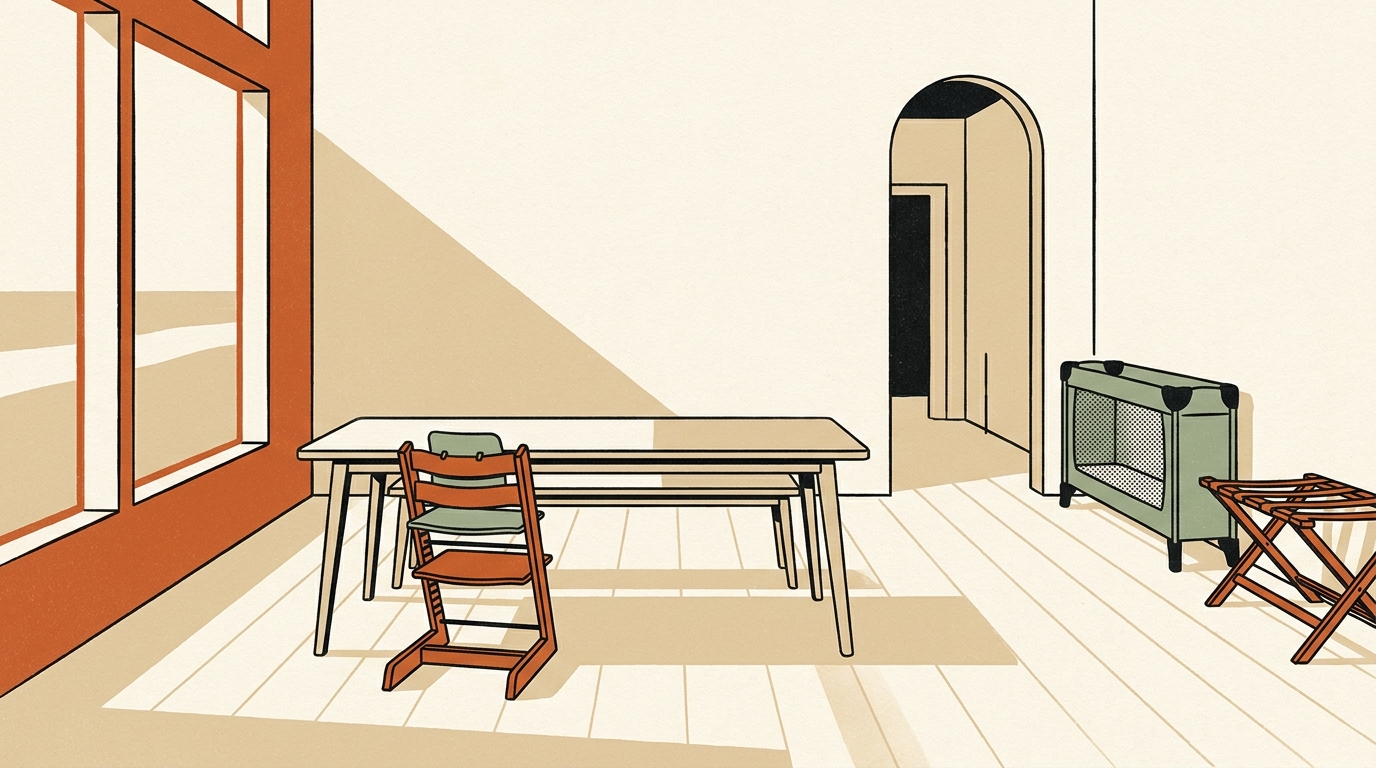
- A wipe-clean, solid high chair. Wooden or hard commercial-grade plastic without fabric crevices. Fabric covers are an operational disaster: they trap mashed berries and peanut butter, absorb milk spills, and force cleaners into mid-turnover laundering nightmares. A smooth, simple design can be wiped down and sanitised with spray in forty seconds flat.
- Non-slip step stools in every bathroom. Toddlers wash their hands constantly. When a bathroom only features an adult-height floating vanity, an adult must lift the child every single time. A simple, rubber-gripped stool tucked unobtrusively under the basin costs fifteen dollars and saves sixty instances of physical back strain over the course of a week.
- Indirect plug-in night lights in hallways and stairwells. A seventy-year-old waking up at 3:00 AM in an unfamiliar bedroom needs to find the toilet without tripping over a threshold or blinding themselves with an overhead chandelier. A three-year-old waking up in a strange room needs to see where the door is without screaming in panic. Soft, downward-facing amber LED night lights solve both problems without altering the daytime aesthetic of the house.
- A secure, professionally anchored grab bar in the main shower. This is the hardware addition hosts resist most fiercely, driven by an irrational fear that their property will look like a clinical care facility. Modern architectural hardware manufacturers make heavy-gauge, matte black or brushed brass safety bars that look identical to high-end contemporary towel rails while holding five hundred pounds of dynamic load. For an older guest with an artificial hip, that bar turns an intimidating, slippery porcelain surface into a safe, reassuring room.
The total retail cost to acquire this complete hardware suite is modest. A top-rated travel crib costs roughly one hundred and fifty dollars. An indestructible high chair runs eighty dollars. Three step stools cost forty-five dollars. A four-pack of quality LED night lights costs twenty dollars. A designer-grade structural grab bar and professional masonry anchors cost eighty dollars. For an outlay under four hundred dollars, the property transforms its utility profile permanently.
Travelling with small children is not a holiday; it is an evacuation drill staged in a strange zip code.
The disaster of the fussy aesthetic
To understand why so many listings fail this demographic, one must examine the aesthetic plague that took over the short-term rental industry over the past half-decade. Driven by social media accounts that champion visual spectacle over functional hospitality, thousands of amateur investors decorated houses for photographs rather than humans.
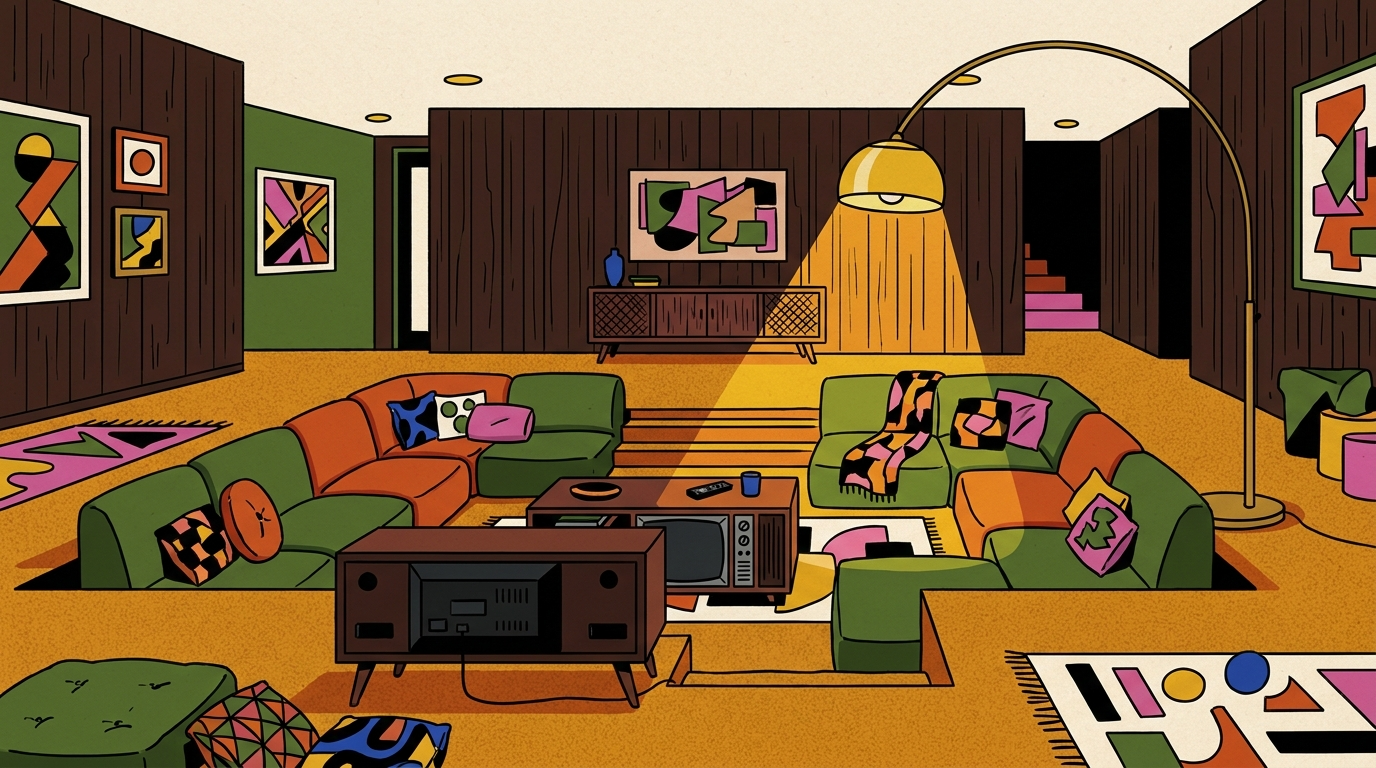
They filled living rooms with sharp-edged marble plinths masquerading as tables. They hung floor-length, dry-clean-only linen drapes that drag on the floor. They placed fragile ceramic vessels on waist-high plinths in narrow hallways. They installed low-slung, cushionless Scandinavian chairs that an eighty-year-old person with a bad knee cannot stand up from without two people pulling on their forearms.
This design philosophy creates an environment of constant, low-grade terror for a visiting family. The parents spend their entire stay policing the children, terrified that a toddler will pull a three-hundred-dollar terracotta jug onto their skull or knock an open cup of juice across a porous stone table. The grandparents spend their stay perched uncomfortably on low furniture, unable to relax their lower backs. Nobody rests. When they leave, they do not write a five-star review praising the minimalist restraint of the decor; they write a three-star review saying the house was stiff, stressful, and poorly suited for real life.
Contrast this with a property designed around sensible human movement. The coffee table has rounded corners or takes the form of an upholstered leather ottoman that doubles as extra seating. The rugs are stain-treated wool or washable poly-blends that resist liquid spills. The ornaments are placed on high shelves above the five-foot line, leaving flat surfaces open for practical things like water bottles, picture books, and medical kits. The house feels welcoming because it is not actively threatening its occupants with financial ruin every time a toy is dropped.
The quiet economics of calm guests
Host group chats are perpetually consumed by horror stories: unauthorised house parties, blown subwoofers, suburban neighbours calling the police, and trashed kitchen counters. Hosts spend hundreds of dollars on noise-monitoring decibel sensors, exterior security cameras, and identity-verification software to protect their physical assets from destructive guests.
The most effective party-prevention tool ever invented is a travel crib parked in the hallway closet. People who travel with a ten-month-old infant and a seventy-two-year-old grandfather do not throw raves. They do not invite thirty local strangers over at midnight to drink tequila on the back deck. They do not smoke marijuana in the laundry room or stage amateur boxing matches on the lawn.
Their evening schedule is ruthlessly predictable. By 7:30 PM, the baby is down in a quiet back bedroom. By 8:30 PM, the adults are sitting around the kitchen island speaking at conversational volume while sharing a bottle of wine. By 10:00 PM, the lights are out because everyone knows that the baby will be awake and demanding breakfast at 6:15 AM sharp. The wear and tear on the building from this rhythm is negligible. The risk of an unmanageable party is effectively zero.
Furthermore, multigenerational groups are extraordinarily profitable on a per-night utility basis. While they use hot water and run laundry, they are not pushing the electrical grid to its absolute breaking point with high-draw amplifiers, outdoor floodlights, or continuous door-opening cycles common to sprawling party crowds. They stay longer because packing up a large family is such an enormous operational ordeal that nobody does it for a forty-eight-hour weekend. They book four to seven nights. They push your average length of stay upward, which directly reduces your turnover friction, laundry costs, and platform platform-fee drag.
The cleaning and maintenance trap
While the hardware is inexpensive to buy, the operational failure point lies in maintenance. Nothing destroys a family booking faster than dirty baby gear. When a mother opens a portable crib and finds biscuit crumbs stuck in the fabric corners or a suspicious brown stain on the mattress, her trust evaporates entirely. She will not put her infant in that crib. She will spend the rest of the stay assuming the bed sheets are dirty, the glasses in the cupboard are greasy, and the property is neglected.
Property managers must integrate family hardware directly into their standard operating procedures for cleaning staff. Cleaners cannot treat the high chair as an optional check. It must be inspected, sprayed with food-safe sanitiser, wiped dry, and placed in plain sight for every turnover where a family is expected. The travel crib must have its mattress cover stripped, inspected for hair and debris, and reassembled with a pristine sheet.
To keep this process efficient, operators should avoid complex, multi-piece baby contraptions. Never buy high chairs with fabric seat pads, safety harnesses with dozens of intricate nooks, or moving mechanical parts that require tools to adjust. Pick the simplest, most durable designs available: solid moulded polypropylene or smooth finished birch wood. These can be wiped down completely in two minutes using standard cleaning supplies. The strap systems should be removable and capable of being tossed into a laundry cycle whenever necessary.
Similarly, the step stools in the bathrooms must not be treated as invisible floor clutter. They must be wiped down on top and underneath. Cleaners frequently mop around them, leaving a ring of grey grime around the base that screams carelessness to anyone sitting on the floor supervising bath time. Precision in cleaning family hardware is what converts a one-time booking into an annual repeat customer.
Photography that closes the sale
Owning the hardware is useless if the listing photos hide it. The vast majority of hosts who supply a high chair or a pack-and-play hide them in the back of a master bedroom wardrobe, folded in a canvas bag behind spare pillows. The photographer never shoots them. The amenity list mentions them as single-line items buried eighty rows down under the heading “Family features.”
This is a marketing catastrophe. A prospective guest scrolling through twenty-five listings on a phone screen does not read eighty rows of text. They scan the first ten to fifteen photographs while sitting on a train or waiting in an office corridor. If they do not see evidence of family usability in the images, they assume the house does not have it.
The setup needs to be staged deliberately in the visual gallery. Do not leave the portable crib folded in a dark closet; set it up in the quietest secondary bedroom, dressed with a clean, taut white sheet, with the soft amber night light visible in the adjacent hallway socket. Stage the high chair neatly at the head of the dining table, clean and ready for use. Include a clear, bright photo of the bathroom step stool positioned neatly under the sink.
These images communicate an overwhelming sense of hospitality and competence. They tell the parent: “You do not have to worry about this. We have already thought through your evening routine. You can leave the heavy gear at home.” That psychological relief is what drives instant booking conversion. It validates the grandmother’s choice and eliminates any lingering hesitation from the family committee.
The long-term repeat loop
The ultimate commercial prize in residential hosting is the off-platform, direct repeat booking. Platforms take significant cuts from both hosts and guests on every transaction. Relying entirely on algorithms to deliver fresh customers every week leaves an operator vulnerable to sudden ranking drops, policy adjustments, and algorithm shifts.
Family travellers are creatures of extreme habit. When a family with three children and elderly grandparents finds a house where the layout works, the equipment is present, the beds are comfortable, and the logistics are smooth, they stop shopping. They do not want to roll the dice on a new property next year. The emotional cost of picking the wrong house—a house where the toddler falls down an open spiral staircase or the grandfather cannot enter the shower—is too high.
They will return to the exact same house every single summer or autumn. They will ask the host: “Can we book directly with you for the second week of July next year?” That single inquiry eliminates hundreds of dollars in platform commission fees, drops your customer acquisition cost to zero, and provides guaranteed revenue twelve months in advance. The four-hundred-dollar hardware setup you purchased three years prior is still sitting in the closet, quietly printing revenue with zero incremental marketing spend.
Operators who ignore this dynamic remain trapped on the guest-acquisition treadmill, spending money on fresh photography, cutting rates to win weekend stragglers, and dealing with the headaches of party-centric demographics. The simple, functional home that solves multi-generational logistics wins the marathon every single time.
What hosts should do now
Capturing this market requires a systematic operational audit rather than a major renovation. Take these concrete steps immediately to capture pending multi-generational bookings for the coming season:
- Audit your backend platform filters today. Log into your Airbnb and Vrbo host dashboards, navigate to your listing amenities, and check whether the boxes for crib, high chair, and step-free access are selected. If you do not have the equipment on-site, leave the screen open and order it before ticking the boxes.
- Purchase commercial-grade, wipe-clean hardware. Order a certified, modern travel crib with a waterproof mattress protector, two neutral cotton sheets, a solid wood or moulded plastic high chair without fabric padding, two rubber-gripped step stools, and three amber LED night lights. Avoid second-hand items from online marketplaces to ensure safety compliance.
- Install a structural grab bar in the main shower. Hire a licensed tradesperson to anchor an architectural-grade, non-clinical safety bar into the wall framing or solid masonry of your walk-in shower. Ensure it matches your existing tapware finishes so it complements the bathroom design.
- Add two dedicated photos to your listing gallery. Photograph the high chair staged cleanly at the dining table and the travel crib assembled in a secondary bedroom. Ensure these images appear within the first twenty photos of your primary listing stream.
- Draft a standard operating procedure for turnover staff. Provide your cleaners with a three-point checklist requiring them to wipe down the high chair with food-grade sanitiser, inspect the travel crib mattress for cleanliness, and position step stools cleanly under the vanity after every departure.
The hosts who understand hospitality know that comfort is not defined by excess ornament; it is defined by the absence of unnecessary friction. Remove the friction for a travelling family, and the reservation will follow every time.
Checked by the standards desk (Eleanor Quist): every specific in this story was traced to its source material before publication.
About this piece
An original expert-analysis column by the Stay Gazette desk. Figures are illustrative of how the market behaves; confirm specifics for your own market before you act.

Related from the desk
Read the desk every morning.
The day's crackdowns and platform moves, the money, the design and the stays going viral, plus the desk's verdict, in one short email every morning.