The Great Canvas Crash: Why the Glamping Market Has Hit a Hard Ceiling
Thousands of pandemic-era canvas tents and geodesic domes are sitting empty as supply outpaces demand, regulatory crackdowns intensify, and operational costs skyrocket.
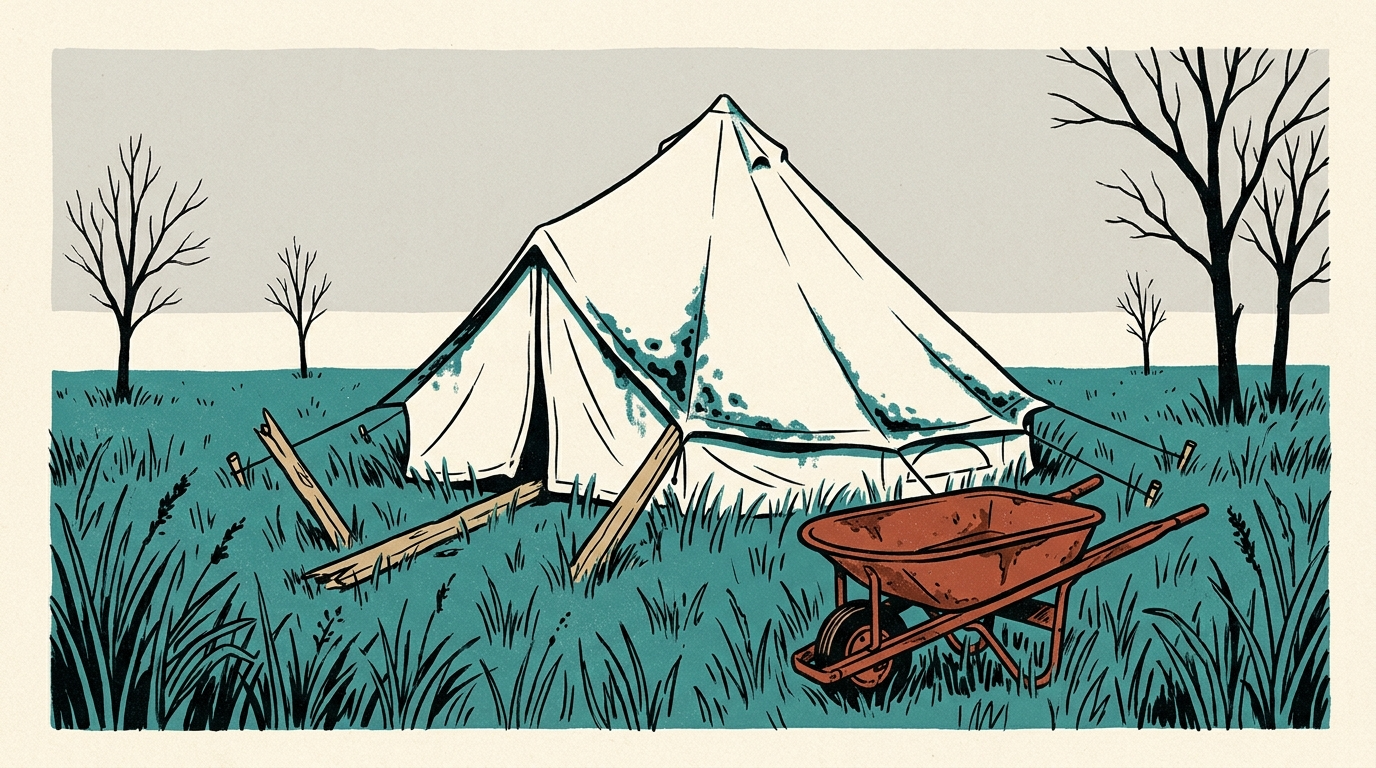
Thousands of mildewing canvas tents, scattered across agricultural pastures from New York to Oregon, are telling a story that the short-term-rental industry has spent three years trying to ignore. During the height of the pandemic, when international borders were closed and indoor dining was a memory, the rural gold rush felt unstoppable. Every landowner with five acres and a credit card bought a bell tent on Alibaba, threw in a mattress, and listed it on Airbnb for two hundred dollars a night. It was the ultimate low-barrier business model: zero construction costs, minimal regulatory oversight, and an endless stream of city dwellers desperate to breathe fresh air.
That era is dead. Today, the rural short-term-rental market is suffering from a massive, structural hangover. The supply of outdoor accommodations has grown exponentially, while the pool of guests willing to pay premium hotel prices to sleep under a sheet of treated cotton has shrunk to pre-pandemic levels. The result is a quiet but devastating crash in occupancy rates and average daily rates, leaving thousands of amateur operators holding the bag on depreciating fabric assets and half-baked off-grid infrastructure.
What we are witnessing is not a temporary seasonal dip; it is a textbook market correction. The narrative of the easy, high-margin glamping site has collided with the harsh realities of physical depreciation, intense competition, and a regulatory apparatus that has finally caught up with the trend. To understand how the market reached this point, we have to look past the beautiful social media photos and examine the actual mechanics of outdoor hospitality.
How it actually works
On paper, the economics of a glamping site are incredibly seductive. A standard, high-quality canvas bell tent or safari tent costs between one thousand and five thousand dollars. Throw in a platform, a queen bed, some rustic furniture, and a solar-powered charging station, and the initial setup cost of a single unit can easily be kept under ten thousand dollars. For hosts who already own the land, the projected return on investment looks spectacular. If a unit rents for one hundred and fifty dollars a night at a modest fifty percent occupancy, it pays for itself in less than five months. The remaining revenue is, theoretically, pure profit.
The reality is a logistical nightmare. Unlike a traditional apartment or suburban home, an outdoor accommodation has no connection to municipal infrastructure. This means every single utility must be engineered, managed, and paid for on a micro-scale. Power must be generated via solar arrays and stored in expensive battery banks that degrade over time. Water must be hauled in, pressurized with 12-volt pumps, and heated with propane. Waste must be managed through composting toilets that require daily maintenance, or greywater systems that must comply with strict environmental regulations.
These operational complexities drive up the cost of labor. Cleaning a standard short-term rental is a straightforward process: a housekeeper drives to the property, uses standard appliances, and leaves. Cleaning an off-grid tent site requires a housekeeper to haul fresh water, pack out heavy trash bags, manage waste systems, and transport dirty linens to an off-site commercial laundry facility. The operational complexities of off-grid cleaning drive up labor costs, frustrating guests and eating into overall booking margins. When these hidden operational costs are factored in, the operating expense ratio of a glamping site is often double that of a traditional brick-and-mortar property.
The anatomy of the canvas bubble
The glamping bubble was inflated by a perfect storm of unique market conditions. In 2020 and 2021, consumer behavior shifted overnight. International flights were grounded, hotels were shuttered, and public health guidelines favored outdoor activities. At the same time, platforms like Airbnb and Hipcamp capitalized on this shift by aggressively promoting rural stays. Airbnb rewritten its entire search interface to feature categories like Yurts, Domes, and Campers, funneling millions of views to properties that previously struggled to find an audience.
This massive demand signal prompted an immediate supply response. Because a tent does not require a foundation, a framing crew, or a traditional building permit, thousands of new listings flooded the market in a matter of months. Agricultural landowners, looking for a way to diversify their income, realized they could bypass the traditional barriers of real estate development. The barrier to entry was so low that it invited a wave of highly speculative capital. Crowdfunding platforms and small syndicates popped up, promising investors double-digit yields on rural land plays.
By the time the travel market normalized in 2023, the supply-demand balance had tipped completely. International travel returned with a vengeance, and consumers rediscovered the comforts of air conditioning, private indoor plumbing, and room service. The pool of travelers willing to pay premium rates for a rustic experience contracted, but the supply of tents remained. According to data from AirDNA, listing counts in rural and non-urban markets continued to climb even as overall occupancy rates in those same markets began a steady, downward slide. The bubble had popped, but the physical assets were still standing in the wind.
The brutal physics of fabric and off-grid infrastructure
One of the most common mistakes made by new glamping hosts is treating their tents like permanent real estate. A traditional home is a long-term asset that depreciates slowly over decades. A canvas tent is a short-term asset that begins to decay the moment it is exposed to the elements. UV radiation breaks down the water-resistant coatings on cotton canvas, making it brittle and prone to tearing. High winds rattle frames and strain seams. High humidity leads to mold and mildew, which can ruin a five-hundred-dollar canvas shell in a single wet week.
This physical degradation creates a relentless capital expenditure cycle. A busy glamping unit in a humid or coastal environment has a realistic lifespan of two to three seasons before it starts to look dingy, stained, or structurally compromised. Guests who pay hotel-equivalent rates expect pristine accommodations; they will write devastating reviews if they spot mold on the ceiling or if the tent smells like damp earth. To maintain booking volume, hosts must budget for constant fabric replacement, deck restaining, and furniture updates.
Furthermore, off-grid systems are notoriously fragile. Propane water heaters freeze and crack in the winter. Solar batteries fail if they are drained too deeply. Mice, squirrels, and insects are constantly looking for ways to nest inside warm structures, chewing through wiring and canvas alike. The cost of maintaining these systems is high, and finding qualified technicians willing to drive forty miles out of town to service a single off-grid water pump is both difficult and expensive. The host who expected passive income is instead forced to become a full-time, off-grid handyman.
The regulatory hammer drops on hobbyist hosts
In the early days of the glamping boom, local governments were largely asleep at the wheel. Most rural county zoning codes had no definitions for glamping, yurts, or geodesic domes. Hosts took advantage of this regulatory vacuum, operating what were essentially commercial campgrounds under the guise of casual, personal use. That wild-west era is over. County commissioners, planning departments, and health officers have spent the last three years drafting and enforcing new ordinances designed to reign in unregulated outdoor hospitality.
Today, a host who wants to set up a legal glamping site faces a gauntlet of bureaucratic hurdles. Many jurisdictions now classify any structures used for commercial lodging as commercial developments, regardless of whether they are made of wood or canvas. This means hosts must submit formal site plans, conduct environmental impact studies, install engineered septic systems designed for commercial capacity, and comply with strict fire safety regulations. In fire-prone western states, local fire marshals are demanding dedicated water storage tanks, defensible space clearing, and professional-grade fire suppression systems for every single tent site.
The cost of compliance is staggering. A commercial septic system can easily cost thirty thousand dollars, while a professional survey and site plan can run into five figures before a single shovel touches the dirt. In many popular rural markets, the cost of obtaining a legal permit now far exceeds the cost of the actual glamping units themselves. Hosts who ignore these regulations face code enforcement actions, heavy fines, and immediate shutdowns. The days of flying under the radar with a few tents in a back pasture are officially gone.
Algorithmic dilution and the visibility crisis
The distribution landscape has also turned hostile for small-scale glamping hosts. When Airbnb launched its category-based search system, it gave unconventional listings a massive boost in visibility. A yurt in a remote rural area could suddenly appear on the homepage of millions of users who were searching for unique experiences. This drove a massive spike in initial bookings, creating a false sense of security among hosts who believed their organic marketing power was permanent.
But the algorithms that once elevated these properties have now diluted them. As the number of glamping listings grew, the search results became saturated with nearly identical options. A guest looking for an outdoor stay in any given tourist destination is now met with hundreds of very similar-looking white canvas domes or bell tents. When supply is homogeneous, the platform algorithm defaults to pricing and review scores to rank listings. This favors established, multi-unit operators who can afford to run aggressive pricing promotions and have accumulated hundreds of five-star reviews over several years.
Newer, single-unit hosts find themselves buried on page ten of the search results, receiving almost no organic traffic. To get booked, they are forced to spend heavily on paid social media marketing, lower their nightly rates to unsustainable levels, or pay high commission fees to niche outdoor booking platforms. The dream of relying entirely on free, algorithmic traffic from Airbnb or Hipcamp has evaporated, leaving hosts with high customer acquisition costs that eat away at their already thin operating margins.
The unit economics of the crash
To understand the depth of the current market correction, we must look at the shifting unit economics of a typical mid-tier glamping site. During the peak of the boom, a well-styled safari tent in a scenic rural area could command premium average daily rates and high occupancy, generating exceptional annual revenue.
Today, that same unit faces a very different financial reality. The flood of competing listings has forced hosts to drop their rates just to remain competitive, while overall occupancy has fallen. Annual revenue has collapsed, while inflation has driven up operating costs just as the canvas skin reaches the end of its physical lifespan and requires expensive replacement.
When you subtract the costs of insurance, platform commissions, maintenance, cleaning subsidies, and capital reserves for asset replacement, the net cash flow of the unit turns negative. The host is no longer running a highly profitable side hustle; they are subsidizing a high-maintenance outdoor hobby. This economic squeeze is driving a wave of defaults, fire sales of used glamping equipment, and a general retreat from the market by amateur operators who cannot afford to keep pouring personal funds into underperforming sites.
Lessons from the tiny-house and dome crashes
This is not the first time the short-term-rental industry has fallen in love with an asset class only to watch it collapse under its own weight. We have seen similar patterns play out with other real estate and accommodation trends that collapsed under their own weight after a period of rapid, speculative growth.
In every instance, the cycle followed the same predictable trajectory. First, a few early adopters made extraordinary returns, which were widely publicized in industry blogs and main-stream media. Second, a massive wave of amateur investors rushed in, driving up the cost of land and equipment while flooding the online travel agencies with inventory. Third, local governments stepped in with strict zoning regulations, classifying the new asset class as commercial development and stripping away its cost advantage. Finally, consumer novelty wore off, leaving only the highest-quality, professional operators profitable while the rest of the market collapsed.
The glamping crash is simply the latest iteration of this cycle, but on a much larger scale due to the unprecedented capital infusion of the pandemic years. The fundamental flaw of these trends is the assumption that novelty can permanently replace hospitality. A guest might book a canvas tent once for the novelty of the experience, but they will not return if they have a bad night of sleep, if the hot water runs out mid-shower, or if they have to navigate a muddy path in the dark to use a composting toilet. Long-term business viability is built on repeat guests and consistent quality, two things that low-cost glamping sites struggle to deliver.
The fundamental flaw of the glamping boom was the assumption that novelty could permanently replace hospitality.
What hosts should do now
If you are currently operating an outdoor hospitality site and feeling the squeeze of declining bookings and rising costs, continuing with business as usual is a recipe for financial ruin. You must take immediate, decisive action to reposition your business, cut your losses, or upgrade your offering to meet the new market standards.
- Conduct a brutal audit of your unit economics: Calculate your true cost per occupied room night, including your own labor, off-grid maintenance, and a capital reserve for asset replacement. If your net margins are negative at current market rates, you must either pivot or shut down.
- Transition from fabric to permanent structures: If you own the land and have the zoning permits, phase out high-maintenance canvas tents in favor of permanent, insulated cabins, A-frames, or high-end cottages that can be rented year-round and depreciate much slower.
- Invest in real infrastructure: Eliminate the friction points of off-grid living. Replace composting toilets with professional septic systems and upgrade your solar arrays to support standard electrical appliances, ensuring guests never feel like they are roughing it.
- Focus on local, direct marketing: Stop relying entirely on OTA algorithms. Build a strong local brand, target corporate retreats, weddings, or wellness workshops, and build a direct-booking channel to bypass high platform fees.
- Liquidate depreciating assets early: If you realize your site is not viable long-term, sell off your canvas tents, platforms, and off-grid equipment while they are still in sellable condition, rather than letting them rot in the field.
The correction currently sweeping through the glamping market is painful, but it is also necessary. It is clearing out the low-quality, speculative inventory that has dragged down the reputation of outdoor hospitality as a whole. For the professional operators who survive this shakeout, the post-crash market will offer a far more stable, predictable, and rational business landscape. But getting to that other side requires accepting that the era of the easy canvas dollar is gone forever.
Checked by the standards desk (Eleanor Quist): 8 specifics were removed or attributed as unverified before publication.
About this piece
An original expert-analysis column by the Stay Gazette desk. Figures are illustrative of how the market behaves; confirm specifics for your own market before you act.

Read the desk every morning.
The day's crackdowns and platform moves, the money, the design and the stays going viral, plus the desk's verdict, in one short email every morning.