
INSURANCE BOMB DROPS: Your Airbnb Listing Just Canceled Your Homeowner's Policy
The nightmare scenario for every short-term rental host is no longer a 'what if' but a brutal reality. Insurers are lurking, ready to deny claims when you need them most, and ignorance is no defense.
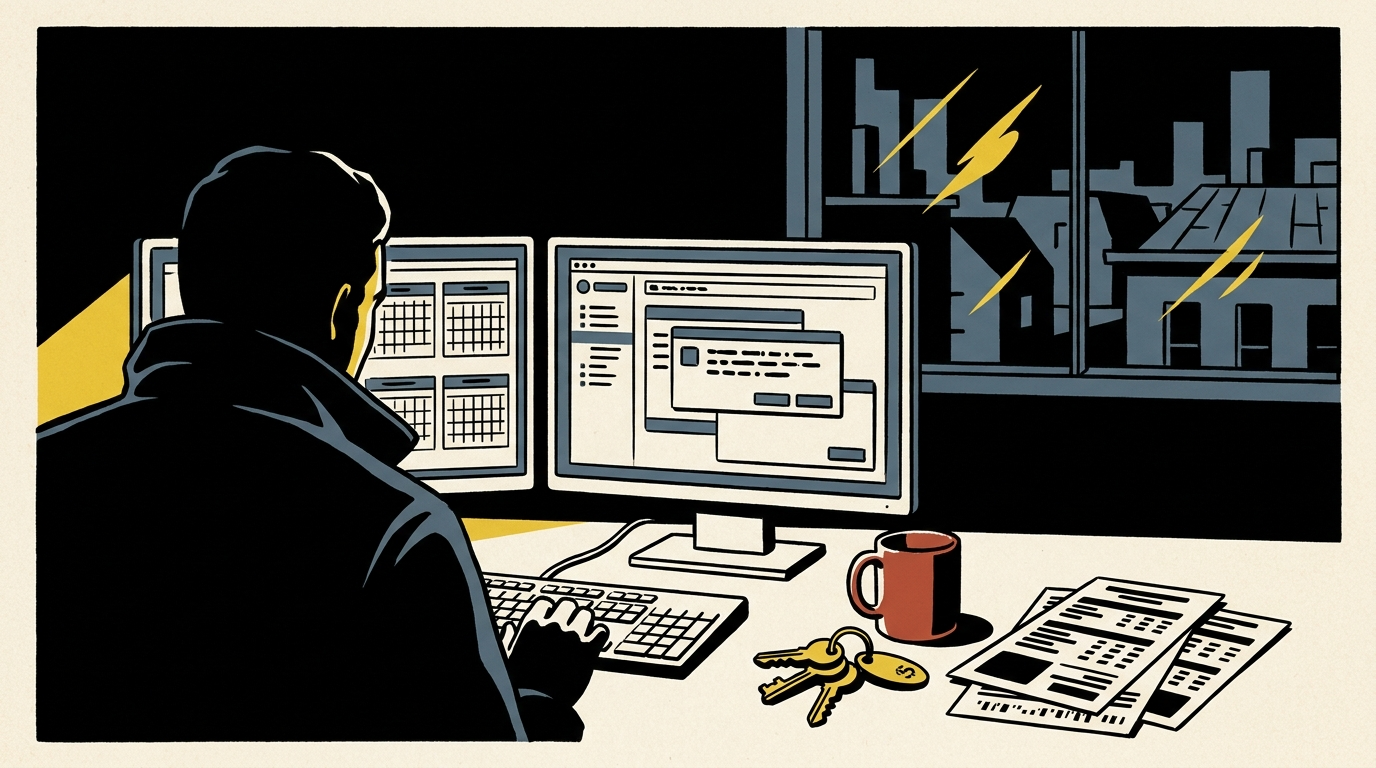
The call comes late. Your property, the one you’ve poured your life savings into, the one that’s been the engine of your financial freedom, is gone. Fire, flood, a catastrophic accident involving a guest – it doesn’t matter. Your world just ended. You pick up the phone, shaky, and dial your insurance company, expecting the lifeline you’ve paid for for years. But instead of comfort, you get a cold, calculated question: “Was this property being used for short-term rentals?”
The silence on your end is deafening. You didn’t think it mattered. Or maybe you did, but you hoped it wouldn’t. You stammer a half-truth, or perhaps you admit it. And then the words come, sharp as a knife, that will haunt your sleep: “We regret to inform you, your claim is denied.”
This isn’t a hypothetical horror story anymore. It is the chilling, unvarnished truth that is beginning to rock the American short-term rental industry to its foundations. A recent report by Insurance Business laid it bare: failing to disclose your STR operations to your insurer can, and increasingly will, void your claim. It’s a silent killer clause hidden in plain sight, and for thousands of hosts, it means their entire investment could be wiped out in an instant.
The Silent Killer Clause in Plain Sight
The core of this impending catastrophe is deceptively simple: standard homeowner’s insurance policies are designed for owner-occupied residences, or at most, long-term rentals with a stable, vetted tenant. They are unequivocally *not* designed for commercial operations, which is precisely what a short-term rental business is. When you list your property on Airbnb, Vrbo, or Booking.com, you are, by definition, operating a commercial enterprise. You are running a hotel, a bed-and-breakfast, a transient lodging establishment, even if it’s just a spare bedroom or a remote cottage.
The insurance industry, historically slow to adapt, spent years grappling with the rise of the ‘sharing economy.’ For a long time, there was a vast, murky grey area where many hosts operated, often unknowingly, without adequate coverage. Some believed their personal policies would cover them. Others relied on the 'host guarantees' offered by platforms like Airbnb and Vrbo, mistakenly believing these were true insurance policies (we’ll get to that catastrophic misconception later). Still others simply didn’t consider the risk, focused instead on the promise of passive income and property appreciation.
But the grey area is shrinking, and the lines are being drawn in harsh, unforgiving ink. Insurers, now fully awake to the scale and nature of the STR market, are actively scrutinizing claims. They have access to public listing data, they can see reviews, they can track booking calendars. If you have a claim – whether it’s a burst pipe, a fire, or a guest injury – and your insurer discovers you’ve been running an undisclosed STR, they have a powerful, ironclad reason to deny your claim: material misrepresentation or undisclosed change in risk. This isn't some obscure loophole. It's fundamental to how insurance contracts work. When you sign a policy, you’re agreeing to a specific risk profile. Operating a business fundamentally alters that profile. It's a risk they didn't underwrite, and thus, a risk they won't pay for.
The Long Shadow of Risk and Liability
Let’s be brutally honest: operating an STR property introduces a host of risks that a standard homeowner’s policy simply isn’t built to cover. Think about it. With a long-term tenant, you have a single lease, a background check, a predictable occupancy. With an STR, you have dozens, if not hundreds, of different guests cycling through your property annually. Each new guest brings a new, unknown risk. There's the increased wear and tear, the higher likelihood of accidental damage, and critically, the massive increase in third-party liability exposure.
Consider a guest slipping on a wet floor and breaking their neck. Or a fire started by a faulty appliance that injures multiple occupants. Or a party that gets out of control and causes damage to neighboring properties. In a traditional homeowner scenario, your liability coverage might kick in. But if you’re operating a business, that personal liability coverage will almost certainly be deemed invalid. You, the host, are suddenly on the hook for potentially millions of dollars in medical bills, legal fees, and damages. This isn't just about property damage; it's about potentially ruinous personal liability.
The reason insurers are so aggressive on this front is simple economics. The actuarial tables are different. The probability of a claim, and the potential severity of that claim, skyrockets when a property transitions from residential use to commercial transient lodging. More people, more frequently, with less personal stake in the property, equals more risk. Insurers price their policies based on these calculations. If you mislead them about the true nature of the risk, they have every right to walk away when disaster strikes. It’s not malice; it’s business.
The grey area is shrinking, and the lines are being drawn in harsh, unforgiving ink.
Platform Protection: The Myth That Burns Hosts
For years, one of the biggest misconceptions in the STR world has been the belief that the 'host guarantees' or 'host protection' programs offered by platforms like Airbnb and Vrbo are adequate substitutes for real insurance. Let’s be crystal clear: they are not. They never have been, and they never will be.
Airbnb’s Host Guarantee, for example, prominently advertised as providing up to $1 million in coverage for property damage, comes with a laundry list of exclusions. It’s not an insurance policy, it’s a contractual agreement between Airbnb and the host. It typically doesn't cover cash, securities, collectibles, or pets. It often excludes damage from natural disasters, wear and tear, or loss of income. Crucially, it only kicks in *after* a guest has damaged the property, and *after* you’ve tried to recover funds directly from the guest. It’s a secondary layer of protection, at best, and it's designed to protect Airbnb’s brand and market share as much as, if not more than, the host’s bottom line.
Vrbo’s Host Liability Insurance (now often referred to as 'Host Protection Insurance') offers $1 million in primary liability coverage for bookings processed through their platform. This is a step up from Airbnb's guarantee in terms of liability, as it acts as primary coverage. However, it still has significant limitations. It typically doesn't cover property damage to your own home, only liability to third parties. It also often has strict requirements for reporting incidents, and specific exclusions that can leave hosts exposed. Moreover, neither platform's offering covers your property when it's vacant, or when it’s being used for personal reasons, or if a guest’s actions lead to a denied claim from your primary insurer.
The fundamental issue is that these platform offerings are not a replacement for a comprehensive, dedicated STR insurance policy. They fill some gaps, but they leave gaping holes. Relying solely on them is a gamble that, as Insurance Business reports, is increasingly destined to end in financial ruin for many.
The Rise of Specialized STR Insurance
Thankfully, the market has not been entirely static. As the insurance industry has caught up to the realities of STRs, a new breed of specialized insurance providers has emerged. Companies like Proper Insurance, CBIZ Vacation Rental Insurance, and others now offer policies specifically designed for short-term rental properties. These policies are underwritten as commercial ventures, acknowledging the unique risks involved.
What do these specialized policies cover that a standard homeowner’s policy doesn't? A lot. They typically include:
- Commercial Property Coverage: Protecting the dwelling itself, as well as contents, against perils like fire, theft, vandalism, and natural disasters, specifically for a property engaged in commercial short-term rental activity.
- General Liability Coverage: Crucial protection against lawsuits arising from guest injuries on the property. This is often the biggest exposure for hosts.
- Loss of Income/Business Interruption: If your property becomes uninhabitable due to a covered peril, these policies can replace lost rental income while repairs are made. This is vital for hosts who rely on their STRs for significant cash flow.
- Guest-Caused Damage: While platforms offer some coverage, specialized policies can often provide broader protection against guest damage that exceeds platform limits or falls outside their exclusions.
- Theft: Coverage for theft by guests, which is often explicitly excluded from standard policies.
- Ordinance or Law Coverage: Addressing the costs of rebuilding to current building codes after a loss, which can be significantly higher than the original construction.
The cost of these policies is, predictably, higher than a standard homeowner’s policy. This is simply the cost of doing business, a necessary expense to properly mitigate risk. For a typical single-family STR, annual premiums can range from a few hundred dollars to several thousand, depending on the property's value, location, and coverage limits. But this cost pales in comparison to the potential financial catastrophe of a denied claim, which could easily run into the hundreds of thousands or even millions of dollars.
The Regulatory Labyrinth: A Double Bind
As if the insurance landscape wasn't complex enough, hosts also operate within an increasingly dense web of local regulations. Cities across America, from New York to San Francisco, from Miami to Santa Monica, have enacted or are considering strict ordinances governing STRs. Many of these regulations, in their effort to legitimize and control the industry, explicitly require hosts to carry adequate commercial insurance.
Consider, for example, cities that mandate a business license for STRs. Obtaining such a license often requires proof of commercial liability insurance. If a host secures a business license by providing a declaration of their standard homeowner's policy, and then later faces a claim denial, they could also find themselves in violation of local ordinances. This creates a terrifying double bind: denied by the insurer for non-disclosure, and then fined or even shut down by the city for non-compliance.
The drive for regulation, ironically, shines an even brighter spotlight on the insurance gap. As cities demand legal and properly insured STR operations, they are, in effect, forcing hosts to confront the inadequacy of their previous insurance arrangements. Those who ignore these dual pressures – from insurers and regulators – do so at their extreme peril. The days of flying under the radar, hoping no one notices your 'cottage' is actually a full-time rental machine, are definitively over.
Who Wins and Who Loses When Claims Are Denied
Let’s follow the money. When an insurer denies a claim due to undisclosed STR activity, who benefits? The insurer, pure and simple. They collect premiums, and when a catastrophic loss occurs, they find a legitimate reason (from their perspective) not to pay out. This improves their underwriting results, their profit margins, and their bottom line. It’s a win for their shareholders.
Who loses? The host. And not just financially. The loss is total: the property itself, often the equity built up over years, the future income stream, and potentially personal assets if liability is involved. For small, independent hosts, or those who leveraged their savings to acquire a second property for STR, a denied claim can mean financial ruin, bankruptcy, and the complete destruction of their investment dreams.
Property managers are also caught in the crossfire. If they are managing properties for owners who are inadequately insured, they face massive reputational damage and potential legal exposure themselves. A property manager’s fiduciary duty often includes advising owners on proper risk mitigation, and if they fail to do so, or if they encourage risky behavior, they could face severe repercussions. The smart property managers are already making specialized STR insurance a non-negotiable requirement for their clients.
Even the larger institutional investors, while likely having sophisticated insurance in place, will see a ripple effect. Increased awareness of risk will lead to higher insurance premiums across the board for STRs, which in turn will impact pro forma financial models, potentially reducing the attractiveness of new acquisitions or impacting overall portfolio profitability. This is not just a problem for the 'little guy'; it's a systemic correction in the risk-reward calculation of the entire industry.
The Evolution of Risk and the Cost of Ignorance
The short-term rental industry has been in a constant state of evolution since its inception. What began as a novel way for individuals to monetize spare space has matured into a multi-billion-dollar global industry. With that maturation comes increased scrutiny, professionalization, and, inevitably, higher standards for compliance and risk management.
The initial years of STR growth were characterized by a certain 'move fast and break things' mentality, often applied to traditional regulatory and financial structures. Insurance was one of those structures that the industry, and many of its participants, either overlooked or hoped to circumvent. But fundamental financial principles, especially those related to risk, cannot be 'broken' indefinitely without severe consequences. The bill is now coming due.
The cost of ignorance, in this scenario, is not just a deductible; it is potentially everything. It’s the difference between recovering from a disaster and losing your entire investment. It’s the difference between a minor financial setback and a life-altering financial catastrophe. For a host who has built their retirement around a few STR properties, a denied claim isn't just a business problem; it's a personal tragedy.
This isn't about blaming hosts. Many entered the market without fully understanding the intricacies of commercial insurance. Many were genuinely misled by the perceived safety nets of platform guarantees. But the market has matured, the risks are clear, and the responsibility now firmly rests with the property owner to ensure they are adequately protected. The information is out there, and the specialized insurance products exist.
The choice is no longer between paying a little more for specialized insurance or saving money. The choice is between being properly covered or being utterly exposed. And for those who choose the latter, the consequences, as Insurance Business has reported, are becoming increasingly unavoidable and devastating.
The bottom line for hosts
This is not optional reading; it is urgent, actionable intelligence. Your primary task, right now, is to ensure your short-term rental properties are properly insured. Here’s how:
- Review Your Current Policy: Get out your homeowner’s insurance policy. Read the fine print. Look for clauses related to 'commercial use,' 'business operations,' 'tenant occupancy,' or 'unoccupied property.' Assume the worst unless you see explicit language covering short-term rentals.
- Contact Your Insurer (Carefully): Call your current insurance provider. Be direct: “I am operating a short-term rental property at [address]. Does my current homeowner’s policy provide adequate commercial property and liability coverage for this activity?” Get the answer in writing. If they say no, or if they offer to add an endorsement that still feels insufficient, it’s time to shop.
- Seek Specialized STR Insurance: Do not rely on your homeowner’s policy or platform guarantees alone. Contact multiple reputable providers of dedicated short-term rental insurance. Get quotes. Understand what they cover (property, liability, loss of income) and what they exclude.
- Budget for the Cost: Factor the cost of comprehensive STR insurance into your business plan. This is not an extra expense; it is a fundamental cost of doing business, just like cleaning fees or property taxes. It’s a non-negotiable investment in protecting your asset and your financial future.
- Understand Platform Protections: While not a substitute for true insurance, understand the limits and benefits of Airbnb’s Host Guarantee or Vrbo’s Host Liability. They can act as secondary layers for specific types of damage, but they are not your primary shield.
- Stay Compliant: Ensure you are meeting all local and state regulations for STRs, which often include insurance requirements. Non-compliance here can invalidate even dedicated STR insurance policies in some cases.
The time for hoping for the best is over. The insurance industry has moved. Now you must, too. Protect your investment. Protect your future. Do it now, before that midnight call comes for you.
Source
STR NEWS analysis — reported August 18, 2026. Read and analyzed by the STR NEWS desk.




Read the desk every morning.
The day's crackdowns and platform moves, the money, the design and the stays going viral, plus the desk's verdict, in one short email every morning.