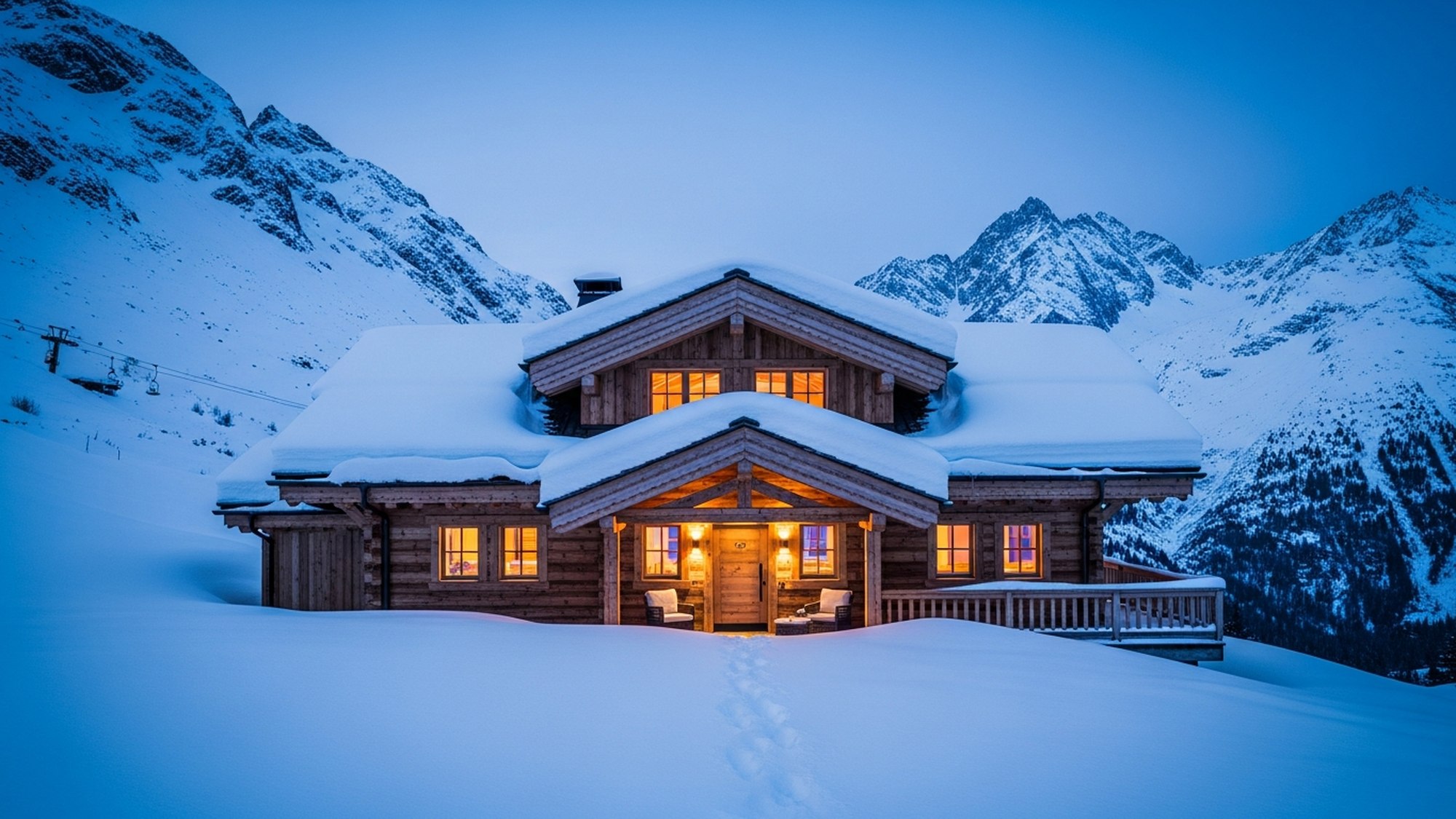
Lake Houses: The Undisputed King of Underrated STR Assets is Under Your Nose
Forget the crowded coastlines and overhyped city pads. The real money and guest loyalty in short-term rentals are quietly being made on America's lakes. Here's why.
You've been sold a bill of goods. For years, the siren song of beachfront properties or the glitzy promise of urban penthouses has dominated the short-term rental narrative. Media pundits, and even some industry 'experts,' have pointed hosts towards these supposedly infallible markets, suggesting they represent the pinnacle of STR investment. They told you: chase the waves, chase the city lights, chase the obvious. And a lot of you did. You bought in. You fought over scarce permits. You paid eye-watering prices for properties that deliver diminishing returns as competition skyrockets and regulations tighten. It's time someone told you the truth: you were looking in the wrong direction.
The real gold isn't where everyone else is digging. It's tucked away, often within a few hours' drive of major metropolitan areas, on the shores of America's vast network of lakes. Lake houses, cabins, and waterfront retreats are not just a niche market; they are, in many critical ways, the most consistently underrated, robust, and profitable STR asset class in the country. They combine a unique blend of enduring demand, inherently constrained supply, and a guest loyalty program that writes itself. But like any formidable beast, it has its catch: seasonality. And for the unprepared, that catch can sting. For the shrewd operator, it's merely a variable to be managed, a challenge to be overcome, and a further filter that weeds out the weak, leaving the spoils for the strong.
This isn't about some new, fleeting trend. This is about fundamental economics, human psychology, and the simple truth of how people genuinely want to spend their precious vacation dollars. We're going to break down why lake properties are poised to outperform, why the 'seasonality trap' is more myth than reality for smart hosts, and how you can position yourself to claim your piece of this often-overlooked, high-yield market. Get ready to rethink everything you thought you knew about where the real value lies in short-term rentals.
The Myth of the Coastal Crown
For too long, the narrative has been that coastal markets are the undisputed champions of short-term rentals. Think Florida beaches, the Outer Banks, or the California coast. These destinations have indeed seen explosive growth, attracting massive investment and a tidal wave of guest demand. But that very success has become their undoing. The competition is cutthroat, the cost of entry is astronomical, and the regulatory landscape is a minefield of ever-changing rules. Property values in prime coastal zones have soared, pushing acquisition costs to dizzying heights. This means a host needs to generate significantly more revenue just to break even, let alone turn a healthy profit.
Beyond the financial squeeze, the guest experience itself is often diluted. Overcrowded beaches, packed restaurants, and traffic congestion have become the norm in many once-serene coastal towns. Guests seeking escape often find themselves trading one kind of urban stress for another, albeit with a view of the ocean. This erosion of the 'getaway' experience makes it harder to cultivate repeat bookings and truly differentiate a property. Platforms like Airbnb and Vrbo are saturated with options, turning the booking process into a race to the bottom on price, or a desperate scramble for reviews. The promise of beachfront bliss frequently clashes with the reality of an increasingly commodified vacation. Furthermore, many coastal regions are staring down the barrel of serious environmental challenges, from rising sea levels to increasingly severe storm seasons, which can impact property values, insurance costs, and the very long-term viability of an investment.
Compare this to the relatively quieter, less overtly marketed appeal of lake destinations. While the ocean offers expansive views, lakes offer intimacy, activity, and a different kind of natural beauty. The dynamic is fundamentally different, and it's one that savvy investors are beginning to recognize as a more sustainable, and ultimately more profitable, path. The 'coastal crown' is heavy, expensive, and increasingly tarnished. It's time to look inland, to the freshwater giants that have been quietly delivering consistent returns for decades, often under the radar of the mainstream STR gold rush.
Natural Moats and Scarce Shores: The Supply Squeeze
One of the foundational pillars of any strong real estate investment is scarcity. And when it comes to lakefront property, scarcity is not just a feature; it's the defining characteristic. Unlike land near an ocean, which can stretch for thousands of miles, or urban areas where vertical expansion is always an option, lakefront property is inherently finite. You can't make more lake. You can't easily expand the shoreline. This natural geographical constraint creates an immediate, unshakeable barrier to entry that significantly benefits existing owners and future investors.
The supply squeeze in lake markets is multi-faceted. First, there's the obvious physical limitation: the perimeter of a lake is fixed. Second, much of the most desirable lakefront land has been privately owned, often for generations, and is simply not coming onto the market. These properties frequently stay within families, passed down as heirlooms, rather than being sold off to the highest bidder. This creates a deeply entrenched ownership pattern that resists market fluidity. Third, environmental regulations often play a significant role. Many lake ecosystems are fragile, and local, state, and even federal agencies implement strict rules regarding development, shoreline protection, and water quality. These regulations, while vital for conservation, simultaneously act as a powerful governor on new construction and density, further limiting the available inventory for short-term rentals.
Consider the typical residential patterns around a lake. Often, these communities grew organically, with a mix of year-round residents and seasonal second-home owners. The latter group, traditionally, might use their property for a few weeks a year and leave it vacant otherwise. The advent of STR platforms has created an incentive for these owners to monetize their unused asset, but the underlying stock of available properties remains limited. New developments, if they occur at all, are typically smaller scale, high-end, and slow to permit, adding only a trickle to the overall supply pool. This thin supply, coupled with steady or growing demand, creates a powerful upward pressure on rental rates and property values, establishing a robust economic moat around these investments that is difficult for competitors to breach. This isn't a market where you wake up to a hundred new listings overnight. It's a market built on solid ground, literally and figuratively.
The Gravitational Pull of Repeat Guests
Here's where lake houses truly shine, often outperforming almost any other STR market type: guest loyalty. It's not just about a booking; it's about a tradition. Guests often return to the same lake, sometimes even the same property, year after year. Why? Because a lake vacation is more than just a place to stay; it's an experience built on specific activities, cherished memories, and a sense of continuity that other destinations struggle to replicate.
Think about it: families often have 'their' lake. They return for the specific fishing spots, the familiar hiking trails, the calm waters perfect for kayaking, or the thrill of wakeboarding. Kids grow up with these annual trips, creating deep emotional connections to the location. These aren't just 'tourists'; they are often multi-generational guests who view their annual lake trip as a cornerstone of their family calendar. This inherent loyalty dramatically reduces guest acquisition costs for hosts. Instead of constantly chasing new bookings through expensive platform advertising or discounting, a significant portion of a lake property's calendar can be filled by returning guests.
This dynamic opens up immense opportunities for direct booking strategies. Once a guest has stayed at a property and had a positive experience, they are highly receptive to booking directly for subsequent visits. This bypasses the often substantial commission fees charged by platforms like Airbnb and Vrbo, directly impacting a host's bottom line. Building an email list, offering special discounts for direct re-bookings, and providing personalized service become incredibly effective tools. This isn't just about saving 3-5% on platform fees; it's about owning the guest relationship, fostering community, and creating a sustainable business model less reliant on the whims of third-party platforms. The value of a loyal, repeat guest extends beyond their booking; they become brand advocates, referring friends and family, and contributing to a virtuous cycle of sustained demand. This isn't just a transactional business; it's a relationship business, and lake markets are uniquely suited to cultivating these deep connections.
Demand Drivers Beyond the Calendar
The allure of a lake vacation transcends simple seasonal appeal. While summer is undeniably prime time, the underlying drivers of demand for lake properties are far more robust and varied than many realize. These properties tap into deep-seated psychological needs and offer a versatile experience that caters to a broad demographic, making them a resilient investment.
At its core, a lake house offers an escape from the relentless pace of urban life. It’s a retreat, a sanctuary where people can genuinely disconnect and recharge. This need for tranquility and nature has only intensified in recent years, making lake destinations increasingly valuable. It’s not just about the water; it’s about the surrounding forests, the quiet mornings, and the starry nights. These natural amenities provide a powerful draw for guests seeking mental and emotional rejuvenation.
Moreover, lake properties often excel at accommodating multi-generational travel. Unlike a cramped hotel room or a small city apartment, a lake house typically offers space for families to spread out, with multiple bedrooms, large common areas, and outdoor spaces. Grandparents, parents, and children can vacation together, creating shared memories through activities like fishing, swimming, paddleboarding, or simply enjoying meals together on a spacious deck. This multi-generational appeal broadens the potential guest pool and often leads to longer stays and higher booking values. The accessibility of many lake markets, typically within a few hours' drive of major population centers, also makes them ideal for weekend getaways and shorter breaks throughout the year, not just extended summer vacations. This 'drive-to' market characteristic is a significant advantage, reducing travel costs and logistics for guests, and making spontaneous trips more feasible. Furthermore, the range of activities extends beyond the summer sun. Many lake regions boast incredible fall foliage, attracting visitors for scenic drives and hiking. In winter, some areas transform into hubs for ice fishing, cross-country skiing, or snowmobiling, while a cozy cabin with a fireplace and a hot tub offers a perfect cold-weather retreat. This versatility in experiences means that, with proper marketing and amenity investments, lake properties can attract guests well beyond the traditional peak summer months, defying the simplistic 'seasonal' label.
The Seasonality Trap and the Smart Host's Escape
If there's one perceived Achilles' heel for lake house investments, it's seasonality. The common wisdom dictates that lake properties are summer-only operations, leading to significant income droughts during the off-peak months. And yes, summer is undeniably the peak season, commanding the highest rates and occupancy. But to view lake properties solely through this lens is a critical misunderstanding, and it's precisely where savvy hosts differentiate themselves from the pack. The 'seasonality trap' is often a self-fulfilling prophecy for those who fail to adapt; for those who innovate, it's merely a variable to be managed, not a destiny to be accepted.
The first step in escaping the trap is aggressive, dynamic pricing. Relying on static rates year-round is a surefire way to leave money on the table in peak season and sit empty in the shoulder and off-seasons. Smart hosts utilize sophisticated pricing tools that adjust rates based on demand, local events, weather forecasts, and even competitor pricing. This means maximizing revenue during the red-hot summer weeks, but also strategically lowering rates just enough to attract guests during the spring and fall, and even for special winter getaways.
Beyond pricing, amenity investment is paramount. A lake house that offers only summer-specific activities will, naturally, struggle during other seasons. But one equipped with a year-round hot tub, an outdoor fire pit, a cozy fireplace indoors, high-speed internet for remote workers, board games, a well-stocked kitchen, and perhaps even a game room, suddenly becomes appealing regardless of the temperature outside. These additions transform a 'summer cabin' into a 'four-season retreat.' Imagine families gathering for Thanksgiving, couples escaping for a romantic fall weekend, or friends enjoying a quiet winter getaway. These are all opportunities for revenue that are missed if the property is not designed and marketed for year-round appeal.
Off-season marketing is another crucial component. This means targeting different demographics and highlighting different activities. Fall foliage tours, winter festivals, local hunting or fishing seasons, or even simply promoting a quiet retreat for remote work or creative endeavors can fill calendars outside of June, July, and August. Collaborating with local businesses – restaurants, outfitters, wineries – can also create attractive packages that draw guests during quieter times. The key is to understand that the demand doesn't disappear; it simply changes. The host who understands and adapts to this shift can turn what others see as a weakness into a powerful competitive advantage, extending their booking calendar and bolstering their annual RevPAR significantly.
The real gold isn't where everyone else is digging. It's tucked away, often within a few hours' drive of major metropolitan areas, on the shores of America's vast network of lakes.
The Regulatory Ripple Effect
The regulatory environment for short-term rentals is a constant, evolving challenge across all markets, and lake communities are no exception. However, their unique characteristics often lead to a distinct pattern of regulation that hosts must understand and proactively navigate. Unlike dense urban centers or politically charged coastal metros, many lake communities began as more laid-back, rural or semi-rural areas. This often meant a slower initial reaction to the rise of STRs, with fewer immediate restrictions.
This initial regulatory lag can be a double-edged sword. On one hand, it allowed many hosts to establish their businesses with relative ease. On the other, it often means that when regulations do come, they can be reactive, sweeping, and sometimes influenced by a vocal minority of long-term residents who feel their quiet way of life is being disrupted. Lake communities frequently grapple with issues unique to their environment: noise complaints carrying across water, septic system capacities, lake access points, and parking on narrow roads. These concerns often translate into specific rules regarding occupancy limits, quiet hours, waste disposal, and even restrictions on watercraft usage.
The typical regulatory progression often starts with registration requirements, moving towards permits, then potentially occupancy caps, and sometimes even density limits (e.g., only a certain percentage of homes on a street can be STRs). Property taxes can also be a significant consideration; some jurisdictions might reclassify STRs from residential to commercial property for tax purposes, leading to higher tax burdens. Cleaning fees, while set by the host, are often scrutinized by guests and platforms, requiring transparency and justification, especially in markets where professional cleaning services for larger properties are a necessity.
Smart hosts in lake markets engage proactively with their local governments and community associations. This means attending town hall meetings, understanding proposed ordinances, and advocating for reasonable, balanced regulations that protect both property owners and residents. Ignoring the regulatory landscape is a recipe for disaster, risking fines, permit revocation, and even outright bans. By staying informed, operating transparently, and being a 'good neighbor,' hosts can significantly mitigate regulatory risks and contribute to a sustainable STR ecosystem in their chosen lake community.
The Financial Undercurrents of Ownership
Investing in a lake house for short-term rental is not just about the daily rate; it's about understanding the unique financial currents that run beneath the surface. While the potential for high returns is significant, particularly during peak season, hosts must be prepared for specific capital expenditures (CapEx) and operational expenses (OpEx) that differ from other property types. This isn't a cheap flip; it's a strategic long-term play requiring a clear understanding of the numbers.
Initial acquisition costs for lakefront property are often at a premium due to the inherent scarcity discussed earlier. This means a higher initial investment compared to many non-waterfront properties. However, this higher barrier to entry also translates into stronger property value appreciation over the long term, as the supply remains fixed while demand for unique waterfront experiences grows. The true cost of ownership extends beyond the mortgage and property taxes. Insurance, for example, can be more complex and costly, particularly in areas prone to specific weather events or those requiring specialized flood or liability coverage due to water access or docks.
CapEx considerations are crucial. Docks, seawalls, and boat lifts require significant upfront investment and ongoing maintenance. If the property includes a boat for guest use (a major draw in many markets), this adds considerable cost for purchase, insurance, storage, and maintenance. Winterization is an annual expense in colder climates, involving draining pipes, shutting down systems, and sometimes removing docks or securing boats. These are not optional costs; they are part of operating a successful lake STR. OpEx also includes specific services like septic system maintenance (common in rural lake areas), specialized landscaping to prevent erosion, and potentially higher utility costs due to larger properties and more extensive outdoor lighting or amenities like hot tubs.
However, these financial considerations are offset by the potential for superior revenue generation. High average daily rates (ADR) during peak season, combined with the potential for extended shoulder season bookings, can lead to robust RevPAR figures. The strong demand and repeat guest loyalty often mean higher occupancy rates compared to more saturated markets, even with higher per-night pricing. Cleaning fees, while variable, are often higher for larger lake homes to cover the extensive cleaning required for multi-bedroom properties and outdoor areas. Hosts must factor these into their pricing strategy to ensure profitability. The key is to run a diligent pro forma, accounting for all these unique financial undercurrents, and understanding that while the entry price might be higher, the long-term appreciation and sustained rental income often justify the investment, delivering a stronger ROI than many seemingly 'cheaper' alternatives.
The bottom line for hosts
The short-term rental industry is a battleground, and victory goes to those who see beyond the obvious. Lake houses represent a rare combination of strong, emotionally driven demand, inherently limited supply, and a unique capacity for cultivating fierce guest loyalty. While seasonality demands a strategic approach, it's a manageable challenge, not a deal-breaker, for the informed operator.
For hosts looking to enter or diversify their portfolio, the message is clear: do your homework on lake markets. Identify locations within a reasonable drive of major population centers. Prioritize properties with genuine water access, even if it means a higher upfront cost, because that's where the premium is. Invest wisely in amenities that extend your booking calendar beyond summer, transforming your property into a four-season destination. Master dynamic pricing to maximize revenue during peak times and ensure consistent bookings in the shoulder seasons. Most importantly, focus relentlessly on the guest experience to foster that invaluable repeat business, moving guests off platforms and onto your direct booking channels. The lake house isn't just a property; it's a powerful, often overlooked, engine for sustainable STR profitability. Don't be the host who missed the boat. The tides are turning, and the freshwater bounty awaits.
About this piece
An original expert-analysis column by the STR NEWS desk. Figures are illustrative of how the market behaves; confirm specifics for your own market before you act.

Related from the desk



Read the desk every morning.
The day's crackdowns and platform moves, the money, the design and the stays going viral, plus the desk's verdict, in one short email every morning.