Extortion Rings Threaten Ruinous Reviews for Cash Refunds
Predatory guests are exploiting platform safety policies, fabricating severe hazards, and forcing professional hosts to pay cash refunds or face ruinous listing suspensions.
The short-term rental industry has built its entire infrastructure on a foundation of mutual trust, but that trust has been weaponized into a highly effective extortion racket. Across global booking platforms, a growing contingent of predatory guests has discovered that a single, unsubstantiated safety complaint can instantly freeze a host's listing and dry up their cash flow. What began years ago as petty demands for waived cleaning fees has matured into systematic, digital shakedowns where operators are forced to choose between paying cash refunds or watching their businesses get choked out by automated platform algorithms.
This is not a story about occasional bad behavior or unreasonable travelers complaining about a dusty baseboard. This is an organized, repeatable playbook executed by individuals who understand the internal machinery of major booking platforms better than the customer support representatives who police them. By fabricating severe safety hazards—ranging from hidden cameras to carbon monoxide leaks—and presenting hosts with an ultimatum, these bad actors have turned the platform's own consumer-protection frameworks into a blunt instrument for financial theft.
The structural vulnerability lies in the asymmetrical power dynamic between the platform, the host, and the guest. When a safety dispute arises, platforms almost universally operate under a policy of immediate suspension first and investigation later. For a host carrying a heavy mortgage, high property insurance premiums, and tight operational margins, even a three-day suspension can mean financial ruin. The extortionists know this, and they use that exact vulnerability to extract immediate cash payouts.
How it actually works
The mechanics of a modern review-extortion scheme are calculated with professional precision. The process begins with a standard booking, often for a high-value property during peak travel seasons, when the host's potential loss is at its highest. The scammer checks in without incident, often maintaining a polite, low-profile demeanor in early communications to disarm the host. The trap is sprung late in the stay or immediately following checkout, timed perfectly to prevent the host from inspecting the property before the threat is delivered.
Rather than filing a formal complaint through official platform channels, the guest contacts the host directly, frequently trying to move the conversation off the platform to SMS, WhatsApp, or phone calls where their statements are harder to document for platform investigators. The guest alleges a catastrophic safety or hygiene violation. They might claim they discovered a hidden camera disguised as a common household object in a bedroom, smelled a persistent gas leak that caused them physical illness, or found evidence of a severe bedbug infestation.
Once the allegation is made, the guest presents their terms. They do not request a standard resolution through the platform's resolution center. Instead, they demand an immediate refund of their entire booking fee, often accompanied by an additional cash payment sent via a direct peer-to-peer payment application like Venmo or PayPal. In exchange for this payment, they offer to remain quiet, promising not to report the alleged issue to the platform and to leave a positive review. If the host refuses, the guest threatens to file an immediate safety report with the platform's trust and safety team, knowing that doing so will trigger an automated suspension.
The host is immediately placed in an impossible position. They are forced to evaluate the financial cost of the refund against the far larger, systemic cost of a platform deactivation. If they refuse to pay, the guest files the report. Within minutes, the listing is deactivated, future bookings are canceled, and the host's account is placed under a unilateral investigation. The platform's automated systems do not evaluate the credibility of the guest's claim before suspending the listing; they prioritize risk mitigation above all else, leaving the host guilty until proven innocent.
This sequence of events highlights the systemic failure of platform moderation. By treating every guest allegation as highly credible and automatically suspending listings without preliminary verification, booking platforms have created a zero-risk environment for extortionists. The scammer faces no penalties for making false claims, while the host bears the entire financial and operational burden of proving their innocence.
The brutal math of the algorithm
To understand why hosts are so vulnerable to this form of extortion, one must look at the brutal mathematics that govern short-term rental search algorithms. Modern booking platforms use complex, proprietary algorithms to determine which listings appear on the coveted first page of search results. While the exact formulas are closely guarded secrets, third-party analytics firms like AirDNA have repeatedly demonstrated that average review ratings, response times, and cancellation rates are the primary drivers of search visibility.
For a professional host, search visibility is the lifeblood of their business. A listing that appears on the first page of search results for a specific market can maintain an occupancy rate of 75% to 80% at a premium Average Daily Rate (ADR). If that same listing drops to the second or third page, its occupancy rate can plunge to 40% or lower, forcing the host to slash rates to attract bookings. The financial impact of this algorithmic demotion is compounding and long-lasting.
Consider the financial profile of a typical suburban short-term rental. The property might generate $6,000 in gross monthly revenue during peak season, operating at an ADR of $200 and 100% occupancy for a 30-day month. Out of this $6,000, the host must pay a $2,500 mortgage, $400 in property taxes, $300 in specialized short-term rental insurance, $500 in utilities and internet, and $180 in platform transaction fees. The remaining cash flow is approximately $2,120, which must cover maintenance, cleaning coordination, and capital reserves.
If a guest leaves a single 1-star review, the listing's average rating can drop from a perfect 5.0 to a 4.8 or lower, depending on the volume of historical reviews. On platforms where the average listing rating is exceptionally high, a drop to 4.8 is enough to trigger a sharp decline in search placement. The algorithm interprets the drop as a sign of declining quality and deprioritizes the listing in favor of competitors. To recover, the host must lower their ADR by 20% to attract budget-conscious guests who filter primarily by price. This reduces the gross revenue to $4,800, while operating costs remain fixed, cutting the host's net cash flow by more than half.
The extortionist understands these numbers. When they demand a $500 refund, they are not just asking for a discount; they are pricing their threat. They know that a $500 immediate loss is vastly preferable to a host than a multi-month algorithmic penalty that could cost thousands of dollars in lost revenue and forced rate reductions. This economic reality forces even the most principled hosts to swallow their pride and pay the extortionist, effectively subsidizing the scammer's travel in order to protect their long-term business viability.
The phantom camera and the biohazard play
Extortionists do not rely on subjective complaints about comfort or cleanliness because those issues do not trigger immediate platform intervention. Instead, they focus on weaponized safety claims that force the platform's hand. The two most common and effective tactics are the phantom camera allegation and the biohazard play. These claims are designed to exploit the platform's liability fears and trigger automated, immediate listing suspensions.
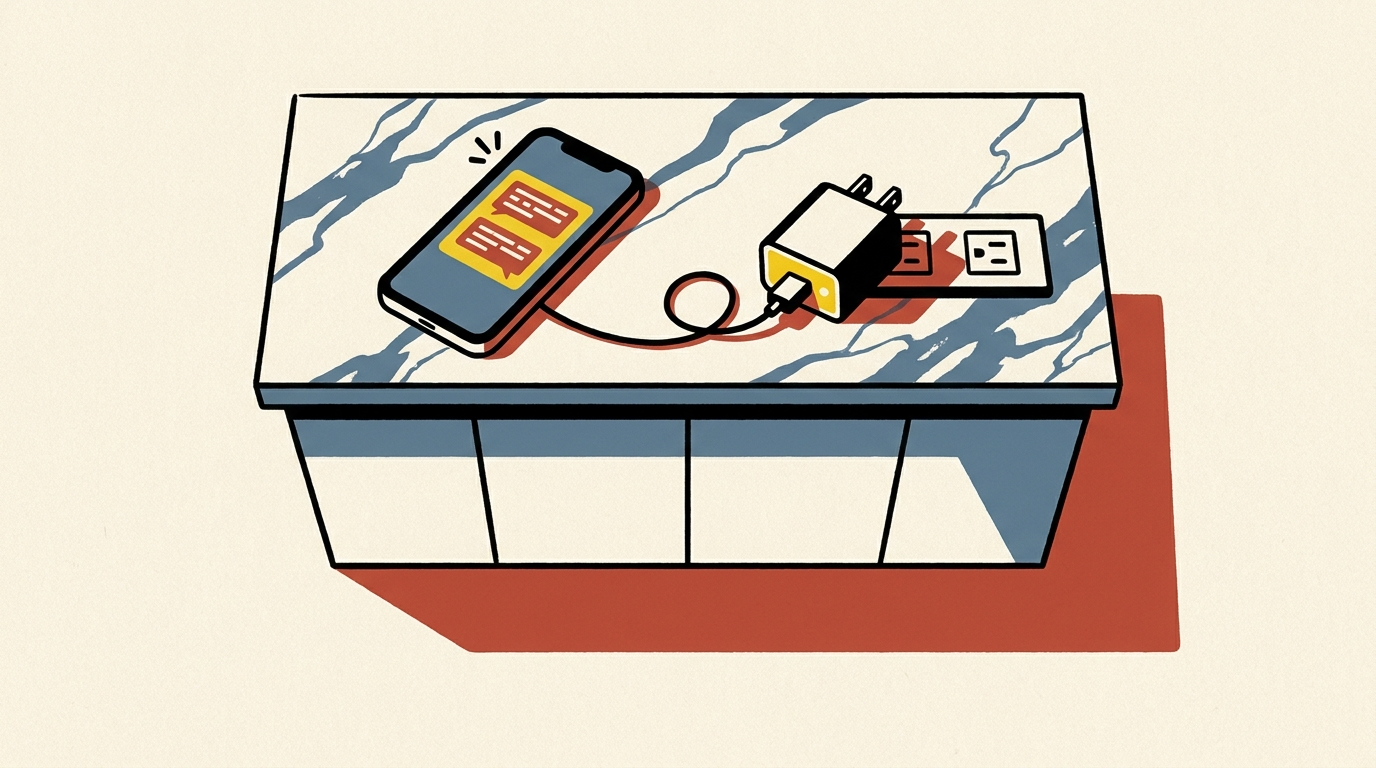
The phantom camera allegation is particularly insidious. Under the privacy policies of major booking platforms, any undisclosed camera inside a property is a severe violation, and cameras in private spaces like bedrooms or bathrooms are grounds for immediate permanent banishment. A guest wishing to execute this scam does not need to find an actual hidden camera. They only need to photograph a common household object—such as a smart thermostat, a motion detector, a plug-in air freshener, or a USB charger block—and claim to the platform that it is a hidden camera.
Once the platform receives a report of a hidden camera, its legal and safety teams are programmed to react with maximum severity. They cannot risk the public relations disaster of allowing a guest to stay in a property where they might be filmed. Consequently, the listing is suspended instantly, existing reservations are canceled at the host's expense, and the host is locked out of the calendar. To get the listing reinstated, the host must undergo a grueling verification process, which often involves submitting detailed photos of every device in the home, proving they do not contain lenses or recording hardware, and waiting for an opaque review process to conclude.
The biohazard play, typically involving bedbugs or toxic mold, is equally destructive. If a guest claims they found bedbugs or suffered bites, the platform operates under a strict biohazard protocol. The listing is suspended immediately to prevent the spread of pests to subsequent travelers. To resolve the issue, the host is required to hire a licensed pest control professional to conduct an inspection and provide a formal, written report certifying that the property is free of pests.
The financial cost of the inspection itself is substantial, often ranging from $150 to $300, but the true cost is the lost revenue during the suspension. If the inspection cannot be scheduled immediately, or if the pest control company's report takes several days to process, the listing remains inactive. Even when the host submits a certified document proving there are no bedbugs, the platform's support team may take several additional days to review and approve the document. The host is left carrying all the costs of a professional inspection and losing booking revenue, all to disprove a completely fabricated claim made by a guest who is likely already staying at another property.
The policy loophole that weaponizes safety
Booking platforms are not blind to the concept of review extortion. Most have explicit terms of service that prohibit guests from using reviews or ratings to force a host into providing refunds, discounts, or other financial incentives. On paper, these policies seem designed to protect hosts from predatory behavior. In practice, however, they are riddled with structural loopholes that make them almost entirely ineffective at stopping professional scammers.
The primary loophole lies in the evidentiary standard required by the platforms. To successfully dispute a review or report under the extortion policy, a host must present clear, unambiguous written evidence that the guest made a direct threat. Scammers have quickly learned how to navigate this requirement. They avoid writing explicit statements like "if you do not give me a refund, I will leave a 1-star review." Instead, they use coded, suggestive language that achieves the same result without triggering automated flags.
A guest might write on-platform messages such as, “I would prefer to handle this directly with you so we do not have to involve the safety team or write about this in my public review.” To a human observer, the threat is obvious. To an automated customer support system or an overworked tier-1 support agent operating from a rigid script, this language is often deemed too vague to constitute a clear violation of the extortion policy. The platform will rule that the guest is simply expressing their experience and negotiating a resolution, leaving the host unprotected.
Furthermore, scammers frequently move the extortion attempt off-platform entirely. They will initiate a phone call or send text messages to the host's personal phone number, where they can be much more explicit with their threats. When hosts attempt to submit screenshots of these external communications to platform support, they are routinely told that external evidence cannot be verified and therefore cannot be used to invalidate a guest's report or review. The platform's insistence on only recognizing on-platform communication logs creates a perfect shield for scammers, who use the platform to book and report, but use private channels to extort.
This policy failure is compounded by the severe outsourcing of platform customer service. Tier-1 support agents are often employees of third-party call centers located in developing nations. They are evaluated on metrics like call resolution time and ticket volume, giving them strong incentives to close cases quickly rather than conduct deep investigations. These agents lack the training, the contextual understanding, and the authority to overrule automated safety suspensions or to recognize sophisticated extortion patterns. When a host attempts to explain the nuance of an extortion attempt, they are met with copy-pasted policy statements and automated rejections.
The rise of organized refund groups
What was once a series of isolated, opportunistic incidents has transformed into an organized, digital underground. Across online forums, social media networks, and encrypted messaging platforms, communities of bad actors have formed to share strategies, templates, and success stories detailing how to exploit the short-term rental ecosystem. These groups have effectively institutionalized fraud, turning review extortion into a highly scalable, low-risk method for securing free travel and cash payouts.
In these online communities, members discuss which platforms have the most guest-favorable refund policies and which specific allegations are guaranteed to trigger immediate suspensions without requiring proof. They share pre-written messaging templates designed to walk the fine line of extortion without violating platform terms of service. For example, a member might post a step-by-step guide on how to photograph a standard smoke detector at a specific angle to make it look like a hidden camera lens, or how to buy fake insect bite prosthetics to fabricate a bedbug claim.
These groups also maintain unofficial databases of vulnerable hosts. They target listings managed by individual, non-professional hosts who do not have the legal resources, the operational scale, or the experience to fight back. These hosts are more likely to panic when faced with a safety complaint and will quickly agree to a refund to save their business. Scammers view these individual operators as easy targets, utilizing their listings as sources of quick cash and free lodging.
This collective intelligence has made the extortion threat far more sophisticated. Hosts are no longer dealing with a single disgruntled customer; they are facing an organized adversary that understands the platforms' internal policies and automated triggers better than most hosts do. This asymmetry of information and organization has allowed the scam to spread globally, affecting markets from metropolitan hubs to remote vacation destinations, and undermining the economic foundation of the short-term rental model.
The asymmetric cost of defense
When a host decides to stand their ground and refuse an extortionist's demands, they are making a decision that defies short-term financial logic. The cost of defending oneself against a fraudulent safety claim is incredibly high, both in terms of direct expenses and indirect operational disruptions, while the guest risks absolutely nothing by launching the attack.
Consider the direct expenses of proving innocence. When a guest reports a gas leak, the host must immediately hire a licensed HVAC technician to inspect the heating and ventilation systems. An emergency weekend dispatch fee can easily cost $200 to $300. If the guest reports bedbugs, a certified pest control inspection is required, costing another $150 to $250. If the guest claims the water is contaminated or that there is toxic mold, the host must pay for professional testing and laboratory analysis. None of these costs are reimbursable by the platform, even if the inspections prove the guest's claims were entirely fabricated.
In addition to these direct costs, the host must absorb the loss of revenue during the suspension period. While the platform investigates the claim, the listing is completely inactive. Prospective guests cannot view or book the property, and existing bookings are often proactively canceled by the platform, with the cancellation penalties assessed to the host. In a competitive market where a single weekend booking can generate $1,500 in revenue, a five-day suspension can wipe out an entire month's profit margin.
The administrative burden is another significant cost. Disputing a fraudulent claim requires the host to spend hours documenting the property's condition, compiling receipts, writing detailed appeals, and calling customer support lines. For property managers who operate dozens of units, the time spent managing a single extortion case represents a massive diversion of operational resources that could be better spent on guest services, maintenance, and marketing.
For the extortionist, the cost-benefit equation is entirely different. They spend perhaps ten minutes drafting a threatening message and submitting a report through the platform's mobile app. They do not need to pay for inspections, they do not lose business revenue, and they do not have to spend hours on hold with customer support. If the host pays, the scammer wins a free vacation and a cash payout. If the host refuses, the scammer still likely receives a full refund from the platform, which prioritizes guest satisfaction over host protection. Even if the platform eventually determines that the claim was fraudulent, the guest's account is rarely terminated, and even if it is, they can easily register a new account using a different email address or phone number. This complete lack of consequences ensures that the supply of extortionists will continue to grow.
By automating safety responses to prioritize guest reports, platforms have outsourced their risk management to the guests themselves, giving bad actors a master key to shut down any host's business at will.
What hosts should do now
While booking platforms work to address these systemic issues, professional hosts and property managers must take immediate, proactive steps to defend their listings from predatory guests. Relying solely on the platform's standard extortion policy is a recipe for financial loss. Operators must build their own independent layer of operational defense to document their property's condition and secure their businesses against false claims.
- Keep all communication strictly on-platform: Never agree to move the conversation to SMS, phone calls, or WhatsApp. If a guest attempts to call you, decline the call and request that they message you through the platform. If they send an off-platform text, reply to it within the platform's messaging system, summarizing what they said and asking them to confirm the details there. This creates a clear, unalterable paper trail that platform support agents are forced to review.
- Install connected, logging smart-home hardware: Equip your properties with professional smart-home devices that log objective, historical data. Use decibel noise monitors that record noise levels over time without recording actual audio. Install connected smoke and carbon monoxide detectors that log real-time gas levels and device health to a cloud portal. When a guest falsely claims a gas leak or a chirping detector, you can present time-stamped cloud logs proving the environment was safe, providing platform safety teams with objective technical data to dismiss the claim.
- Conduct documented pre-arrival inspections: Require your cleaning teams to take a standardized set of time-stamped photos and videos of the property immediately before every guest arrival. These photos must include close-ups of outlets, smoke detectors, and thermostats to disprove hidden camera claims, as well as photos of mattresses, linens, and baseboards to disprove bedbug or cleanliness allegations. Having a comprehensive, time-stamped visual record of the property's condition immediately prior to check-in is your strongest defense against fabricated claims.
- Establish a strict no-negotiation protocol: Never agree to pay a refund or cash settlement to a guest who hints at leaving a bad review or reporting a safety issue. Paying the extortionist only fuels the cycle and marks your listing as an easy target. If a guest attempts to extort you, immediately flag the message, stop communicating with them, and proactively contact the platform's support team to report the extortion before the guest has a chance to file their fraudulent safety report.
- Maintain independent liability and business interruption insurance: Do not rely on the platform's built-in coverage to protect your business from financial loss. Secure a comprehensive, independent short-term rental insurance policy that includes coverage for lost business revenue due to listing suspensions, professional inspections, and legal defense. Having a financial safety net outside of the booking platforms ensures that a temporary suspension will not force you into foreclosure.
Ultimately, the rise of review extortion is a symptom of an immature digital economy that has prioritized rapid scale and automated risk management over operational fairness. Until booking platforms realign their incentives and begin protecting the operators who provide their inventory, hosts must operate with a defensive mindset, using rigorous documentation, smart technology, and strict communication standards to shield their businesses from the digital highwaymen of the modern travel era.
Checked by the standards desk (Eleanor Quist): every specific in this story was traced to its source material before publication.
About this piece
An original expert-analysis column by the Stay Gazette desk. Figures are illustrative of how the market behaves; confirm specifics for your own market before you act.



Read the desk every morning.
The day's crackdowns and platform moves, the money, the design and the stays going viral, plus the desk's verdict, in one short email every morning.