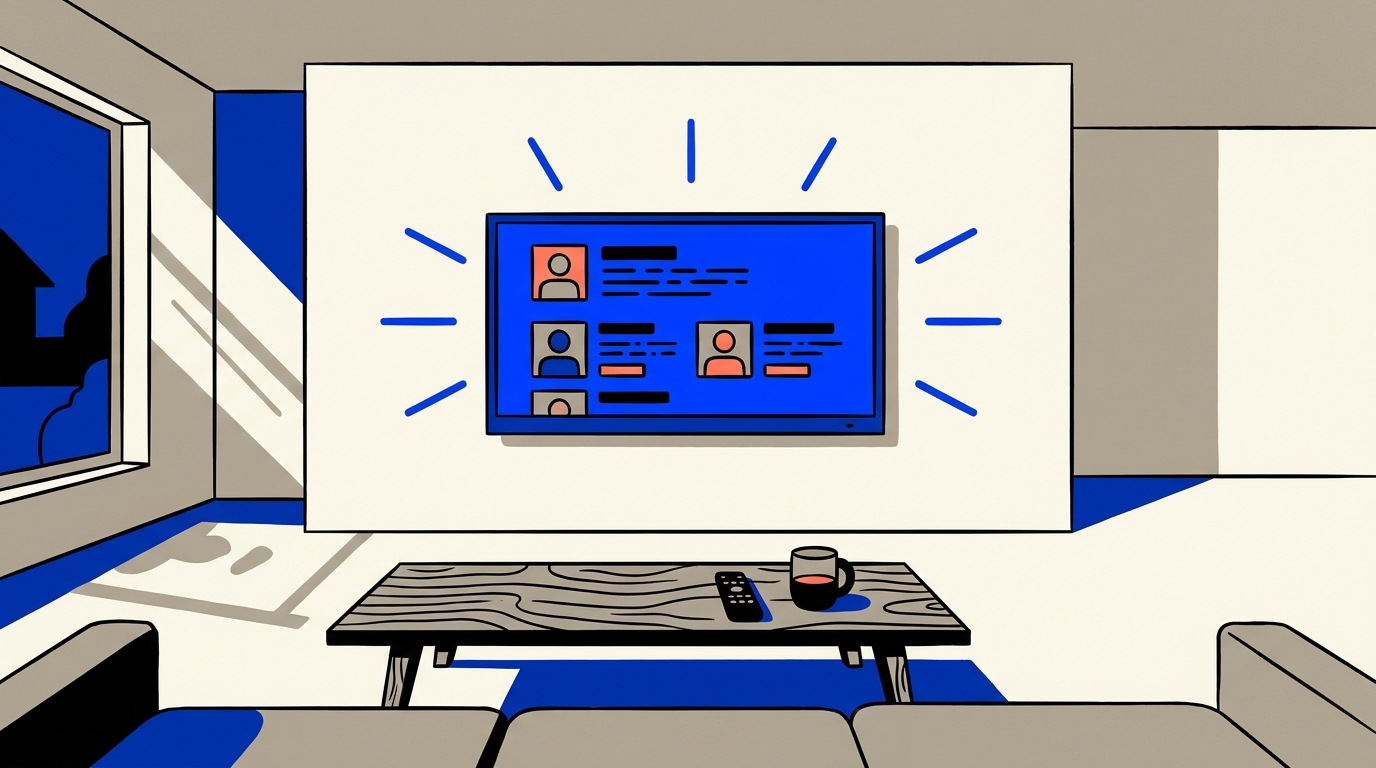
The Digital Ghost in the Living Room: Why Smart TVs Are Your Rental’s Biggest Security Threat
Guests checkout but leave their digital identities behind. Here is why your smart TV is a ticking data bomb—and why the major platforms are ignoring it.
The glowing screen on your vacation rental's living room wall is a digital threat in waiting, and your housekeeping crew is almost certainly ignoring it. Every afternoon across the global short-term rental sector, a highly coordinated, high-speed cleaning turnover takes place. Linens are stripped from mattresses, bathroom fixtures are sterilized, kitchen countertops are wiped clean, and trash bags are hauled to the curb. The physical space is meticulously scrubbed of the previous occupant's physical existence, ensuring that the incoming guest experiences an immaculate environment. Yet, while the physical property is polished to perfection, the digital footprint of the last traveler remains trapped inside the television, quietly holding the keys to their personal data, financial accounts, and private viewing habits.
When a traveler arrives at a property after a grueling journey of delayed flights and highway traffic, they seek immediate relaxation. They pick up the remote control, navigate to Netflix, Prime Video, or Disney+, and input their personal credentials to continue watching their favorite shows. This is a standard convenience that modern guests expect as a matter of course. But when checkout time arrives at ten in the morning, amidst the frantic scramble to pack suitcases, locate misplaced phone chargers, and herd family members out the door, logging out of the smart TV is the absolute last thing on their minds. They walk away, leaving their digital identity cached in the local memory of a consumer-grade television. The next guest who checks in does not just inherit a clean apartment; they get unrestricted access to a stranger's digital profile, complete with active streaming sessions, credit cards on file, and private email addresses.
This lack of digital hygiene represents a major security vulnerability that is quietly spreading through the entire short-term rental ecosystem. While hosts spend thousands of dollars securing their physical properties with smart locks, exterior security cameras, and noise sensors, they consistently ignore the glowing black boxes mounted on their walls. These consumer smart TVs, designed for single-family homes rather than commercial lodging, do not have automated session-timeout mechanisms. They are designed to keep users logged in forever to reduce friction. In a commercial hospitality context, this design choice is a disaster, turning every television into a potential vector for identity theft, financial fraud, and severe violations of privacy.
What happened
This silent vulnerability is no longer just a hypothetical threat discussed by cybersecurity researchers. According to a detailed report by Atlanta News First, this exact security lapse has become an everyday hazard across the vacation rental market, turning living room televisions into active sources of data leaks. The news station's investigation highlighted how subsequent guests can easily exploit active streaming accounts left behind by previous occupants. In many instances, travelers who forgot to log out of their personal profiles on smart TVs in short-term rentals discovered that strangers were using their accounts weeks or months later, sometimes racketing up charges for premium channels or renting movies using the payment card linked to the profile.
The Atlanta News First broadcast revealed a stark double standard in how the short-term rental industry manages safety and privacy. While property managers and major platforms have spent years implementing strict physical security measures, digital security has remained an unaddressed blind spot. Travelers interviewed by the station expressed genuine shock at how simple it was to access the sensitive personal data of prior guests. They did not need sophisticated hacking tools or technical expertise; they simply picked up the TV remote control and clicked on an active profile. The screen displayed the full names, viewing habits, and in some cases, linked payment methods of complete strangers who had occupied the property days or weeks before them.
“Did you forget to log out? The big risk on vacation rental smart TVs is that your personal data remains fully accessible to the next stranger who walks through the door.”
In one case highlighted by the reporting, a guest returned home from their vacation only to receive a series of unexpected email receipts for digital movie rentals they had never authorized. Upon reviewing their streaming account history, they realized the purchases had been made from the smart TV in the rental property they had checked out of several days prior. The incoming guest had simply used the active profile to purchase entertainment at the previous guest's expense. This scenario is playing out in thousands of properties every single weekend, yet the vast majority of hosts remain completely unaware of the financial and legal risks associated with their in-room entertainment systems.
The reporting from Atlanta News First underscores that this is not an isolated issue or a rare technical fluke. It is a systemic byproduct of the shift from traditional cable television to app-based streaming entertainment. Because short-term rentals rely almost exclusively on consumer-grade electronics rather than commercial hospitality hardware, they lack the centralized management tools necessary to protect guest data. The result is a highly fragmented, insecure environment where guest credentials are left exposed on millions of screens worldwide, creating a massive target for opportunistic exploitation.
The consumer TV as an enterprise liability
To understand why this digital security gap is so persistent, one must look at the fundamental design of modern consumer electronics. Smart televisions are engineered for single-family residential homes, not high-turnover commercial hospitality environments. When a consumer purchases a smart TV from a retail store and sets it up in their private living room, the operating system is designed to maximize ease of use. Software developers at Samsung, LG, Roku, and Amazon know that typing complex passwords with a directional pad on a plastic remote is a slow and frustrating experience. To solve this friction, they design their applications to keep users logged in indefinitely. There is no automatic session timeout on a standard consumer streaming app. Once a user signs in, the session remains active until someone manually selects the logout button.
In a vacation rental that welcomes dozens of different guests over the course of a year, this convenience-focused design becomes a severe operational liability. The television becomes an accidental data aggregator, accumulating active login sessions from Netflix, Hulu, Prime Video, Disney+, Max, and YouTube. Because consumer smart TVs do not feature a unified option to log out of all applications simultaneously, clearing these sessions requires a user to open every individual application, navigate deep into its nested settings menu, find the sign-out option, and confirm the action. For a guest rushing to catch an early morning flight, this multi-step process is an annoying chore that they simply choose to ignore, assuming the host or the cleaning service will handle it.
This design flaw is not limited to cheap streaming sticks. Even high-end consumer televisions from premium brands operate on the same basic principle: once authenticated, remain authenticated forever. This means that a guest's entire viewing profile, including their watch history, recommended content, and associated email addresses, remains visible to anyone who turns on the television. In the hands of a malicious actor, this information can be used to harvest personal details, launch targeted phishing attacks, or compromise other accounts that share the same email address. The television, once a simple device for displaying broadcast signals, has become a complex computing device containing a wealth of sensitive consumer data.
Furthermore, many smart TV applications are directly linked to the user's primary marketplace accounts. For instance, the Amazon Prime Video app on a television is often tied directly to the user's main Amazon shopping account. If a guest remains logged into Prime Video, any subsequent user can easily browse their order history, view their shipping address, and make purchases using the credit card stored on the account. The security boundary between entertainment and personal finance has been completely dissolved by the integration of these digital ecosystems, turning the vacation rental television into a direct threat to the guest's financial security.
The operational economics of the turnover window
The reality of property management is governed by the unforgiving economics of the turnaround window. In the short-term rental business, time is the most expensive commodity. A cleaning crew typically has a window of four to six hours to transform a messy house into an immaculate listing. During this brief period, they must execute a massive checklist that covers everything from bleaching bathroom tiles to checking for physical damage. Cleaners are compensated and evaluated based on the physical cleanliness of the property, not its digital hygiene.
Expecting a cleaning professional, who is already working under immense time pressure, to sit on the couch, turn on the television, and spend fifteen minutes navigating through various streaming apps to log out of old accounts is an operational fantasy. It simply does not happen in the real world. Even if a host adds this step to their cleaning checklist, the technical execution is fraught with operational friction. A single property might feature three different brands of televisions, each running a completely different operating system with its own unique user interface. A cleaner who is highly efficient at sanitizing a kitchen may have no idea how to navigate the settings of an older Sony Android TV or a modern LG webOS interface. As a result, the task is ignored, and the digital footprint of the previous guest remains active, waiting for the next check-in.
This operational failure is compounded by the fact that many property management companies rely on third-party cleaning contractors. These contractors are paid flat rates per turn, meaning their profitability is directly tied to how quickly they can complete a job. Any task that adds non-cleaning time to their workflow represents a direct cut to their profit margins. Unless a property manager is willing to pay a premium for digital auditing, or unless the process is completely automated, the smart TV will remain untouched during the turn, leaving the host's digital security posture entirely compromised.
Additionally, the lack of quality control tools for digital systems makes verification nearly impossible for remote property managers. A manager can easily verify if a kitchen is clean by reviewing photos uploaded by the cleaning crew. However, they cannot easily verify if a television has been cleared of guest accounts without physically turning on the device and checking every application. This lack of visibility means that digital security lapses can go unnoticed for weeks, building up a backlog of active guest accounts that are exposed to every incoming traveler.
Ultimately, the manual approach to smart TV security is a failing strategy. It relies on a level of operational discipline and technical expertise that does not exist in the highly cost-sensitive world of property turnovers. As long as hosts rely on human intervention to solve a technological problem, they will continue to expose their guests to significant privacy risks, leaving their businesses vulnerable to negative reviews, disputes, and potential legal liabilities.
The evolution of in-room entertainment
This problem has been exacerbated by a massive shift in how travelers consume media. A decade ago, vacation rentals typically offered standard cable packages or a basic selection of local television channels. Guests did not expect to access their personal media libraries while on vacation. However, the rise of streaming services and the subsequent cord-cutting revolution have completely rewritten guest expectations. Today, travelers expect to have the same seamless access to their personalized entertainment feeds in a rental home that they enjoy in their own living rooms.
According to industry research, a vast majority of US broadband households now subscribe to at least one streaming service, and the average household subscribes to several. When these users travel, they do not want to watch local broadcast news or basic cable channels with commercial interruptions. They want to watch their specific Netflix queue, their personalized YouTube recommendations, and their premium sports subscriptions. To meet this demand, short-term rental hosts have raced to upgrade their properties with cheap, internet-connected smart TVs. But in doing so, they have transformed their properties from simple accommodations into complex digital networks, without implementing any of the security infrastructure required to manage those networks safely.
This rapid technological upgrade occurred without any coordination or standardization. In the traditional hotel sector, the evolution of in-room entertainment was carefully managed by enterprise technology providers. Hotels transitioned from basic cable to sophisticated interactive systems that allowed guests to purchase pay-per-view movies securely. These systems were built from the ground up with security and privacy in mind, ensuring that one guest's activity could never be viewed by the next. The short-term rental market, by contrast, bypassed this entire enterprise phase. Hosts went straight from basic cable to consumer-grade smart TVs, bringing all of the security vulnerabilities of the consumer market into a commercial hospitality setting.
The consequences of this rapid transition are now becoming clear. By installing consumer televisions without commercial management software, hosts have created an environment where guest data is routinely exposed to strangers. The ease of access that makes streaming services so popular in residential homes has become a major liability in the commercial lodging sector, highlighting the urgent need for a more professional, secure approach to in-room entertainment in the short-term rental industry.
The legal and financial liabilities for hosts
When a guest's digital account is compromised due to a smart TV left active in a short-term rental, the legal and financial fallout can quickly land on the host's doorstep. While the booking platforms like Airbnb and Vrbo do their best to shield themselves from liability through their extensive terms of service, the individual property owner or manager remains the primary point of contact for a furious guest. If a traveler discovers that their Amazon account was used to purchase hundreds of dollars of movies or that their Netflix password was changed by a subsequent guest at a specific rental property, their first course of action will be to demand compensation from the host.
Beyond the immediate financial disputes over unauthorized purchases, there are broader legal implications regarding data privacy. In jurisdictions with strict consumer data protection laws, such as the California Consumer Privacy Act (CCPA) in the United States or the General Data Protection Regulation (GDPR) in Europe, businesses are legally obligated to protect the personal data of their clients. While these laws are primarily aimed at larger corporations, the legal definitions of data controllers and processors can easily extend to property management companies that operate dozens or hundreds of units. If a property manager systematically fails to clear guest credentials from devices owned and provided by the business, they could theoretically face regulatory scrutiny or class-action lawsuits for failing to implement reasonable security measures.
The smart TV on your rental wall is a digital time bomb, holding the keys to your last guest's financial and personal life.
Furthermore, the reputational damage of a digital security breach can be catastrophic for a short-term rental business. In a highly competitive market where booking volumes are driven by reviews and ratings, a single detailed review from a guest claiming that their identity was stolen or their financial accounts were compromised during their stay can permanently destroy a listing's booking momentum. Hosts spend thousands of dollars optimizing their listings for search algorithms, hiring professional photographers, and perfecting their interior design. To allow all of that investment to be wiped out by a single unlogged-out Netflix account is a profound failure of risk management.
The financial cost of resolving these disputes can also be significant. Property managers often find themselves spending hours communicating with angry guests, investigating account histories, and negotiating compensation to prevent a negative review from being published. In some cases, hosts have had to reimburse guests for unauthorized purchases or offer free stays to appease travelers whose privacy was compromised. These unexpected expenses directly erode the profitability of the rental, proving that neglecting digital security is a costly mistake that no professional operator can afford to ignore.
The platforms' silence on digital safety
Despite the growing frequency of these digital privacy breaches, the major short-term rental platforms have remained conspicuously silent on the issue. Airbnb's extensive safety guidelines cover a wide array of physical hazards, requiring hosts to disclose the presence of noise monitors, carbon monoxide detectors, and outdoor security cameras. The platform has even instituted outright bans on indoor security cameras to protect guest privacy. Yet, when it comes to the digital privacy of the guest's personal data on host-provided smart TVs, there is a complete lack of policy, guidance, or support.
This silence is a strategic choice. By failing to regulate smart TV data hygiene, the platforms avoid taking on any operational or financial responsibility for digital security breaches. If Airbnb were to mandate that hosts clear all smart TVs between stays, they would have to establish a mechanism for verifying compliance, which is nearly impossible to do remotely. Instead, they leave hosts to figure it out on their own. This lack of platform-level support means that the vast majority of hosts remain completely unaware of the risks they are exposing their guests—and their businesses—to, until a major security incident occurs.
The platforms' hands-off approach to digital security contrasts sharply with their aggressive intervention in other areas of property operations. When it comes to collecting occupancy taxes, enforcing cancellation policies, or regulating guest communication, the platforms are highly active and interventionist. But when it comes to the complex, messy world of local network security and consumer electronics, they retreat behind their terms of service, leaving individual hosts to bear the full weight of the operational and legal risks.
This lack of industry standards has created a highly fragmented security landscape. While some professional property managers have invested in enterprise-grade security solutions, the vast majority of individual hosts continue to operate with zero digital security protocols. This inconsistency undermines the credibility of the entire short-term rental sector, making it easy for traditional hotels to position themselves as the safer, more secure option for privacy-conscious travelers.
The premium gap between hotels and STRs
The hospitality industry has long understood the risks associated with in-room technology, and traditional hotels solved this problem years ago. If you check into a modern Marriott, Hilton, or Hyatt, you will notice that the in-room television does not behave like a standard consumer smart TV. Hotels utilize specialized hospitality televisions and managed entertainment systems designed specifically for commercial use. These systems, provided by commercial tech companies, are directly integrated with the hotel's property management system (PMS).
When a hotel guest checks out at the front desk or via the hotel's mobile app, a secure signal is sent automatically to the television in their room. This signal triggers an instant, system-wide factory reset of the TV's interactive software, wiping all cached passwords, search terms, and streaming profiles in a matter of seconds. Furthermore, many modern hotel entertainment systems do not even require guests to enter their credentials on the screen. Instead, they utilize secure casting protocols, allowing guests to connect their smartphones or tablets to the TV via a secure local connection and stream content directly from their personal devices. The guest's password never leaves their phone, completely eliminating the risk of left-behind credentials.
The short-term rental market, by contrast, operates in a state of technological improvisation. Because commercial hospitality TV networks require significant upfront capital, dedicated servers, and complex local network configurations, they are financially and operationally out of reach for the vast majority of individual STR hosts. Instead, the average host relies on cheap, consumer-grade TVs purchased from big-box retailers. This technological gap between professional hotel security and casual vacation rental setups is a major vulnerability that professionalizes the hotel industry while making short-term rentals look amateurish and unsafe.
This gap is not just a matter of convenience; it is a fundamental security disparity. As travelers become increasingly aware of digital privacy risks, they will begin to demand the same level of security in short-term rentals that they expect in hotels. Professional property managers who fail to close this technology gap will find themselves at a severe competitive disadvantage, as corporate clients and high-value guests choose the safety of traditional hotels over the unmanaged digital environments of vacation rentals.
The technical solutions that actually work
For hosts who want to secure their properties without spending thousands of dollars on enterprise-grade hotel systems, there are practical technological solutions available. The most effective consumer-facing tool on the market today is Roku's Guest Mode (formerly known as Auto Sign-Out Mode). This free feature, built directly into the Roku operating system, is a rare example of a tech manufacturer designing a tool specifically for the short-term rental and hospitality market.
When Guest Mode is enabled on a Roku TV or a Roku streaming stick, the television presents a customized welcome screen to every arriving guest. The screen prompts the guest to select their checkout date using the remote control. Once the date is entered, the guest can log into their personal streaming accounts just as they would on any other TV. However, at noon on the selected checkout date, the Roku operating system automatically initiates a secure wipe. It logs out of every single streaming application, clears all search histories, deletes all cached credentials, and returns the television to its baseline state, completely ready for the next arrival. This process requires absolutely zero physical intervention from the host or the cleaning crew, making it the single most reliable method for maintaining digital hygiene in a vacation rental.
Unfortunately, Roku is currently the only major television operating system that offers this specific hospitality-focused feature out of the box. Competitors like Samsung (Tizen OS), LG (webOS), and Amazon (Fire OS) do not offer a comparable consumer-friendly guest mode. For hosts who do not use Roku devices, securing their televisions requires more manual effort, such as using smart plugs to power down and reset devices, or implementing strict operational policies that require cleaners to perform manual factory resets between stays—a process that is slow, prone to human error, and frustrating for everyone involved.
Another alternative is to install external casting-only hardware, such as a Google Chromecast that has been configured to block local application installations. By restricting the TV's functionality to casting only, hosts can allow guests to stream content from their personal devices without ever entering a username or password on the television itself. This approach replicates the security of modern hotel systems at a fraction of the cost, though it does require a slightly higher level of technical setup and may be less intuitive for older or less tech-savvy guests.
Ultimately, the choice of hardware is a critical decision that directly impacts the security and operational efficiency of the rental. Professional property managers must move away from generic consumer setups and actively choose hardware platforms that support automated security resets. By investing in the right technology, hosts can eliminate the risk of digital data leaks, protect their guests' privacy, and streamline their turnover operations without relying on manual cleaning checklists.
The hidden danger of host-provided accounts
In an attempt to avoid the hassle of guests logging into their own accounts, some hosts choose to provide pre-logged-in host accounts on their rental TVs. While this seems like a generous amenity, it actually introduces a whole new suite of operational and security headaches. When a host provides a shared Netflix or Disney+ account for all guests to use, they quickly discover that travelers cannot resist messing with the settings.
Within a few weeks, guests will inevitably create new profiles, delete existing profiles, change the language settings, or log out of the account entirely. If a guest accidentally or maliciously logs the host's account out of the TV, the next guest will arrive to find a screen demanding a username and password. Because the host cannot easily share their master credentials with guests, this triggers an immediate customer service issue, requiring the host to either walk the guest through a complex remote login process or drive to the property to type in the password themselves.
Furthermore, shared host accounts are a clear violation of the terms of service of almost every major streaming platform. Over the past two years, companies like Netflix and Disney+ have cracked down aggressively on password sharing and out-of-household account usage. A host-provided account that is accessed by dozens of different devices in different locations throughout the year is highly likely to be flagged and suspended by the platform's automated security systems. Relying on host-provided accounts is a fragile, high-maintenance solution that fails to address the underlying need for a professional, automated digital reset.
Additionally, host-provided accounts expose the host to financial risks. If the account is linked to a payment method that does not require a PIN for purchases, guests can easily buy premium movies, subscribe to additional channels, or upgrade the service tier without the host's permission. The cost of these unauthorized transactions can quickly add up, turning a supposedly free guest amenity into an expensive operational drain. For these reasons, professional operators strongly advise against providing shared host accounts, recommending instead that hosts provide a secure, clean platform that allows guests to use their own streaming accounts safely.
The guest psychology of checkout amnesia
To build a truly bulletproof operational workflow, hosts must first understand the psychology of the modern traveler. When guests check into a short-term rental, they experience a cognitive transition. They are in vacation mode, a mental state characterized by a relaxed adherence to normal routines and a heightened desire for convenience. In this state, the friction of entering passwords or worrying about digital security is pushed to the background. The immediate goal is comfort, and the smart TV represents a direct path to that comfort.
However, the end of a stay triggers a completely different mental state: checkout anxiety. The final hours of a vacation rental stay are almost always chaotic. Guests are focused on packing suitcases, searching under beds for stray socks, throwing trash into bins, and ensuring they do not leave valuable personal items behind. They are operating under a hard deadline, often with the threat of a late-checkout fee hanging over their heads. In this high-stress, time-compressed environment, cognitive bandwidth is extremely limited.
This is where checkout amnesia sets in. Physical objects, like a passport on the nightstand or a laptop charger in the wall, have physical weight and visibility. They are easy to spot during a final sweep of the property. Digital sessions, however, are completely invisible. A logged-in Netflix account does not take up physical space, does not make a sound, and does not trigger a visual reminder when a guest glances around the living room before locking the door. Because there is no physical cue to prompt the action, the session is forgotten. Hosts who expect guests to take responsibility for their own digital security are designing a system that is guaranteed to fail, because it ignores the predictable reality of human behavior during checkout.
Recognizing this psychological blind spot is the first step toward building a secure property. Professional hosts do not blame their guests for forgetting to log out; instead, they design systems that assume the guest will forget. By building automation and physical cues into the property's design, hosts can protect their guests from their own forgetfulness, ensuring that digital security is maintained even during the most chaotic checkout scrambles.
The smart home integration dilemma
The smart TV privacy crisis is part of a much larger, systemic challenge facing the short-term rental industry: the rapid, unregulated expansion of the smart home. Over the past decade, hosts have embraced smart technology with open arms. We have installed smart locks to eliminate physical keys, smart thermostats to control utility costs, smart noise monitors to prevent party damage, and smart water sensors to detect plumbing leaks. Each of these devices promises to make property management more efficient, more automated, and more profitable.
However, this rapid adoption of connected hardware has occurred without any centralized coordination or security standards. Most short-term rentals are equipped with a chaotic patchwork of consumer-grade smart devices, each running on a different platform, requiring a different app, and collecting different types of guest data. The living room TV is connected to the same local Wi-Fi network as the smart lock, the security cameras, and the host's private smart home hub.
This lack of network segmentation represents a massive cybersecurity risk. If a malicious guest checks into a property, they do not just have access to the television screen; they have access to the entire local network. A basic network scan can reveal every connected device in the home, including the smart locks that secure the front door and the security cameras that monitor the perimeter. If these devices are running on default passwords or outdated firmware, a tech-savvy guest could easily compromise the entire property's security infrastructure. The smart TV, with its open USB ports, outdated web browsers, and constant internet connection, is often the easiest entry point for a network-wide security breach.
To mitigate this risk, professional property managers must treat their vacation rentals like commercial networks. This means segmenting the local Wi-Fi network so that guests are placed on a completely isolated guest network that has no visibility or access to the property's smart home devices or infrastructure. By isolating the smart TVs on their own network segment, hosts can prevent digital security breaches from spreading to other critical systems, ensuring that a compromised television does not lead to a compromised property.
The cleaning checklist fallacy
Many property managers believe they have solved the smart TV problem by simply adding a line item to their cleaning checklists: "Log out of all streaming apps on all televisions." On paper, this seems like a straightforward, low-cost solution. In practice, however, it is a classic administrative fallacy that fails to account for the operational realities of the cleaning turn.
A cleaning checklist is only as good as the cleaner's ability and willingness to execute it under pressure. During a tight three-hour turn on a busy summer weekend, cleaners are forced to prioritize tasks that directly impact the guest's physical experience and the listing's cleanliness rating. If a cleaner is running behind schedule and has to choose between thoroughly cleaning a shower or sitting on the couch to manually click through five different TV menus, they will choose the shower every single time. A dirty shower triggers an immediate complaint and a potential refund; a logged-in Disney+ account is a silent issue that may go unnoticed for weeks.
Furthermore, the manual logout process is incredibly tedious and prone to human error. Even if a cleaner intends to complete the task, they can easily miss an app. They might log out of Netflix and Hulu but forget to check Prime Video or YouTube. They might clear the TV in the living room but overlook the smaller television mounted in the guest bedroom. Without an automated, system-wide reset tool like Roku's Guest Mode, relying on manual labor to maintain digital security is an expensive, unreliable strategy that will inevitably fail.
To build a truly reliable digital security protocol, professional property managers must move away from manual checklist items and embrace automated technological solutions. By removing the human element from the security reset process, hosts can ensure that digital hygiene is maintained consistently across their entire portfolio, protecting their guests' privacy and freeing up valuable cleaning time for more critical physical tasks.
What hosts should do now
If you are running a short-term rental property, you need to audit your digital security protocols immediately to protect your guests and your business. The following actionable steps will help you eliminate the risk of digital data leaks and ensure that your properties remain secure:
- Enable Roku Guest Mode: If you use Roku televisions or streaming devices, enable Guest Mode immediately. This free feature allows guests to enter their checkout date, and the operating system will automatically log out of all applications and clear all cached data at noon on that specific day.
- Shift to Casting-Only Setups: If you use Samsung, LG, or other smart TVs that do not offer an automated guest mode, consider installing external casting devices like Google Chromecast. This allows guests to stream content directly from their personal mobile devices without ever entering their usernames or passwords on the TV itself.
- Segment Your Local Network: Ensure that all smart TVs and guest devices are placed on an isolated guest Wi-Fi network. This prevents guests from accessing your property's smart locks, security cameras, or other critical smart home infrastructure.
- Update Your Checkout Signage: Place a clear, prominent reminder near the television or in your digital guestbook reminding guests to log out of their streaming accounts before checking out. While this should not be your only line of defense, it helps raise awareness among privacy-conscious travelers.
- Standardize Cleaner Training: If you must rely on manual resets, create a detailed, visual guide for your cleaning crew showing exactly how to factory reset each TV brand in your portfolio. Add this step as a paid, incentivized item on their checklists to ensure it is not skipped during tight turnover windows.
By taking these steps, you can secure your properties against the very real threat of digital data leaks, protect your guests' sensitive information, and ensure that your short-term rental business remains professional, secure, and highly rated in an increasingly competitive market.
Checked by the standards desk (Eleanor Quist): 1 specific was removed or attributed as unverified before publication.
Sources
- Atlanta News First - reported September 25, 2026.
- atlantanewsfirst.com - Did you forget to log out? The big risk on vacation rental smart TVs - atlantanewsfirst.com.
- atlantanewsfirst.com - Is someone watching your streaming? They are if you didn’t log out before checkout. - atlantanewsfirst.com.
Read and analysed by the Stay Gazette desk.



Read the desk every morning.
The day's crackdowns and platform moves, the money, the design and the stays going viral, plus the desk's verdict, in one short email every morning.