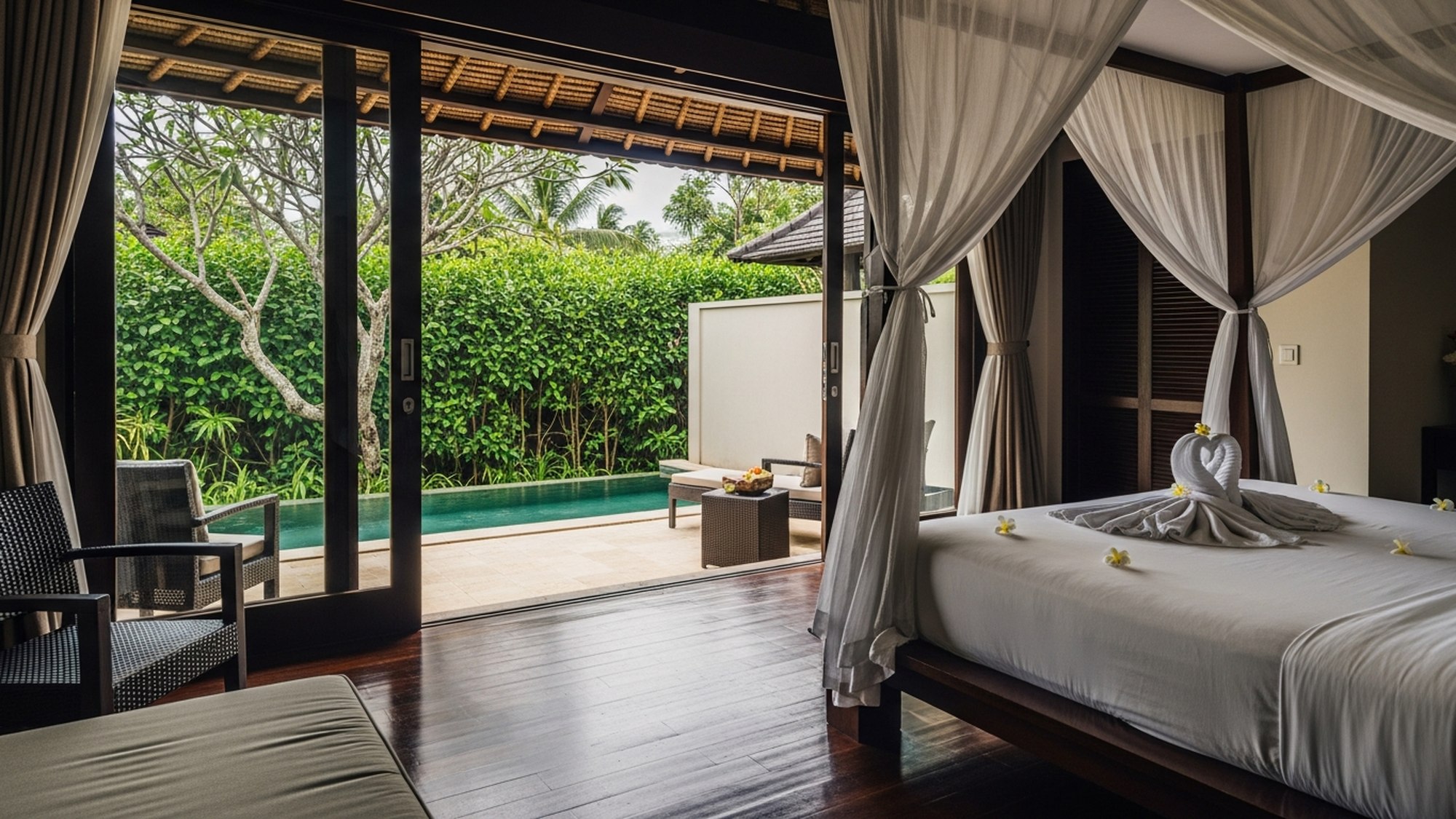
The Amenity Arms Race Is Out of Control, And It's Burning Hosts
The siren call of the next big feature — another hot tub, a bigger arcade, a home theater — is luring hosts into a financial trap. When does adding amenities stop paying off, and how can you actually compete without goin
The short-term rental industry built itself on the promise of unique experiences. Forget sterile hotels; guests wanted character, a sense of place, and often, amenities that were simply out of reach at a traditional lodge. For years, this was the golden ticket: add a hot tub, install a fire pit, maybe deck out a game room, and watch your occupancy and nightly rates climb. We saw it, we celebrated it, we evangelized it. But somewhere along the line, the drive for differentiation turned into a desperate sprint, and now, the amenity arms race isn't just out of control – it's actively driving hosts into financial ruin.
Hosts are dumping tens, even hundreds of thousands of dollars into properties, convinced that another Instagrammable feature is the key to out-competing the guy down the street. The thinking is simple: if a hot tub gets you an extra $50 a night, then a hot tub *and* a home theater *and* a massive arcade *and* a resort-style pool must get you $200 more, right? Wrong. Dead wrong. What started as a smart strategy to capture market share has metastasized into an unsustainable cycle of spending, fueled by FOMO and a fundamental misunderstanding of diminishing returns.
This isn't about shaming innovation. It's about pulling back the curtain on a brutal economic reality that many hosts are only just beginning to grasp: there's a point where every additional dollar spent on an amenity yields less than a dollar in increased revenue. In fact, it often costs you more than it ever brings in. The question isn't whether amenities matter; it's when they stop mattering, and how to survive – and thrive – when everyone else is still busy digging their own financial graves with a new putting green.
The Lure of the Lush Life (and the Ledger)
Rewind a few years. The STR market was still finding its footing, particularly outside major urban centers. Early adopters in vacation markets discovered a simple truth: offer something a hotel can't, and people will pay. A private pool in Orlando, a cozy fireplace in a mountain cabin, a sprawling deck overlooking a lake – these were genuine differentiators. They commanded higher average daily rates (ADR) and boasted enviable occupancy rates. The math was clear, and it was glorious: invest in a key amenity, watch your listing stand out, and enjoy the robust returns.
Platforms like Airbnb and Vrbo, in their relentless push to expand offerings and attract diverse travelers, actively encouraged this trend. Their search filters made it easy for guests to find properties with specific features. "Looking for a place with a hot tub? Click here." "Need a home with a game room? We've got you covered." This algorithmic push further cemented the idea that amenities were not just a perk, but a necessity for visibility and bookings. Hosts, seeing their competitors add features and gain traction, felt the pressure. It was a virtuous cycle, at least initially, where investment seemed to directly correlate with success.
The early market was hungry for novelty. Guests were delighted by anything beyond the basics. A simple grill, a well-stocked kitchen, decent Wi-Fi – these were often enough to earn rave reviews. But as the market matured and more hosts piled in, the bar began to rise. What was once a luxury became an expectation. Then, what was an expectation became the minimum entry requirement. This creep, subtle at first, accelerated into a full-blown sprint as social media amplified the "wow factor" of increasingly elaborate setups. Suddenly, a hot tub wasn't enough; it had to be a *brand new* hot tub, with mood lighting and a Bluetooth speaker. A game room wasn't enough; it needed a full arcade with vintage machines, a pool table, and a dedicated media wall. The perceived cost of entry, and the pressure to continually upgrade, began to outpace the actual market value.
The Escalation Engine: How We Got Here
The amenity arms race didn't happen overnight. It's the byproduct of several interlocking forces, all pushing hosts toward ever-greater capital expenditures. First, there's the sheer volume of listings. In many popular destinations, the number of STRs has exploded. When every other property offers "basic comforts," you feel compelled to offer something more. This is the classic supply-and-demand squeeze, where increased supply without a proportionate increase in *unique* demand drives down effective pricing power.
Second, platform algorithms, while initially helpful, contribute to the problem. If a guest filters for "pool" and there are 500 listings, the guest still needs a way to choose. What rises to the top? Often, it's listings with higher review scores, which are often correlated with properties that offer more amenities and a better overall experience. But it's also about perceived value. A listing with a long list of features can sometimes appear more "valuable" in a quick scan, even if those features aren't the primary drivers for a specific guest's booking.
Third, guest expectations have shifted dramatically. Social media is a powerful, double-edged sword. Guests scroll through endless feeds of influencer-worthy vacation homes, complete with private water parks, professional-grade kitchens, and themed bedrooms. This sets an unrealistic bar. Guests start to believe these extravagant setups are the norm, not the exception. They see a property with "just" a hot tub and think, "Eh, I've seen better." The pressure to create a shareable, Instagrammable moment becomes a driving force for hosts, often overshadowing the practicalities of profitability.
Finally, and perhaps most insidiously, there's the host-to-host FOMO. Hosts talk. They compare notes in online forums, in local meetups, and on social media. When one host posts about their new movie theater addition and boasts about a bump in bookings, it creates a ripple effect. Other hosts, fearing they'll be left behind, start drawing up plans for their own costly upgrades. It's a race where the finish line keeps moving, and the only certainty is that your wallet gets lighter with every lap.
The Hard Math of Hot Tubs and Home Theaters
Let's talk brass tacks. Every amenity comes with a price tag, and it's rarely just the sticker price. Take a hot tub, the quintessential STR amenity. Initial purchase and installation? Easily $5,000 to $20,000 depending on size and features. That's just the start. Then you have the ongoing operational expenses: electricity for heating, chemicals for maintenance, filters, covers that need replacing every few years, and professional servicing. A typical hot tub can add hundreds of dollars a month to your utility bill and require dedicated weekly or bi-weekly maintenance. Accidents happen too: a broken jet, a faulty pump, guest misuse – all mean repair costs and potential downtime.
Consider a home theater or a full arcade. The initial investment for high-end audio-visual equipment, comfortable seating, and proper soundproofing can easily exceed $10,000 to $50,000. Arcade machines, while fun, are often vintage and notoriously finicky, demanding specialized repair skills and parts. They consume significant power. They also require constant supervision for wear and tear, and inevitably, some machines will be out of order at any given time, leading to guest disappointment and negative reviews.
The real question isn't just "How much does it cost?" but "What is the return on investment (ROI)?" A common mistake is to simply look at the perceived bump in ADR. If your hot tub costs $10,000 and it allows you to charge an extra $50 a night, you might think you'll recoup the cost in 200 nights. But that ignores all the ongoing expenses, the lost opportunity cost of that capital, and the depreciation of the asset. Hot tubs don't last forever. Electronics fail. Arcade machines break down. These assets have a finite lifespan and will need repair or replacement, often sooner than you expect given the heavy use by multiple guests.
Many hosts also forget about increased insurance premiums for certain amenities, like pools or trampolines, which can significantly raise your operational overhead. Permitting costs for new construction or substantial additions can be prohibitive in some jurisdictions. And the biggest silent killer? The added complexity to your cleaning crew's job. Cleaning a standard home is one thing; cleaning and sanitizing a hot tub, tidying a sprawling game room, or managing multiple special features adds significant time and effort, which either translates into higher cleaning fees (potentially deterring guests) or cuts into your cleaning company's margin, leading to less diligent work.
When the Margins Melt: Diminishing Returns and Market Saturation
This is the critical juncture. In economics, the law of diminishing returns states that adding more of a factor of production (in this case, amenities) beyond a certain point will result in smaller increases in output. For STRs, it means there's a ceiling to how much more you can charge, or how many more bookings you can get, by continually adding features.
Imagine a market where only 10% of properties have a hot tub. Adding one makes your listing stand out dramatically. You can charge a premium. But what happens when 80% of properties have a hot tub? It ceases to be a differentiator and becomes a baseline expectation. Now, to stand out, you might add a home theater. That gets you a bump, but a smaller one than the hot tub did, because some guests simply don't care about a home theater, or only care a little. Then you add an arcade. Maybe that gets you another small bump, but now you've spent three times the capital for a diminishing return on each subsequent investment.
Market saturation accelerates this trend. In oversaturated markets, even properties with extensive amenities struggle to maintain high occupancy or premium ADRs because there are simply too many similar options. Guests have their pick, and unless your property offers something truly unique and highly sought after, they'll often opt for a slightly cheaper, less amenity-rich option that still meets their core needs. The "me-too" phenomenon drives everyone's costs up without necessarily increasing profitability.
Consider a destination primarily catering to couples looking for a romantic getaway. While a hot tub might be appreciated, a sprawling arcade or a multi-level bunk room is entirely superfluous. Those amenities are expensive to install and maintain, yet they offer zero value to that specific guest demographic. In such a scenario, the host has sunk significant capital into features that don't generate revenue, effectively melting their margins.
The Unseen Costs: Headaches, Housekeeping, and Hype Fatigue
Beyond the direct financial outlays, amenities carry a host of hidden costs that chip away at a host's sanity and bottom line. Every added feature is another point of failure. A hot tub breaks, the game console freezes, the movie projector bulb burns out. These aren't just minor inconveniences; they're potential crises. A guest arrives, excited to use a promised amenity, only to find it out of order. That's a guaranteed bad review, a refund request, or at the very least, a frustrated customer service call that costs you time and potentially future bookings.
Managing maintenance for a complex property is a full-time job in itself. You need a reliable network of plumbers, electricians, handymen, and specialized technicians. Finding these people, coordinating their schedules between guest turnovers, and paying their rates adds layers of complexity and cost that a simpler property avoids. This operational drag often goes uncalculated when hosts dream up their next big amenity project.
Cleaning is another massive unseen cost. A property with a simple layout and minimal features can be turned over efficiently. Add a fully-equipped gym, a sprawling indoor play area, or multiple themed bedrooms, and your cleaning time can easily double or triple. Your cleaning crew will either charge you more, or they'll rush the job, leading to missed details and lower guest satisfaction. This friction point is a constant source of stress for hosts and property managers alike. The "invisible work" of maintaining high-end amenities is substantial.
Then there's the liability. More amenities often mean more risk. A trampoline, a private dock, a sophisticated home automation system – each of these can introduce new risks for guest injury or property damage. While insurance helps, the hassle of claims, potential lawsuits, and the impact on your insurance premiums are real considerations. Some cities are also getting stricter with permits for certain amenities, especially pools and hot tubs, adding bureaucratic hurdles and potential fines.
The amenity arms race isn't just out of control; it's actively driving hosts into financial ruin.
Finally, there's a phenomenon we're calling "hype fatigue." Guests, bombarded with over-the-top listings, are becoming more discerning. They're starting to look past the superficial "wow" and ask whether the experience truly aligns with their needs. A property can have every amenity under the sun, but if the basics aren't perfect – if the beds are uncomfortable, the Wi-Fi is spotty, or the communication is poor – all those expensive features become irrelevant. The core experience still reigns supreme, and often, hosts get so caught up in the amenity race that they neglect the foundational elements of a great stay.
Beating the Race by Not Running: The Contrarian Playbook
So, how do you compete when everyone else is building a miniature theme park? You stop running. You pivot. You focus on strategies that deliver genuine value without necessarily breaking the bank. This isn't about being basic; it's about being strategic, intentional, and guest-centric in a way that truly differentiates.
- Niche Down, Hard: Instead of trying to appeal to everyone with every amenity, identify a specific guest demographic and cater to them perfectly. Are you near a national park? Focus on hikers and nature lovers with gear storage, local trail maps, and robust outdoor seating. Near a wine region? Emphasize a gourmet kitchen, wine fridge, and comfortable spaces for tastings. A property designed specifically for remote workers might prioritize high-speed internet, dedicated workspaces, and ergonomic chairs over a game room. By targeting a smaller, more specific audience, you can become the undisputed best choice for *them*, even without a massive amenity list.
- Experience Over Extras: What kind of experience are you truly selling? Instead of just providing a hot tub, can you offer a curated "romantic spa night" package with bath bombs, candles, and robes? Instead of just a grill, provide a "BBQ master kit" with specialty rubs and tools. Partner with local businesses for unique guest perks – a discount at a nearby restaurant, a guided tour, or a complimentary treat from a local bakery. These "soft amenities" enhance the guest experience significantly, often at a fraction of the cost of hard amenities.
- Operational Excellence: This is the unsexy but critical differentiator. Flawless cleanliness, seamless check-in/check-out, proactive communication, and prompt resolution of issues create a sense of trust and professionalism that guests remember and review positively. A sparkling clean, well-maintained, and comfortable property with basic amenities will almost always outperform a lavish, slightly dirty, or poorly managed one. Invest in professional cleaning, robust systems, and responsive guest support. These are amenities of service, and they are priceless.
- Hyper-Local Curation: Become the local expert. Provide a detailed, personalized digital guidebook with recommendations for restaurants, activities, hidden gems, and local tips that only a resident would know. This doesn't cost much but adds immense value. Guests crave authenticity and connection to the place they're visiting. Your local knowledge is a free, powerful amenity.
- Design and Aesthetics: Good design doesn't necessarily mean expensive. Thoughtful decor, a consistent theme, comfortable furnishings, and excellent lighting can transform a space without requiring major structural changes or high-cost installations. Focus on creating inviting, aesthetically pleasing spaces that photograph well and feel welcoming. Comfort, functionality, and visual appeal are often more important than sheer number of features.
- Sustainability and Wellness: As travelers become more conscious, properties that prioritize sustainable practices (energy efficiency, waste reduction, local sourcing) or wellness features (yoga mats, healthy cooking options, quiet zones) can attract a growing segment of the market. These can often be implemented without massive capital outlay and resonate deeply with certain guests.
The STR NEWS verdict: A Second Look
Let's double down. The industry has been conditioned to think that more is always better, but that's a lie bought and sold by those who profit from the upgrades. For the vast majority of hosts, especially those running single or a handful of properties, chasing the amenity dragon is a losing game. You're competing against corporate-backed property managers with deeper pockets and economies of scale. Trying to out-spend them on features is a fool's errand. The smart play is to out-think them. Understand your unique value proposition, not just what your property *has*, but what experience it *provides*. The future of profitable hosting lies in precision and purpose, not just piling on.
The Next Frontier: Experience, Not Excess
The market is undeniably shifting. Guests are increasingly looking for more than just a place to sleep; they're seeking authentic connections, memorable moments, and seamless stays. The era of simply adding a hot tub and calling it a day is over. But so too is the era where a sheer volume of amenities guaranteed success. The new frontier is about delivering a holistic, high-quality experience that resonates with your target guest, and doing so efficiently.
This means a renewed focus on the basics done exceptionally well. Impeccable cleanliness is non-negotiable. Beds must be comfortable, linens fresh, and towels plush. Wi-Fi must be fast and reliable. Communication must be clear, timely, and helpful. These are the "unsexy" amenities that truly drive guest satisfaction and repeat bookings, yet they often get overlooked in the pursuit of the next big "wow" feature.
Professionalization of the industry also plays a role. As more large property management companies enter the space, they bring a standardized level of quality and service. While they might outfit properties with certain amenities, their strength often lies in operational efficiency and consistent guest experiences. Individual hosts need to learn from this, not by trying to mimic their scale of amenities, but by adopting their rigor in managing the core guest journey.
Ultimately, the most successful hosts in the coming years will be those who understand the difference between perceived value and actual value. They will invest in features that genuinely enhance the guest experience for their specific niche, rather than mindlessly accumulating expensive items in a desperate bid for attention. They will prioritize comfort, cleanliness, and thoughtful touches over sheer volume of installations. They will treat their STRs as businesses, with clear ROI calculations for every dollar spent, rather than as personal playgrounds for their latest decorating whim.
The bottom line for hosts
Stop the bleeding. Before you spend another dime on a new amenity, do your homework. Analyze your specific market. Who are your ideal guests? What do they truly care about? Is it proximity to attractions, unique local experiences, a quiet retreat, or a family-friendly setup? What is the *actual* demand for the amenity you're considering, and how many other properties in your direct competitive set already offer it? Can you genuinely justify the CAPEX and OPEX with a realistic increase in ADR or occupancy that will pay back within a reasonable timeframe, accounting for depreciation and maintenance?
Focus on foundational excellence: pristine cleanliness, exceptional comfort, robust connectivity, and responsive communication. These are the non-negotiable "amenities" that every guest expects, and they often deliver far more long-term value than any expensive add-on. Curate an experience, don't just collect features. Build your brand around what makes your property genuinely special, whether that's its design, its location, or the personalized service you provide. The amenity arms race is a trap. The hosts who recognize this, and pivot to smarter, more sustainable strategies, are the ones who will ultimately win.
About this piece
An original expert-analysis column by the STR NEWS desk. Figures are illustrative of how the market behaves; confirm specifics for your own market before you act.

Read the desk every morning.
The day's crackdowns and platform moves, the money, the design and the stays going viral, plus the desk's verdict, in one short email every morning.