
The Host-Guest Claim War: Lies, Losses, and The Fight for Fair Play
From guests faking falls to hosts inventing damage, the resolution center is a digital battlefield. Here's how honest operators weaponize evidence to win.
The dirty secret of the short-term rental industry isn’t the late-night parties or the grumpy neighbors. It’s the war. A silent, grinding conflict fought daily in the digital trenches of resolution centers, where guests accuse hosts of negligence and hosts accuse guests of wanton destruction. This isn’t about honest mistakes or accidents. This is about calculated fraud, played from both sides of the check-in desk, and it’s costing the industry millions while eroding the very trust platforms claim to protect.
Every host has a story. The guest who claimed a broken leg from a loose stair that inspection reports showed was solid. The missing designer pillow that reappeared in a photo on the guest’s social media. Conversely, every traveler who uses short-term rentals has heard or experienced it: the host who blamed them for existing appliance damage, the inflated cleaning fee for a smudge, or the sudden claim of a "stolen" remote that was simply misplaced. These aren't isolated incidents. They are symptoms of a systemic flaw, a consequence of an industry built on rapid transactions and the inherently asymmetric information between a temporary resident and a property owner.
This is the exposed truth of damage-claim fraud. It’s a high-stakes poker game where the cards are often stacked against the honest operator, and the house — the platform — frequently plays arbiter with a bias towards expediency over justice. Understanding the play, the tells, and the rules of engagement is not just good practice; it’s survival.
The Silent War for Your Bottom Line
The short-term rental market thrives on volume and perception. Low vacancy rates and high average daily rates (ADRs) are the lifeblood for property managers and individual hosts alike. But beneath the polished listing photos and glowing reviews, a constant battle rages over minor and major disputes. Each claim, whether legitimate or fraudulent, eats into profit margins, saps precious time, and, perhaps most dangerously, chips away at a host’s review score and platform standing. The stakes are RevPAR, occupancy, and, ultimately, the viability of the business.
Platforms like Airbnb and Vrbo built their empires on trust. They promised a safe, reliable way for strangers to exchange keys and cash, protected by guarantees and a robust resolution process. For many years, this system worked well enough. Minor damages were handled, reasonable disputes mediated. But as the industry scaled, so too did the incentives for bad actors. The anonymity of a temporary stay, the perceived wealth of property owners, and the platforms’ often-opaque resolution mechanisms created fertile ground for opportunistic fraud. Guests saw a potential payout for a "slip and fall" or a way to get a free vacation, while some hosts saw an opportunity to offload maintenance costs onto an unsuspecting visitor.
The financial impact is substantial. A single fraudulent claim, even if successfully fought, can cost a host dozens of hours in documentation, communication, and emotional stress. If paid, it’s a direct hit to the bottom line, easily wiping out the profit from several bookings. For property managers overseeing dozens or hundreds of units, these claims represent a significant operating expense, requiring dedicated staff just to manage disputes. The platforms themselves are also caught in the middle, balancing their brand reputation, the cost of processing claims, and their legal liabilities. This equilibrium is precarious, and often, the party with the most compelling narrative, or the most persistent approach, wins.
The Guest's Ploy: Injury and Theft Fantasies
Guests engaging in fraudulent claims often target two primary areas: personal injury and property damage/theft. Personal injury claims, especially those involving alleged slip-and-falls, are particularly insidious because they leverage the host’s potential liability and the platform’s desire to avoid protracted legal battles and negative press. A guest might claim to have slipped on a wet floor, tripped on a rug, or fallen down stairs, sustaining an injury that requires medical attention. The alleged damages often include medical bills, lost wages, and pain and suffering. The critical element here is proving negligence on the host’s part, which can be incredibly difficult to disprove if the property isn't meticulously maintained and documented.
Another common guest tactic involves claiming the property was unsafe, unhygienic, or not as advertised, demanding a full refund or significant compensation. These claims are often accompanied by selectively edited photos or videos, or exaggerated descriptions of minor issues. The goal is to leverage the platform’s refund policies, which often prioritize guest satisfaction and can be very generous when a guest claims an experience fell far short of expectations. A guest might allege a severe insect infestation, a non-functional appliance, or a pervasive odor, even if the property was pristine upon their arrival.
The most brazen guest frauds involve outright theft or fabricated damage. A guest might report expensive electronics missing, or claim significant damage to furniture that was in perfect condition. They know that proving a negative – that an item wasn’t stolen, or that damage didn't occur during their stay – relies heavily on the host’s pre-existing documentation. Without ironclad proof of condition before check-in and after check-out, the host is left scrambling, often forced to settle or absorb the loss. These claims are particularly frustrating because they are not just about money; they are a direct assault on the host’s integrity and trust.
The Host's Scam: Damage, Disappearing Acts, and Inflated Bills
The resolution-center war isn’t exclusive to guests. A segment of hosts, unfortunately, also engage in fraudulent practices, leveraging the system to their advantage. The most common host fraud involves inventing or exaggerating damage, often attempting to charge guests for pre-existing wear and tear or minor blemishes. A host might claim a scratch on a table or a scuff on a wall was caused by a recent guest, even if it was there for months. This is often an attempt to cover routine maintenance costs or upgrade items on the guest’s dime. They might present inflated repair quotes or replacement costs, hoping the guest will pay a smaller amount just to make the problem disappear.
Another variation involves claiming items are missing or stolen. A host might assert that decorative items, kitchenware, or even towels have disappeared, attributing the loss to the most recent guest. Without a meticulously detailed inventory and proof of its presence before the guest’s arrival, such claims can be difficult for a guest to refute. The host relies on the guest’s memory and lack of counter-evidence, often leading to a pressured settlement. This behavior erodes guest trust and contributes to the overall skepticism that permeates the resolution process.
Perhaps more insidious is the host who intentionally delays reporting damage or issues, or attempts to blame a guest for problems that are clearly not guest-related, such as a leaky roof or a malfunctioning HVAC system. They might present a photo of a leak and claim a guest left a window open during a storm, despite clear evidence to the contrary. These tactics are designed to extract extra money, often in the form of inflated cleaning fees or bogus repair charges, from guests who are typically far from the property and unable to immediately inspect or defend themselves. These hosts often operate on the fringes, sometimes using burner accounts or cycling through properties to avoid detection, but their actions impact the reputation of all hosts.
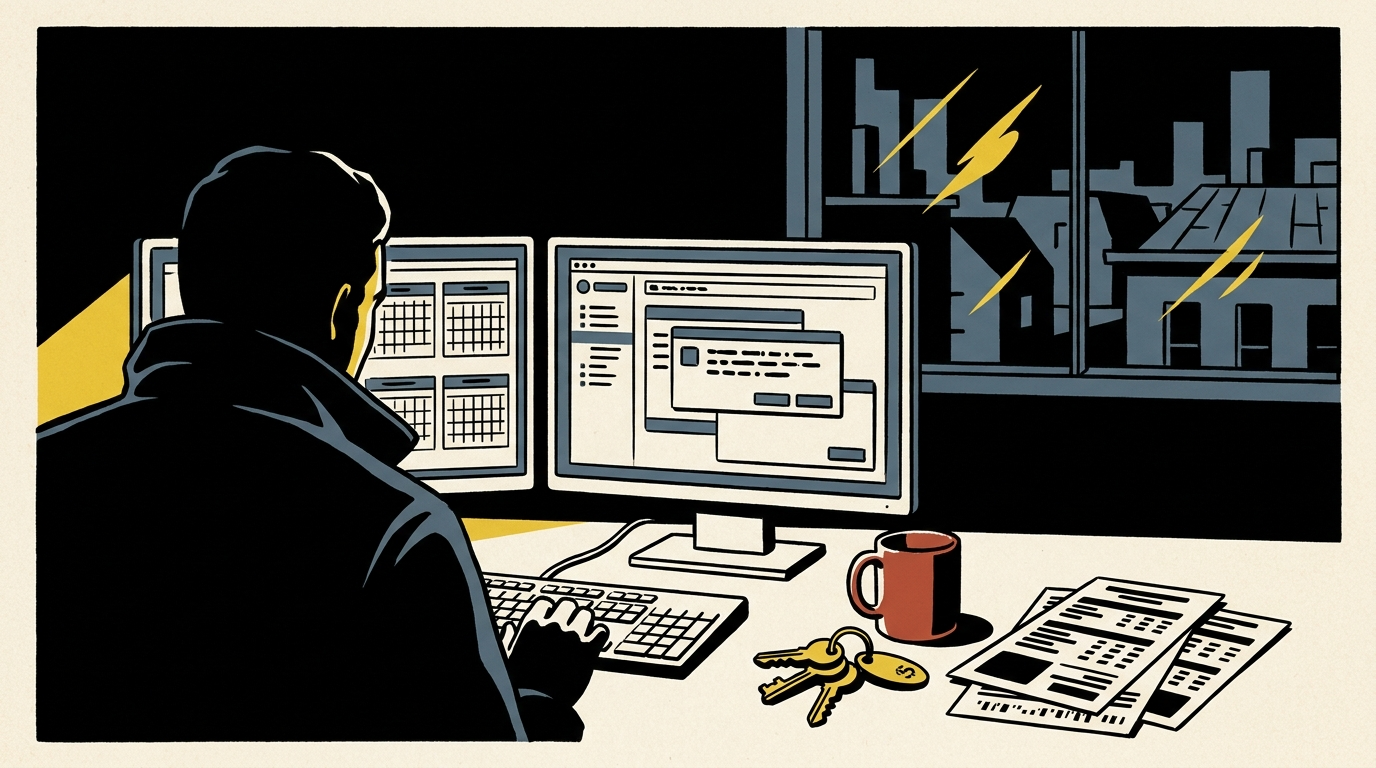
The resolution center is a digital battlefield where the party with the most compelling narrative, or the most persistent approach, often wins.
The Resolution Center's Cold Calculus
The resolution centers of major platforms like Airbnb and Vrbo are the battlegrounds where these claims are fought. They are designed to be efficient, but efficiency often comes at the cost of deep investigation. The process typically involves a host or guest initiating a claim, submitting evidence (photos, messages, receipts), and then the other party responding. A platform representative, often a tier-one agent, reviews the submitted material and attempts to mediate or make a ruling.
The primary challenge is the sheer volume of claims. Human agents are under pressure to resolve cases quickly, and often lack the time or resources to conduct extensive, independent investigations. This means the quality of evidence submitted becomes paramount. Vague photos, unsubstantiated accusations, or emotionally charged arguments rarely sway a decision. What works is clear, timestamped, verifiable evidence.
Platforms also operate under a cold calculus of risk and reputation. For guests, negative experiences can lead to chargebacks or public relations nightmares. For hosts, persistent issues can lead to account deactivation. The platforms want to keep both sides engaged but will often lean towards whichever party has a stronger position in the court of public opinion, or whichever resolution path seems least likely to result in further escalation. This can mean a bias towards guest refunds in certain situations, or a default to splitting costs when evidence is ambiguous. The system isn't always about absolute justice; it's about managing risk and maintaining a semblance of fairness in a high-volume, low-margin operation.
The High Stakes of Platform Guarantees
Platform guarantees, such as Airbnb’s AirCover or Vrbo’s Liability Insurance, are often touted as safety nets for hosts. They offer coverage for property damage and sometimes even liability claims. However, these guarantees come with significant caveats. They are not traditional insurance policies, and their terms and conditions are often complex, requiring specific procedures to activate coverage.
For instance, AirCover has exclusions and claim limits. Hosts must report damage within a strict timeframe, provide extensive documentation, and often exhaust all attempts to resolve with the guest directly before the guarantee kicks in. Even then, there are deductibles, and certain types of damage or items might not be covered. Personal injury claims, while potentially covered by a separate liability protection, often involve a much higher bar for proof and typically require the guest to engage directly with the platform’s insurance provider, not just the resolution center.
These guarantees are valuable, but they are not a blank check. They are a last resort, and platforms often prefer that hosts resolve minor issues directly with guests or through their own homeowner’s insurance. This puts the onus back on the host to have robust personal insurance policies that specifically cover short-term rental activities. Relying solely on platform guarantees for every incident is a recipe for frustration and financial exposure.
The Unassailable Defense: Documentation and Diligence
In the resolution-center war, evidence is your weapon, and documentation is your armor. Honest operators protect themselves by building an unassailable record of their property's condition and every interaction with guests. This isn't just good practice; it's the only way to effectively counter fraudulent claims and ensure legitimate ones are fairly processed.
The cornerstone of this defense is comprehensive photo and video documentation. Before every check-in, perform a detailed video walkthrough of the entire property, focusing on high-value items, areas prone to damage, and any existing wear and tear. Narrate the video, pointing out the date and time. Take high-resolution photos of every room, every appliance, every piece of furniture. Use a cloud storage service that timestamps uploads, ensuring an irrefutable record of the property's condition immediately prior to the guest's arrival. This visual evidence makes it nearly impossible for a guest to claim pre-existing damage was new, or for a host to falsely accuse a guest of damage that was already present.
Beyond visuals, maintain meticulous records of all communications. Use the platform’s messaging system for all interactions, as these are often admissible as evidence. Keep receipts for all purchases, repairs, and professional cleaning services. Document maintenance schedules, safety inspections, and any repairs made to the property. If a guest reports an issue, respond promptly and professionally, logging all actions taken. For personal injury claims, ensure your property meets all safety codes, conduct regular safety checks, and keep records of those inspections. If a guest claims a fall, immediately check the area, take photos, and review any security camera footage.
Guest vetting is another critical layer of defense. While platforms limit the information available, review past guest reviews carefully. Look for patterns of complaints, cancelled bookings, or unusual communication. While not foolproof, this can help identify potentially problematic guests before they even step through your door. Finally, clear house rules, prominently displayed and agreed to by the guest, establish expectations and provide a contractual basis for damage claims.
When to Fight, and When to Fold
Not every claim is worth fighting to the bitter end. This is a business, and sometimes the cost of fighting – in terms of time, energy, and potential negative reviews – outweighs the financial loss of a smaller claim. The decision of when to fight and when to fold requires a clear-eyed assessment of the situation.
For small, ambiguous claims – say, a minor scuff mark on a wall or a missing inexpensive item – it might be more strategic to absorb the cost. Engaging in a protracted dispute over a $20 item could lead to a negative review, which has a far greater long-term impact on your occupancy and ADR than the replacement cost. Hosts must weigh the immediate financial loss against the potential damage to their reputation and the effort required for a full-scale battle.
However, for significant damage, clear theft, or egregious personal injury claims, fighting is essential. This is where your meticulous documentation becomes invaluable. Present your evidence calmly, factually, and comprehensively to the platform’s resolution team. If the initial agent doesn’t rule in your favor, politely request to escalate the case. Be prepared to be persistent. If a fraudulent claim involves a significant amount, or if you have undeniable evidence of criminal activity (such as theft caught on external security cameras), involve local law enforcement. File a police report. This adds a layer of official documentation that platforms often take seriously.
Understand the chargeback process. For guests, if a host attempts to charge them for invented damage, they can dispute the charge with their credit card company. This is a powerful tool, but it should be used judiciously, as platforms can view it negatively. For hosts, if a guest initiates a fraudulent chargeback after a legitimate payment for damages, you will need your meticulous documentation to defend against it. This is a complex area, often requiring direct engagement with your payment processor and strong evidential support.
Ultimately, the goal is to protect your business. This means not being a pushover for fraudulent claims, but also understanding that not every battle is worth winning at all costs. Develop a clear policy for how you will handle different types of claims, and stick to it. This consistency will save you time and provide a framework for navigating these often-stressful situations.
The bottom line for hosts
Damage-claim fraud is an unfortunate reality of the short-term rental business, an ugly underbelly that can trip up even the most diligent operator. But it is not an insurmountable threat. The difference between being burned and coming out ahead lies in preparation, diligence, and a clear understanding of the rules of engagement. Document everything. Assume every guest is a potential fraudster, and every platform resolution agent is a neutral party who needs to be convinced with hard facts, not emotional appeals.
Invest in good insurance, both for your property and for your short-term rental operations. Do not rely solely on platform guarantees. Understand their limitations, and ensure your personal policies fill the gaps. Vet your guests as thoroughly as the platforms allow, and communicate clearly and professionally at all times. When a claim arises, assess it coldly: Is the damage significant? Is the evidence strong? Is it worth fighting for, or is it a strategic retreat? Your time and reputation are valuable assets; guard them fiercely.
The industry is maturing, and with that comes a greater need for professionalism and robust operational procedures. Those who treat their short-term rental operation as a serious business, armed with the right tools and strategies, will be the ones who not only survive the resolution-center wars but thrive beyond them. The stakes are too high for anything less.
About this piece
An original expert-analysis column by the STR NEWS desk. Figures are illustrative of how the market behaves; confirm specifics for your own market before you act.




Read the desk every morning.
The day's crackdowns and platform moves, the money, the design and the stays going viral, plus the desk's verdict, in one short email every morning.