
Camera Inside? You Just Threw Your Entire Business Into the Fire
STR NEWS pulls no punches: The 'security camera' in your rental could cost you everything. This is the hard truth on surveillance, what's allowed, and the line you absolutely cannot cross.
A camera inside your short-term rental is not a security measure. It is a ticking time bomb. It is a direct route to financial ruin, legal peril, and the total destruction of your hosting operation. This isn't a hyperbolic warning from a well-meaning but naive industry observer. This is the cold, hard reality of how the business truly works, how platforms operate, and how the law views privacy.
For too long, some hosts have played fast and loose with the idea of 'monitoring' their properties, driven by legitimate fears of damage or unauthorized parties. Those fears are valid. The solution, however, is not to violate a guest's fundamental right to privacy, nor to ignore the clear, unambiguous rules set by the very platforms that fuel this industry. The consequences for doing so are not minor inconveniences; they are existential threats to your livelihood.
We're talking about more than just a bad review. We're talking about delisting, fines, civil lawsuits, and in some jurisdictions, criminal charges. Every dollar you've invested, every hour you've spent building your brand, every booking you've ever secured – all of it can vanish in an instant because of a poorly placed lens. This column lays out precisely why that camera is a liability, not an asset, and where the unforgiving lines are drawn.
The Invisible Eye: A Host's Worst Instinct
The temptation is understandable. The short-term rental business, at its core, involves entrusting one of your most valuable assets – your property – to strangers. Stories of trashed homes, massive unauthorized parties, and guests absconding with everything but the kitchen sink are not urban legends; they are painful realities for some hosts. This environment fosters a natural desire for control, for oversight, for knowing what's happening behind closed doors. For many, that desire manifests as a quiet voice whispering: "just put a camera inside."
This instinct, while born of genuine concern for property protection and financial security, is fundamentally misguided when it leads to indoor surveillance. It represents a profound misunderstanding of the guest-host relationship, the legal landscape, and the operational directives of the major booking platforms. The initial cost of a discreet camera pales in comparison to the multi-layered financial and reputational damage it can inflict. A host might calculate the cost of a replacement TV after a party, but rarely do they factor in the potential six-figure legal defense or the complete loss of their income stream when they consider installing a hidden camera.
The core problem isn't just the device itself, but the intent behind it: to monitor guest activity within a space where they have a reasonable expectation of privacy. This isn't a retail store or a public park. This is, for the duration of their stay, the guest's temporary home. The very essence of hospitality and trust, which underpins the entire STR industry, is shattered the moment a guest discovers they are under surveillance inside their private accommodations. The psychological impact on a guest is immediate and severe, leading to feelings of violation, anger, and betrayal – emotions that quickly translate into devastating public exposure for the host.
Platform Edict: The Unwavering Rule
Let's be unequivocally clear: the major short-term rental platforms have a hard, explicit, and non-negotiable stance against indoor surveillance. This isn't a nuanced policy with loopholes; it's a bright-line rule. Airbnb, for instance, has long prohibited security cameras and recording devices in private spaces like bedrooms and bathrooms. More recently, in early 2024, Airbnb went further, banning ALL indoor cameras, regardless of location or disclosure. This change eliminated any ambiguity that might have existed, closing off common areas like living rooms or hallways where some hosts previously believed cameras were permissible if disclosed.
Vrbo, while having slightly different phrasing, operates under the same fundamental principle. Their policy states that devices like cameras must not be in or view areas that guests would reasonably consider private, such as bedrooms, bathrooms, or sleeping areas. Even in common areas, Vrbo typically requires prominent disclosure prior to booking. The intent behind both platforms' policies is identical: to safeguard guest privacy and foster an environment of trust. They understand that their entire business model depends on guests feeling safe and secure in the properties listed on their sites.
These policies are not arbitrary. They are the result of years of dealing with guest complaints, media backlash, and the very real legal risks associated with facilitating surveillance. When a guest reports an undisclosed or improperly placed indoor camera, the platform's response is swift and severe. Delisting is common, often permanent. Funds can be withheld. And crucially, the platform may share the host's information with law enforcement or legal counsel if a violation rises to a criminal or civil offense. For a host whose entire booking pipeline depends on these platforms, a delisting is a death sentence for their business, an immediate cessation of all income from that property, and potentially, an entire portfolio.
Beyond the Platforms: The Iron Fist of the Law
While platform policy is certainly a critical factor, it's merely the first layer of defense against indoor surveillance. Beneath that, the legal system looms, and its consequences are far more severe than a mere delisting. In the United States, privacy laws vary significantly by state, but certain core principles are widely applicable. The fundamental concept is the 'reasonable expectation of privacy.'
When a guest rents an entire home or a private room, they are afforded a reasonable expectation of privacy within that space. This expectation is highest in areas like bedrooms and bathrooms, but it can extend to living rooms, dining areas, and even entryways within the private confines of the rental. Recording someone without their consent in a place where they have this reasonable expectation of privacy can trigger a cascade of legal problems.
At the federal level, the Electronic Communications Privacy Act (ECPA) generally prohibits the interception of oral communications. While often applied to phone calls, it can also extend to conversations recorded without consent. More directly, many states have specific laws regarding 'eavesdropping' or 'video voyeurism.' These laws often differentiate between 'one-party consent' states and 'two-party consent' states. In a one-party consent state, only one person involved in a conversation needs to consent to its recording. However, this typically applies to participants in the conversation, not to a third party secretly recording others. In a 'two-party consent' state, all parties to a conversation must consent to its recording. Crucially, these laws rarely, if ever, grant a property owner the right to secretly record guests in a private rental space, regardless of consent rules for direct participants.
States like California, Florida, Massachusetts, and Pennsylvania are known for their stringent privacy protections, often requiring two-party consent for recording conversations and having specific statutes against video voyeurism. The penalties for violating these laws are severe. Criminal charges can range from misdemeanors to felonies, carrying potential jail time and substantial fines. Beyond criminal prosecution, hosts face significant civil liability. Guests who discover secret cameras can sue for invasion of privacy, emotional distress, and other torts, potentially winning substantial damages that dwarf any lost income from a party or property damage.
Furthermore, local ordinances in many cities and counties are increasingly addressing short-term rentals, and many explicitly forbid surveillance devices inside properties or mandate strict disclosure requirements that effectively make indoor cameras unfeasible. A host found in violation of these laws isn't just facing platform penalties; they're facing the full weight of the justice system. Ignorance of the law is no defense, and the financial ramifications can be utterly devastating, extending far beyond the initial fines to include legal fees, settlements, and a permanently tarnished reputation.
A camera inside your short-term rental is not a security measure. It is a ticking time bomb.
The Creep Factor: Trust, Transparency, and the Bottom Line
Even if a host were to somehow navigate the legal and platform minefield (which, to be clear, is virtually impossible for indoor cameras), the 'creep factor' alone is enough to torpedo a business. The short-term rental industry thrives on trust. Guests, by and large, are seeking a comfortable, private, and secure experience. The moment that trust is broken – or even perceived to be broken – the entire foundation of the transaction crumbles.
Consider the guest who discovers a camera. Their immediate reaction is not calm understanding. It's shock, violation, and anger. This emotional response translates directly into negative reviews, chargebacks, and potentially, public shaming across social media. A single viral post about a hidden camera can decimate a host's reputation, not just for one property, but for an entire portfolio. In an industry where online reputation is paramount, a smear of this magnitude is incredibly difficult, if not impossible, to scrub away.
Negative reviews mentioning surveillance, even if the camera was technically disclosed (and still against platform rules), will deter future bookings. Potential guests scrolling through listings will immediately bypass any property associated with such a controversy. This directly impacts key performance indicators (KPIs) that hosts live by: occupancy rates plummet, average daily rates (ADR) become unsustainable as the host is forced to discount heavily to attract any bookings, and RevPAR (revenue per available rental) tanks. The long-term damage extends to booking conversions – guests simply won't click 'book' if there's even a whiff of privacy invasion.
The cost of acquiring a new guest is already significant, between platform fees, marketing efforts, and the operational expenses of preparing a unit. Losing guests due to a privacy breach means those acquisition costs were wasted, and the host must expend even more resources trying to rebuild a reputation that may be beyond repair. It's a self-inflicted wound that metastasizes throughout the entire business, making sustained profitability an increasingly distant dream.
Outdoor Monitoring: A Tightrope Walk
So, if indoor cameras are strictly forbidden, what *can* a host do to protect their property and ensure responsible guest behavior? The answer lies in outdoor monitoring and noise detection, but even these come with caveats and strict disclosure requirements.
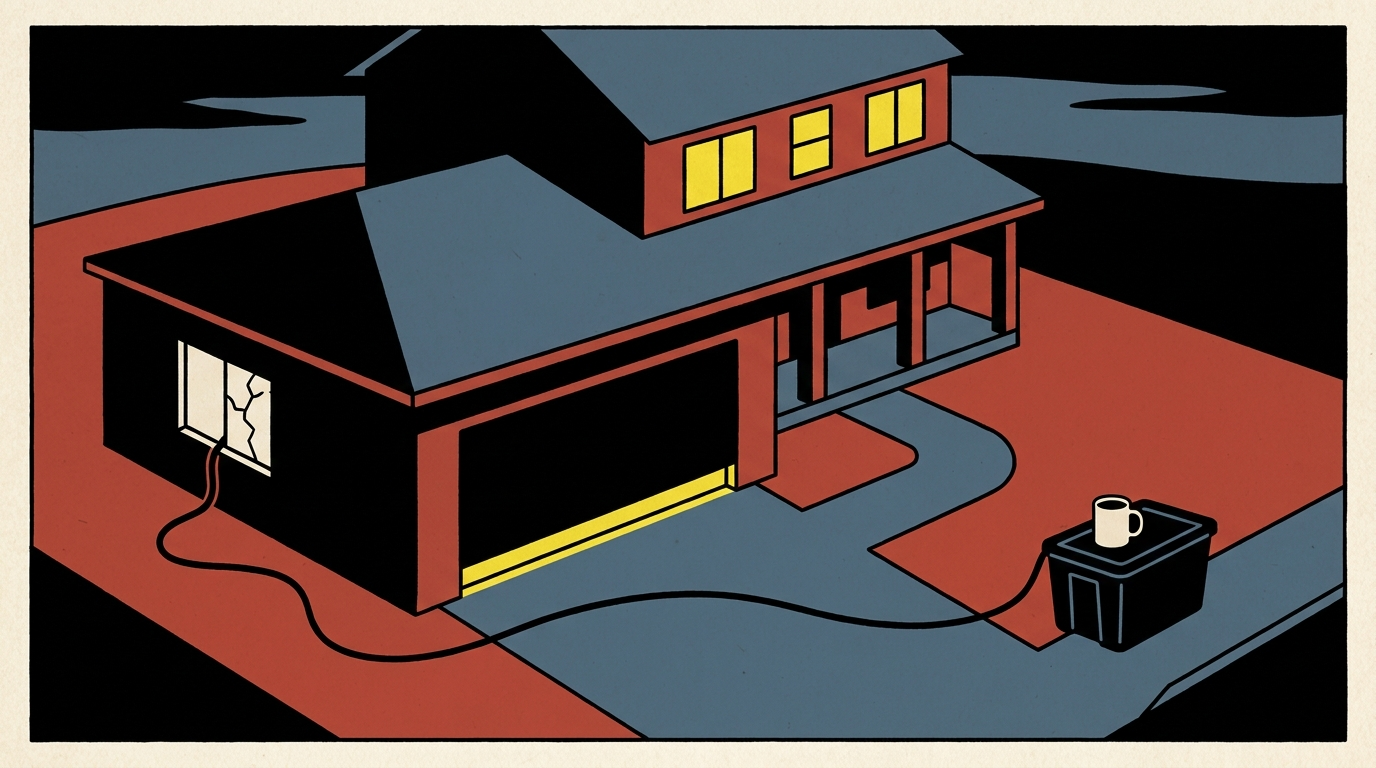
Exterior cameras, such as doorbell cameras or cameras monitoring the driveway, yard, or perimeter of the property, are generally permissible. The key distinction here is the 'reasonable expectation of privacy.' In outdoor, publicly viewable areas, that expectation is significantly diminished. However, hosts must still adhere to several critical guidelines:
- Disclosure is Paramount: Every single outdoor camera must be clearly and prominently disclosed in the listing description. Guests must know about them *before* they book. Vague statements are insufficient. State precisely where the cameras are located (e.g., "Ring doorbell at front entrance," "Camera monitoring driveway").
- No Intrusion into Private Spaces: Outdoor cameras cannot point into areas where guests have a reasonable expectation of privacy, even if those areas are outside. This means no cameras peering into windows, private patios, enclosed yards, or hot tub areas. The camera's field of view must be limited to truly public-facing areas.
- No Audio Recording: While video recording outdoors is often permissible, audio recording can be a legal minefield, especially in two-party consent states. Many hosts opt to disable audio recording on outdoor cameras to avoid potential legal complications.
Noise monitoring devices, like NoiseAware or Minut, represent another layer of permissible security. These devices do not record conversations or identify specific voices; instead, they measure decibel levels to detect excessive noise, which often indicates an unauthorized party. They are designed to respect privacy by only tracking noise metrics, not content. Again, full transparency is crucial. Hosts must disclose the presence of noise monitoring devices in their listing description, explaining their function and ensuring guests understand no conversations are being recorded.
These tools, when used correctly and transparently, offer a legitimate way for hosts to mitigate risks without violating privacy. They allow a host to monitor property security and enforce house rules (like quiet hours or occupancy limits) while respecting the guest's right to privacy within the rental itself. The trade-off is clear: security measures that prioritize transparency and privacy are allowed; those that don't are banned.
The Cost of "Knowing": When Security Becomes Liability
Let's crunch the numbers, not with fabricated specifics, but with a clear understanding of financial flows in this business. A typical host might generate an average of, say, $2,500-$5,000 in monthly gross revenue from a single property, depending on market, seasonality, and property type. An average occupancy rate could be 70-85%, with cleaning fees, platform commissions (typically 3-15% of the booking total), and local occupancy taxes (often 5-15%) eating into that. A host might clear 20-40% profit on gross, after all expenses. That's a significant income stream, often critical to a household budget or portfolio expansion.
Now, consider the financial fallout of an indoor camera violation:
- Immediate Revenue Loss: Delisting by a major platform like Airbnb or Vrbo instantly cuts off 70-90% of a typical host's booking channels. This is not a temporary suspension; it can be permanent. The property sits vacant, generating zero income. Reserves dwindle. Mortgage payments, utilities, and maintenance costs still pile up.
- Legal Defense Costs: If a guest pursues legal action (civil or criminal), legal fees can quickly reach tens of thousands of dollars, or even hundreds of thousands for complex cases. These are costs incurred just to defend oneself, before any potential judgments or settlements.
- Settlements and Damages: If a host is found liable for invasion of privacy, emotional distress, or other related claims, settlements or court-ordered damages can be substantial. These figures easily climb into the five- to six-figure range, wiping out years of profit and potentially forcing the sale of assets.
- Reputational Damage: While harder to quantify immediately, reputational damage has a tangible impact. Future properties, even if unrelated to the initial incident, may struggle to gain traction. The 'brand' of the host, if they operate multiple units or under a management company name, can be permanently poisoned. This translates to lower ADRs, fewer bookings, and a permanently depressed RevPAR across their entire portfolio.
- Permit and License Revocation: Many cities and counties require permits or licenses to operate short-term rentals. A privacy violation can lead to the revocation of these permits, making it illegal to operate the property as an STR, even if the host somehow finds alternative booking channels.
Contrast this with the investment in legitimate security: a doorbell camera for a few hundred dollars, a noise monitor for another few hundred, and clear signage. These are minor, one-time expenses that provide genuine protection without the crushing liability. The cost of "knowing" what's happening inside, through illicit means, is demonstrably and catastrophically higher than any perceived benefit. It's a gamble where the house always wins, and the host loses everything.
The Gray Areas and the Red Flags
Despite the unequivocal rules and severe consequences, some hosts still attempt to find 'gray areas' or loopholes. Let's be clear: these don't exist when it comes to indoor cameras. Any attempt to circumvent the spirit of the privacy regulations is a red flag that will eventually lead to problems.
- "Non-Functional" Cameras: Some hosts argue they have cameras that are not actively recording, or are simply props. This is a distinction without a difference. The mere presence of a camera, functional or not, can create a chilling effect and violate a guest's reasonable expectation of privacy. Platforms and courts are unlikely to differentiate; the intent to deceive or intimidate is often inferred.
- "Disclosed" Indoor Cameras: Before Airbnb's blanket ban, some hosts believed that if they disclosed an indoor camera in a common area, it was acceptable. This was always risky and often led to negative guest experiences and platform intervention. With the new rules, disclosure of an indoor camera now simply highlights a violation.
- Hidden Cameras: This is the most egregious offense and carries the most severe penalties. Attempting to conceal a camera in smoke detectors, alarm clocks, tissue boxes, or other everyday objects immediately elevates the situation from a policy violation to a potentially criminal act of video voyeurism. The legal consequences for this are catastrophic.
- "Security for My Stuff": Hosts sometimes reason that the camera is there to protect their personal belongings or valuable art. While property protection is valid, it does not supersede guest privacy. The solution is to secure valuables in locked closets or safes, or remove them entirely from a short-term rental. It is not to surveil guests.
- "I'm Just Watching for Parties": While unauthorized parties are a legitimate concern, the correct tools are noise monitors and clear house rules, not cameras inside the living space. Proportional responses are key.
The industry's evolution reflects a growing understanding that guest privacy is not a luxury; it's a fundamental expectation that underpins the entire business. Early days of STR might have seen more lenient interpretations, but as the industry matured and gained mainstream acceptance, the need for clear, enforceable privacy standards became paramount. What might have been overlooked a decade ago is now a career-ending blunder. Any host operating today under outdated assumptions about what's permissible is setting themselves up for a fall.
The bottom line for hosts
Your property is not a reality TV set. Your guests are not actors. They are paying customers who, for the duration of their stay, are entitled to privacy within the walls of your rental. The path forward for any responsible, profitable short-term rental host is clear and unambiguous:
First, immediately and physically remove every single camera or recording device from inside your property. Check every room, every nook, every seemingly innocuous object. Do not leave any active or even non-functional indoor camera in place. This is not optional; it is mandatory for continued operation on major platforms and for legal compliance.
Second, implement permissible and transparent outdoor security measures. Install doorbell cameras or exterior cameras that monitor public-facing areas only, such as the front door, driveway, or backyard perimeter. Ensure these cameras do not peer into private guest spaces like windows, private patios, or hot tub areas. Critically, disclose the exact location and purpose of every single outdoor device in your listing description, prominently and clearly, before guests book.
Third, consider noise monitoring devices for party prevention. These non-intrusive sensors provide objective data on decibel levels without recording conversations, offering a powerful tool to enforce quiet hours and occupancy limits. Again, disclose their presence in your listing description.
Finally, bolster your defense with robust insurance coverage specific to short-term rentals, and establish clear, enforceable house rules. Communicate these rules effectively to guests. Understand that the true cost of "knowing" through illicit surveillance will always outweigh any perceived benefit. Your investment, your reputation, and your livelihood depend on strict adherence to privacy principles and platform policies. The line is drawn. Do not cross it.
About this piece
An original expert-analysis column by the STR NEWS desk. Figures are illustrative of how the market behaves; confirm specifics for your own market before you act.

Read the desk every morning.
The day's crackdowns and platform moves, the money, the design and the stays going viral, plus the desk's verdict, in one short email every morning.