
Held Hostage: The One-Star Review Extortion That Platforms Can't or Won't Stop
A single bad review can shatter a host's reputation and bottom line. But what happens when that review isn't earned, but weaponized? STR NEWS exposes the review extortion racket and how to fight back.
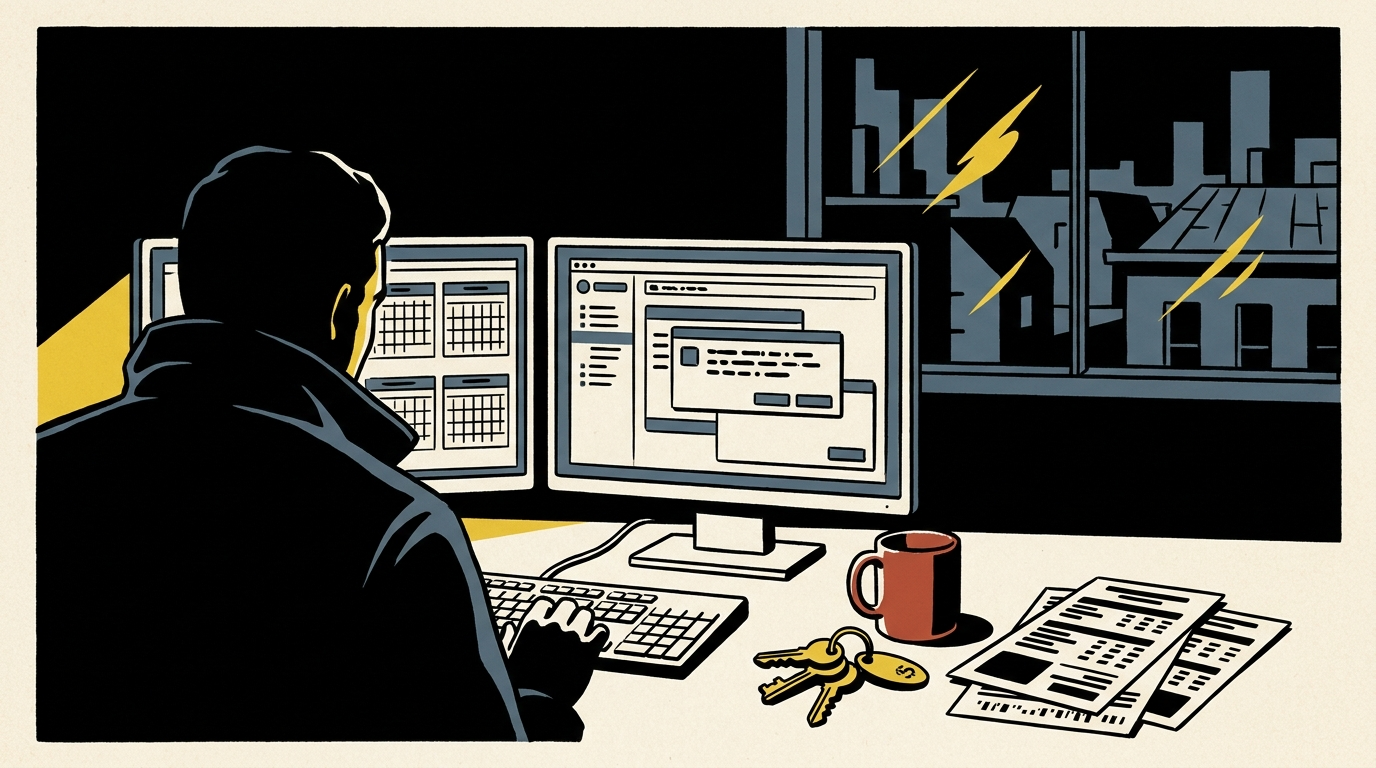
It arrives in your inbox like a digital ransom note: "Refund me for X, Y, and Z, or I'm leaving a one-star review and telling everyone about it." The blood runs cold. You know the guest is full of it, that their complaints are fabricated, their demands unreasonable. But you also know the crushing power of that single star, the way it can sink your listing, derail your Superhost status, and cost you thousands in future bookings. You are, in that moment, a hostage. And the platform, in its infinite wisdom, often leaves you to fend for yourself.
This is the dark underbelly of the review economy, a system designed to build trust that, in practice, frequently empowers bad actors and leaves good hosts vulnerable. It's a daily battle for countless short-term rental operators across the country, a fight against guests who weaponize the very mechanism meant to ensure quality. Today, we're pulling back the curtain on review extortion, the frustrating blind spots of the major booking platforms, and precisely how you can defend your business, your reputation, and your sanity.
The Review Economy: A Double-Edged Sword
No host needs to be told the importance of reviews. They are the lifeblood of the short-term rental business, more critical than almost any other single factor in determining a listing's success. A steady stream of positive reviews, especially five-star ones, directly translates to higher search rankings, increased visibility, and, crucially, a stronger booking conversion rate. Guests scroll past anything below a 4.5 average, and for good reason: a few negative reviews can signal anything from cleanliness issues to unresponsiveness, from misrepresented amenities to safety concerns. For many guests, the review average is the primary filter, the first and last word on whether a property is worth their money and trust.
The platforms themselves built this system, an intricate web of trust and reciprocity. Guests review hosts, hosts review guests. This mutual accountability is supposed to ensure a baseline level of quality and respect. Hosts strive for perfection, knowing every interaction could result in a public critique. Guests are encouraged to be good stewards, aware that their behavior could impact their ability to book future stays. In theory, it's brilliant. In practice, it creates a massive asymmetry of power, especially when a guest decides to exploit it.
A single one-star review, particularly for a newer listing or one with fewer overall reviews, can be catastrophic. It can knock an average down significantly, dropping a listing out of preferred search results and into the digital abyss. This isn't just about pride; it's about pure economics. Lower visibility means fewer inquiries, which means lower occupancy rates. Lower occupancy often forces hosts to drop their Average Daily Rate (ADR) to compete, further eroding revenue. In a market where a typical host might aim for an 80% occupancy rate and an ADR of, say, $200, dropping to 60% occupancy and $180 ADR due to reputation damage can slash monthly RevPAR (Revenue Per Available Rental) by thousands of dollars. Cleaning fees, permit costs, property taxes, mortgage payments – these fixed costs don't disappear because a guest decided to play dirty. The stakes are immense, and bad actors know it.
The Mechanics of a Hostage Situation
Review extortion typically follows a pattern. It begins with a complaint, often minor or even fabricated. Perhaps the Wi-Fi was "slow" for an hour, or a towel was "not soft enough," or they simply "didn't like the decor." These minor grievances escalate, sometimes within hours of check-in, but more often towards the end of a stay or even after checkout. The true nature of the interaction reveals itself when the guest explicitly states or strongly implies that a positive review, or the avoidance of a negative one, is contingent upon a specific concession from the host.
Common demands include partial or full refunds for non-existent issues, waived fees (like legitimate charges for extra guests or late checkouts), or even demands for services beyond the scope of the booking. "Give me a full refund for the first night because the internet buffered, or I'm going to leave you the worst review possible." "I'm not paying for that broken lamp unless you want me to detail all the 'problems' with your place in my review." This is the precise moment the host realizes they are no longer dealing with a customer service issue but a clear act of coercion. It’s an explicit threat, designed to exploit the host's dependence on their public rating.
The platforms, despite their stated policies against review manipulation, often struggle to address these situations effectively. Why? Because proving malicious intent is incredibly difficult. A guest can always claim their negative review was genuine, a true reflection of their experience, even if the underlying motivation was to extract a refund. Unless the extortion threat is captured in explicit, undeniable communication on the platform's messaging system, it often devolves into a "he said/she said" scenario. Platform support agents, often overworked and following strict scripts, are incentivized to close cases quickly. They prioritize avoiding liability and maintaining a perception of neutrality, which often means leaving the host to absorb the damage rather than intervening decisively.
Platform Policies: A Blind Spot for Extortion?
Both Airbnb and Vrbo have policies against "review manipulation" or "extortion." Airbnb's policy, for instance, states: "Threatening to harm someone’s reputation or to unjustifiably leave a negative review in exchange for a refund, additional compensation or a reciprocal positive review is not allowed." Vrbo has similar language. On paper, these policies sound robust, offering a clear line of defense for hosts. In reality, the enforcement is inconsistent and often frustratingly opaque.
The primary hurdle, as mentioned, is proof. Hosts are advised to keep all communication on-platform, which is sound advice. If a guest explicitly types out their threat within the app, there's a good chance support will intervene. However, many guests are savvy enough to make their threats verbally, via phone calls or in-person conversations, or to use thinly veiled language that stops just short of explicit extortion. "I'm very disappointed, and I'm sure my review will reflect it unless we can find a resolution for this 'issue'." Is that extortion or just a guest trying to negotiate? Platforms typically err on the side of caution, protecting the guest's right to leave a review as they see fit, unless the threat is absolutely undeniable.
This creates a perverse incentive structure. Guests who understand the system can push the boundaries, knowing that unless they are overtly crude in their threats, they have a good chance of getting away with it. For platforms, the cost of thoroughly investigating every potential extortion claim, cross-referencing communications, and making subjective judgments about intent, is immense. It's often cheaper, in the short term, to allow a legitimate host to suffer a bad review than to invest heavily in a human-led, nuanced dispute resolution process. This isn't a conspiracy; it's a cold, hard calculation based on operational costs and perceived user friction. They want the booking, they want the commission, and they want the dispute resolved as quickly as possible, often by deferring to the guest's right to review.
The Retaliatory Review: When 'Fair' Isn't Fair
Beyond explicit extortion, hosts also face the scourge of the retaliatory one-star review. This often occurs when a host legitimately enforces their house rules, charges for damages, or denies an unreasonable request. The guest, feeling slighted or unjustly treated, responds with a scathing, often dishonest, review. The critical difference here is the absence of an explicit threat *before* the negative action is taken. The bad review is a reaction, not a pre-emptive demand.
Consider a guest who breaks a valuable piece of furniture and the host, following platform guidelines, charges them for the damage. Or a guest who checks out three hours late, incurring a late checkout fee clearly outlined in the house rules. In both scenarios, the host is acting entirely within their rights and the agreed-upon terms. Yet, the guest, rather than accepting responsibility, uses the review system to punish the host. "The host tried to charge me for a tiny scratch! Unreasonable! Avoid!" or "The host was so strict about checkout, completely inflexible!" These reviews are often filled with misrepresentations, exaggerations, or outright lies, crafted to smear the host's reputation.
These retaliatory reviews are often even harder to remove than clear-cut extortion attempts. Since there was no prior threat, and the review is simply presented as the guest's "experience," platforms are incredibly reluctant to intervene. Their stance is typically that guests have a right to express their opinion, even if that opinion is heavily biased or demonstrably false. The host is left in the unenviable position of having to publicly respond, often looking defensive, while the damaging star rating remains. It's a lose-lose situation where upholding your legitimate business practices can directly harm your financial viability.
The dilemma for hosts is stark: Do you enforce your house rules and risk a retaliatory review, potentially costing you thousands in future bookings? Or do you bend the rules, absorb the cost of damage, or grant unreasonable requests, setting a precedent that will only lead to more problems down the line? Many hosts, especially those new to the business, will initially choose the path of appeasement, only to discover it's a slippery slope. Giving in once only encourages guests to push further, turning what should be a professional business transaction into an endless negotiation with every stay.
Building Your Defense: Evidence is Everything
Given the platforms' limitations, your best defense against review extortion and retaliatory attacks is a robust, proactive strategy centered on documentation and clear communication. This isn't about being paranoid; it's about running a professional business in an environment where you are often, by design, the underdog.
- Keep All Communication On-Platform: This is non-negotiable. Text messages, phone calls, in-person conversations – none of these will be considered valid evidence by platform support teams unless they are explicitly referenced and confirmed within the platform's messaging system. If a guest calls you with a complaint or threat, immediately follow up with a message on the platform summarizing the call: "Just following up on our call regarding X. As discussed, our policy is Y..." This creates a written record.
- Document Property Condition Meticulously: Before and after every stay, take detailed, timestamped photos and videos of your property, paying special attention to high-risk areas or items known to be fragile. Think wide shots and close-ups. This is your irrefutable proof against false damage claims. If a guest claims the couch was stained upon arrival, your pre-check-in photos prove otherwise.
- Clear, Concise House Rules: Ensure your house rules are easily accessible, unambiguous, and acknowledged by the guest during the booking process. If you have a strict no-smoking policy, make it clear. If there's a fee for excessive cleaning, state it explicitly. Refer to these rules when disputes arise.
- Professional Pre-emptive Strikes: If you notice a minor issue during a guest's stay (e.g., a smoke smell, an unapproved pet), address it immediately and professionally through the platform's messaging system. This demonstrates your attentiveness and creates a record. If the guest disputes it later, you have evidence of your initial communication.
- Responding to Threats: If a guest explicitly threatens a bad review to extract a concession, do NOT engage in negotiation. Immediately contact platform support with screenshots of the conversation. State clearly that this is a case of "review extortion" or "review manipulation" and cite the platform's policy. The faster you act, the better your chances.
- Guest Vetting (with caution): While tricky and prone to accusations of discrimination, some hosts develop informal methods. Extremely vague profiles, a lack of reviews, or overly demanding pre-booking questions can sometimes be red flags. However, be incredibly careful here, as legitimate guests can also have sparse profiles.
Fighting Back: Navigating Platform Support
Even with impeccable documentation, fighting a review can feel like shouting into the void. Platform support can be a maze of automated responses, disconnected agents, and confusing policies. But giving up is not an option. Here's how to maximize your chances when engaging with support:
1. Be Clear and Concise: When you contact support, state your case directly. "I am reporting a case of review extortion under your policy X. The guest, [Guest Name], threatened to leave a one-star review if I did not provide a full refund for a non-existent issue. I have attached screenshots of the communication." Avoid emotional language; stick to facts.
2. Provide Unassailable Evidence: Attach all relevant screenshots of messages, photos, and any other documentation that supports your claim. Organize it logically. Point to specific timestamps and quotes. Don't make them dig for it.
3. Quote Policy: Reference the platform's own review policy or community guidelines. This demonstrates you know their rules and that the guest has violated them. This often forces agents to escalate the case beyond standard customer service scripts.
4. Request Escalation: If the first-line support agent seems unwilling or unable to help, politely but firmly request to speak with a supervisor or someone from the "Trust and Safety" team. These teams often have more experience with complex policy violations and greater authority to make decisions.
5. Persistence is Key: You may need to open multiple cases or follow up repeatedly. Document every interaction with support: agent names, case numbers, dates, and what was discussed. If one agent closes your case without resolution, open a new one. The squeaky wheel sometimes gets the grease, especially when you have solid evidence.
6. The Public Response (If All Else Fails): If a retaliatory or extortionate review is published and the platform refuses to remove it, your final recourse is a professional, factual public response. Address the specific false claims without getting defensive or emotional. For example: "We're sorry [Guest Name] did not enjoy their stay. We politely reminded them of our no-smoking policy after detecting smoke, which is clearly stated in our house rules, and processed a legitimate claim for damages found upon checkout. We strive for transparency and enforce our rules consistently for all guests." This allows future guests to see your side and often discredits the malicious review.
The platforms have built a system that incentivizes guests to leverage their review power, and then they've shirked the responsibility of consistently enforcing their own rules.
The Unseen Costs and the Industry's Plea
The impact of review extortion extends far beyond the immediate financial hit. There's a significant emotional and psychological toll on hosts. The feeling of being unjustly attacked, of having your hard work undermined by a manipulative guest, can be incredibly demoralizing. Many hosts report anxiety, frustration, and a sense of helplessness when navigating these disputes. The time spent battling platform support is time not spent on property maintenance, guest experience improvements, or marketing – all activities that actually grow the business.
Furthermore, the cumulative effect of a few such incidents can lead to burnout, causing hosts to question the viability of their business. In markets with stringent permitting requirements, a host's reputation, as reflected in their platform ratings, can even impact their ability to renew licenses. While not common, some city ordinances around STRs have provisions that allow for permit revocation based on sustained poor guest experiences, though these are typically tied to things like excessive noise or trash, not subjective review scores. Still, the overall erosion of trust and goodwill impacts the industry's ability to self-regulate and maintain a positive public image.
The short-term rental industry, through its trade associations and host communities, has consistently called for platforms to improve their review dispute mechanisms. The call isn't for censorship of legitimate criticism, but for a more robust, fair, and human-centric approach to identifying and removing reviews that are clearly abusive, extortionate, or retaliatory against legitimate host actions. Comparing this to other review-driven industries like Yelp or Amazon, where sophisticated algorithms and human moderation teams work to identify fake or manipulative reviews, highlights the gap. While no system is perfect, the current setup often feels heavily skewed against the host.
The bottom line for hosts
The short-term rental landscape, for all its promise, remains a Wild West in many respects, particularly concerning review integrity. As a host, you must operate with the assumption that the platform's policies against review extortion are a weak shield. Your real defense lies in meticulous documentation, unwavering professionalism, and a willingness to fight for your business. Communicate everything on-platform. Photograph everything, always. Understand your house rules inside and out, and enforce them consistently. When a threat comes, act swiftly and decisively by reporting it with irrefutable evidence. Do not negotiate with terrorists; they will only come back for more. While the system isn't perfect, and the odds are often stacked against you, an informed and prepared host has a fighting chance. Protect your reputation, and by extension, your livelihood.
About this piece
An original expert-analysis column by the STR NEWS desk. Figures are illustrative of how the market behaves; confirm specifics for your own market before you act.

Related from the desk

Read the desk every morning.
The day's crackdowns and platform moves, the money, the design and the stays going viral, plus the desk's verdict, in one short email every morning.